
The ev battery is the most expensive part of any electric car and the part most buyers understand the least. It decides how far you can drive, how fast you can charge, how long the car will last, and a big share of what you pay. Strip away the marketing and it comes down to a handful of things worth knowing — so here they are, in plain language.
7 quick facts before we start:
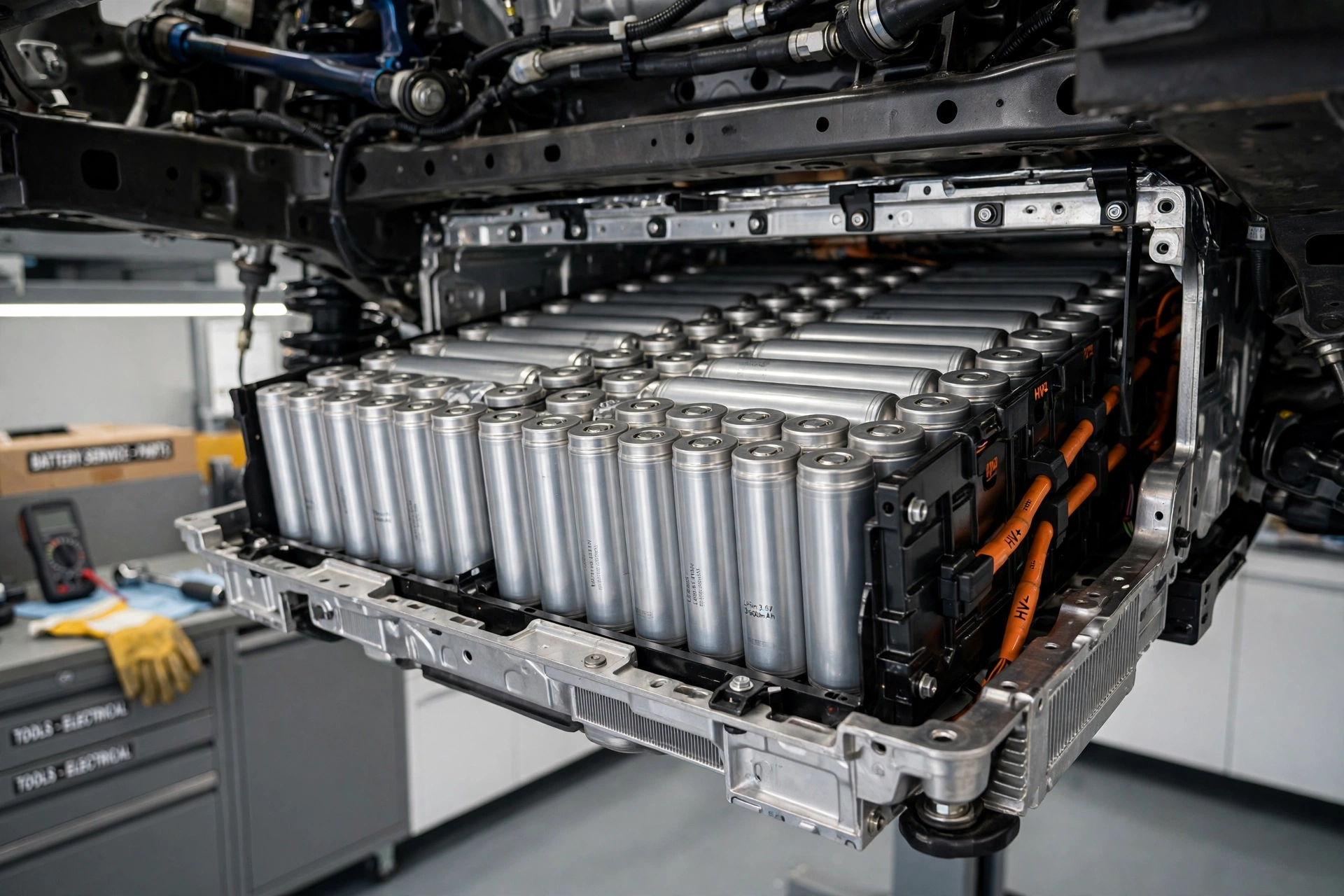
- An EV battery is thousands of small lithium-ion cells wired together, sitting flat under the floor.
- Battery size is measured in kilowatt-hours (kWh) — that’s your “fuel tank”.
- Pack prices fell to about $105/kWh in 2026, down 93% since 2010.
- Most EVs lose only 1–2% of battery capacity per year early on.
- Real-world range is usually 70–85% of the EPA sticker number.
- Cold weather can cut range by 10–30%.
- The battery typically outlasts the payments — 8-year/100,000-mile warranties are standard.
Table of Contents
What an EV Battery Actually Is
Pop the floor of a modern EV and you won’t find one giant battery. You’ll find a pack built from hundreds or thousands of individual lithium-ion cells, grouped into modules, all wired together and managed by a computer called the battery management system (BMS). The BMS watches every cell’s voltage and temperature, balances the charge between them, and throttles power or charging speed when something gets too hot or too full. It’s the unsung hero of EV longevity — early electric cars without proper thermal management aged badly; modern ones don’t.
The pack sits flat under the cabin floor — the “skateboard” layout you hear about. That’s why EVs have flat floors, roomy interiors, and a low center of gravity that makes even a family crossover handle like it shrunk a size. Most EVs run a ~400-volt architecture; newer designs like the Hyundai Ioniq 5 and Kia EV6 use 800 volts, which lets them gulp down DC fast charging at seriously impressive rates.
The EV Battery Specs That Actually Matter
Spec sheets love throwing numbers at you. Four of them matter:
Capacity (kWh). This is the size of the tank. A Tesla Model 3 Long Range carries roughly 75 kWh; a Hyundai Ioniq 5 Long Range has 82 kWh; the big Ford F-150 Lightning extended-range pack is 131 kWh; a Rivian R1T is around 135 kWh. Bigger isn’t automatically better — it adds weight and cost — but it is the single biggest predictor of range.
Usable vs. gross capacity. Manufacturers hold back a few percent as a buffer you can’t touch, which protects the pack from the extremes that age it fastest. When you read “75 kWh,” the usable figure is a bit lower. Don’t sweat it — every brand does this, and it’s why packs last.
Charging speed (kW). The peak rate the battery can accept from a DC fast charger. An Ioniq 5 can peak above 230 kW; Tesla’s V3 Superchargers deliver up to 250 kW. But peaks are brief — what matters is how long the car holds a high rate, which is why 10–80% times are the honest metric.
Efficiency (miles per kWh). How far the car stretches each unit of energy. Most EVs land between 3 and 4.5 mi/kWh; a slippery sedan beats a brick-shaped SUV every time. This is the number that explains why two cars with the same battery size can have very different ranges.
LFP vs NMC: The Two Chemistries You’ll Actually Meet
Almost every EV on sale uses one of two lithium-ion recipes:
NMC (nickel-manganese-cobalt) packs more energy per kilogram, so it’s the choice for long-range models. The tradeoff: nickel and cobalt cost real money, and NMC packs averaged about $128/kWh in 2025. Daily charging to 100% wears NMC faster, so most brands suggest an 80% daily limit.
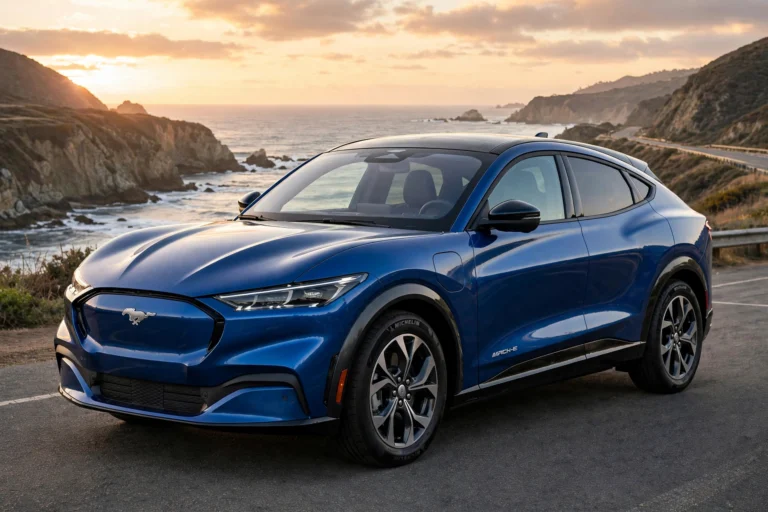
LFP (lithium-iron-phosphate) is the budget champion — around $81/kWh for packs in 2025 — with a longer cycle life and a calm attitude toward being charged to 100% every day. The catch is lower energy density, meaning a bit less range for the same weight, and slower charging in deep cold. You’ll find LFP in standard-range Teslas, the Ford Mustang Mach-E’s base versions, and a growing list of affordable EVs.
My take? For a commuter car you charge at home, LFP is the sweet spot — cheaper, tougher, and you never have to think about charge limits. For a road-trip machine, NMC’s extra range still earns its keep.
Real-World Range vs. the Sticker Number
The EPA range figure is measured on gentle test cycles. Your life is not a gentle test cycle. Sustained 75-mph highway driving, winter cold, headwinds, hills, and a loaded car all take their cut. A working rule: expect 70–85% of the EPA number in mixed real driving, and 60–75% in the depths of winter.
So plan with 70%. A car rated at 300 miles is a 210-mile car on a bad day — still plenty for the 40-odd miles the average American drives daily, but worth knowing before a road trip. Check independent range tests, not just the window sticker, and pay attention to highway-range figures specifically; they’re the honest ones.
How Long Does an EV Battery Last?
This is the question that keeps used-EV shoppers up at night, and the answer is reassuring. In the US, federal rules require battery warranties of at least 8 years or 100,000 miles, and most cover you down to 70% of original capacity. Real-world data from fleet tracking shows degradation of roughly 1–2% per year in the early years, slowing after that — plenty of 6-to-8-year-old EVs still hold 85–90% of their original range.
What ages a pack fastest? Constant exposure to extreme heat, sitting at 100% charge for weeks, and — to a smaller degree — heavy DC fast-charging use. Normal driving with sensible charging habits? The battery will very likely outlast your car payments. When a pack does eventually retire from car duty, it usually isn’t dead — it gets a second life in stationary storage, and only then goes to recycling. If you want the full picture of what happens at the end, read our guide to what happens to expired EV batteries.
What an EV Battery Costs in 2026
Here’s the trend that changed everything: BloombergNEF’s annual survey put the average lithium-ion pack at about $108/kWh in 2025 and forecasts roughly $105/kWh for 2026. In 2010, the same kilowatt-hour cost around $1,500. That’s a 93% collapse, and it’s the reason EVs went from curiosities to price competitors.
Do the rough math: a 75 kWh pack represents about $8,000 of manufacturing value at today’s prices. But if you actually need a replacement installed at a dealer — parts, labor, logistics, margins — expect a five-figure bill. Current estimates put a Tesla Model 3 Long Range pack replacement around $14,000 and a Hyundai Ioniq 5 around $16,000. Sounds scary, but warranty coverage and the sheer rarity of failures mean almost no owner ever pays it. And every year you wait, replacements get cheaper — the cost curve hasn’t stopped falling yet. Where the raw materials come from matters too; see how lithium mining works to understand the supply chain behind the price.
Charging Speeds and Battery Health
You have three speeds of life with an EV:
Level 1 — a regular wall outlet, about 3–5 miles of range per hour. Sounds slow, but if you drive 30 miles a day and park 12 hours, it genuinely works; here’s whether a regular outlet is enough for you.
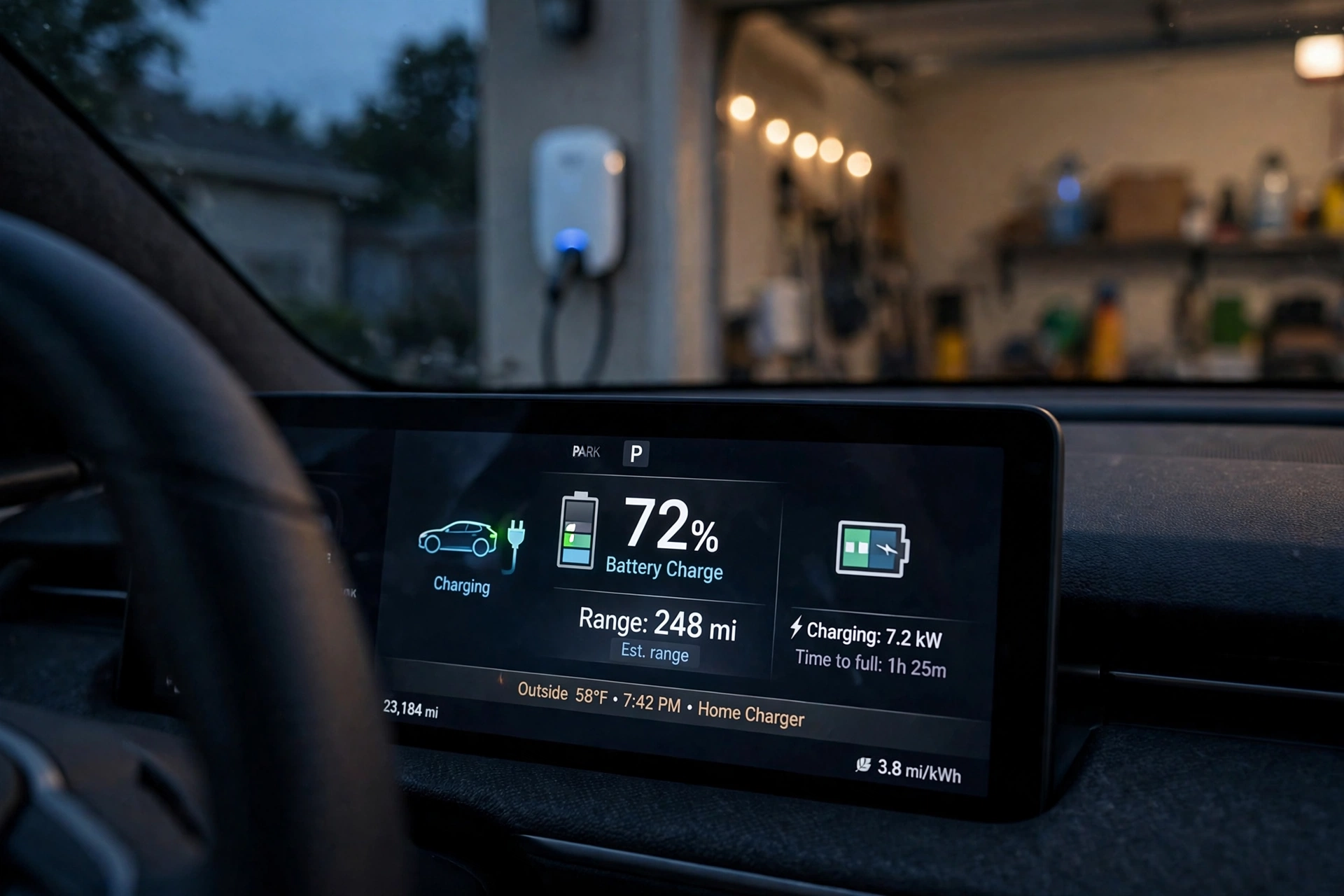
Level 2 — a 240-volt home or workplace charger, roughly 20–40 miles per hour. This is the sweet spot: plug in at night, wake up full, and the gentle rate is kind to the battery.
DC fast charging — the road-trip weapon, typically 10–80% in 18–30 minutes on a capable car. Two things to know: charging slows dramatically past 80% (the battery tapers to protect itself, so plan stops around the 10–80% window), and while occasional fast charging is fine, living on it exclusively adds some wear over the years.
Cold Weather and Your Battery
Lithium-ion chemistry is a fair-weather friend: below freezing, expect 10–30% less range, plus extra drain from heating the cabin. The fixes are simple. Precondition the battery while still plugged in so the car leaves warm. Cars with heat pumps (most Teslas, newer Hyundais and Kias) sip energy instead of gulping it for heat. And if you have a garage, use it — a 50°F garage beats a 20°F driveway by a wide margin. We’ve measured the details in our winter range loss guide.
What to Check Before You Buy
If you take one checklist to the dealership, make it this:
- Your real range — apply the 70% rule to the EPA figure for your climate and driving.
- The chemistry — LFP means charge to 100% freely; NMC means set an 80% daily limit.
- Voltage architecture — 800V cars road-trip better; 400V is fine if you mostly charge at home.
- Warranty fine print — years, miles, and the capacity threshold (usually 70%).
- A heat pump — close to a must-have if your winters are real.
- On a used EV — get a battery health report; it’s the equivalent of a compression test.
The U.S. Department of Energy keeps a solid overview of all-electric vehicle technology if you want the official numbers behind any of this.
Bottom line: the EV battery is no longer the fragile, mysterious part that decides whether electric cars make sense. It’s a mature, warrantied, steadily cheapening component — and now you know how to read it.