
Table of Contents
EV Cars: Range, Charging, Costs and Who Should Buy It
EV cars are no longer a niche experiment. In 2026, roughly one in ten new vehicles sold in the United States is fully electric, the cheapest models now start under $30,000, and the best-selling electric models outsell most gas cars in their class. But the questions shoppers ask have not changed: How far does it really go? How long does charging take? What does it cost to run? And the honest one underneath all the others — is an electric car actually right for me? This guide answers each question with current 2026 numbers, real model names, and no sales pitch. By the end you will know exactly what range to expect, what charging looks like day to day, what EV cars cost to buy and run, and whether you are the kind of driver who should buy one now or wait.
EV Cars and Range: What You Actually Get in 2026
Range is the first number every shopper looks at, and in 2026 it is better than most people expect. The mainstream sweet spot is now 250 to 320 miles on a full charge. Budget models clear 300 miles, and the longest-range versions of popular cars push past 350. Here are the headline figures for the models Americans actually buy, using each car’s maximum EPA-rated range and its starting price:
| Model (2026) | Starting MSRP | Max EPA range |
|---|---|---|
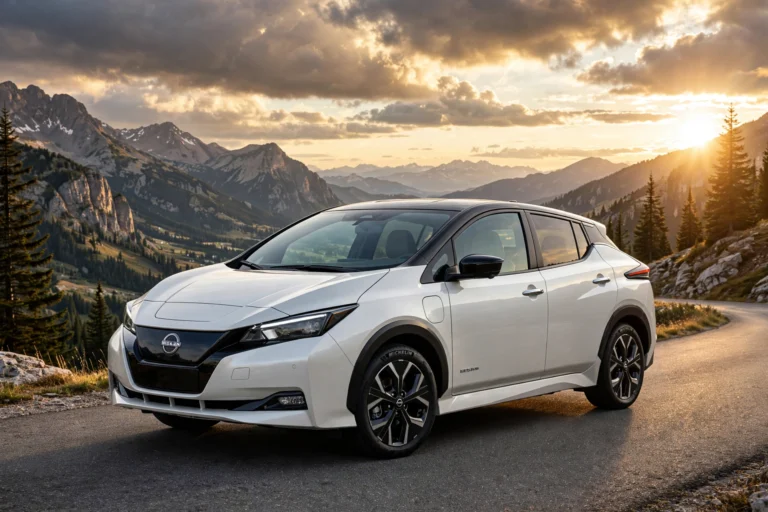
| Nissan Leaf | $29,990 | Up to 303 miles |
| Chevrolet Equinox EV | About $36,495 | Up to 319 miles |
| Tesla Model 3 | About $36,990 | Up to 363 miles |
| Hyundai Ioniq 5 | $37,750 | Up to 318 miles |
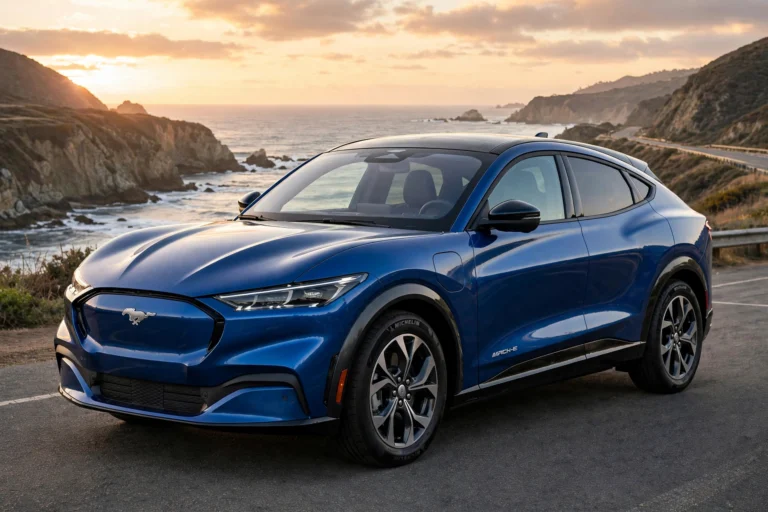
| Ford Mustang Mach-E | About $37,995 | Up to 320 miles |
| Tesla Model Y | About $39,990 | Up to 353 miles |
Two honest caveats. First, the maximum range belongs to a specific trim — usually a rear-wheel-drive long-range version. All-wheel-drive and performance trims go less far, sometimes 40 to 60 miles less. Second, the EPA number is a best-case blend. On a 75-mph highway run, most EV cars deliver about 70 to 80 percent of their rated range, and in hard winter weather you can lose another chunk on top of that — plan on roughly 60 to 70 percent of the sticker figure for a cold highway trip. For daily driving, though, the math is generous: the average American drives under 40 miles a day, which means even a 250-mile car needs charging only once or twice a week. If you want the deeper science on what is inside the pack and why ranges differ, our explainer on how EV batteries work covers capacity, chemistry, and degradation in plain English.
Charging: Home, Work and the Highway
Charging is where EV cars feel most different from gas cars — and, for most owners, better. Instead of visiting a gas station every week, you plug in where the car already sits. There are three levels, and you will use two of them regularly.
Level 1 (a normal wall outlet) adds about 3 to 5 miles of range per hour. That sounds slow, and it is — but plugged in for 12 hours overnight it returns 40 to 60 miles, which covers the average commute. Plenty of owners with short drives never install anything else.
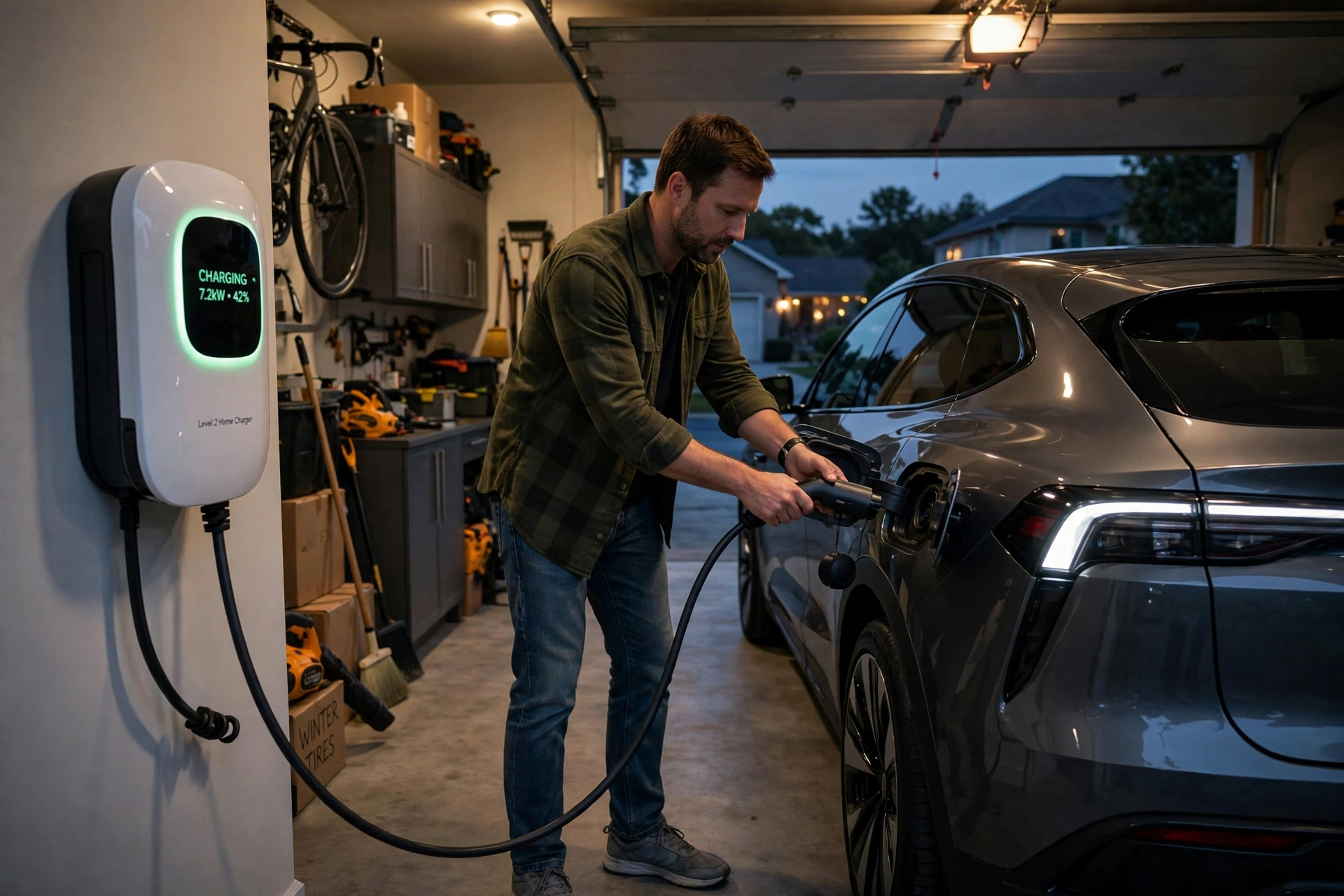
Level 2 (240-volt, home or workplace) is the setup most owners choose. A home wall charger adds roughly 25 to 45 miles of range per hour, refilling even a big battery overnight. Installed cost typically runs $500 to $1,500 for the charger and electrician on top of the unit itself, and many utilities offer rebates and cheap overnight rates for EV drivers. This is the single biggest quality-of-life upgrade in EV ownership: you leave every morning with a full “tank” that cost you a few dollars.
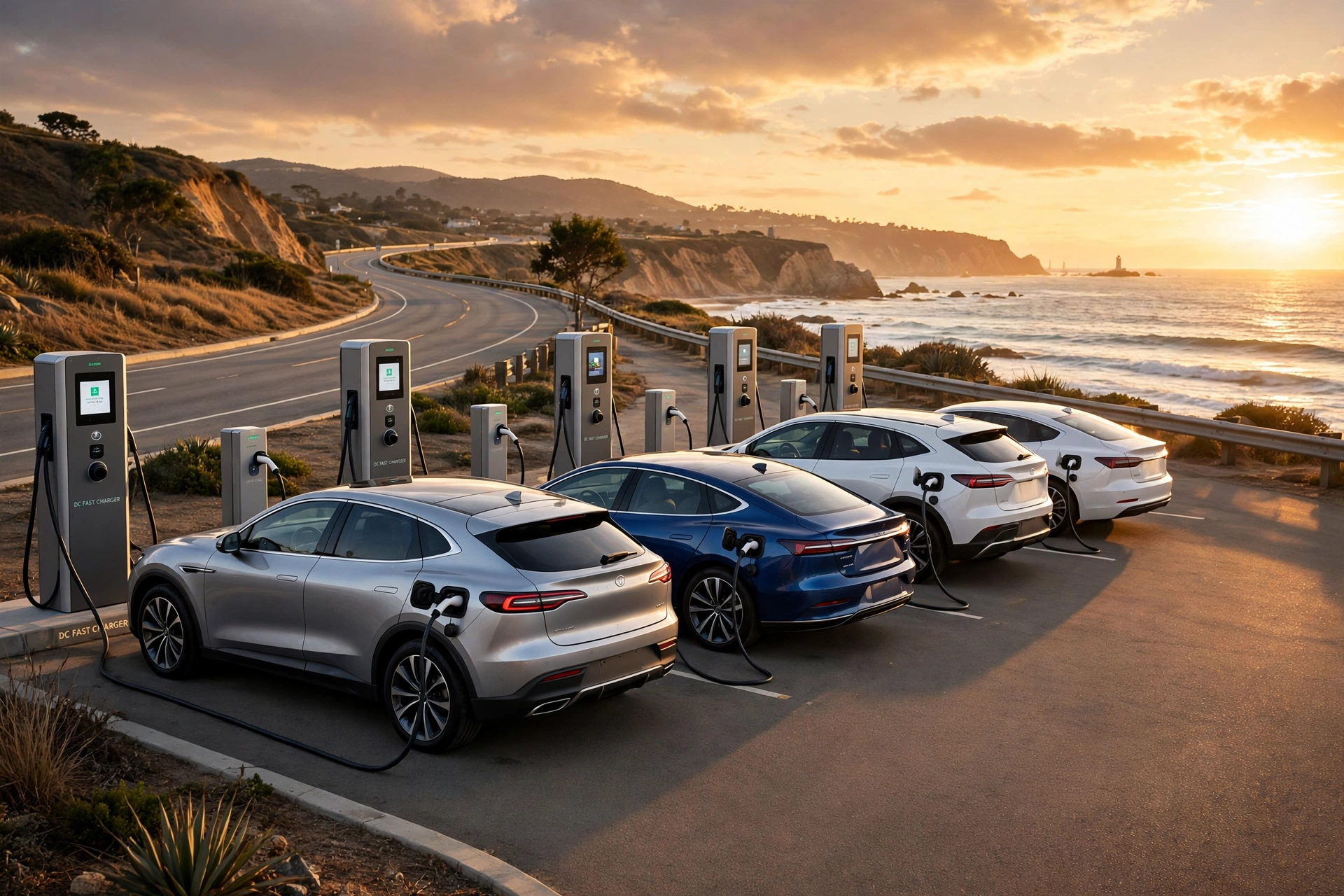
DC fast charging is for road trips. At 150 to 350 kW, modern EV cars add serious range quickly — a Hyundai Ioniq 5 charges from 10 to 80 percent in about 20 minutes, a Tesla Model Y in roughly 25 to 30. Since 2025, most new EVs sold in North America use the NACS connector, which means Tesla’s Supercharger network — the largest and most reliable fast-charging network in the country — is open to nearly everyone. The U.S. now has well over 200,000 public charging ports, and our guide to finding EV charging stations shows how to locate and compare them wherever you drive.
What EV Cars Cost to Buy and Run
The purchase price gap has nearly closed. The average new car in the U.S. — gas or electric — now costs around $50,000, while the best-selling EV cars cluster between $30,000 and $45,000, and the Leaf undercuts nearly everything with a gas engine in its class. Where EV cars pull ahead is running costs, and the gap is not small.
Fuel. The average U.S. residential electricity price is about 17 cents per kWh. A typical EV travels about 3.5 miles on one kWh, so home charging works out to roughly 5 cents per mile. Public fast charging costs more — often 40 to 50 cents per kWh, or 12 to 14 cents a mile — which is why owners who can charge at home save the most. Compare a gas car at 30 mpg with fuel at $3.15 a gallon: that is 10.5 cents per mile for fuel alone, double the home-charging cost. Over 15,000 miles a year, the home-charging EV driver spends about $750 on electricity; the gas driver spends about $1,575 on gasoline. Our detailed breakdown of electric car cost per mile runs the full comparison, including public-charging scenarios.
Maintenance. EV cars have no oil to change, no spark plugs, no exhaust system, and no multi-gear transmission to service. Regenerative braking means brake pads routinely last past 100,000 miles. The main consumable that wears faster is tires — instant torque and battery weight are hard on rubber — so budget for tire replacement a little sooner than you would on a comparable gas car. Every EV battery sold in the U.S. carries a federally required warranty of at least 8 years or 100,000 miles, and real-world data shows modern packs losing only about 1 to 2 percent of capacity per year.
Who Should Buy an EV Car in 2026 — and Who Should Wait
Buy one now if you can charge where you park — a driveway, garage, or workplace charger turns EV ownership into the easiest version of car ownership there is. Buy one if your daily driving is under 200 miles, which describes the overwhelming majority of households. Buy one if you are tired of gas prices and maintenance bills, or if your commute is long: the fuel savings grow with every mile you drive, and high-mileage drivers recoup any price premium fastest.
Wait, or think carefully, if you regularly tow heavy loads over long distances — towing cuts an EV’s range roughly in half, and charging with a trailer attached is still awkward at many stations. Wait if you have no home or workplace charging and would depend entirely on public fast charging; it works, but it costs more and takes more planning. And wait if you routinely drive 300-plus highway miles in freezing weather without stops — a long-range model can do it, but a hybrid will do it with less thought. None of these are permanent verdicts. Battery range, charging speed, and station coverage improve every single model year, which is itself an argument some buyers use for leasing instead of purchasing.
Frequently Asked Questions
How long do EV cars take to charge?
At home on a Level 2 charger, expect a full charge overnight — roughly 6 to 10 hours depending on the battery size. On a DC fast charger, most 2026 models go from 10 to 80 percent in about 20 to 35 minutes, which is the range that matters on a road trip.
How long do electric car batteries last?
Modern packs are lasting far longer than early skeptics predicted. Fleet data shows average degradation of about 1 to 2 percent per year, meaning most batteries still hold 85 percent or more of their original capacity after 10 years. Every pack is warrantied for at least 8 years or 100,000 miles in the U.S.
Are EV cars cheaper to own than gas cars?
For drivers who charge at home, yes — fuel costs roughly half per mile, and scheduled maintenance is significantly lower. Over five years, typical owners save several thousand dollars versus a comparable gas car, even before any purchase incentives.
What range do I really need?
Look at your longest regular day, not your longest imaginable one. If you drive 50 miles a day and take two road trips a year, a 260 to 300-mile car with fast charging covers everything comfortably. Buying range you use twice a year means paying for battery you carry every day.
Can EV cars handle winter?
Yes, with planning. Cold weather reduces range — expect roughly 20 to 30 percent less in freezing conditions, more on short trips where the cabin heater works hardest. Preconditioning the cabin and battery while plugged in recovers much of the loss, and heat pumps, now common on 2026 models, help considerably.
The Bottom Line
EV cars in 2026 are not a compromise you make for the planet or a gadget you buy for the novelty. The range is real — 300 miles is the new normal — charging at home is cheaper and more convenient than gas, and the purchase prices now start where mainstream gas cars start. The buyers who love them share one trait: they can plug in where they park. If that is you, an electric car will very likely be the cheapest, easiest car you have ever owned. If it is not you yet, the technology will be even better when your situation changes — but check the numbers for your own driving first, because they surprise most people. For neutral, government-published efficiency and cost data on every model mentioned here, FuelEconomy.gov from the U.S. Department of Energy is the reference we trust most.