🔋 EV Battery Replacement Cost Estimator
The number everyone fears. Get an honest 2026 estimate by battery size — and find out if replacement even makes sense.
Based on 2026 average pack prices (~$139/kWh, BloombergNEF trend). Dealer quotes vary widely — independents are often 20–40% cheaper. Always check warranty first: most EV batteries are covered 8 years / 100,000 miles.
EV Battery Replacement Cost: The Number Everyone Fears
“What if the battery dies?” is the question that stops more EV purchases than any other. So let’s answer it with real numbers instead of fear. In 2026, EV battery replacement cost averages roughly $115–$165 per kWh for the pack plus $800–$1,500 labor. For a typical 75 kWh EV, that’s $9,400–$13,900 at a dealer — less at an independent shop.
That’s real money. But here’s the context the fear skips: battery failure is rare, degradation is gradual and manageable, warranties cover the scary scenarios, and pack prices fall about 10% per year. Let’s go through each.
Failure vs Degradation: Only One Needs Replacing
People conflate two very different things:
Degradation is the slow loss of capacity — 1–2% per year. A 5-year-old EV at 90% health drives perfectly; it just goes 10% less far. Degradation alone almost never justifies a $10,000+ replacement. You adapt: charge to 100% instead of 80%, or accept the shorter range.
Failure is a dead pack or dead modules — the car won’t drive. This is genuinely rare in modern EVs (well under 1% outside warranty, per available data). And when it happens under 8 years / 100,000 miles, the warranty covers it.
The estimator above asks which situation you’re in because the advice differs completely.
Check Your Warranty Before Anything Else
This is the most expensive mistake in EV ownership: paying an EV battery replacement cost the manufacturer owed you. Federal rules require an 8-year / 100,000-mile battery warranty covering excessive degradation (typically defined as dropping below 70% capacity) and outright failure.
If your car is under 8 years old and the battery is the problem, call the dealer first — not an independent shop, not Google. Warranty replacement is free. Even if you’re unsure, check: the warranty follows the car, not the owner, so used EVs are covered too.
When Replacement Actually Makes Sense
Out of warranty, the math is brutal but simple: compare the EV battery replacement cost to the car’s value. The estimator shows this ratio automatically. Rules of thumb:
- Under 50% of car value: replacement can make sense, especially if you love the car and it’s otherwise sound.
- 50–70%: gray zone. Get an independent quote (often 20–40% cheaper than dealers) before deciding.
- Over 70%: sell the car as-is. There’s an active market for EVs with degraded batteries (buyers who need short-range runabouts, or shops that refurbish packs). Put the money toward your next EV.
The Module Repair Secret
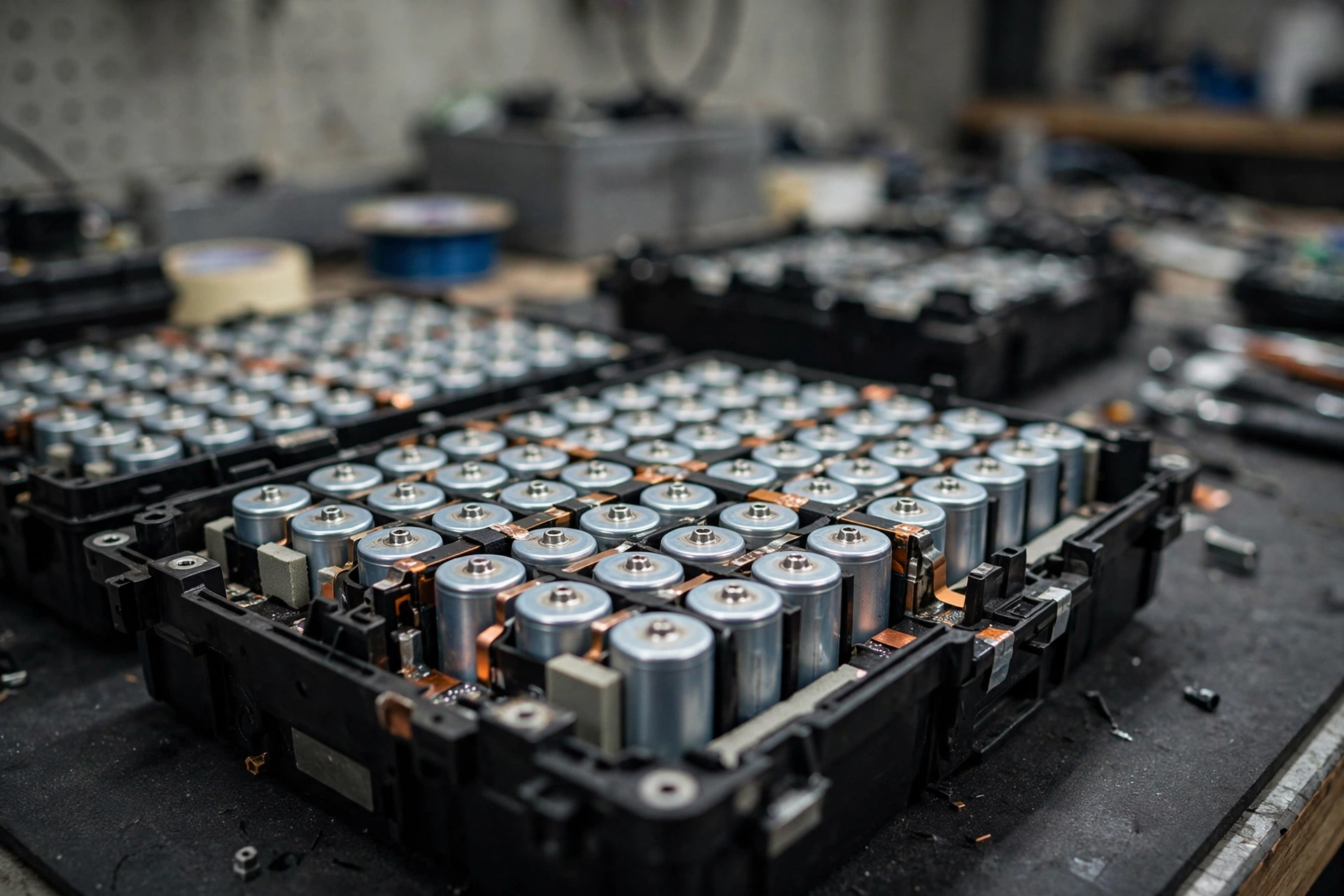
Here’s what dealers don’t advertise: a “failed” battery is often one or two bad modules, not a dead pack. EV packs contain dozens of modules, and independent specialists can diagnose and replace individual modules for $1,500–$3,000 — versus $10,000+ for the whole pack. Always ask for a module-level diagnostic before authorizing a full replacement. This single question has saved owners five figures.
Battery Prices Keep Falling
The long-term trend is your friend: lithium battery pack prices have fallen roughly 90% since 2010 and continue to decline. Industry analysts at BloombergNEF publish updated price surveys each year, and each one pushes the projected EV battery replacement cost lower.
Frequently Asked Questions
How long do EV batteries actually last?
Data from high-mileage fleets (taxis, Teslas with 200,000+ miles) shows modern packs retaining 85–90% capacity after 200,000 miles. For a typical driver, that’s 15+ years before degradation becomes a practical problem — longer than most people keep cars.
Does fast charging kill the battery?
It accelerates degradation modestly — frequent DC fast charging might cost you a few extra percent over the car’s life versus home charging. It’s not the battery-killer legend suggests, thanks to thermal management. But a used EV with exclusively fast-charged history deserves a closer battery health check.
Can I replace the battery myself?
No. EV packs weigh 1,000+ pounds, operate at 400–800 volts DC (lethal), and require lifts, insulated tools, and software pairing with the car. This is professional-only work — preferably at an EV-specialized shop.
What happens to old EV batteries?
They’re too valuable to landfill. Degraded packs get second lives as stationary storage (solar backup, grid buffering), and when truly spent, 95%+ of the lithium, cobalt, and nickel is recoverable through recycling. The recycling industry is scaling fast.
The Bottom Line
The EV battery replacement cost for a typical EV is $9,000–$14,000 — but you’ll probably never pay it. Warranties cover the first 8 years, degradation is manageable, module repair exists, and prices fall yearly. Run your numbers above, check that warranty first, and stop losing sleep over the number everyone fears.