🔄 New vs Used EV Calculator
A used EV costs thousands less — but the battery is older and the warranty shorter. See which deal is genuinely better.
✨ New EV
🚗 Used EV
📊 Your situation
Totals = purchase price + energy + estimated maintenance, minus resale. Used EVs typically need tires/brakes sooner and may need a 12V battery. Battery health (SOH) can be checked with an OBD dongle or a dealer battery report — always verify before buying used.
Why Used EVs Are the Best Deal Nobody Talks About
The new vs used EV debate has a twist most car advice misses: electric cars depreciate faster than gas cars, which is bad news for new buyers but fantastic news for used buyers. A 3-year-old EV often sells for 40–50% less than its original sticker — while its battery, the part everyone worries about, has typically lost only 5–10% of capacity.
That mismatch — huge price drop, small battery degradation — is the whole opportunity. This new vs used EV calculator compares the true cost of both options over your ownership period, including the risks people forget to price in.
What the New vs Used EV Calculator Compares
Purchase price is just the start. The calculator adds:
- Energy costs for your annual mileage at your electricity rate
- Maintenance — budgeted slightly higher for the used EV ($550/year vs $400), because older cars need tires, brakes, and wear items sooner regardless of powertrain
- Resale value at the end of your ownership — used EVs depreciate from a lower base, which actually helps their total-cost math
It also flags three risks automatically that every new vs used EV shopper should weigh: battery warranty expiring mid-ownership, battery health below 85%, and cars 6+ years old needing a pre-purchase inspection.
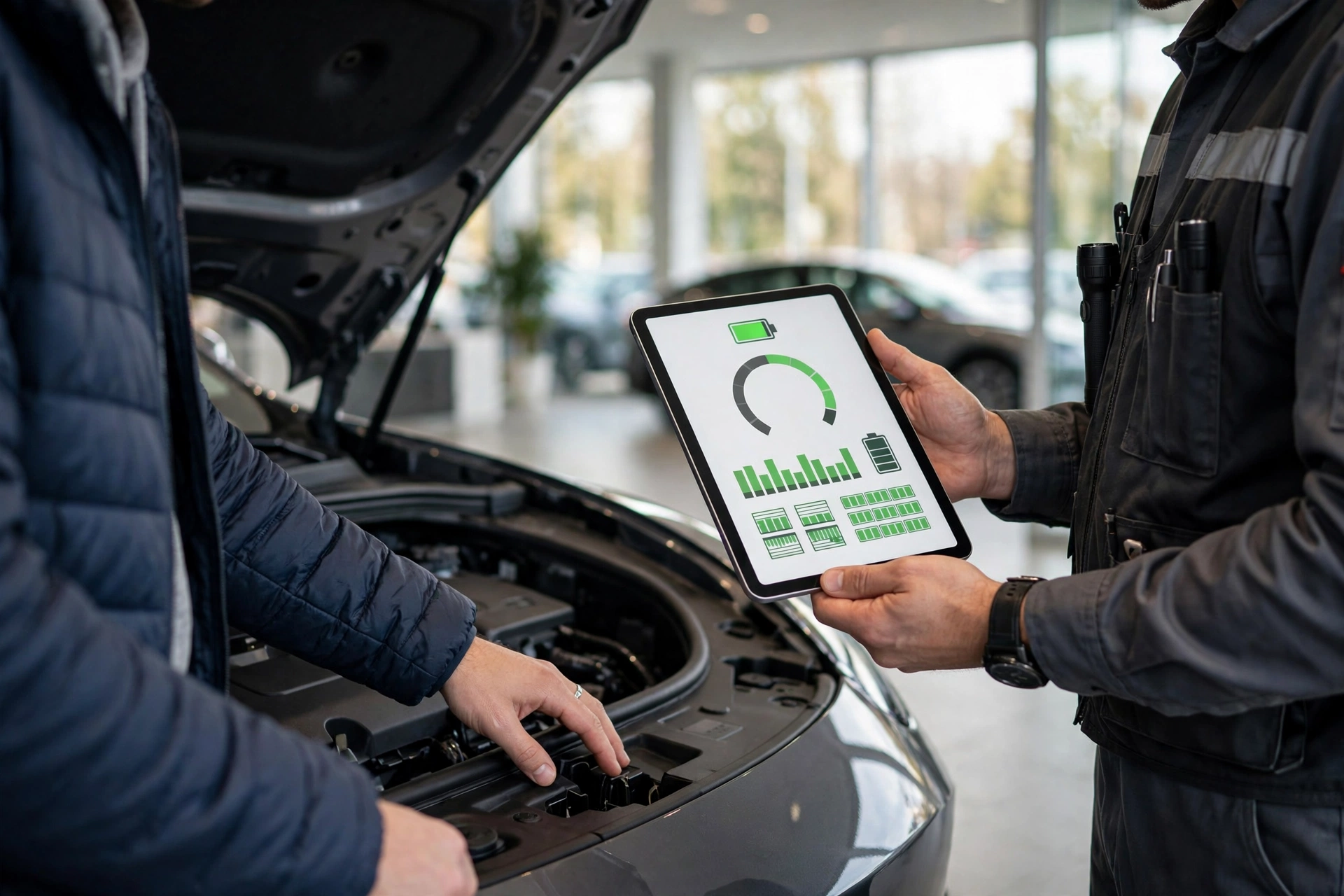
The Battery Question: How Much Degradation Is Normal?
This is the fear that keeps used-EV prices low, so let’s be precise. Modern EV batteries lose roughly 1–2% of capacity per year in normal use. A 3-year-old EV at 92–95% state of health (SOH) is completely normal — that’s maybe 15–20 miles less range on a 250-mile car. You will not notice it in daily driving.
What actually matters:
Get a battery health report before buying. Ask the dealer for one, or check it yourself with a $30–$50 OBD-II dongle and an app like LeafSpy or manufacturer-specific tools. Never buy a used EV without knowing the SOH — it’s the equivalent of checking the engine on a gas car.
Check the battery warranty, not just the car warranty. EV batteries typically carry 8-year/100,000-mile warranties against excessive degradation (usually defined as dropping below 70%). A 3-year-old EV has 5 years of that left — which may cover your entire ownership. That’s the single most important number on a used EV.
Fast-charging history matters more than mileage. A car with 60,000 gentle home-charged miles often has a healthier battery than one with 30,000 miles of constant DC fast charging. Ask how the previous owner charged.
When New Wins Anyway
I’m pro-used-EV, but in the new vs used EV debate, new wins in specific cases — and the calculator will show you:
- You keep cars 10+ years. Over very long ownership, the new car’s full warranty and fresh battery compound in its favor.
- You need maximum range. If your commute pushes the car’s limits, the used EV’s 5–10% degradation could matter.
- Tax incentives apply. The federal used-EV credit (up to $4,000 for qualifying used EVs under $25,000) actually favors used — but state and utility incentives sometimes favor new. Check both.
- Peace of mind has a price for you. Honest truth: some people sleep better with a full warranty. That’s a valid preference, just know what it costs — the calculator shows you exactly.
A Worked Example
Here’s a typical new vs used EV comparison using the defaults: a $42,000 new EV versus a $24,000 3-year-old EV at 92% battery health, 12,000 miles/year, 6-year ownership:
- New EV total: purchase $42,000 + energy ~$3,700 + maintenance $2,400 − resale $16,800 = ~$31,300
- Used EV total: purchase $24,000 + energy ~$3,700 + maintenance $3,300 − resale $7,200 = ~$23,800
- Difference: the used EV saves roughly $7,500 — and still has 5 years of battery warranty remaining
The used EV’s only real concession: ~8% less range than new. For most drivers, that’s invisible.
Frequently Asked Questions
How do I check a used EV’s battery health?
Three ways: ask the dealer for a battery health report (many now provide them), use an OBD-II dongle with an app like LeafSpy, or pay for a third-party inspection from a service that specializes in EVs. You’re looking for state of health (SOH) above 85% — the key number in any new vs used EV decision.
Is there a federal tax credit for used EVs?
Yes — up to $4,000 or 30% of the price (whichever is less) for qualifying used EVs sold under $25,000 through a dealer, subject to income limits. Rules change, so verify current eligibility at fueleconomy.gov before counting on it. If the credit doesn’t apply to you, read our breakdown of whether EVs are worth buying without tax credits.
What mileage is too high for a used EV?
Mileage matters less than in gas cars — there’s no engine wearing out. Battery health and charging history matter more. A 100,000-mile EV with 90% SOH and gentle charging history is a better buy than a 40,000-mile one that’s been fast-charged daily.
Should I worry about the 12V battery on a used EV?
Mildly — it’s a $150–$250 replacement every 3–5 years, same as a gas car, and a dead 12V is the most common “my EV won’t start” cause. Budget for it on any used EV over 3 years old.
The Bottom Line
For most buyers, a 2–4 year old used EV is the smartest money in electric cars — you skip the steepest depreciation, keep most of the battery warranty, and lose only a few percent of range. Run your numbers in the new vs used EV calculator above, verify the battery health, and don’t let battery fear talk you out of the best deal in the EV market.