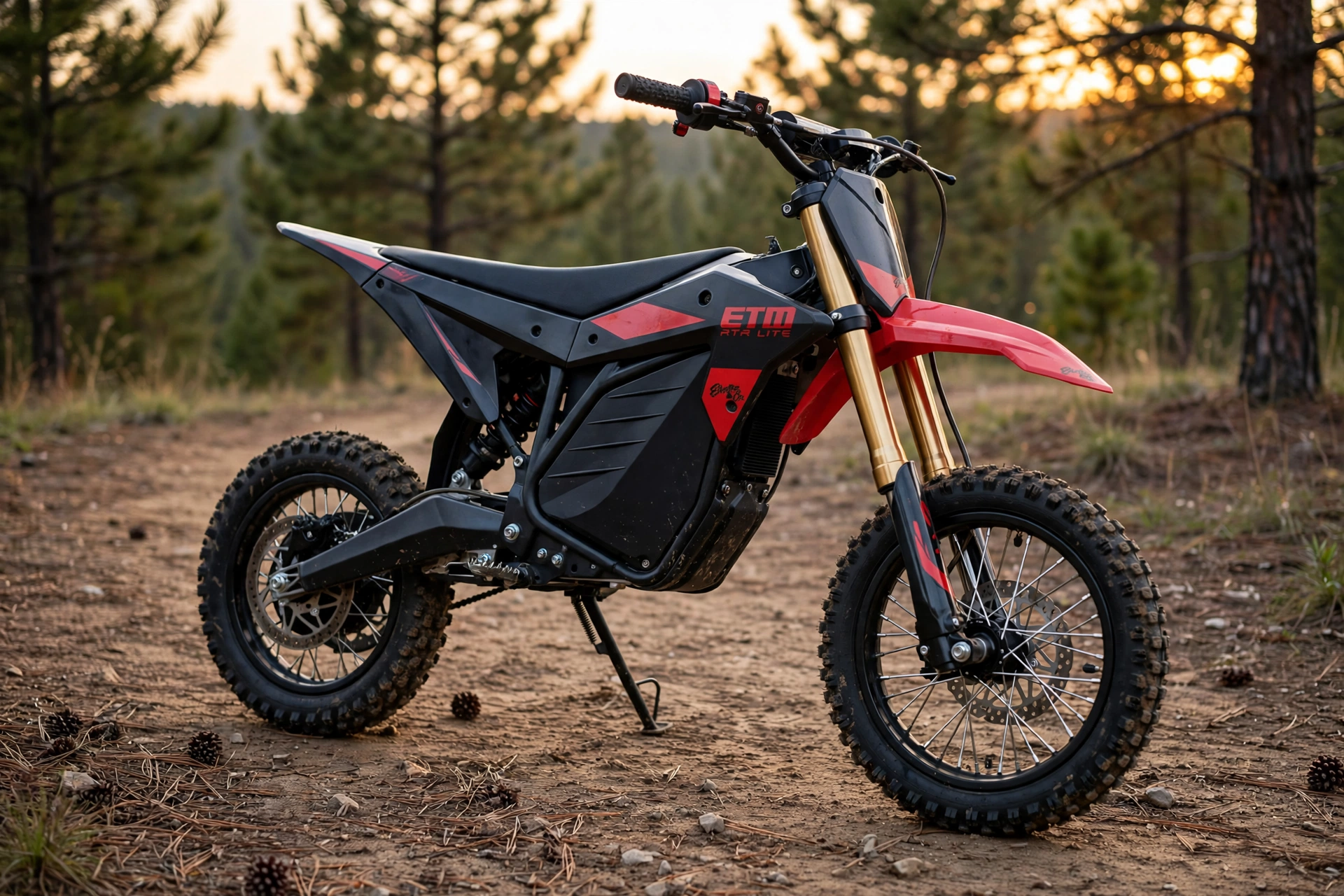

The RTR Lite is Electro & Company’s $2,199 answer to a very specific question: what if an electric pit bike cost less than most e-bikes, hit 45+ mph, and came with a chassis you could actually upgrade instead of outgrowing? Built in California on the same platform as the flagship RTR, the Lite is the entry trim of Electro & Co’s “Ready to Rip” lineup — a compact, off-road-only electric trail bike aimed squarely at teens and adults stepping up from a gas 110cc pit bike. This guide covers the real specs, the honest range numbers, what it costs to own, the street-legality catch, and whether it’s worth your money in 2026.
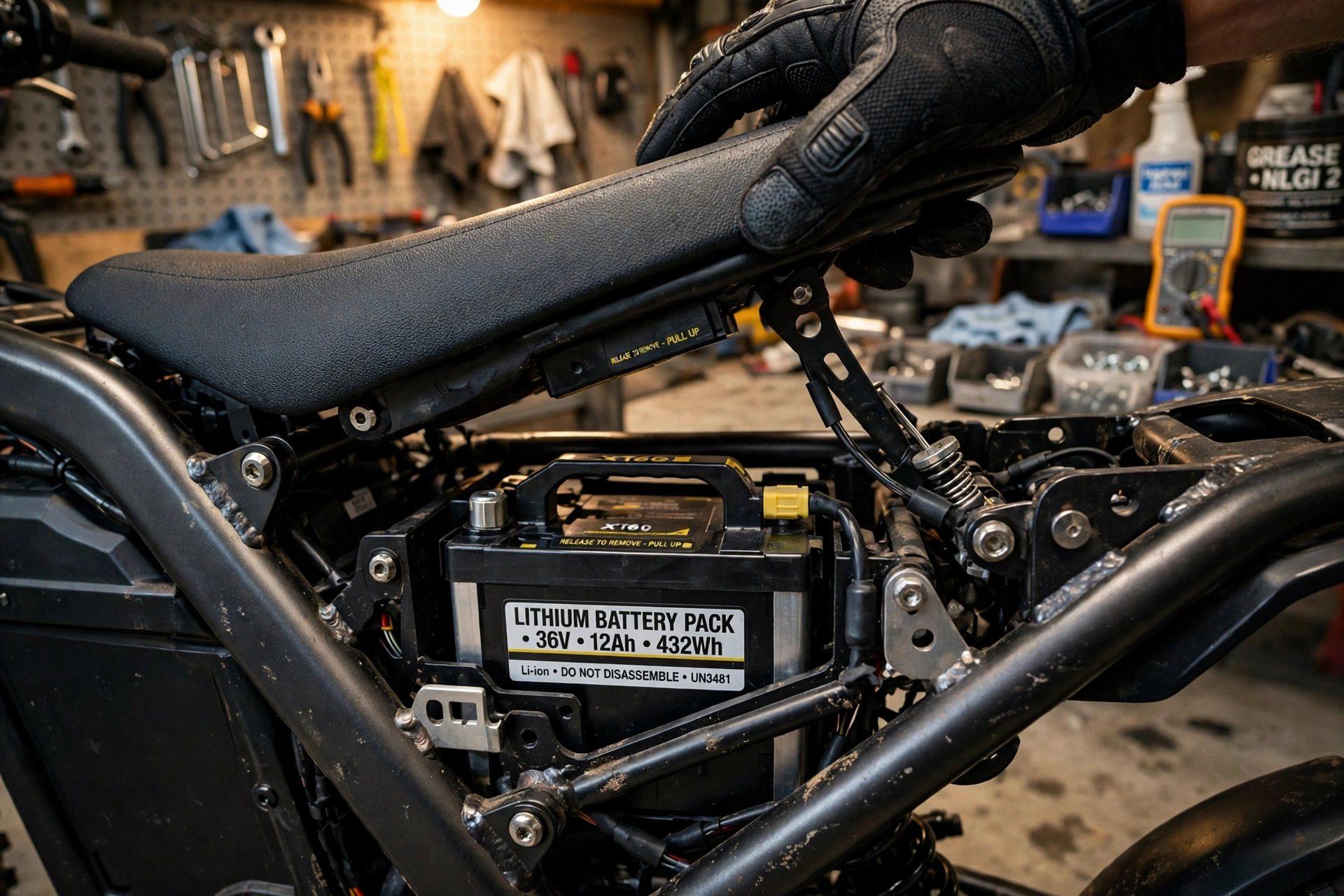
Table of Contents
What the RTR Lite Actually Is
First, a clarification that saves a lot of confusion: the RTR Lite is not a street e-bike, and it isn’t related to any big motorcycle brand. It’s made by Electro & Company (usually styled Electro & Co or E&C), a California company that hand-builds electric pit bikes and trail machines. “RTR” stands for “Ready to Rip,” which is both the model family name and an accurate description of the intent.
The RTR Lite sits at the bottom of a three-trim lineup. Electro & Co and its dealers position the 2026 range roughly like this:
- RTR Lite — 5 kW / 60V, 45+ mph, ~$2,199. The entry point.
- RTR Sport — 8 kW / 72V with the new Revolver IPM motor, 55+ mph, ~$2,999.
- RTR XL — 16 kW / 72V with a 72V 35Ah Samsung pack, 65+ mph, ~$3,799.
What makes the Lite interesting is what it shares with its bigger siblings: the same frame, the same geometry, and the same hot-swappable battery system. Electro & Co explicitly markets it as an upgrade-ready platform — the stock 60V pack can later be swapped up to a 72V 45Ah unit, and the frame ships with pre-drilled TruMoto controller mounts. You buy a 5 kW bike today; the chassis is ready for more power when you are.
RTR Lite Specs That Matter
Here’s the full spec sheet, using figures published by Electro & Co and its authorized dealers for the current model:
- Motor: 5,000W (5 kW) IPM brushless — roughly 6.7 horsepower equivalent
- Battery: 60V 20Ah lithium (1.2 kWh), swappable in seconds via quick-release seat; expandable to 72V 45Ah
- Top speed: 45+ mph
- Range: ~20 miles on the stock pack (some dealers quote 20–40 miles depending on riding style)
- 0–30 mph: ~1.8 seconds (dealer-published figure)
- Weight: 120–130 lbs (figure varies by dealer listing; plan on ~125)
- Seat height: 30 inches
- Wheelbase: 44.5 inches
- Wheels/tires: 14-inch front / 12-inch rear, MX knobby tires (60/100-14 front, 80/100-12 rear)
- Brakes: 4-piston hydraulic disc, 203mm rotors front and rear
- Rider weight capacity: ~250 lbs
- Ride modes: 3 selectable
- Display: bar-mounted LCD; forged aluminum triple clamps; tunable 48mm front forks
The standout spec for the money is the brake setup — four-piston hydraulic discs with 203mm rotors on both ends is genuinely proper hardware for a $2,199 pit bike, and a clear step above the bicycle-grade components that drag down cheaper electric pit bikes. The weak link on paper is the battery: 1.2 kWh is small, which is why range is the number everyone argues about.
Battery and Range: The Honest Numbers
Electro & Co quotes roughly 20 miles of range on the stock 60V 20Ah pack, and that’s the number I’d plan around. Some dealers advertise 20–40 miles, but the high end of that assumes gentle cruising, a lighter rider, and flat ground — not how anyone actually rides a dirt bike. Wide-open trail riding will push you toward the lower end; relaxed puttering on private land can stretch it further.
The physics are straightforward. The pack holds 1.2 kWh (60V × 20Ah). At a rough real-world consumption of 55–65 Wh per mile on dirt — typical for a bike this size ridden briskly — you get 18–22 miles. That’s the honest band. The good news: the pack swaps in seconds thanks to the quick-release seat design, so a second battery effectively doubles your ride time if you buy one, and the upgrade path to 72V 45Ah (3.24 kWh) roughly triples the energy on board.
A quick charging-cost reality check, since it’s almost comically cheap: a full charge of the 1.2 kWh pack at the US average of ~$0.16/kWh costs about $0.19 — under twenty cents. Over 20 miles that’s roughly a penny per mile in electricity. (If you want the full method for working this out on any electric bike, our guide on how much it costs to charge an electric bike walks through the math.) Charging happens on a standard wall outlet; expect a few hours from empty on the stock charger.
Price and What $2,199 Gets You
The headline price is about $2,199 through most dealers, though you’ll see $1,799 promotional pricing at some shops (watch for added doc fees — one dealer listing pairs $1,799 with a $499 doc fee, landing at $2,298 all-in). Shipping and assembly policies vary by dealer; some include in-house assembly and a 1-year factory warranty.
Context matters. The obvious comparison is the Sur-Ron Light Bee X, the benchmark electric pit bike, which lists around $3,499 — roughly 60% more expensive. The RTR Lite is also lighter than most full-size e-motos at ~125 lbs, and the 30-inch seat height puts it within reach of younger and shorter riders that a full-size dirt bike would intimidate. You’re trading outright power for price and approachability: 5 kW versus the Light Bee X’s class, and a smaller stock battery. Whether that’s a good trade depends entirely on who the bike is for.
The Big Catch: It’s Not Street Legal
This is the part some listings bury. The RTR Lite ships as a pure off-road machine: no headlight, no taillight, no mirrors, no license plate, no road registration. It’s built for private land, trails, and tracks — not public roads. You cannot legally commute on it, and depending on your state and county, even multi-use paths may be off-limits.
For perspective on how cheap it is to run when you’re riding it where you’re allowed, our breakdown of electric vehicle cost per mile puts the penny-per-mile figure in context against cars and other EVs. Just don’t let the low running cost tempt you onto roads the bike was never designed for — a traffic stop on an unregistered 45-mph pit bike is an expensive lesson.
Who Should Buy the RTR Lite (and Who Shouldn’t)
Buy it if: you’re a teen or smaller adult moving up from a 110cc gas pit bike and want real torque without the noise, fuel, and maintenance; you have access to private land or trails; you want a platform to upgrade over time rather than a disposable toy; or you specifically want a lightweight (~125 lb) e-moto that’s easy to load into a truck bed.
Skip it if: you need to ride on public roads (this bike legally can’t); you’re a heavier or aggressive rider who will outgrow 5 kW in a month — look at the RTR Sport or a Sur-Ron/Talaria-class bike instead; or your main use is long trail rides far from a charger, since 20 miles of stock range limits your loop.
One group worth calling out: parents shopping for younger riders. The combination of a 30-inch seat height, three selectable ride modes (so power can be dialed down while skills develop), and silent operation makes the Lite one of the more sensible first “real” e-motos — provided the riding happens somewhere legal. Our guide on EVs for students and young drivers covers the broader picture of getting younger riders into electric vehicles safely.
RTR Lite vs. the Competition
The compact electric pit bike segment has real options in 2026, and the Lite doesn’t win every comparison:
- Sur-Ron Light Bee X (~$3,499): the category benchmark — more power, bigger aftermarket, and a huge owner community. But it’s ~60% more money and heavier. If your budget stretches, it’s the safer long-term pick.
- Talaria Sting series: similar price territory to Sur-Ron, similar story — more bike, more money.
- Cheaper 72V pit bikes (MotoTec-class, ~$1,500–$2,000): often match the Lite on headline voltage but lag on brakes, frame quality, and the upgrade ecosystem. The Lite’s chassis and component quality are where the extra few hundred dollars go.
- RTR Sport ($2,999): the in-family upgrade — 8 kW, 72V 25Ah pack, 55+ mph, and the 2026 model fixed the old bicycle-style chain with a proper 420 moto chain. If the Lite’s 20-mile range feels limiting, the extra $800 buys a lot of bike.
My honest read: the Lite is the value play of the RTR lineup and the best sub-$2,500 entry into a serious electric pit bike platform — but only if you accept the range limit or plan to expand the battery later.
Ownership Costs: A Worked Example
Beyond the purchase price, electric pit bikes are famously cheap to run. Let’s price one year of typical recreational use — say 500 miles of trail riding:
- Electricity: 500 miles ÷ 20 miles/charge = 25 full charges × $0.19 = $4.75. Yes, under five dollars for the year.
- Tires: a set of MX tires runs ~$80–$120; recreational riders might replace rears annually. Budget $100.
- Brake pads and consumables: pads, chain lube, the odd bolt — call it $50.
- Battery: the big one. The stock pack is a wear item with a finite cycle life; a replacement 60V pack runs several hundred dollars. Spread over 3–4 years of recreational use, budget ~$150/year amortized.
Year-one running total: roughly $300 on top of the purchase price. Compare that with a gas 110cc pit bike: at 40 mpg and $3.50/gallon, 500 miles costs ~$44 in fuel alone, plus oil changes, air filters, and spark plugs — and that’s before the inevitable carburetor rebuild. The battery article on our site (EV batteries explained) covers why packs degrade and how to make them last, which applies to bikes as much as cars.
Final Verdict
The RTR Lite is an easy bike to recommend with one big asterisk. At $2,199, it delivers genuine pit-bike performance — 45+ mph, real hydraulic brakes, a California-built chassis with a real upgrade path — for less than most quality e-bikes cost. The 20-mile stock range and off-road-only status are the two limits you have to accept; if either is a dealbreaker, spend the extra $800 on the RTR Sport or step up to the Sur-Ron class.
For its intended buyer — a teen or budget-conscious adult with trail access who wants to start electric and upgrade over time — the Lite is arguably the smartest buy in the segment in 2026. Just buy it from an authorized dealer, confirm what’s included in the price (watch doc fees and assembly charges), and ride it where it’s legal.
Frequently Asked Questions
Is the RTR Lite street legal?
No. It ships without lights, mirrors, or registration and is sold for off-road use only — private land, trails, and tracks.
How fast does the RTR Lite go?
45+ mph on the stock 60V 20Ah battery, with a dealer-quoted 0–30 mph time of about 1.8 seconds.
How far can the RTR Lite go on a charge?
About 20 miles of real trail riding on the stock pack. Gentle riding stretches it; aggressive riding shrinks it. A 72V 45Ah upgrade pack roughly triples the battery energy.
How much does the RTR Lite cost?
Around $2,199 from most dealers in 2026, with some promotional listings at $1,799 before fees. Budget for shipping or assembly charges depending on the dealer.
Can kids ride the RTR Lite?
It’s aimed at teens and adults. The 30-inch seat height suits smaller riders, and the three ride modes let you limit power for beginners — but it’s a 45-mph machine, so supervision and proper safety gear are non-negotiable.
Does the RTR Lite battery come out for charging?
Yes. The 60V 20Ah pack is hot-swappable and releases in seconds via the quick-release seat, so you can charge it indoors or carry a spare.
The US Department of Energy’s electric vehicle basics guide is a solid starting point if you want the fundamentals of how battery-electric drivetrains work before buying any EV, two wheels or four.