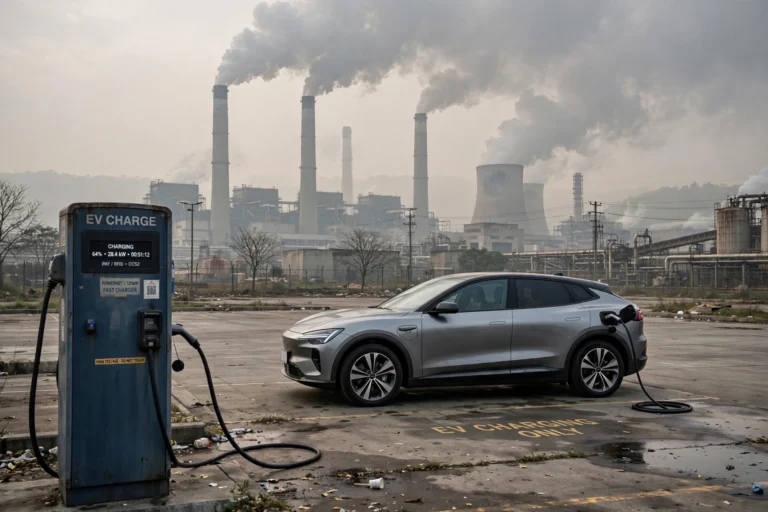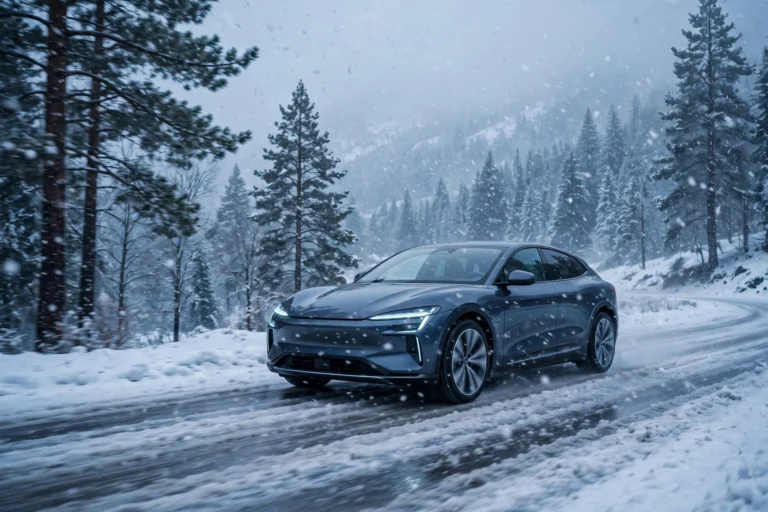

Every EV battery has an expiry date written into its chemistry. Not a sudden death — a slow fade. A pack that once held 100% of its charge keeps 85%, then 78%, and at some point the car it powers stops being useful to anyone. So what actually happens to expired EV batteries when they come out of the car? The answer is more interesting — and more hopeful — than the landfill story you may have heard.
Table of Contents
First, what “expired” really means
An EV battery is usually considered spent for car use when it drops below roughly 70–80% of its original capacity. A Nissan Leaf that once did 150 miles might manage 105. Annoying? Yes. Dead? Not even close. That pack still stores a huge amount of energy — it has simply fallen below what drivers will tolerate.
This matters because most expired EV batteries aren’t waste. They’re assets wearing the wrong label. The industry now sorts them into three paths: reuse, repurpose, or recycle.
Path one: a second career in a shed, a farm, or a football stadium
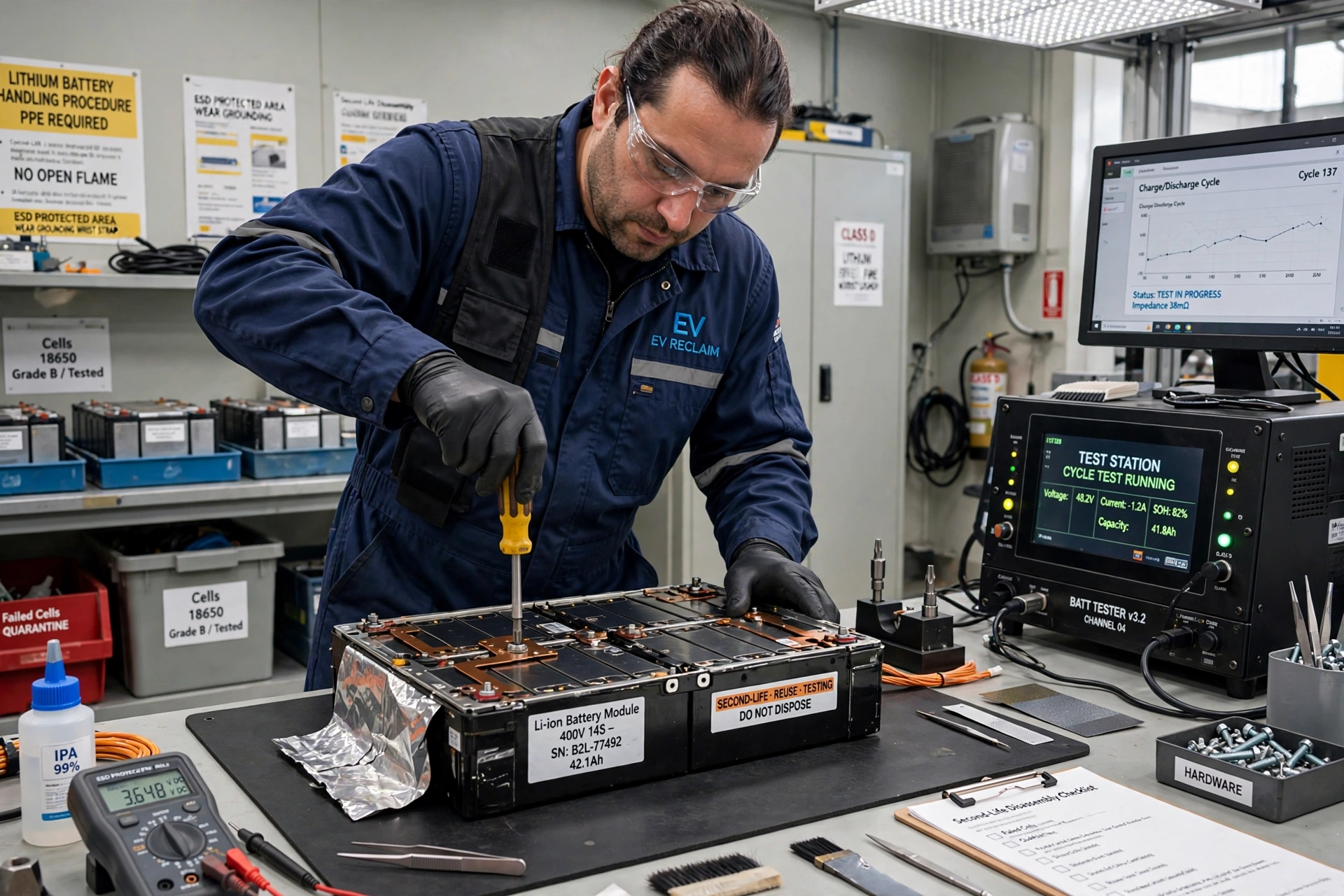
The most elegant option is to not take the pack apart at all. Pulled from a car, tested, and re-certified, old EV modules make excellent stationary storage. They soak up solar power during the day and release it at night. They smooth out demand spikes for factories. Amsterdam’s Johan Cruijff Arena famously runs part of its backup power on second-life Leaf batteries.
Automakers love this because it stretches the value of something they already built. Owners should love it too — a healthy second-life market supports the resale value of your car, which connects neatly to the numbers we run in our guide to EV battery replacement costs. A pack that is worth money at end of life rarely ends up dumped.
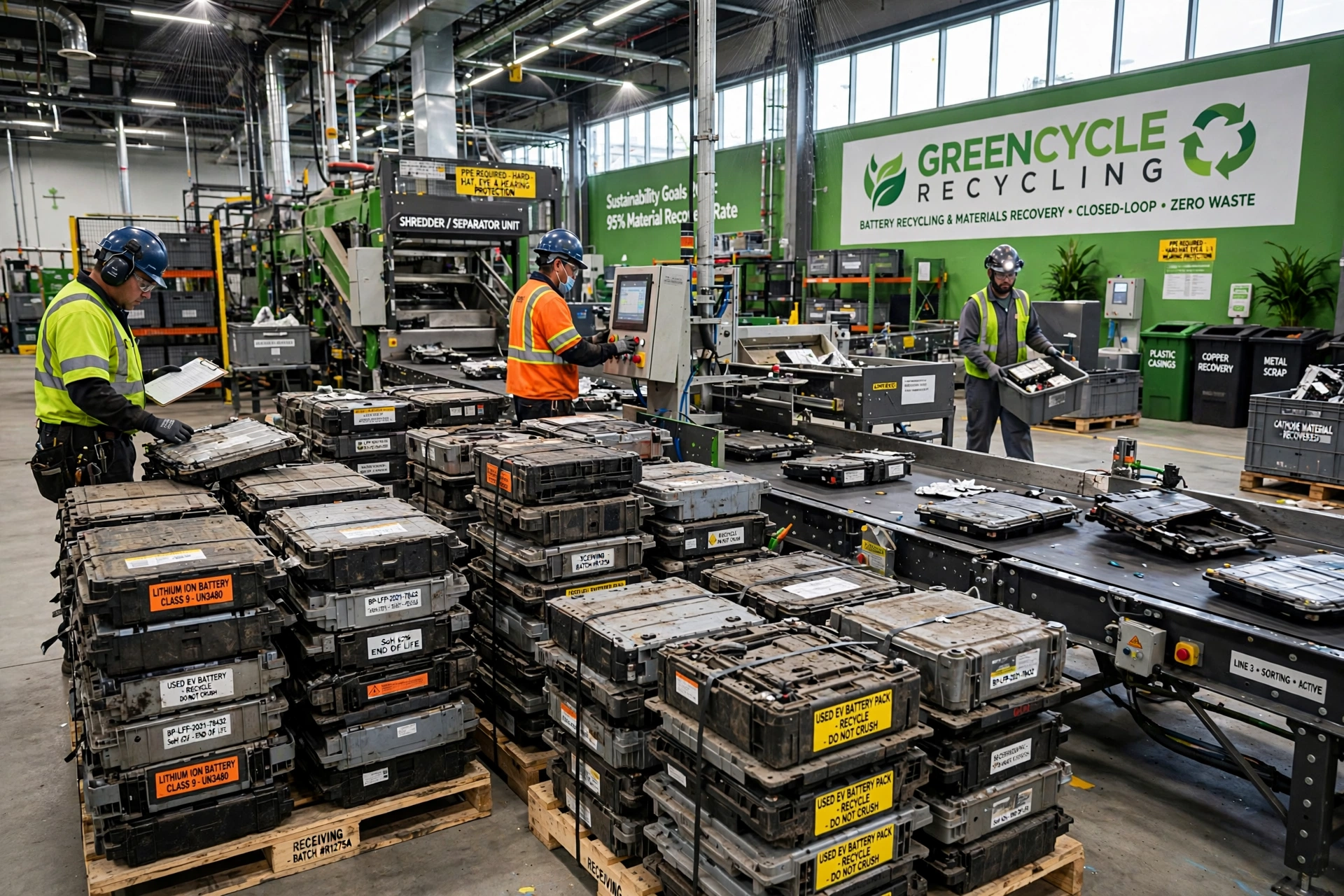
Path two: recycling — shredding, smelting, and getting the good stuff back
When a battery truly is finished, recyclers take over. There are two main approaches, and the difference between them is enormous.
Pyrometallurgy is the old-school method: burn the pack at extreme temperatures and recover a metal alloy. It’s robust and simple, but it loses the lithium and graphite entirely and uses a lot of energy doing it.
Hydrometallurgy is where the industry is heading. Packs are shredded into a powder called “black mass,” then leached with chemicals to pull out lithium, nickel, cobalt, and manganese individually. Done well, it recovers over 90% of the key metals — material that goes straight back into new cells. Companies like Redwood Materials in the US have built their whole business on this loop, and the US Department of Energy is funding the research to make it cheaper.
The awkward middle: storage, stockpiles, and the wild west
Here’s the part nobody puts in the press release. Between a battery leaving a car and entering one of those clean pathways, there’s a messy middle. Packs sit in warehouses. Small operators buy them cheap with no clear plan. In some countries, a written-off Tesla Model 3 pack might pass through three owners before anyone tests it.
Damaged batteries are the sharp end of this problem. A crashed EV’s pack can be a genuine fire risk if it’s stored badly, and regulation has not kept pace everywhere. This is one of the honest cons of electric cars for the environment that the industry still has to fully solve — the systems exist, but the chain of custody is patchy.
How long until your battery gets here, anyway?
Slower than the headlines suggest. Modern packs are lasting far longer than early predictions. Taxi fleets have pushed Tesla and Hyundai packs past 200,000 miles with usable capacity remaining, and most manufacturers warranty the battery for 8 years or 100,000 miles as a floor, not a ceiling.
That longevity is quietly great news for the waste problem: the dreaded tidal wave of dead batteries keeps receding into the future, giving recycling capacity time to scale. If you’re curious how that slow fade shows up day to day, our guide to electric car winter range loss covers the other side of battery ageing — how capacity and conditions interact in the real world.
What this means if you’re buying an EV today
- Your battery will probably outlive your ownership. Most first owners will sell the car long before the pack is a waste question.
- Ask about the take-back scheme. Major brands now publish battery recycling partnerships. It’s a fair question to ask a dealer, and the answer tells you a lot about the company.
- A degraded pack is not worthless. If you ever do face a battery swap, the old unit has trade-in value precisely because recyclers want it.
- Second-life storage is a bonus, not a loophole. It delays recycling by a decade or more — but the metals eventually come back, which is the point.
The honest summary: expired EV batteries are a real logistics challenge, and the infrastructure is still being built. But they are not the environmental time bomb critics describe. They’re closer to aluminium cans in the 1970s — a valuable material waiting for the collection system to grow up. It is growing up, fast.
And if you’re weighing the bigger question of whether EVs come out ahead overall, our main analysis — Electric Cars Are Really Better for the Environment — puts the whole lifecycle side by side.