
Table of Contents
How Bad Is Electric Car Winter Range Loss, Really?
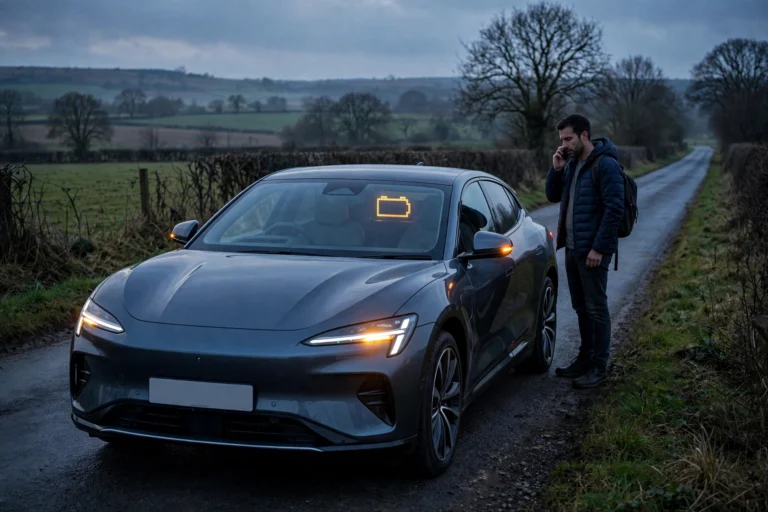
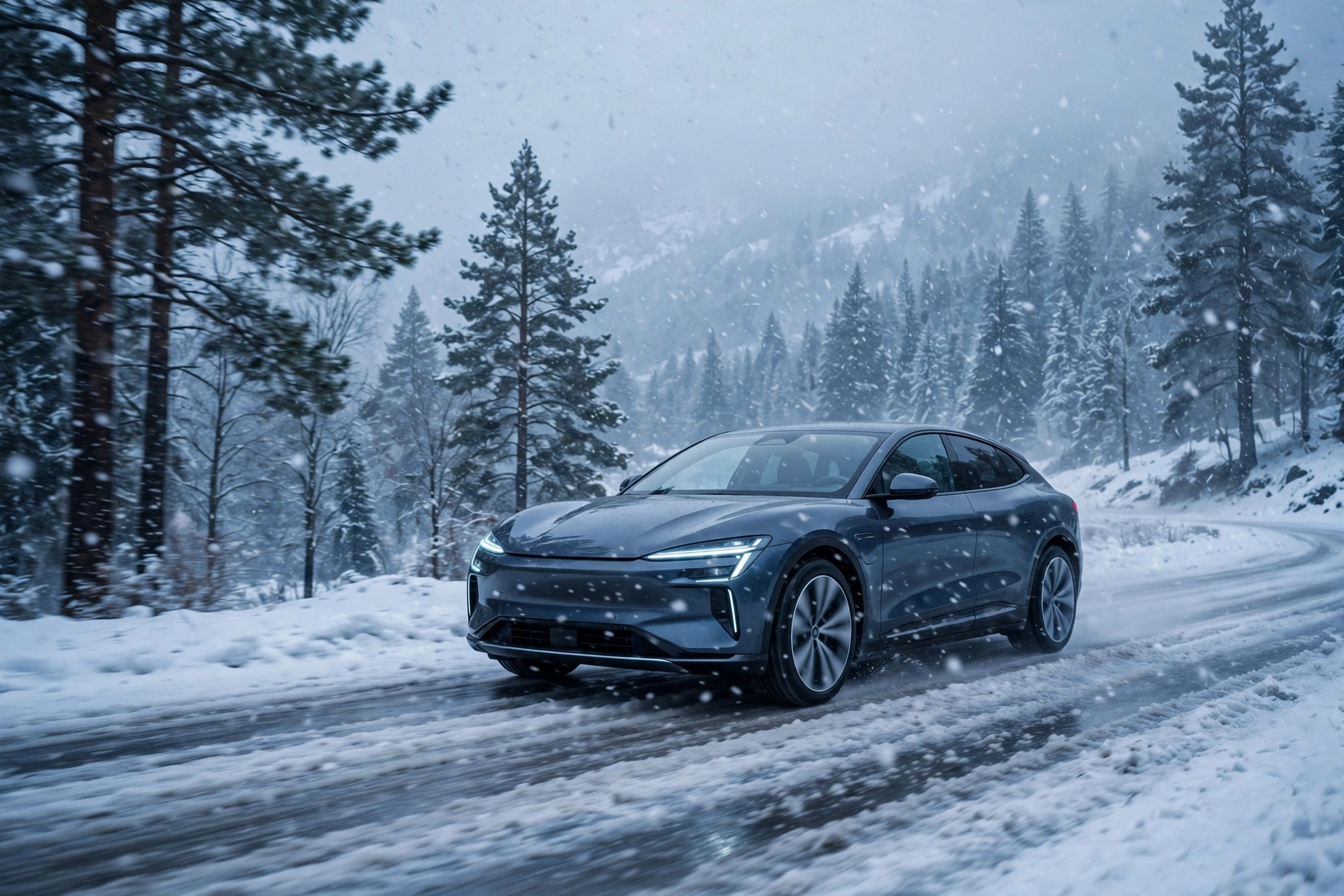
Let’s start with the number: electric car winter range loss typically runs 20–40% in freezing weather. A 300-mile EV becomes a 180–240-mile EV when the thermometer drops to 20°F. At 0°F, you can lose 40% or more.
That’s the bad news, and I won’t soften it — winter is the single biggest range variable in EV ownership, bigger than speed, bigger than hills, bigger than a heavy foot. But here’s the part that surprises new owners: almost all of it is explainable, predictable, and partly preventable. Let’s break down exactly where your miles go.
Where Your Winter Miles Actually Go
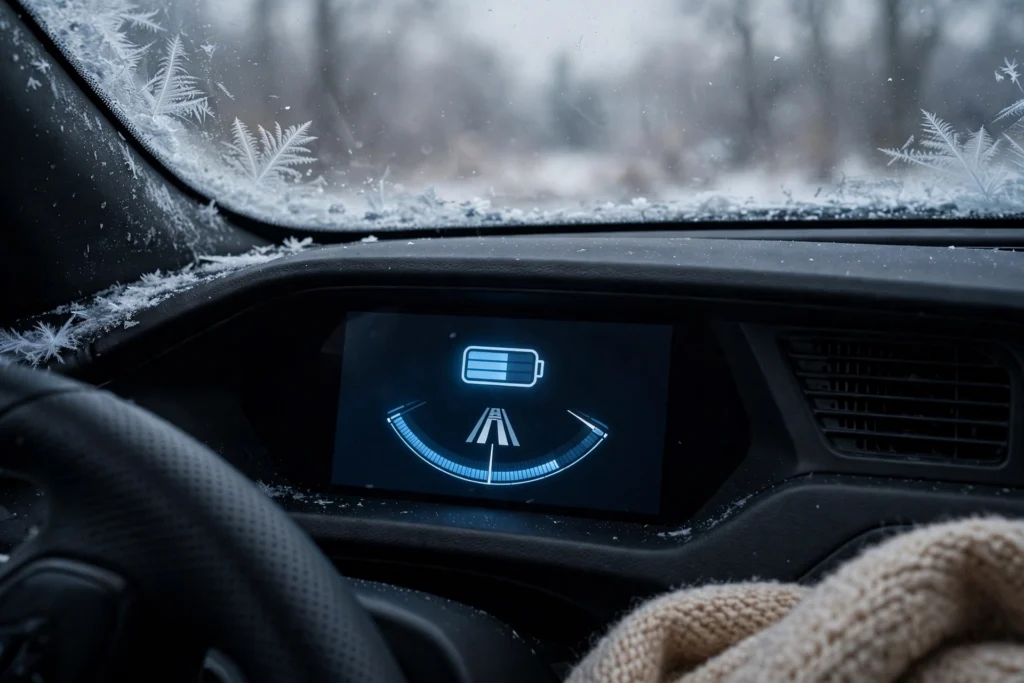
Three thieves steal your range, and they stack:
1. Cold battery chemistry (~50% of the loss). Lithium-ion batteries are chemical devices. Cold slows the reactions, so the pack holds less usable energy and delivers it sluggishly. Your battery isn’t damaged — it’s just groggy. Range returns as it warms.
2. Cabin heating (~30% of the loss). A gas car heats you with waste engine heat — free. An EV generates heat from the battery at 3–7 kW, like driving with a space heater running. Older EVs with resistive heaters suffer most; heat-pump models (most 2022+) lose roughly half as much.
3. Everything else (~20%). Denser cold air means more drag. Winter tires roll harder. Short trips never let the battery reach its happy temperature. Tire pressure drops ~1 PSI per 10°F. None is huge alone; together they matter.
The Math for Your Car
Based on published AAA testing and fleet data, here’s roughly what electric car winter range loss looks like:
- 50°F: ~10% loss — barely noticeable
- 32°F (freezing): ~20% loss — plan for it
- 20°F: ~30% loss — charging stops get closer together
- 0°F: ~40% loss — serious trip planning required
Add cabin heat blasting and 75 mph highway driving on top, and a 300-mile EV can drop under 170 miles. But the same car at 40°F with seat heaters and city driving might only lose 15%. Your habits move the number as much as the weather does.
7 Proven Ways to Get Your Miles Back
1. Precondition while plugged in. The single biggest win. Schedule your car to warm its battery and cabin using wall power before you unplug — you leave with a warm car and a full battery, saving 10–15% range. Every EV has this; too few owners use it.
2. Heat the seats, not the cabin. Seat heaters and a heated steering wheel use a fraction of the energy of heating all the cabin air. In mild cold, this alone can halve your heating penalty.
3. Slow down on highways. Drag rises with the square of speed. Dropping from 75 to 65 mph saves more range than every other trick combined on long trips.
4. Park in a garage. Even unheated, a garage keeps the battery 10–20°F warmer than outside. The car starts the day closer to efficient operating temperature.
5. Stay plugged in when parked. In extreme cold, the battery thermal management sips wall power to keep the pack healthy instead of draining itself. If you have a home charger, use it as a parking spot, not just a fueling stop.
6. Check tire pressure monthly. Cold deflates tires, and underinflated winter tires compound the rolling-resistance penalty. Five minutes with a gauge, once a month.
7. Plan shorter charging legs. In winter, plan for 60–70% of your summer distance between chargers. Your car’s navigation usually adjusts automatically — trust it over your summer instincts.
Does Winter Damage the Battery?
No — and this is the most reassuring fact in the whole topic. Cold temporarily reduces usable capacity; it does not degrade the battery. Heat is the real long-term enemy of battery health. When spring comes, your full range comes back. Nobody’s battery has ever been “ruined by winter.”
What cold can do is make DC fast charging slower — a freezing battery can’t accept high charge rates until it warms up. That’s why preconditioning before arriving at a fast charger (most EVs do this automatically when you navigate to one) matters so much on winter road trips.
Buying Advice: What to Look For
If you live somewhere with real winters and you’re shopping for an EV, three features that minimize electric car winter range loss matter more than the brochure suggests:
A heat pump. Non-negotiable for cold climates. It roughly halves the heating energy penalty. Check the spec sheet — most 2022+ models have one, but some base trims don’t.
More range than you think you need. Buy 20–30% more EPA range than your summer needs. The “extra” isn’t wasted — it’s your winter buffer, and it means less battery stress year-round.
Battery preconditioning. Confirm the car preconditions for fast chargers (via navigation) and on a schedule while plugged in. This is standard on Tesla, Hyundai/Kia, and most new EVs — but verify.
Frequently Asked Questions
Why does my EV lose range overnight in winter?
The battery cooled down (less usable energy) and the thermal management may have used energy keeping the pack from getting too cold. Parking in a garage or staying plugged in minimizes it.
Should I charge to 100% in winter?
For road trips, yes — take the buffer. For daily driving, keep your normal limit (usually 80%). Winter doesn’t change the daily charging guidance, just the trip planning.
Do electric cars work in really cold places like Canada and Norway?
Norway is the world’s biggest EV market per capita, and it has real winters — proof that it works fine with the right habits. Preconditioning, garages, and heat pumps are simply part of life there, the way block heaters were for gas cars.
Is electric car winter range loss worse on older EVs?
Generally yes — older models often lack heat pumps and have less sophisticated thermal management. A 2018 EV might lose 40% where a 2024 model loses 25% in the same conditions. Another reason the used-EV buyer should check the spec sheet, not just the odometer.
The Bottom Line
Electric car winter range loss takes 20–40% of your range. It’s physics, not a defect — and it’s entirely manageable. Precondition on wall power, heat yourself instead of the cabin air, slow down a touch, and buy more range than your summer math says. Do that, and winter EV driving becomes as unremarkable as winter driving ever is.
Want your exact number? Try our EV cold weather range calculator — enter your temperature and driving conditions for a personalized estimate.