
How many Electric Motors does the Solterra Have? (Honest Answers)
Last updated: October 23, 2026
How many electric motors does the Solterra have? It is a simple question with a slightly unusual answer, because Subaru refuses to sell you the cheaper version. Every Solterra ever sold in the United States — every trim, every year from 2023 to 2026 — has exactly two electric motors: one driving the front wheels and one driving the rear wheels. There is no single-motor Solterra, and there never has been.
That makes the Solterra an oddity in its class. Most rivals let you choose between one motor and rear-wheel drive, or two motors and all-wheel drive. Subaru, being Subaru, made all-wheel drive standard and skipped the choice entirely. Below we break down what those two motors do, how their power changed for 2026, and — since the question behind the question is usually “is two better than one?” — how the Solterra’s setup compares with the wider market.
Short answer: How many electric motors does the Solterra have? Two. One per axle, permanent all-wheel drive, 215 horsepower in the 2023–2025 cars, and 233 or 338 horsepower in the updated 2026 model.
Two Motors, One on Each Axle: How the System Works
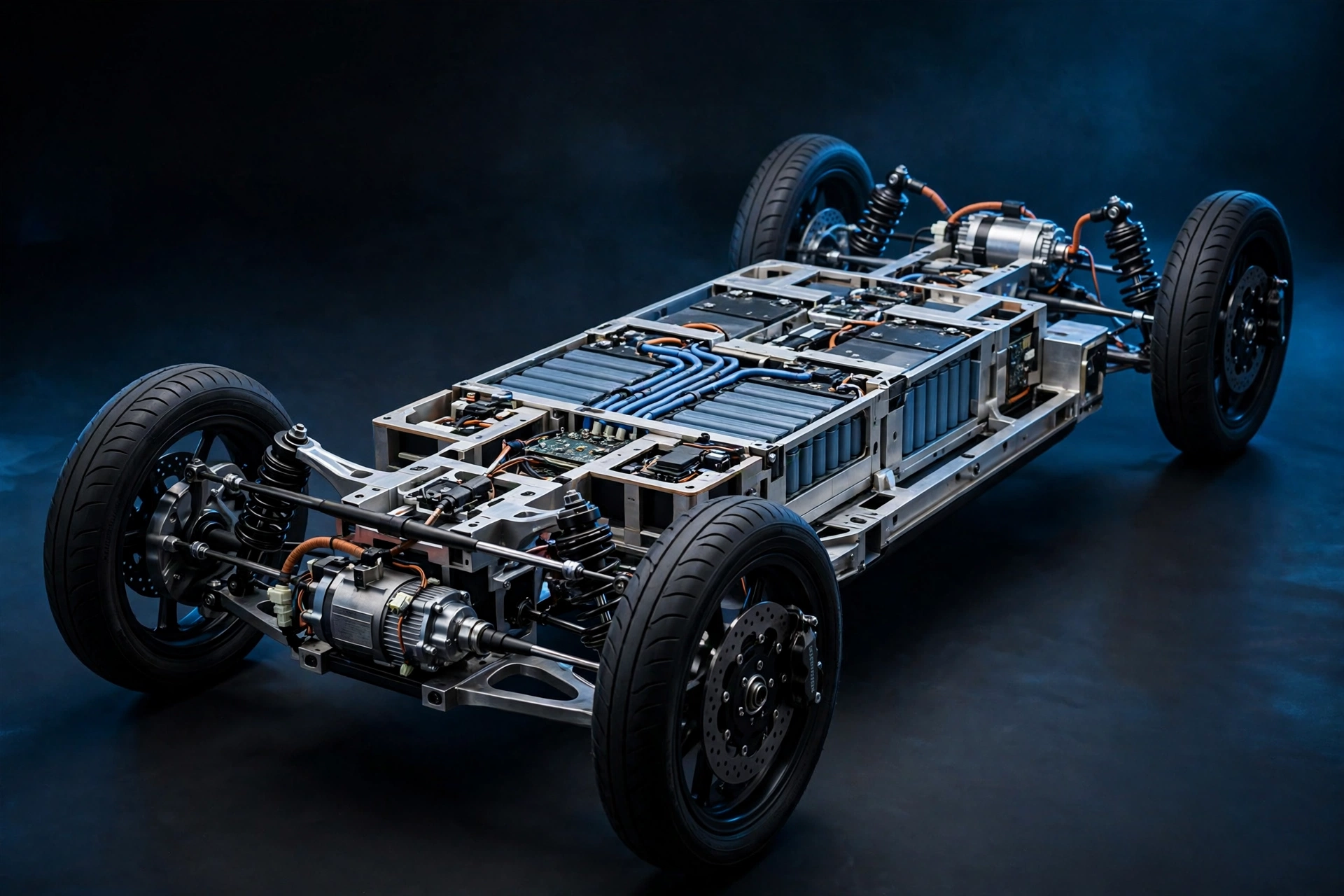
Each motor sits on its own axle and drives its own pair of wheels. There is no driveshaft running down the middle of the car and no mechanical link between the axles at all — software decides, many times per second, how much power each motor should make. On a dry highway the work is shared for efficiency; the moment a wheel starts to slip, the system shuffles torque to the axle with grip.
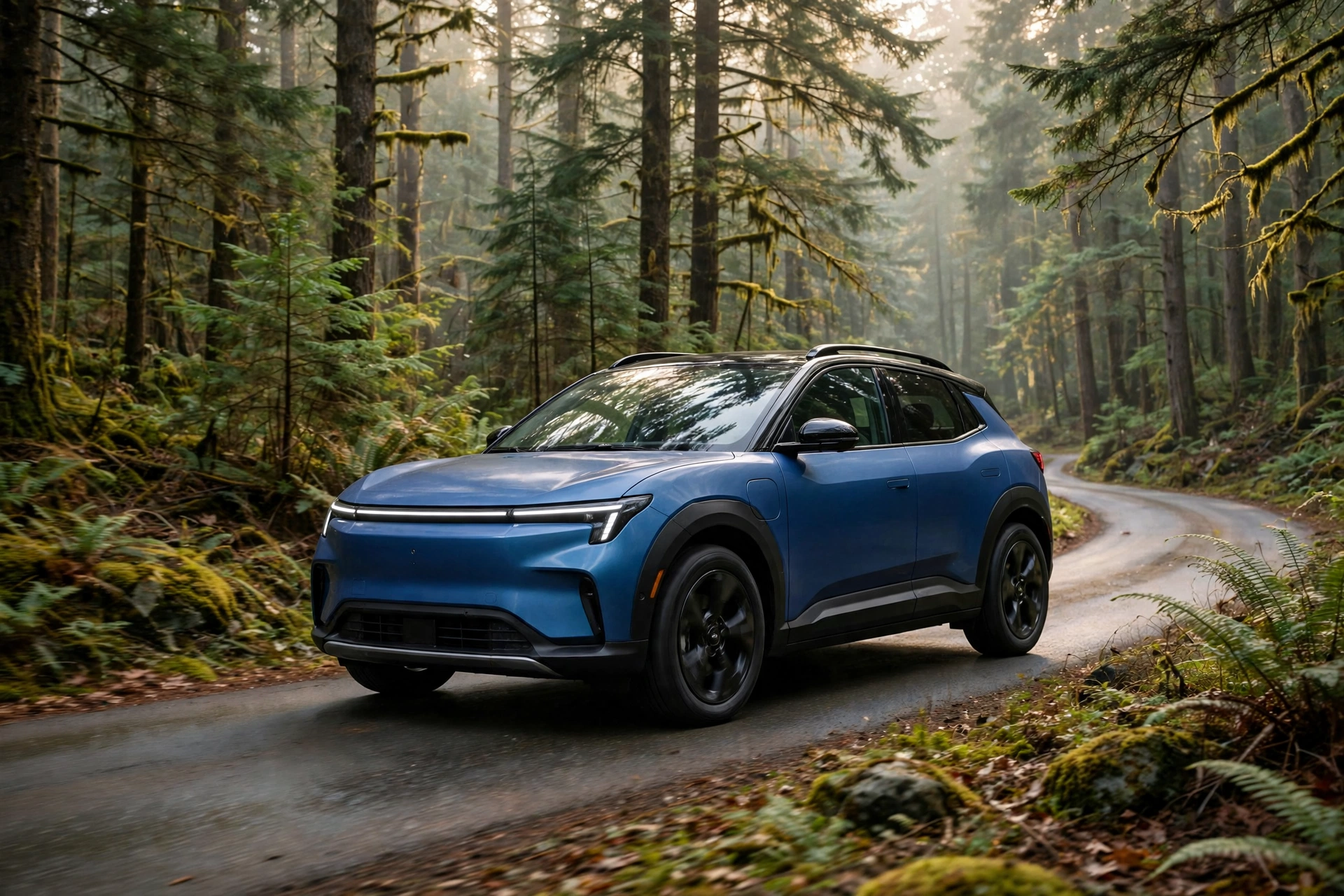
This is the electric version of Subaru’s Symmetrical All-Wheel Drive idea, and it comes with the brand’s X-MODE terrain settings (Snow/Dirt and Deep Snow/Mud), hill-descent control and a genuinely useful 8.3 inches of ground clearance. Most electric crossovers are road cars with a marketing department’s idea of adventure. The Solterra’s hardware is more honest than that.
The motors themselves are compact permanent-magnet units. In the 2023–2025 cars each one makes 80 kW, and together they produce 215 horsepower and 249 lb-ft of torque. For 2026 Subaru fitted smaller, lighter and more efficient motors — still two of them — and wound the output up considerably, as the next section shows.
What Each Motor Actually Does
It helps to stop picturing one engine split in two. Each Solterra motor is a complete drive unit — motor, single-speed reduction gearbox and inverter in one housing — and either could move the car on its own. Together they let Subaru do three things a single motor cannot.
First, traction. With a motor on each axle, the car can send power to whichever end has grip without waiting for brakes or clutches to react. On snow or gravel the difference is immediate, and it is why the Solterra feels so settled where a front-wheel-drive EV is still scrabbling for purchase.
Second, balance. Two smaller motors spread the weight more evenly than one large one, and the software can bias power rearward on a dry road for a more natural feel, then even the split out the moment the weather turns or a wheel starts to spin.
Third, braking. Both motors work in reverse as generators when you lift off the accelerator, recovering energy from all four wheels instead of two. Around town that is a meaningful share of the car’s range, and it is a large part of why asking how many electric motors does the Solterra have matters to your running costs, not just to performance.
Every 2026 Trim: Same Motor Count, Different Muscle
The question “how many electric motors does the Solterra have” has the same answer at every price point, but the strength of those motors is now the main reason to climb the trim ladder. All 2026 prices below exclude the $1,450 destination charge; full pricing is published on Subaru’s official site.
| 2026 trim | Price | Motors | Power | EPA range |
|---|---|---|---|---|
| Premium | $38,495 | 2 (AWD) | 233 hp | 288 miles |
| Limited | $41,395 | 2 (AWD) | 233 hp | 278 miles |
| Limited XT | $42,895 | 2 (AWD, uprated) | 338 hp | 278 miles |
| Touring XT | $45,555 | 2 (AWD, uprated) | 338 hp | 278 miles |
Our verdicts, argued from the numbers:
Solterra Premium — Our score: 8.6/10 (Range 9 · Charging 6 · Value 9). The cheapest trim gets the longest range and the same two-motor AWD as everything else. This is the one most people should buy.
Solterra Limited — Our score: 8.2/10 (Range 8 · Charging 6 · Value 8). Bigger wheels cost you 10 miles of range, but the 360-degree camera, heated rear seats and power tailgate are real-life useful.
Solterra Limited XT — Our score: 8.8/10 (Range 8 · Charging 6 · Value 9). The bargain of the range. Just $1,500 more than the Limited buys uprated motors and 105 extra horsepower — about $14 per horsepower, the cheapest power upgrade on sale in any EV we cover.
Solterra Touring XT — Our score: 8.0/10 (Range 8 · Charging 6 · Value 7). Fast and plush, with ventilated seats and a panoramic roof, but at $45,555 it walks into rivals with faster charging.
Once the question of how many electric motors does the Solterra have is settled — two, everywhere — choosing between the trims comes down to two different questions. Do you regularly drive beyond the car’s range in one go? Then the Premium’s extra 10 miles and lower price beat the Limited’s toys. Do you enjoy driving? Then skip a step: the Limited XT’s motor upgrade is the rare option that transforms the car — the same range as the Limited, sports-car pace when you ask for it — for less than the cost of most paint-and-leather packages. The Touring XT is for buyers who want every seat warmer and camera Subaru offers; everyone else is paying for garnish.
What Changed in 2026: Same Answer, Much More Power
If you are cross-shopping used cars, the honest history helps. The 2023–2025 Solterra used two 80 kW motors making a combined 215 horsepower, fed by a 72.8 kWh battery. Range was 227 miles on the Premium trim and 222 miles on the heavier Limited and Touring, and DC fast charging peaked at a leisurely 100 kW — about 35 minutes from 10 to 80 percent. Reviewers liked the car and criticised exactly those two numbers.
The 2026 update reads like Subaru kept a list. The battery grew to 74.7 kWh, range jumped roughly 27 percent to a maximum of 288 miles, and charging improved to 150 kW with a 10-to-80-percent time of about 28 minutes. A native NACS port replaced the old CCS socket, so the car plugs straight into Tesla Superchargers, and the home-charging rate rose to 11 kW. Power climbed to 233 horsepower in the standard cars, while the new XT trims pair a larger front motor with an uprated rear unit for 338 horsepower and a 0–60 mph time under five seconds.
Notice what did not change: the motor count. Subaru could have chased a lower sticker price with a single-motor model, the way its Toyota twin does. It chose not to — all-wheel drive is the brand’s entire identity, and two motors is simply what that costs.
The used market has noticed all of this. Early Solterras launched from $44,995 in 2023, before Subaru cut new prices hard for 2025 — and used values followed them down. Clean 2023–2024 cars now change hands in the mid-$20,000s, which buys you the same two-motor AWD hardware, the same 8.3 inches of clearance and a battery Subaru warrants for 8 years or 100,000 miles. The compromises are the ones listed above: 222–227 miles of range and 100 kW charging. If your life fits inside those numbers, a used Solterra is one of the quiet bargains of the electric market.
How Many Electric Motors Does the Typical EV Have?
To put the Solterra in context, here is how many electric motors the wider market runs — and remember, asking how many electric motors does the average EV have is really asking how the industry splits between efficiency and traction.
| Model | Motor options | Layout |
|---|---|---|
| Subaru Solterra | 2 only | Dual-motor AWD, standard |
| Toyota bZ | 1 or 2 | FWD single-motor, or AWD dual-motor |
| Tesla Model Y | 1 or 2 | RWD single-motor, or AWD dual-motor |
| Hyundai Ioniq 5 | 1 or 2 | RWD single-motor, or AWD dual-motor |
| Volkswagen ID.4 | 1 or 2 | RWD single-motor, or AWD dual-motor |
| Ford Mustang Mach-E | 1 or 2 | RWD single-motor, or AWD dual-motor |
| Rivian R1S / R1T | 2, 3 or 4 | Dual, tri or quad-motor AWD |
| Tesla Model S | 2 or 3 | Dual-motor, or tri-motor Plaid |
| Mercedes-Benz G 580 | 4 | One motor per wheel |
Why would anyone fit three or four motors, then? Control. With a motor at each wheel, a car can speed up or slow down each corner independently — sharpening turns, steadying slides and, in the G 580’s case, rotating the whole vehicle on the spot. It is brilliant engineering in search of a problem most drivers do not have, which is why the industry sweet spot remains exactly where the Solterra sits: two motors, one per axle, no theatrics.
Three things stand out from our own analysis of these figures. First, horsepower per motor tells the Solterra’s upgrade story better than the headline number: the old car made about 107 horsepower per motor, the 2026 standard car makes about 116, and the XT makes 169 per motor — a 57 percent jump per unit, from motors that are physically smaller than before.
Second, the second motor is not free. On this exact platform, the front-wheel-drive Toyota bZ — same battery family, one motor — is EPA-rated up to 252 miles, while the dual-motor Solterra managed 227. That is roughly 25 miles, or about 10 percent of range, spent on all-weather traction (EPA figures for both cars are published at fueleconomy.gov). Whether that trade is worth it depends entirely on your winters.
Third, motor count is a poor proxy for speed or quality. The quad-motor Mercedes G 580 we covered in our Mercedes electric car guide exists to spin in place and climb rocks, not to be efficient, while plenty of single-motor cars are quicker than the base Solterra. Count the motors to understand the drivetrain layout — judge the car on range, charging and price.
Living With Two Motors: Costs, Care and Quirks
Living with the answer to how many electric motors does the Solterra have is easy: day to day, the dual-motor layout is close to invisible — which is the point. There is no extra servicing for the second motor: electric motors have no oil, filters or spark plugs to change, and Subaru’s maintenance schedule for the Solterra is mostly inspections, brake fluid and cabin filters. The battery underneath carries the real long-term value, and our guide to how EV batteries age explains what actually wears it out.
Running costs are easy to work out. Filling the 2026 car’s 74.7 kWh battery at an average US residential rate of about $0.17 per kWh costs roughly $12.70. Using the earlier car’s official 104 MPGe efficiency, 75,000 miles of driving takes about $4,100 of electricity, against roughly $8,000 of petrol for a 30-mpg petrol crossover at $3.20 a gallon — a saving near $3,900 over five years, before the cheaper servicing. Run your own numbers, including your local electricity price, in our total cost of ownership calculator.
Winter is where the two-motor layout earns its keep — and where the battery gives some of it back. It is also the season when how many electric motors does the Solterra have matters most and least at the same time: most for grip, least for range. Traction in snow is genuinely excellent, and X-MODE makes the Solterra one of the most confidence-inspiring EVs we cover on a slippery road. But cold air taxes every electric car; our guide to why electric cars lose range in winter explains the 20–30 percent drop to budget for in freezing weather, and why preheating the cabin while plugged in is the cheapest range you will ever buy. Plan a 2026 Premium as a 200–230-mile car in deep winter, not a 288-mile one, and it will never surprise you.
Two honest quirks before you buy. Subaru does not give the US Solterra a tow rating, so if you need to pull a trailer, look elsewhere. And while the 2026 car’s 150 kW charging is a real improvement, Hyundai, Kia and Tesla rivals still charge faster; on a long road trip the Solterra’s stops will run a few minutes longer than the class best.
Solterra Motor Questions, Answered
How many electric motors does the Solterra have in every trim?
Two — in the Premium, Limited, Limited XT and Touring XT, and in every earlier model year as well. The count never changes; what changes for 2026 is the motors’ output: 233 horsepower in the standard cars and 338 horsepower in the XT models.
Is there a single-motor Solterra?
No. People sometimes ask how many electric motors does the Solterra have in a cheaper front-wheel-drive form — the honest answer is that no such car exists. Subaru sells the Solterra with dual-motor all-wheel drive only. If you want this platform with one motor, it exists as the front-wheel-drive Toyota bZ — you give up all-wheel drive and gain roughly 25 miles of range.
How many electric motors does the Toyota bZ have?
One or two, depending on the version you pick: a single front motor in front-wheel-drive models, or two motors in the all-wheel-drive version. The bZ and the Solterra were developed together on the same platform, which is why their batteries and dimensions are so similar.
Do two motors use twice as much electricity?
No. The two motors share the work, and at a steady cruise the car sips power through whichever combination is most efficient. The real cost of the second motor on this platform is about 10 percent of range compared with the single-motor Toyota — the price of all-weather grip, not double consumption. A worked example makes it concrete: at the car’s official 104 MPGe, a 40-mile commute uses about 13 kWh — roughly $2.20 of home electricity — no matter that two motors turned to produce it. What drains a battery is weight, speed and cold air, not the motor count.
What happens if one Solterra motor fails?
Electric motors are among the most reliable parts of any EV, with a single moving rotor each, and failures are rare. Subaru does not advertise a one-motor limp-home mode, so treat a motor fault as what it is: a service visit. The reassuring part is that the battery and motors are covered by Subaru’s EV warranty for 8 years or 100,000 miles.
The Bottom Line
So, how many electric motors does the Solterra have? Two — always two, on every trim and every year, because Subaru would rather give you standard all-wheel drive than a cheaper entry model. For 2026 those two motors finally got the power, range and charging speed the rest of the car deserved. Buy the Premium for value, or the Limited XT if you enjoy the fact that the sensible Subaru is now the quick one at the lights. And if you came here to settle an argument with a one-line answer — it is two. It has always been two. Subaru would not have it any other way.
Sources
Subaru manufacturer specifications and 2026 US pricing (Premium $38,495; Limited $41,395; Limited XT $42,895; Touring XT $45,555, before $1,450 destination). EPA range and efficiency figures via fueleconomy.gov (2023–2025 models) and Subaru’s published 2026 EPA estimates (288 miles Premium, 278 miles other trims). Prior-year specifications (215 hp, 72.8 kWh) cross-checked against Kelley Blue Book and Edmunds model-year data. Prices checked: October 23, 2026. Figures marked as estimates are identified as such in the text; all other figures are official ratings or manufacturer specifications.