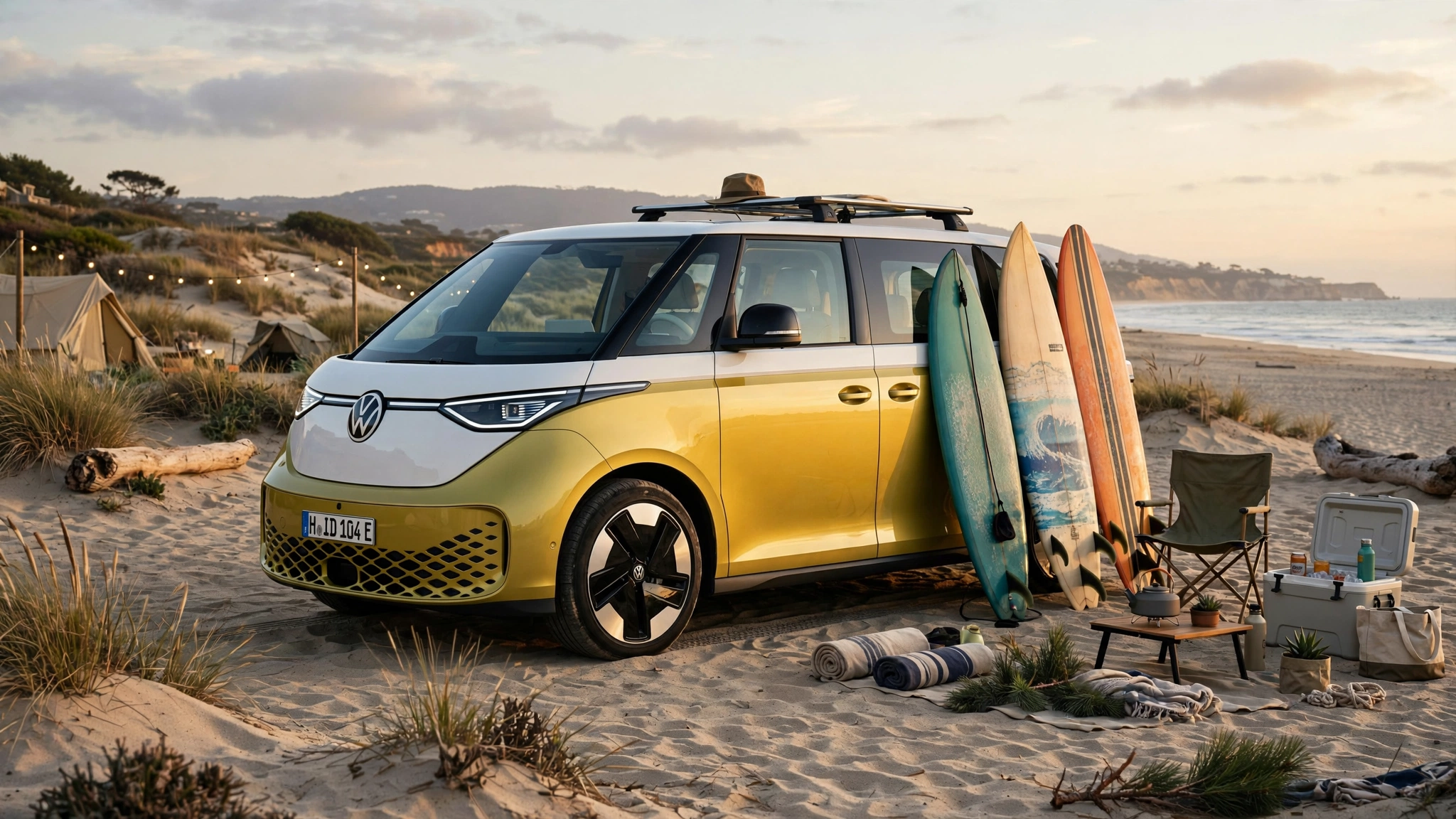

VW Electric Van — The Complete 2026 Guide
The vw electric van story has two heroes: the ID. Buzz, the retro people-carrier that turned a 1950s icon into a 234-mile electric family van, and the ID. Buzz Cargo, the working panel van quietly building a following with fleets in Europe. Both wear the vw electric van badge into a market that suddenly has real competition from Kia, Ford, and Mercedes. This complete guide covers every vw electric van you can buy in 2026 — prices, range, charging, cargo numbers, the honest compromises, and who each version suits.
VW Electric Van Lineup: Buzz, Buzz Cargo, and GTX
| Model | Market | Power | Range | Price (from, approx.) |
|---|---|---|---|---|
| ID. Buzz (LWB, 7-seat) | USA / global | 282 hp RWD | 234 miles EPA | Launched ~$59,995; 2026 dealer ads under $50,000 |
| ID. Buzz AWD (LWB) | USA / global | 335 hp AWD | 231 miles EPA | About $65,000 list |
| ID. Buzz (SWB, 5-seat) | Europe | 282 hp RWD | Up to ~258 miles WLTP | About £45,000 UK |
| ID. Buzz Cargo | Europe | 187–282 hp | 218–277 miles WLTP by battery | About £29,995 + VAT (new entry model) |
| ID. Buzz Cargo LWB | Europe | Up to 335 hp AWD | Nearly 300 miles WLTP | About $58,000–$60,000 equivalent |
| ID. Buzz GTX | Europe | 335 hp AWD | About 295 miles WLTP | Premium trim, about £60,000+ |
Every vw electric van rides on the same MEB platform as the ID.4, which is why the range and charging numbers feel familiar. The U.S. gets only the long-wheelbase passenger Buzz, in 6- or 7-seat layouts. Europe gets the full family: short-wheelbase passenger, Cargo in two lengths and three battery sizes, and the GTX performance flagship. A camper version (the “California”) has been promised for years and remains the lineup’s most-requested missing member.
VW Electric Van Range and Charging
The U.S. Buzz carries a battery of about 91 kWh gross and returns 234 miles EPA in rear-wheel drive, 231 with all-wheel drive — honest numbers that translate to roughly 190 to 210 miles of 70-mph highway work. European passenger models with the 79 kWh net battery quote up to about 258 to 277 miles on the gentler WLTP cycle. The Cargo range now starts with a new 58 kWh entry battery good for 218 miles WLTP, aimed squarely at urban delivery duty cycles. Charging peaks at about 170 to 200 kW depending on version, with a 10-to-80-percent stop in roughly 26 to 30 minutes, and the newest Cargo models add vehicle-to-load: the van becomes a giant power outlet for tools, laptops, or a campsite. For the family side of the ledger, our earlier deep-dive on the electric vans for business compares the Buzz against its commercial rivals on total cost.
VW Electric Van Interior: The Family Case
Inside is where the vw electric van earns its premium. The long-wheelbase Buzz seats seven across three rows with a genuinely airy cabin, sliding rear doors on both sides, and up to about 146.6 cubic feet of cargo space with the seats folded — minivan numbers in a shape that makes people wave at you. The dashboard carries VW’s 12.9-inch infotainment with the group’s latest software, which is markedly better than the early ID cars (though still not the class benchmark), and the two-tone paint catalog is a nostalgia menu: Pomelo Yellow, Bay Leaf Green, Starlight Blue. What you do not get is the minivan establishment’s party tricks — no seats that fold into the floor — so the Chrysler-shaped hole in the Buzz’s practicality is real if you haul plywood weekly.
VW Electric Van for Work: The Cargo Case
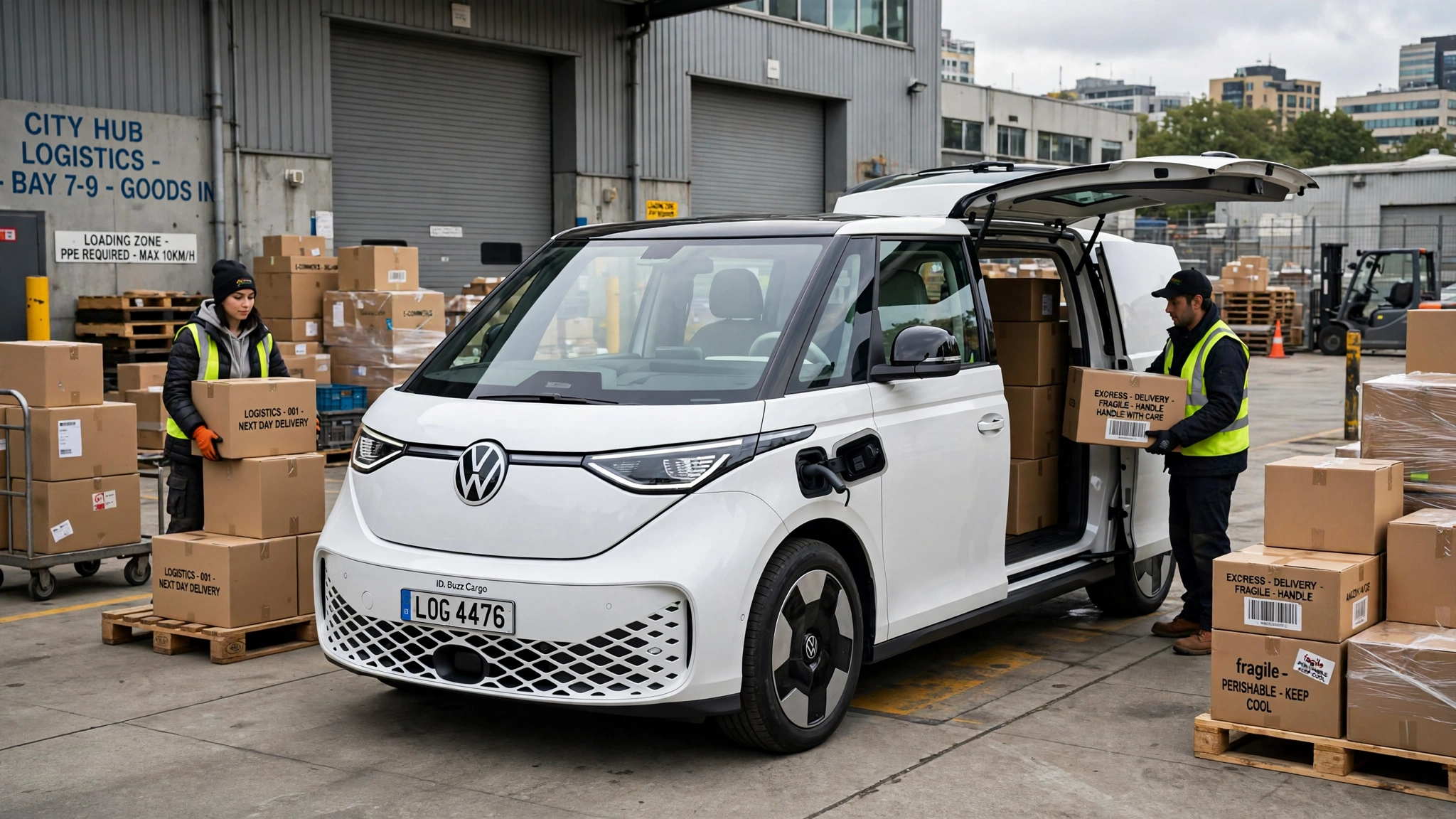
The Cargo is the vw electric van that fleet managers should study. Payload runs to roughly 700 kg on the long-wheelbase rear-drive model, the load bay takes a Euro pallet through the wider sliding door, and the new entry version’s UK price — £29,995 before VAT, chased by a £5,000 Plug-in Van Grant — undercuts the diesel Transporter it replaces on whole-life costs for urban routes. Add standard vehicle-to-load (power your tools from the van), over-the-air software, and running costs in the region of 5 cents a mile on depot electricity, and the business case closes for most city and regional duty cycles. The honest limitations: 234-mile-class real range rules out rural high-mileage routes without midday charging, and the Buzz Cargo is not sold in the U.S., where fleets shop the Ford E-Transit and Mercedes eSprinter instead.
VW Electric Van Prices in 2026: The Discount Story
The most important vw electric van fact of 2026 is that nobody should pay list price. The U.S. Buzz launched at $59,995 and climbed toward $70,000 in top trims; slow sales have since pushed advertised dealer prices below $49,000 in some markets — nearly $19,000 under the highest stickers. That transforms the value argument: at $49,000 the Buzz competes with plug-in hybrid minivans while costing pennies per mile to run, as our cost per mile analysis shows for the whole EV class. In Europe, the Cargo reshuffle has cut entry pricing at the same time as range improved. Whether you buy family or fleet, the negotiation starts at the advertised discount, not at the window sticker — and the wider EV cars guide explains the incentive landscape that stacks on top in many states.
VW Electric Van Rivals: How It Stacks Up
Three rivals define the segment. The Kia PV5 is the Buzz Cargo’s sharpest new threat — purpose-built, cheaper to start in Europe, and expanding fast. The Ford E-Transit owns U.S. fleet volume with a bigger dealer network but shorter range (about 159 miles), a gap that matters on regional routes. The Mercedes eSprinter plays the premium fleet card with strong range in its big-battery form. Against all three, the vw electric van counters with the best charging curve in the class, the only real passenger-car charm, and — in passenger form — no true rival at all: nothing else on sale looks like it, and for many family buyers that settles the argument before the spreadsheets open.
VW Electric Van Ownership Costs and Warranty
Running a vw electric van follows the friendly EV pattern with two van-sized caveats. Routine maintenance is minimal — no oil, no exhaust, brake wear slowed by regeneration — and U.S. cars carry a 4-year/50,000-mile basic warranty with the battery covered for 8 years/100,000 miles at a 70 percent capacity floor. Home or depot charging keeps fuel near 5 cents a mile; public fast charging on road trips costs two to three times that, still well under diesel. The caveats are tires and insurance: a 5,700-pound van on 20- or 21-inch wheels eats expensive rubber, particularly with enthusiastic use of the instant torque, and insurance groups it with premium family vehicles rather than work vans. Budget both lines honestly and the Buzz still lands far below a comparably equipped diesel or hybrid van over five years — before the fuel savings of any camper weekends you add on top.
Frequently Asked Questions About the VW Electric Van
How much does the vw electric van cost?
The U.S. ID. Buzz launched at $59,995, but 2026 dealer discounts advertise some cars under $49,000. In Europe, the ID. Buzz Cargo starts near £29,995 plus VAT for the new entry model, with passenger versions from about £45,000.
What is the range of the vw electric van?
234 miles EPA for the U.S. rear-wheel-drive Buzz (231 AWD). European Cargo models quote 218 to nearly 300 miles WLTP depending on battery and wheelbase. Real highway range runs 10 to 20 percent below the ratings.
Is the vw electric van available as a camper?
Not from the factory yet. VW has repeatedly promised an ID. Buzz California camper; for now, converters offer pop-top and interior kits, and the flat floor plus vehicle-to-load make DIY builds unusually capable.
Can the vw electric van tow?
European models tow up to about 1,000–1,800 kg depending on version (GTX at the top). U.S. models are rated around 3,500 lbs with the factory hitch on AWD — confirm the exact rating for the specific vehicle before you buy.
Is the VW ID. Buzz Cargo sold in the USA?
No — the Cargo is Europe-only for now. U.S. business buyers cross-shop the Ford E-Transit, Mercedes eSprinter, and BrightDrop vans, or buy the passenger Buzz and fold the seats.
The Bottom Line on the VW Electric Van
The vw electric van range asks a premium for personality, then quietly justifies it with strong range, fast charging, and running costs that shame every diesel rival. In 2026 the calculation improved again: discounts took the U.S. Buzz under $50,000 at some dealers, and the Cargo’s new entry model dragged European pricing down while range went up. Families should buy the passenger Buzz at a negotiated price; fleets should model the Cargo against the Kia PV5 route by route. Either way, this is the electric van with the longest waiting list of admirers — and finally, pricing that lets more of them become owners. For official efficiency figures, FuelEconomy.gov lists every U.S. trim.
