
Mercedes Electric Car — The Complete 2026 Guide
A Mercedes electric car in 2026 is a very different machine from the one you could buy three years ago. The first EQ models were quiet, quick and comfortable, but they charged slowly, cost too much and lost value at a frightening pace. Meanwhile, the brand has quietly rebuilt its electric range around two brand-new platforms, and the result is a lineup that finally makes sense.
Today a Mercedes electric car can cost you anywhere from $47,250 to more than $180,000. At the bottom sits the new CLA, a compact sedan with 374 miles of EPA range and 320 kW fast charging. At the top sits the electric G-Wagen, a 579-horsepower statement piece that makes no financial sense and enormous emotional sense. In between, there is a Mercedes electric car for almost every luxury buyer — if you know which ones to pick and which ones to haggle on.
This guide walks through every model on sale in the United States for 2026: real prices, verified EPA range figures, charging speeds, running costs and resale behaviour. No brochure language, just the numbers and an honest verdict on each car.
Every Mercedes Electric Car on Sale in 2026
Here is the full Mercedes electric car lineup for the US market at a glance. Prices are starting MSRP before destination charges, and range figures are EPA estimates for the version listed.
| Model | Body style | Starts at | EPA range | Power |
|---|---|---|---|---|
| CLA 250+ | Sedan | $47,250 | 374 miles | 268 hp |
| CLA 350 4MATIC | Sedan | $49,800 | 312 miles | 349 hp |
| GLC 400 4MATIC | SUV | $63,500 | Up to 350 miles (est.) | 483 hp |
| EQE 320+ | Sedan | $64,950 | 308 miles | 315 hp |
| EQE 320+ SUV | SUV | $64,950 | 302 miles | 315 hp |
| EQS 450+ SUV | SUV | $91,200 | 312 miles | 355 hp |
| AMG EQE | Sedan | $96,600 | 220 miles | 617 hp |
| EQS 450+ | Sedan | $99,900 | 390 miles | 355 hp |
| G 580 with EQ Technology | SUV | $163,200 | 239 miles | 579 hp |
Two details matter before you compare those numbers with rivals. First, destination charges add $1,250 to the CLA and up to $1,450 on the bigger cars, so the real entry price is higher than the headline. Second, the Mercedes-Maybach EQS 680 SUV sits above this table at $181,150 — it is an EQS SUV in a tailored suit, built for buyers who will mostly sit in the back.
You may also notice a name missing. The EQB, once the cheapest Mercedes electric car, ended its run after the 2025 model year. In practice, the CLA sedan and the GLC SUV now do the EQB’s job, and both do it with far better range and charging. Mercedes has also changed its naming: new models are sold “with EQ Technology” instead of wearing EQ badges, which is why the GLC and G 580 read like normal Mercedes names.
Mercedes Electric Car Prices in 2026: Where the Money Goes
The single biggest story in Mercedes electric car pricing is that the entry point fell by roughly $6,000. The CLA 250+ starts at $47,250, which undercuts the old EQB and lands below the price of the average new car in America. For that money you get 374 miles of range, an 800-volt electrical system and a cabin running Mercedes’ newest software. A Tesla Model 3 Premium is cheaper still, but on range and charging speed the CLA actually beats it.
Step up to the middle of the range and the picture gets more complicated. The GLC 400 4MATIC SUV starts at $63,500 and the EQE 320+ sedan at $64,950. Both are strong cars, yet both face rivals that fight hard on price — the Cadillac Optiq, for example, undercuts them by thousands while offering similar range. What the Mercedes badge buys you here is ride quality and cabin finish, not a spec-sheet win.
At the top, prices climb steeply. The EQS sedan starts at $99,900, the AMG EQE at $96,600, the G 580 at $163,200 and the Maybach EQS 680 SUV at $181,150. However, there is a catch that works in your favour: the first-generation EQ cars have a reputation for heavy discounting. Dealers have been trimming EQS and EQE prices to move metal, so the sticker is a starting point for negotiation, not the final number.
One more cost has changed for 2026. The federal clean vehicle credit ended on September 30, 2025, so no Mercedes electric car gets a $7,500 federal discount this year. Some states still offer their own incentives, and it is worth checking your state’s programme before you sign anything.
CLA: The Mercedes Electric Car That Changes the Story
If you only read one section of this guide, read this one. The CLA is the first Mercedes electric car built on the new MMA platform, and it fixes nearly every complaint levelled at the old EQ cars. The spec sheet reads like a car costing $20,000 more.
The CLA 250+ uses a single rear motor making 268 horsepower and an 85 kWh battery. It is EPA-rated at 374 miles, the longest range of any Mercedes electric car south of the flagship EQS. The dual-motor CLA 350 4MATIC costs $49,800, makes 349 horsepower and reaches 60 mph in an estimated 4.8 seconds, but its range drops to 312 miles — a steep price for all-wheel drive you may rarely need.
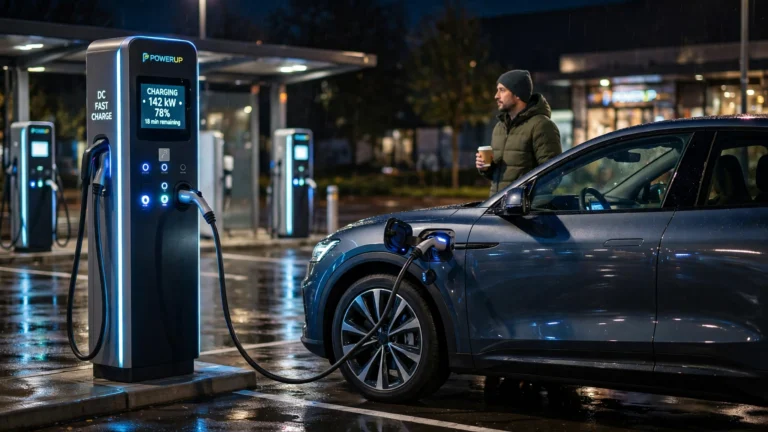
Charging is where the CLA embarrasses its elders. The 800-volt system peaks at 320 kW, taking the battery from 10 to 80 percent in about 22 minutes and adding roughly 100 miles in five minutes. A two-speed gearbox helps efficiency at highway speed, a trick borrowed from the Porsche Taycan. The CLA is also the first Mercedes in the US with a native NACS port, so it plugs straight into Tesla Superchargers, and it even has a small front trunk — the first frunk in Mercedes history.
Inside, the story continues. The new MB.OS software runs across an optional full-width Superscreen, and the voice assistant is genuinely better than the old MBUX. Rear legroom is improved, although tall adults will still find the sloping roofline tight. Even so, at $47,250 before destination, the CLA 250+ is the easiest Mercedes recommendation we have made in years.
GLC 400 4MATIC: The Electric GLC Arrives in Late 2026
The GLC is Mercedes’ best-selling model line, so an electric GLC was always going to matter more than any flagship. The GLC 400 4MATIC with EQ Technology reaches US dealers in the second half of 2026, priced from $63,500.
Underneath sits the new MB.EA platform with a 94 kWh usable battery and dual motors making 483 horsepower and 590 lb-ft of torque. Mercedes quotes 0 to 60 mph in about 4.2 seconds, and EPA range is expected to reach up to 350 miles. Fast charging peaks at 330 kW — slightly quicker than the CLA — with the same 10-to-80-percent time of roughly 22 minutes.
What sets this Mercedes electric car apart is the options list. You can order the 39.1-inch MBUX Hyperscreen, the largest single screen Mercedes has ever fitted, plus AIRMATIC air suspension and rear-axle steering that shrinks the turning circle to about 36.7 feet. In practice, that makes a 5,500-pound SUV feel oddly handy in a parking garage. If your family wants one electric Mercedes and it has to be an SUV, this is the one to wait for.
EQS and EQE: The First-Generation Flagships
The EQS and EQE launched the modern Mercedes electric car era, and for 2026 they continue with meaningful updates and meaningfully lower effective prices. The EQS 450+ sedan starts at $99,900 and remains the range king of the whole lineup at 390 EPA miles. Its 355-horsepower rear-drive powertrain is not quick by modern standards, but nothing at this price rides more quietly.
The EQE sedan got the more interesting refresh. The new EQE 320+ starts at $64,950 — about $10,000 less than last year’s equivalent — and power rises to 315 horsepower from a 96 kWh battery good for 308 miles. The all-wheel-drive EQE 320 4MATIC costs $67,450 and trades range for traction, dropping to 267 miles. At the top, the AMG EQE makes 617 horsepower and hits 60 mph in roughly three seconds, but its 220-mile range tells you exactly what that performance costs.
The SUVs follow the same pattern. The EQE 320+ SUV starts at $64,950 with 302 miles of range, and the EQS 450+ SUV at $91,200 with 312 miles and an optional third row. As a result, families who need three rows inside a Mercedes electric car have exactly one choice, and it is a good one — just an expensive one.
Honesty matters here, though. The EQ cars charge at 170 to 200 kW, well behind the new CLA and GLC, and their resale values have fallen hard. A three-year-old EQS that listed above $100,000 now changes hands for less than half that. For a new buyer that is a warning; for a used buyer, it is the bargain of the decade. How the battery underneath holds up is covered in our guide to how EV batteries work and age.
G 580: The Electric G-Wagen
The G 580 with EQ Technology is the Mercedes electric car for people who find a normal luxury SUV too sensible. Four electric motors — one per wheel — make 579 horsepower and can spin the truck in place with the theatrical G-TURN function. It climbs, wades and crawls like a proper G-Class, because it is one.
The compromises are just as real. The EPA range is 239 miles, the price starts at $163,200, and efficiency is what you would expect from a motorized brick. Buy it because you love it, not because a spreadsheet told you to. Nobody cross-shops a G 580 against a Hyundai Ioniq 5, and that is entirely the point.
Mercedes Electric Car Range and Charging, Honestly Compared
Range is the easiest way to sort this lineup. The EQS 450+ sedan leads at 390 miles, the CLA 250+ follows at 374, and the GLC 400 is expected around 350. Below those three, every other Mercedes electric car sits between 220 and 312 miles. That is enough for daily driving anywhere in America, but road-trippers should note how far the AMG EQE (220 miles) and G 580 (239 miles) fall behind.
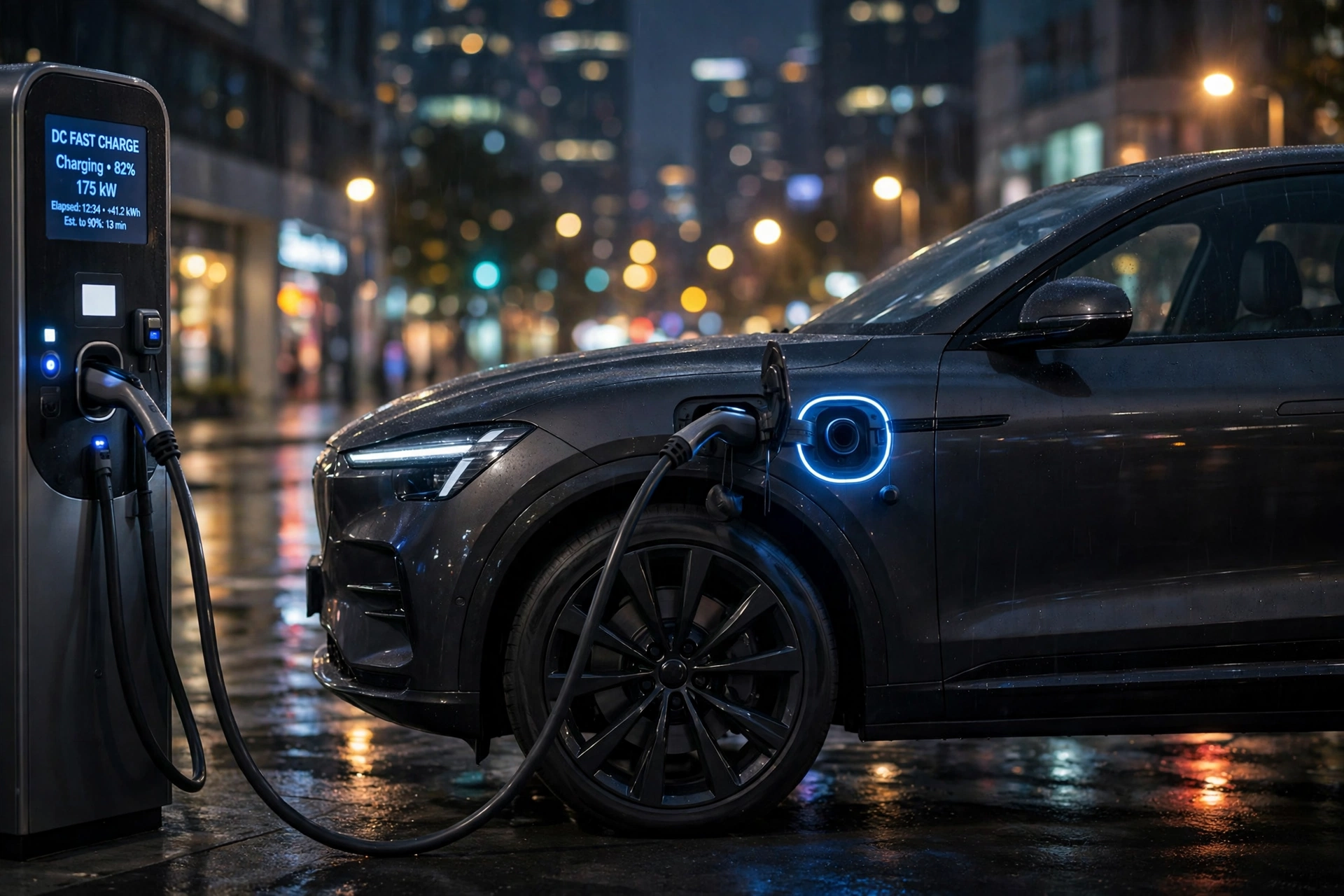
Charging splits the range into two generations. The new cars — CLA and GLC — use 800-volt systems that peak at 320 to 330 kW and refill from 10 to 80 percent in about 22 minutes. The older EQ cars use 400-volt systems peaking at 170 kW (EQE) and 200 kW (EQS), needing 31 to 32 minutes for the same refill. On a single stop the difference is ten minutes; across a 600-mile day with three stops, it is half an hour and a lot of patience.
Plug compatibility is simpler than it used to be. The CLA and GLC have native NACS ports for Tesla Superchargers, while the EQ models now include a NACS adapter as standard, so every 2026 Mercedes electric car can use the Supercharger network. At home, a Level 2 wallbox refills any of them overnight — the CLA takes about nine hours from empty on a 240-volt circuit, and you will rarely arrive home empty.
Running Costs, Warranty and the Depreciation Question
Electricity is the cheap part of owning a Mercedes electric car. Government figures at fueleconomy.gov put the EQE 320+ at roughly $800 a year in electricity for 15,000 miles of driving, and the EQS at about $75 a month. A comparable gas E-Class or S-Class would burn two to three times that in fuel. Home charging widens the gap further, especially on an overnight rate.
Maintenance is lighter too: no oil, no spark plugs, no exhaust, and brake pads that last far longer thanks to regenerative braking. Budget instead for tyres — these are heavy cars, and the EQS weighs as much as some pickup trucks — and for out-of-warranty electronics, which are never cheap at a Mercedes dealer.
The warranty itself is standard luxury fare: four years or 50,000 miles bumper to bumper, and eight years or 100,000 miles on the battery. That battery cover is shorter than the 10-year warranties from some Korean rivals, something to weigh if you keep cars for a decade.
Then there is depreciation, the subject every Mercedes electric car review eventually reaches. The first-generation EQ models lost value faster than any cars Mercedes has sold in decades. If you buy an EQS or EQE new, negotiate hard and plan to keep it. If you are buying the CLA or GLC, the honest answer is that nobody knows yet — the technology is new, and so is the market’s mood.
Which Mercedes Electric Car Should You Buy?
For most buyers, the answer is the CLA 250+. It has the range, the charging speed and the price that the rest of the lineup cannot match, and it still feels like a proper Mercedes inside. The CLA 350 4MATIC only makes sense if your winters genuinely demand all-wheel drive.
Families should look at the GLC 400 4MATIC, or — if a deal appears — the EQE SUV. Buyers who value silence and space above charging speed should test the EQS 450+, especially the sedan at a discount. It is worth cross-shopping the BMW i5 before deciding, since the BMW drives better while the Mercedes rides better.
Performance buyers get the AMG EQE and its 617 horsepower, accepting the 220-mile range as the price of fun. And the G 580? Buy it if a rotating electric G-Wagen makes you smile. That is reason enough, and pretending otherwise would be dishonest.
Mercedes Electric Car FAQ
What is the cheapest Mercedes electric car in 2026?
The CLA 250+ is the cheapest Mercedes electric car, starting at $47,250 plus a $1,250 destination charge. It is also one of the best: 374 miles of EPA range, 268 horsepower and 320 kW fast charging.
Which Mercedes electric car has the longest range?
The EQS 450+ sedan, at 390 EPA miles. The CLA 250+ is close behind at 374 miles and costs less than half as much, which is why it wins most of our comparisons.
How long does a Mercedes electric car take to charge?
The newest models are the fastest: the CLA and GLC charge from 10 to 80 percent in about 22 minutes at up to 320–330 kW. The EQE and EQS take roughly 31 to 32 minutes. At home on Level 2, any model refills overnight.
Can a Mercedes electric car use Tesla Superchargers?
Yes. The CLA and GLC have native NACS ports, and the EQ models include a NACS adapter as standard equipment for 2026, so the whole lineup can charge on the Tesla Supercharger network.
Is the Mercedes EQB still on sale?
No. The EQB ended after the 2025 model year. Shoppers who wanted one should look at the CLA sedan or wait for the electric GLC, both of which offer far more range for similar money.
Do these cars qualify for a federal tax credit in 2026?
No. The federal clean vehicle credit ended on September 30, 2025, so there is no $7,500 federal saving on a 2026 Mercedes electric car. Some states still run their own incentive programmes, so check locally before buying.
The Bottom Line
The Mercedes electric car lineup finally has a shape that makes sense: an affordable, long-range CLA at the bottom, a family-ready GLC in the middle, and the EQS, AMG models and G 580 doing flagship duty at the top. The older EQ cars are comfortable and heavily discounted; the new cars are simply better where it counts — range, charging and value. If you buy one Mercedes electric car in 2026, make it the CLA 250+. If you buy two, add the GLC and call it a fleet.