
Segway Xyber: Range, Charging, Costs and Who Should Buy It
Last updated: October 23, 2026
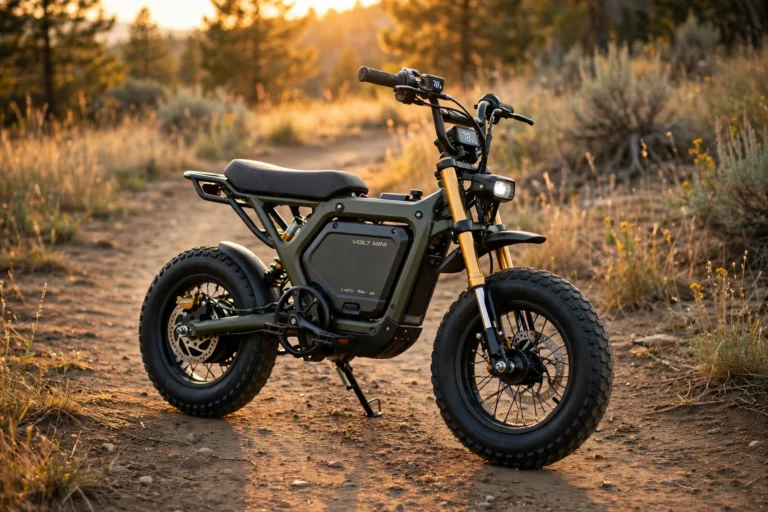
I review commuter bikes. Rain at 7 a.m. Hills that look fine on a map. Arriving at work without smelling like a gym bag. So let me save you some time: the Segway Xyber is not that bike. It isn’t close. It’s a 138-pound fat-tyre machine with a motorcycle seat, up to 6,000 watts of peak power, and a top speed of 35 mph — wearing a pair of pedals the way a wolf wears a fleece.
None of which makes it bad.
Judged as what it actually is — an electric dirt toy with lights and an app — the Xyber is one of the most interesting machines Segway has ever sold. Judged as transport, it fails in ways you should understand before spending $3,000. This guide separates the two, because most coverage doesn’t.
First, the Catch: You Can’t Legally Ride It to Work
Segway sells the Xyber as off-road only. Not “off-road capable.” Off-road only. The company calls it unclassified, and one US dealer listing states the position flatly: no title is issued, and it ships restricted.
Here’s the nuance. The Segway app offers Class 1, 2 and 3 limiter modes, which cap the motor to legal e-bike behaviour — 20 mph on throttle, 28 mph on pedal assist. In those modes, on paper, the Xyber behaves like a bicycle. Unlock it, though, and you’re riding a 35 mph, 6,000-watt vehicle that no e-bike law in America covers. If that distinction is news to you, read our guide to the e-bike class system before you buy anything in this category. The rules are not decorative.
My position, since you’re here for one: the limiter modes make the Xyber more honest than most of its rivals, because Segway at least admits the full-power mode is not for public roads. Ride it unlocked on a bike path and you’re the reason cities keep banning things. There. Said.
One more legal wrinkle, because it decides where the Segway Xyber can ever go: with no title issued, most states give you no route to register it as a road vehicle even if you wanted to add mirrors, indicators and paperwork. This isn’t a motorcycle with an identity crisis. It’s a trail machine, permanently. Buy it on that understanding and you’ll never be disappointed by a rule you hoped would bend.
The Numbers: What 6,000 Watts Actually Means
The Xyber’s party trick is that the second battery doesn’t just add range. It doubles the power. Full specifications are published on Segway’s official site; the ones that matter are these:
| Segway Xyber | One battery | Two batteries |
|---|---|---|
| Price | $2,999.99 | About $4,100 (second pack ≈ $1,100) |
| Peak power | 3,000 W | 6,000 W |
| Torque | 120 Nm | 175 Nm |
| Battery | 1,440 Wh (48V) | 2,880 Wh |
| Claimed range | Up to 56 miles | Up to 112 miles |
| Weight | 138 lbs | About 165 lbs |
| Top speed | 35 mph (off-road mode); 0–20 mph in 2.7 seconds | |
For scale: a legal Class 3 e-bike is capped at 750 watts of nominal power. The single-battery Xyber peaks at four times that. The dual-battery version peaks at eight times that, with torque (175 Nm) in the territory of a small petrol motorcycle.
The rest of the hardware is built to match, to Segway’s credit. Four-piston hydraulic brake up front on a 220 mm rotor. Full suspension — 110 mm of travel at the front, 100 mm at the back. Tyres are 20 by 5 inches, which is less “bicycle tyre” and more “small tractor.” There’s a 1,300-lumen headlight, a colour display, GPS tracking, Apple Find My built in, and an AirLock system that physically blocks the rear wheel when you walk away. The battery is IPX7-rated, so rain and puddles are genuinely not a concern.
Twelve levels of pedal assist, by the way. Twelve. On a bike whose pedals mostly exist for legal camouflage. Reviewers who’ve ridden it report ghost pedalling above about 21 mph — your legs spinning, contributing nothing — because the single-speed gearing runs out long before the motor does.
Living With 138 Pounds: The Stuff Spec Sheets Skip
Weight shapes every minute with this bike, and it never shows up in the launch videos.
At walking pace the Segway Xyber is a handful. Testers consistently flag the same thing: low-speed maneuvering takes effort, tight turns need planning, and the bike’s bulk is always making suggestions you’d rather it didn’t. The four-piston front brake is strong; the two-piston rear brake, on a machine this heavy, gets called out by BikeRide’s testers as the weak link — budget your stopping distances accordingly, especially two-up or downhill.
The seat height compounds it. At 32.3 inches, shorter riders are balancing 138 pounds on tiptoe. That’s not a confidence recipe at a trailhead, let alone anywhere busier.
And hills? Forget them. They’re a non-event. Even the single-battery setup makes 120 Nm of torque — roughly double what a strong mid-drive commuter bike produces — and the dual-battery 175 Nm simply erases climbs that would have a normal e-bike rider walking. If your riding is steep, loose and private, this is the Xyber’s whole argument, and it’s a good one. My commute has one railway bridge and a headwind. Your mileage, as they say, will vary.
The 112-Mile Claim, Translated
Now the range claim, because this is where Segway’s marketing department earns its salary.
“Up to 112 miles” is a laboratory number. It assumes gentle pedal assist, modest speeds, a reasonable rider, and no interest whatsoever in the throttle. The dual-battery Xyber carries 2,880 Wh of battery, and physics sets the terms: at 35 mph on the throttle, a fat-tyre bike with an upright rider burns through energy at roughly three times the rate of a 15 mph pedal-assist cruise.
Realistically — and this is our estimate, based on the battery capacity and how every comparable machine behaves — expect around 28–35 miles from one battery and 55–70 miles from two in mixed riding with real throttle use (est.). Ride gently at assist level 3 and you’ll beat those numbers. Live in Race mode and you’ll see less. Plan your purchase around the honest figures and the Xyber makes sense; plan around 112 and you’ll feel cheated by a number that was never promised to your right wrist.
One more range cost nobody mentions: weight. Every mile of claimed dual-battery range drags about 1.47 pounds of motorcycle around with it (165 lbs ÷ 112 claimed miles). A normal commuter e-bike runs closer to 0.9 pounds per claimed mile. That deadweight is why the Xyber feels sluggish at walking pace and why pushing it anywhere — a gate, a garage corner, a flight of stairs — is a two-handed job.
Do the dual batteries at least earn their keep on range per charge cycle? Run the ownership maths: a rider covering 25 trail miles every weekend charges the dual setup about once a fortnight, where a single pack needs a top-up after most rides. Fewer cycles, shallower discharges, slower battery ageing. The second pack pays you back in convenience weekly and in battery health yearly — one more reason the single-battery Segway Xyber is the version to skip.
Charging and Running Costs: Pennies, Honestly
Here’s where my commuter brain does approve. Charging an e-bike is nearly free, and the Xyber is no exception.
One 1,440 Wh battery, filled from empty at an average US home electricity price of about $0.17 per kWh, costs roughly 24 cents. Both batteries: about 49 cents. Even at our realistic range estimates, that’s around 0.7–0.9 cents of electricity per mile. A month of daily 8-mile round trips on the dual-battery setup costs less than a single coffee. Our full breakdown of what it costs to charge an electric bike shows the maths for the whole category — the Xyber sits at the expensive end and it’s still pocket change.
Charging speed is decent too. The included 10-amp charger refills a pack in about 3.7 hours, and with both batteries fitted they charge at the same time. Plug in at dinner, full by bedtime. No apps, no memberships, no charger roulette. (One warning from owners, reported by Popular Science: the bike sips power while parked, so a Xyber left for a fortnight may greet you with a noticeably emptier battery. Top it up before a ride, not after the last one.)
The original analysis worth doing on this bike is price per watt. At $2,999.99 for 3,000 peak watts, the single-battery Xyber costs almost exactly $1.00 per watt. Add the second pack — about $1,100 — and the total of roughly $4,100 buys 6,000 watts: $0.68 per watt. The second battery isn’t an accessory. It’s the discount.
Running costs beyond electricity: those 20×5 tyres are consumables with motorcycle appetites, brake pads work hard stopping 165-plus pounds of bike and rider, and that’s about it. No chain-and-cassette budget to speak of — the drive is a single-speed hub setup with very little to wear out. Budget for tyres, keep the brake pads fresh, and the Xyber is cheap to feed.
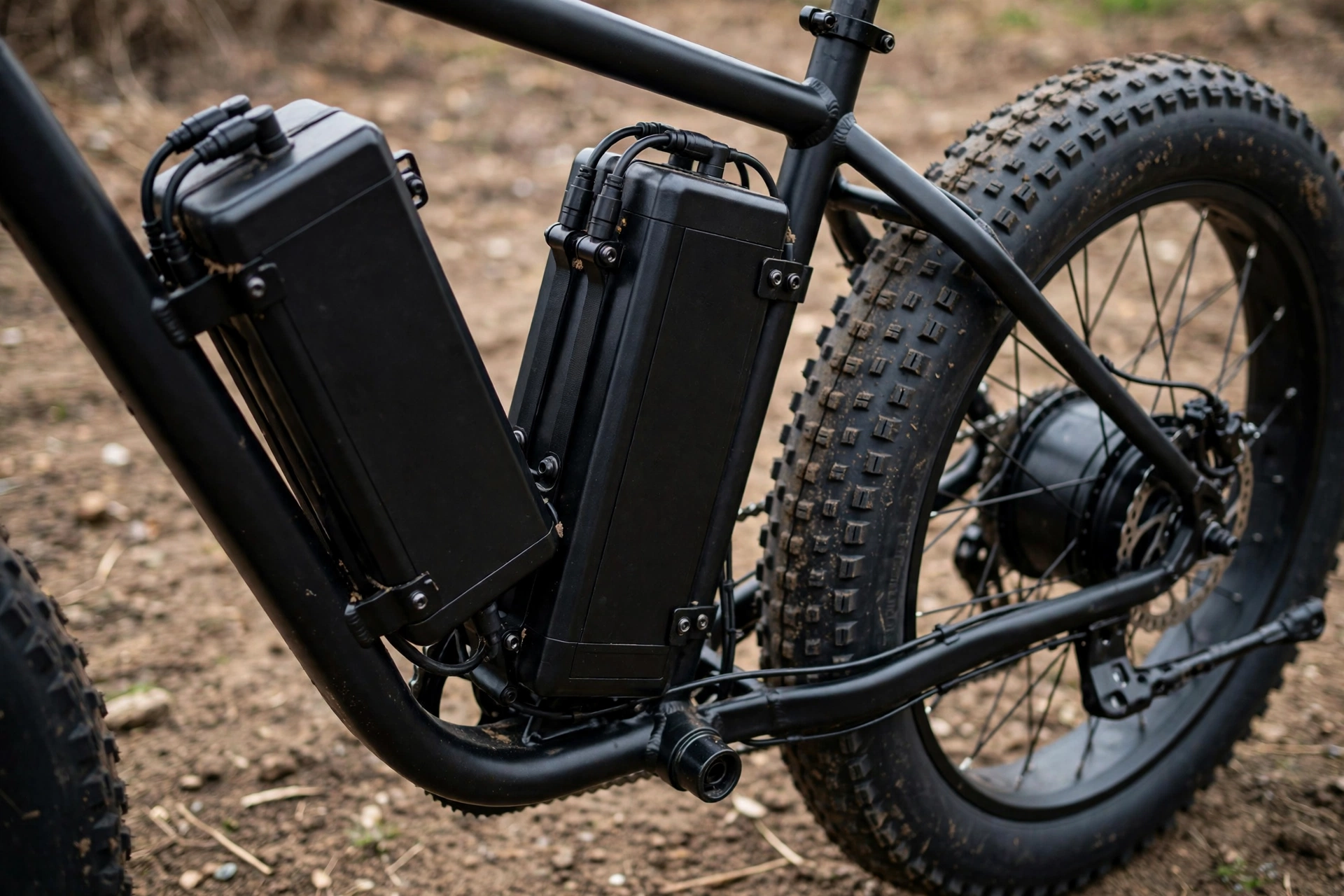
One practical mercy: the batteries come out. Each pack weighs about 27 pounds (derived from the 138 lb single-battery and roughly 165 lb dual-battery totals), so while the bike itself lives downstairs, a pack can travel up to a socket in one hand. Apartment owners — this is the only way the Xyber works for you, and it means the second battery can charge indoors while the first sits in the frame. Store packs part-charged rather than brim-full if the bike will sit for weeks, and remember that parked power drain: check the gauge the night before a ride, not at the trailhead.
Our Verdicts
Segway Xyber, one battery — Our score: 7.1/10 (Range 6 · Charging 8 · Value 7). Half the machine. The power is there, the range (28–35 real miles, est.) runs out right where the fun starts, and you’ll buy the second pack within a month. Everyone does.
Segway Xyber, two batteries — Our score: 7.6/10 (Range 8 · Charging 7 · Value 7). The complete product: 6,000 watts, 175 Nm, an honest 55–70 miles of hard riding. Heavy, expensive, and completely unapologetic about both.
As a commuter bike — Our score: 3/10. Not legal on the road in full-power mode, too heavy for stairs or train platforms, no rack worth the name, and a seat designed for trails rather than Tuesday. Buy it for commuting and you’ll sell it by spring.
Who Should Buy the Xyber, and Who Should Walk Away
Buy it if you have land, trails, or private roads to ride on, a garage or ground-floor storage, and a clear-eyed view of what it is: an electric plaything with motorcycle manners and bicycle paperwork. Rural property owners will love it. So will anyone cross-shopping small petrol dirt bikes who’d rather charge at home than mix fuel.
Walk away if you live in an apartment above the ground floor. Seriously. One hundred and thirty-eight pounds does not go up stairs, into lifts built for shopping trolleys, or onto wall hooks. Walk away if your “off-road” is a gravel towpath shared with dog walkers — 35 mph machinery doesn’t belong there either, whatever mode it’s in. And walk away if the plan was to unlock it for the road and hope nobody notices; enforcement around overpowered e-bikes is tightening in city after city, and an unregistered, untitled vehicle is a confiscation story waiting for a slow news day.
A word for the people who came here wanting a Segway commuter, because one exists and it isn’t this. The Xafari — Segway’s other e-bike — is Class 2 legal, costs about $2,400, weighs a sane amount less, and claims up to 88 miles from a 936 Wh battery. As a commuter, it’s the better Segway by a distance (our quick score as transport: 7.8/10). The Xyber only beats it at being a Xyber.
Shorter riders, check the fit before money changes hands: the seat sits 32.3 inches up, and Segway publishes no recommended height range. Under about 5’8″, you may be on tiptoes at every stop.
Segway Xyber Questions, Answered Straight
Is the Segway Xyber street legal?
Not in its full-power form. Segway sells it as an off-road vehicle, it ships restricted, and the app’s Class 1/2/3 limiter modes are what make it behave like a legal e-bike. Unlocked at 35 mph with 6,000 watts, it’s an unregistered motor vehicle in the eyes of most US states.
What range will I actually get from the Xyber?
Our estimate: 28–35 miles per battery in mixed riding with real throttle use (est.), against Segway’s claimed 56. Gentle pedal assist stretches it; Race mode shrinks it. Two batteries roughly double whatever your right hand achieves on one.
How long does the Xyber take to charge?
About 3.7 hours per battery on the included 10-amp charger, and both packs charge simultaneously when fitted. A full dual-battery refill costs roughly 49 cents at average US electricity prices.
Can two people ride the Xyber?
The frame is rated for 396.8 lbs of payload and has threaded mounts for passenger pegs (pegs aren’t included). The long seat suggests Segway knew people would try. Two-up riding is an off-road-only idea, same as everything else about this bike.
Is the Xyber too heavy for an apartment?
Yes, for almost every apartment. At 138 lbs with one battery (about 165 with two), it’s a ground-floor-or-garage vehicle. If your storage plan involves stairs, a hallway, or a wall mount, pick a different bike.
Should I buy the Xyber or a Sur-Ron style e-moto?
The Xyber is the more polished, more connected product — better security, better app, proper dealer network, and limiter modes the e-motos don’t offer. The Sur-Ron class is lighter and more tuneable. If you want an appliance, buy the Segway. If you want a project, buy the other one.
The Bottom Line
The Segway Xyber is a very good electric dirt bike and a very bad bicycle, and nearly everything written about it pretends it’s the second one. Buy the dual-battery version, keep it off the road in full-power mode, store it on the ground floor, and expect 60-odd honest miles instead of 112 brochure miles. Do that, and it’s one of the most entertaining ways to spend $4,100 on two wheels. Ignore any part of that sentence and it becomes an expensive lesson.
Last thing, from the commuter desk: watch dealer pricing before you pay list. In the same week we checked Segway’s $2,999.99 launch price, US dealers had the single-battery Segway Xyber listed between $2,399 and $2,899. At $2,399 the one-battery bike argues back — briefly — until you price the second pack. Some arguments the spreadsheet always wins.
Sources
Segway manufacturer specifications (power, torque, battery, weight, charging) via the official product documentation and dealer spec listings; US pricing from Segway’s launch price of $2,999.99 with dealer listings checked October 23, 2026 (sale prices of $2,399–$2,899 seen the same day — prices move, so check before buying). Riding impressions, ghost pedalling and parked battery drain as reported by Popular Science and The Manual. Prices checked: October 23, 2026. Figures marked (est.) are our estimates, with their basis stated in the text.