
Tesla Model Y Problems Explained: Key Facts, Specs and Real-World Range
Tesla Model Y problems are the worst-kept secret in the car world: the best-selling vehicle on the planet also generates more owner complaints, inspection failures, and recall headlines than almost anything else on the road. Both things are true at once, and that is exactly why this guide exists. Below, we go through the most-reported tesla model y problems one by one — what actually breaks, what the data says, which model years suffer most, and which issues should (and should not) stop you from buying one.
Tesla Model Y Problems Ranked by How Often Owners Report Them
Not all tesla model y problems are equal. Some are expensive mechanical failures, some are safety recalls fixed free, and some are pure annoyances that owners learn to live with. Here is the honest ranking, from most serious to most trivial.
| Problem | Severity | Who it affects | Typical fix |
|---|---|---|---|
| Suspension wear (control arm bushings) | High | Most years, high-mileage cars | Parts replacement, a few hundred dollars per corner |
| Brake disc corrosion | Medium | Cold, wet climates | Disc/pad service; drive and brake firmly occasionally |
| Phantom braking on Autopilot | Medium | All years | Software updates; driver attention |
| Paint chips and panel gaps | Low–Medium | Most years, delivery day | Reject or document at delivery; PPF helps |
| 12-volt battery sudden failure | Medium | Older cars (lead-acid 12V) | Replacement, roughly $100–$250 fitted |
| Heat pump failures | Medium | Early builds, cold climates | Warranty repair on affected cars |
| Auto wipers and screen glitches | Low | All years | Software updates; manual wiper control |
Tesla Model Y Problems in the Inspection Data: The TÜV Verdict
Owner forums are one thing; inspection statistics are another. Germany’s TÜV Report 2026 — based on 9.5 million mandatory safety inspections — ranked the Model Y last in its 2-to-3-year-old class, with 17.3 percent of cars failing with significant or dangerous defects, against a class average of about 6.5 percent. It was the worst defect rate TÜV had recorded in a decade.
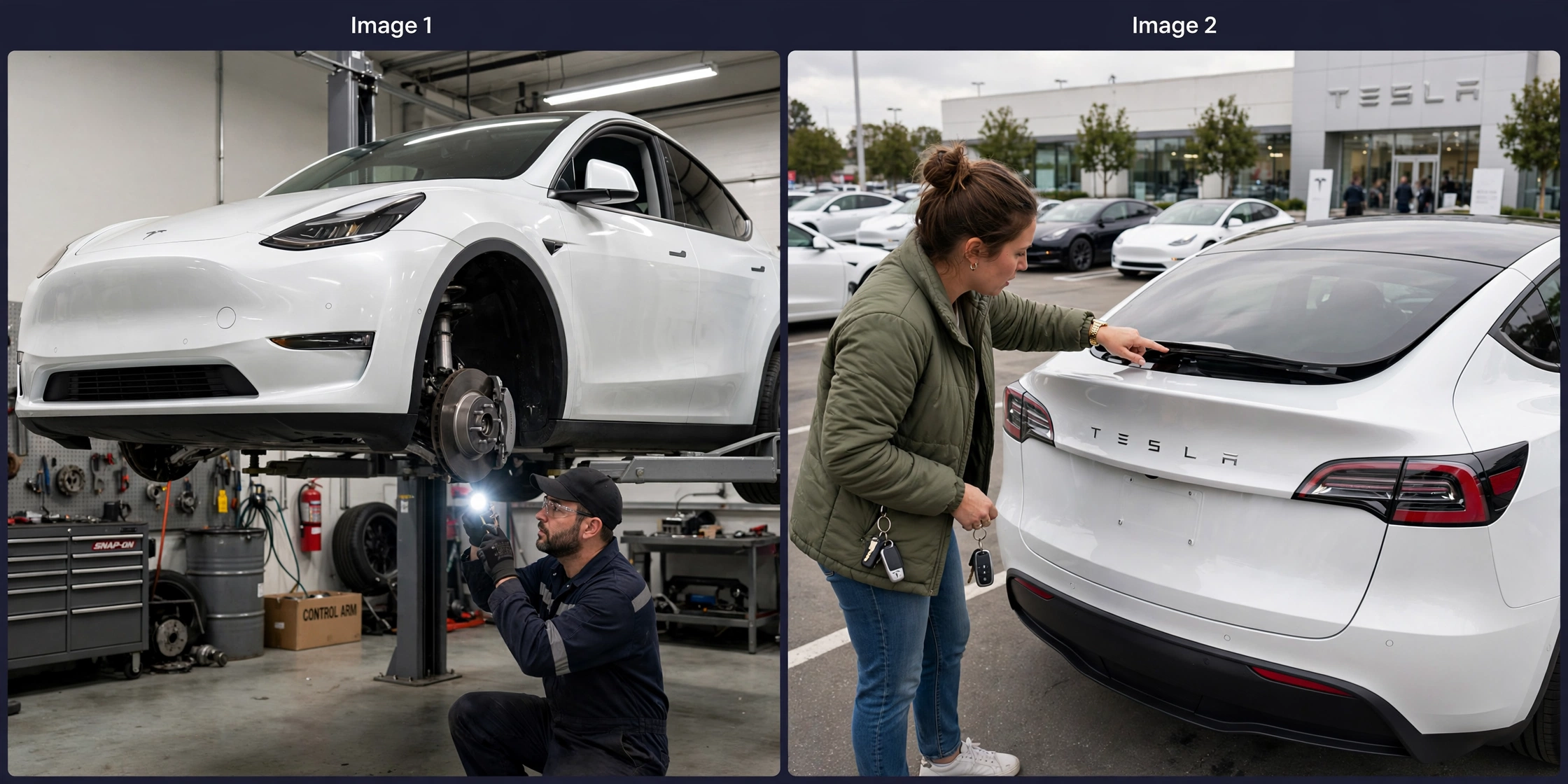
However, the details matter more than the headline. Inspectors flagged three main culprits: worn axle suspension parts, especially control arm bushings; corroded brake discs, because regenerative braking means the friction brakes sit unused and rust in wet climates; and lighting defects. In other words, the failures cluster in wear-and-climate items, not in the battery or motors. The traction battery and drive units — the expensive EV-specific parts — are conspicuously absent from the failure lists, which matches what high-mileage owner data shows worldwide.
Tesla Model Y Problems: Recalls You Should Know About
Recalls are a normal part of modern car ownership, and the Model Y has had its share. Most Tesla recalls are fixed with a free over-the-air software update — including the 2.2-million-vehicle warning-light recall of 2024 and the 2025 electronic power steering assist recall covering roughly 376,000 Model 3 and Model Y cars. Those sound dramatic and cost owners nothing but a parked night.
Occasionally, though, a recall needs wrenches. In 2026, Tesla recalled certain 2026 Model Y vehicles built between July 26 and August 4, 2026, because an assembly tool fault left front suspension lateral link fasteners under-torqued — a genuine steering-stability concern, fixed free at service centers with owner letters following in late October. Before buying any used Model Y, run its VIN through the official recall checker; it takes two minutes and tells you exactly what is outstanding. Our guide to EV cars and who should buy them explains how recall history should factor into a used-EV decision.
Tesla Model Y Problems in Daily Driving: The Annoyance List
Beyond the mechanical items, the everyday tesla model y problems are mostly software and trim. Phantom braking — the car slowing sharply for shadows, bridges, or nothing at all on Autopilot — remains the most-reported driving complaint across all years. The automatic wipers, controlled by cameras instead of a rain sensor, activate on dry days and hesitate in downpours. The touchscreen occasionally freezes or drops connectivity. Flush door handles can freeze shut in icy weather. Road noise and a firm ride bothered early owners most; the 2025 “Juniper” refresh brought a quieter cabin, softer suspension, and better build consistency, and most reviewers consider it a real improvement.
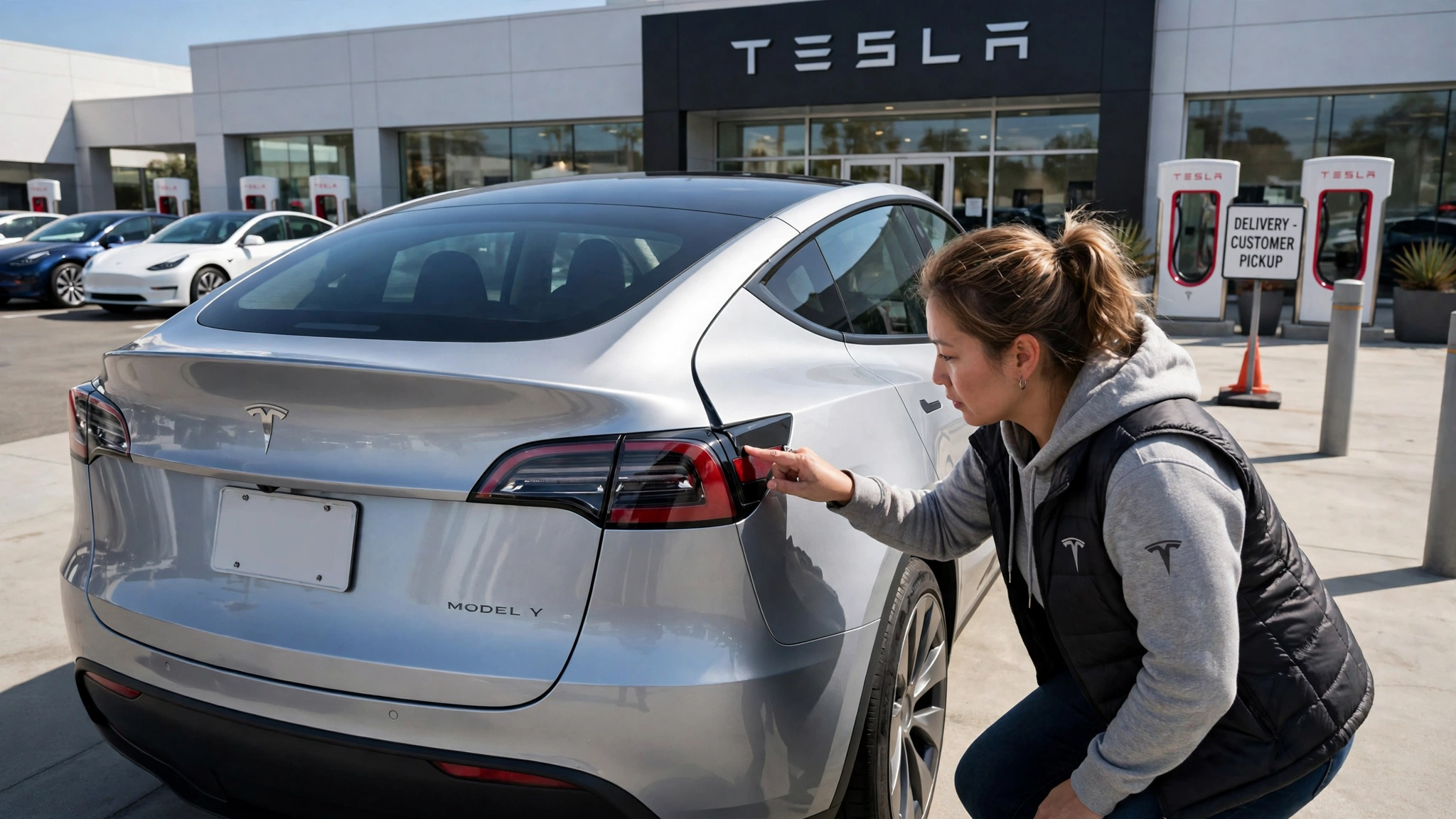
Paint deserves a special mention. Tesla’s paint is widely reported as thin and chip-prone, especially behind the wheels and on the sills, and panel gaps at delivery vary from car to car. None of this is hidden information: inspect the car carefully on delivery day, photograph everything, and get defects logged inside the reporting window. Owners who fit paint protection film to the high-impact areas largely sidestep the issue.
What Tesla Model Y Problems Mean for Running Costs
Here is the context that keeps the Model Y at the top of the sales charts despite everything above. The expensive parts of an EV — the high-voltage battery and motors — are not the problem parts. Battery degradation data consistently shows most Model Y packs retaining about 85 to 90 percent capacity at 200,000 miles, and the battery and drive unit carry an 8-year warranty (100,000 to 120,000 miles depending on trim) with a 70 percent capacity guarantee. The recurring costs are suspension wear items, tires (heavy car, strong torque — expect faster rear tire wear), the occasional 12-volt battery, and brake servicing in salty climates. Our breakdown of electric car cost per mile shows why the Model Y still undercuts comparable gas SUVs on total running costs even with these items included. And if the worst ever happens outside warranty, our guide to Tesla battery replacement cost lays out the real numbers.
Tesla Model Y Problems by Model Year: A Quick Map
Year matters more than mileage with tesla model y problems. The 2020–2021 launch cars carry the full list: the weakest panel fit, heat pump failures in cold regions, lead-acid 12-volt batteries that die without warning, and the firmest ride. The 2022–2023 cars improve steadily — better consistency from the Texas and Berlin factories, a lithium low-voltage battery on later builds that ends the 12-volt surprise, and suspension tweaks that softened the ride. The 2025-onward refreshed cars, the “Juniper” generation, are the ones to hunt for used: quieter cabin, ventilated seats, better assembly discipline, and the fewest early complaints of any generation. Even so, the TÜV-flagged items — suspension bushings and brake discs — remain inspection points on every year, because they are wear patterns rather than build-date defects.
A practical way to use this map: on a 2020–2022 car, budget for a suspension and brake inspection before purchase and treat any report as a price negotiation. On a 2023-plus car, shift attention to tires and software history. On any year, a car with documented Tesla service history and completed recalls is worth a premium over a cheaper twin without paperwork — the problems are predictable, so the paperwork is the proof they were handled.
Frequently Asked Questions About Tesla Model Y Problems
What are the most common tesla model y problems?
Suspension wear (control arm bushings), brake disc corrosion in wet climates, phantom braking on Autopilot, thin paint and panel gaps, and sudden 12-volt battery failures on older cars. The high-voltage battery and motors are rarely the issue.
Is the Tesla Model Y unreliable?
It depends on the yardstick. Germany’s TÜV ranked it last for inspection defects among 2-to-3-year-old cars, driven by suspension, brakes, and lighting. At the same time, owner surveys and fleet data show the powertrain and battery to be durable, and most recalls are free software fixes. It is a car with mediocre fit-and-finish discipline and a robust electric core.
Which Model Y years should I avoid?
Early Fremont builds (2020–2021) show the most build-quality complaints and heat pump issues. The 2025-onward refreshed “Juniper” cars are measurably better in ride, noise, and assembly. Whatever the year, a pre-purchase inspection of suspension, brakes, and tires is money well spent.
How much does it cost to fix Model Y suspension problems?
Control arm and bushing work typically runs a few hundred dollars per corner at independent shops, more at Tesla service centers. It is a wear item accelerated by the car’s weight and torque, so budget for it beyond 60,000 miles.
Does phantom braking still happen on new Model Y cars?
Owners still report it, though software updates have reduced its frequency. It is a driver-assistance quirk to manage with attention, not a defect that strands the car.
The Bottom Line on Tesla Model Y Problems
Tesla model y problems are real, well documented, and — for most owners — manageable. The pattern is consistent across every data source: the electric heart of the car is strong, while the suspension, brakes, paint, and software polish lag behind legacy brands. Buyers who go in with open eyes, inspect carefully at delivery, keep up with brake and suspension maintenance, and check recall status by VIN get the car that outsells everything else for good reasons. Buyers expecting Toyota-grade fit and finish from day one are the ones who end up disappointed. To check any specific car’s recall status before you commit, use the official NHTSA recall lookup — it is free and takes two minutes.