Last updated: October 27, 2026
Some gadgets you buy, install and forget. A home charger is not one of them. You will touch it in the rain, in the dark, in socks, holding a takeaway coffee and a charging cable that suddenly feels sentient. So the MaxiCharger AC Elite Home 50A EV Charger — Autel’s top home unit — deserves a different kind of review: not just how fast it pours electricity, but how it behaves on an ordinary Tuesday.
Short version first: the maxicharger ac elite home 50a ev charger is properly fast at 50 amps and 12 kW, the free app is one of the better ones in this price class, and it has more ways to connect to your house than some laptops. It also has two honest catches — a cable that gets grumpy in deep cold, and a connector choice that Tesla households need to think about. Details below, with the maths shown.
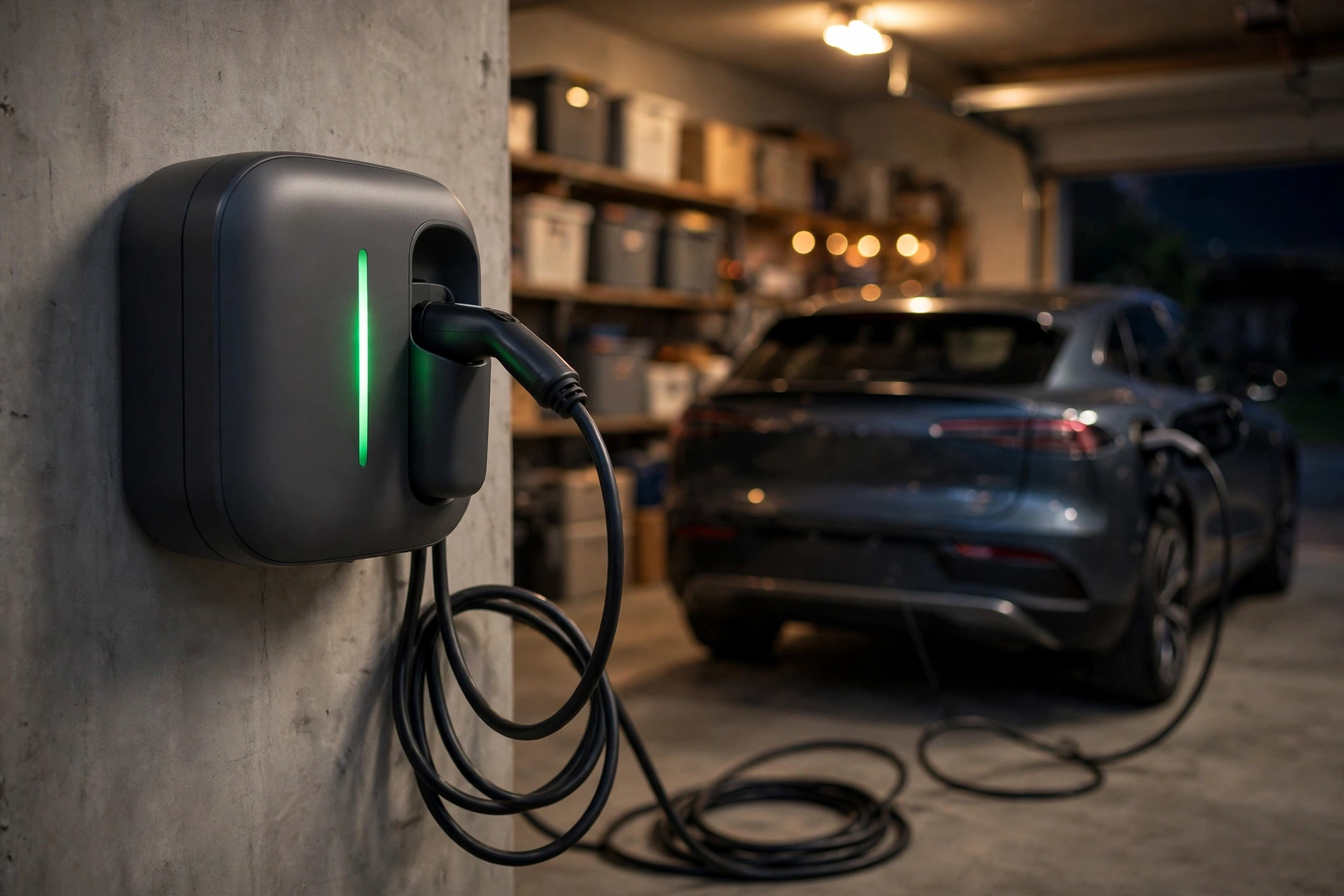
What actually arrives: a dark gray wallbox, 13.2 × 7.4 × 3.8 inches and about 15.4 lbs, with an LED status strip down the front and a 25-foot cable ending in an SAE J1772 connector. That cable length is the longest in its class, and it sounds like a boring spec until day one, when you park nose-in the wrong way and discover a rival’s 23-foot cable ends two feet from your charge port. We have all done that first-week shuffle. Twenty-five feet forgives it.
The housing is rated NEMA 4X and IP65, so it shrugs off driveway installs, hose-downs and dust, and Autel rates it to work from −40°F to 131°F. You choose between an in-body holster, where the connector docks into the unit itself, or a separate holster you can mount wherever your hand naturally falls. Pick the in-body one. The separate holster costs $3 less and buys you one more thing to mount, aim at and miss in the dark.
Prices here were checked October 27, 2026, on Autel’s official store: the maxicharger ac elite home 50a ev charger costs $498 with the in-body holster and $495 with the separate holster, down from a $639 list price. Autel’s own product page for the AC Elite Home 50A lists the full spec sheet if you want to cross-check us.
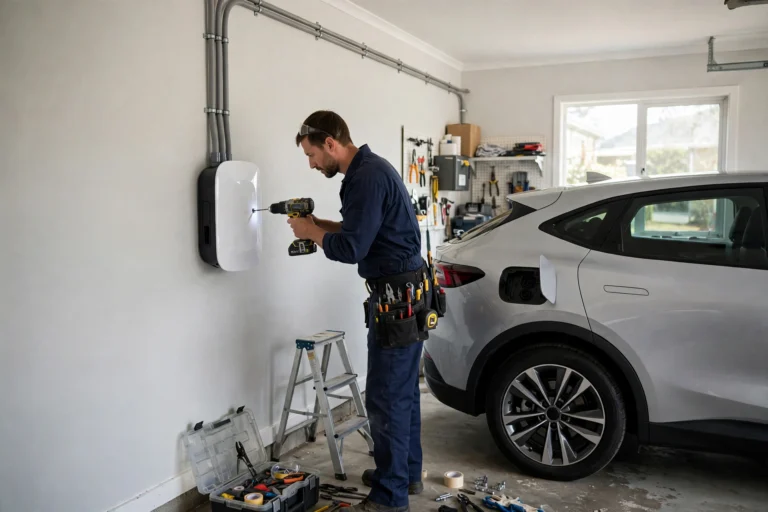
Two things are not in the box. The RFID charge cards are a $36.99 two-pack, sold separately, and installation is on you — EnergySage puts typical professional installation at $800 to $3,000 depending on your panel and cable run, which means the electrician, not the charger, is usually the bigger line item. Budget for both numbers before you fall in love with the $498.
Installation is hardwired only at this size; the plug-in versions in the family are the 40-amp Elite models. For the full 50-amp output you need a 70-amp circuit, and the reason is plain code arithmetic: EV charging counts as a continuous load, so the circuit must be sized at 125% of the draw — 50 × 1.25 = 62.5 amps, which lands you on a 70-amp breaker.
Do not panic if your panel cannot spare that. Output adjusts from 16 to 50 amps in steps (16, 24, 32, 40, 48, 50), set by dip switch at install or later in the app, so a 100-amp-panel house can run it at 32 amps tonight and turn it up after a panel upgrade. If you are not sure what your panel can carry, run your numbers through our EV charger sizing calculator before the electrician visit, not after.
“Up to 48 miles an hour” — the speed maths, done honestly
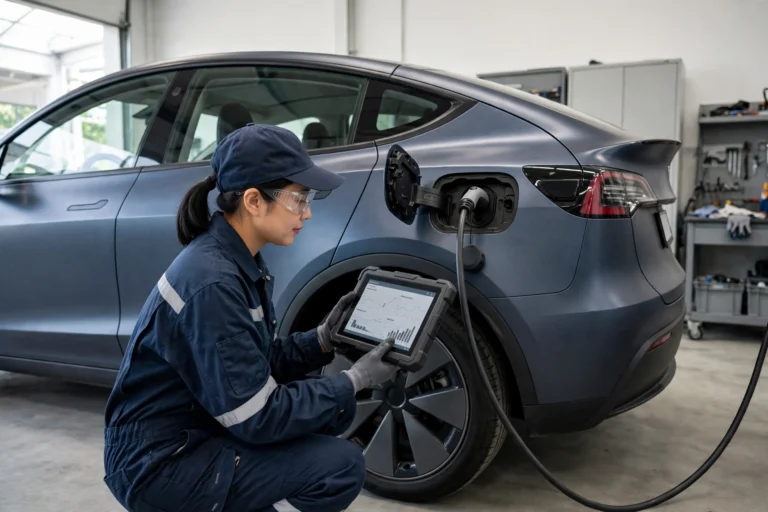
Autel advertises up to 48 miles of range per hour of charging. That number assumes your car converts every watt into distance at 4 miles per kWh and that nothing is lost along the way. Real cars and real cables are sloppier than that, so here is the same claim rebuilt with honest inputs. Take a Tesla Model Y, which uses roughly 250 Wh per mile on its EPA cycle, and the maxicharger ac elite home 50a ev charger pushes 12 kW from the wall; figure about 90% of that reaches the battery after conversion losses, so 12 × 0.9 = 10.8 kW actually lands in the pack.
Divide 10,800 watts by 250 Wh per mile and you get about 43 miles of range per hour. Not 48. Also not slow.
Now the comparison that actually matters, against a common 40-amp charger. That unit delivers 9.6 kW from the wall, so 9.6 × 0.9 = 8.64 kW reaches the battery, and 8,640 ÷ 250 = about 35 miles per hour. Over an eight-hour night, the maxicharger ac elite home 50a ev charger returns roughly 43 × 8 = 346 miles while the 40-amp unit returns 35 × 8 = 280 miles. A gap of about 66 miles by breakfast. If you drive 40 miles a day, neither number changes your life. If you run a big-battery SUV or truck, share one charger between two cars, or get home at midnight and leave at six, those 66 miles are the whole argument.
One ceiling sits above all of this: your car. The charger offers power; the car’s onboard charger decides how much to accept. Plenty of plug-in hybrids sip at 3.3 or 7.7 kW, and some EVs cap out at 9.6 kW no matter what the wallbox can do. Check your car’s AC charging limit before paying for 50-amp bragging rights — the spec is in your owner’s manual and takes two minutes to find.
And if you are upgrading from a wall socket, keep perspective: as our guide to charging an electric car with a regular outlet shows, Level 1 gives you roughly 4 miles an hour. Going from 4 to 43 is the real headline here. The fight between 43 and 48 is marketing.
The app is the queue manager
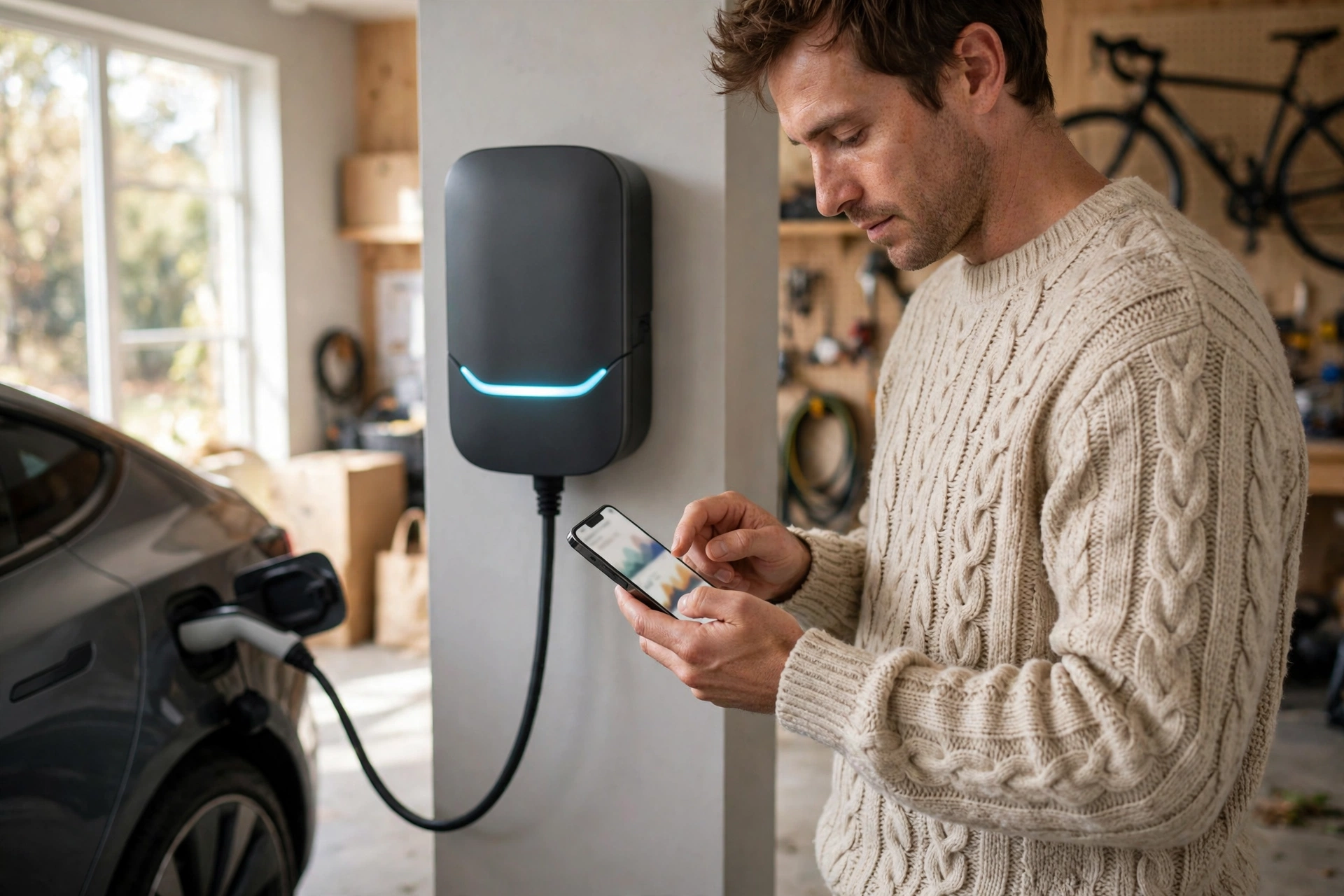
Every smart charger ships an app; most of them feel like homework. The free Autel Charge app for the maxicharger ac elite home 50a ev charger is better than average at the jobs you will actually repeat: starting and stopping a session from the sofa, scheduling charging into your utility’s off-peak window, nudging the current up or down, and showing session history with costs and even CO2 saved. Firmware updates arrive over the air.
It works over Wi-Fi, Ethernet or Bluetooth up close, and that Ethernet port quietly matters — garages are where home Wi-Fi goes to die, and a wired option means the schedule you set in October still runs in February. There is Alexa voice control if asking a speaker to start charging amuses you. And if you want none of it, AutoStart mode just charges when you plug in, no phone, no account gymnastics, like a charger from simpler times.
Scheduling is where the app earns its keep, so here is what it is worth in a cold week. Say you drive 40 miles a day, five days: 200 miles. Cold weather pushes a typical crossover to roughly 0.31 kWh per mile (est., based on the usual winter efficiency penalty), so the week needs 200 × 0.31 = 62 kWh. On a peak time-of-use rate of $0.32 per kWh (est., typical of published TOU plans) that week costs 62 × 0.32 = $19.84. Scheduled into an off-peak window at $0.12 per kWh (est.), it costs 62 × 0.12 = $7.44.
Setting one schedule on the maxicharger ac elite home 50a ev charger saves about $12.40 that week — roughly $50 across a cold month, for ninety seconds of tapping. Our electric car cost per mile guide shows how that rate choice moves your whole per-mile number, if you want the longer version of this maths.
Then there is the human layer, which no spec sheet covers. The Elite has a built-in RFID reader, so a tap of a card can start a session. Our position: in a locked garage, skip the cards. Tapping a card to charge your own car, in your own garage, is security theatre, and the $36.99 is better spent on pizza.
On an open driveway, in a shared house, or anywhere a teenager’s friend might treat your charger as a public amenity, the cards become the peace treaty — they settle who charged, when, and they keep the queue polite. Households with two EVs develop a plug-in rota more formal than most dishwasher treaties; at least this way the app keeps the receipts.
Two EVs, one panel: the load-balancing trick
The feature most buyers scroll past is the one we would put on the box. Dynamic Load Balancing (DLB) on the maxicharger ac elite home 50a ev charger lets several MaxiChargers share a fixed pool of power and divide it between cars — one car charging alone gets the lot; a second car plugs in and they split it, no tripped breakers, no 2 a.m. negotiations.
Adaptive Load Management (ALM) goes a step further and watches the whole house, easing the chargers down when the oven, dryer and heat pump all run at once, though ALM needs extra monitoring hardware at additional cost (est.). Independent reviewers of the MaxiCharger line note power sharing across up to six units. For a one-car home this is shelf-ware. For a two-EV household staring at a four-figure panel-upgrade quote, it is frequently the difference between buying a second charger and rewiring the house. This, not the 50-amp headline, is the maxicharger ac elite home 50a ev charger’s best party trick.
The rivals, priced per kilowatt
Three chargers dominate this shelf, and each beats the Autel somewhere. The ChargePoint Home Flex matches it at 50 amps and 12 kW, adds plug-in versions and a native NACS option, and costs about $549 (checked October 27, 2026) with a 23-foot cable. The Tesla Wall Connector runs 48 amps and 11.5 kW at $475, carries a longer four-year warranty, and is the obvious native fit for Tesla households; its Universal sibling adds a J1772 adapter for more money. The Emporia Level 2 charger also delivers 48 amps and 11.5 kW at about $399, with energy monitoring that data fans love.
Now divide price by power, because kilowatts are what you are actually buying. The maxicharger ac elite home 50a ev charger: $498 ÷ 12 kW = $41.50 per kW. ChargePoint Home Flex: $549 ÷ 12 = $45.75 per kW. Tesla Wall Connector: $475 ÷ 11.5 = $41.30 per kW. Emporia: $399 ÷ 11.5 = $34.70 per kW.
Read that table the right way. The Autel sits mid-pack on price per kilowatt — you are not overpaying for the watts, and you are not getting them at Emporia’s bargain rate either. What the extra money buys is the connectivity stack (five connection methods, wired Ethernet included), the load balancing above, and the longest cable in the group. ChargePoint wins if you need a NACS plug or a plug-in install. Tesla wins inside Tesla households and on warranty length. Emporia wins the budget argument outright. The maxicharger ac elite home 50a ev charger wins the two-charger garage and the house where the router is three rooms and a brick wall away from the car.
The catches nobody prints on the box
Three honest drawbacks, in descending order of how much they will bother you. First, the cable in deep cold. The unit is rated to operate at −40°F, and electrically it does — but independent cold-weather cable testing, summarised in EnergySage’s review of Autel’s EV chargers, found the Elite family’s cable among the stiffest tested in freezing conditions. In a Minnesota January, coiling 25 feet of it feels like wrestling a garden hose that has opinions. If your charger lives outdoors in a cold state, this is a real, weekly annoyance, not a footnote.
Second, there is no screen. Status on the maxicharger ac elite home 50a ev charger lives on the LED strip and in the app, which is elegant right up until the app signs you out and you are standing in a cold garage at midnight re-typing a password to answer the question “is it charging?” The LED strip does tell you the essentials at a glance, and AutoStart removes most of the drama, but a tiny display would have cost little and saved real irritation.
Third, the connector. The Elite is J1772 only — there is no native NACS version of this model, since Autel’s NACS cables live in its Lite line. Tesla owners charge perfectly well through the J1772 adapter that came with the car; it is simply one more small object to keep track of, in a life already full of small objects. Add the separately sold RFID cards and the extra hardware ALM requires, and the accessory tail is longer than the headline price suggests. None of this kills the product. All of it belongs in your decision.
One piece of admin is worth doing before you order, not after. The maxicharger ac elite home 50a ev charger carries ENERGY STAR certification, and many utilities run charger rebates — commonly a few hundred dollars — that require the unit to appear on their approved list before purchase. Autel’s store runs a rebate finder for exactly this reason. Check your utility’s list first, screenshot it, and keep the email receipt with the charger’s serial number somewhere findable; future you, mid-rebate-form at 11 p.m., will be grateful. We have all been future us in that exact chair.
Our verdict
Our score: 8.4/10 — Charging speed: 9/10 · App & smarts: 8.5/10 · Value: 7.5/10
Buy the maxicharger ac elite home 50a ev charger if your car can accept 48 amps or more, if a second EV is even a rumour in your household, or if your garage Wi-Fi is held together by hope — the Ethernet port and load balancing are worth real money in those three lives.
Look elsewhere if you want a native NACS plug today, if you rent and need a plug-in unit, or if your winters are serious and the charger must live outdoors; a stiffer-than-rivals cable will greet you every frozen morning. For the broad middle of EV owners — one car now, maybe two later, a panel with some room and a driveway that sees weather — it is one of the most complete home chargers at $498, and the app makes the daily ritual about as painless as plugging in gets. Our scoring weighs published specifications, certification listings and independent test coverage; how we research explains the method behind every score on this site.
Frequently asked questions
Is the maxicharger ac elite home 50a ev charger worth it if my car only accepts 40 amps?
For speed alone, no — your car’s onboard charger sets the ceiling, and a 40-amp limit means the Autel runs at 40 amps whatever the badge says. It can still make sense for the app, the scheduling and the load balancing if a faster-charging second car is coming, but if none of that applies, a good 40-amp charger saves you money for identical overnight results.
Will it charge a Tesla?
Yes, through the J1772-to-NACS adapter that Tesla includes with the car, at the full rate your car accepts. There is no version of this Elite model with a native NACS connector; Autel puts NACS cables on its Lite line instead. If adapter-free Tesla charging matters most to you, Tesla’s own Wall Connector or a NACS Home Flex is the cleaner buy.
What size circuit breaker does it need?
A 70-amp circuit for the full 50-amp output, because EV charging is a continuous load and code sizes the circuit at 125% of the draw. If your panel cannot spare that, the unit can be set to 16, 24, 32, 40 or 48 amps on a smaller circuit and raised later. Either way it is a hardwired install, so a licensed electrician and a permit are part of the plan.
Do the RFID cards come in the box?
No. The reader is built into the charger, but the cards are a $36.99 two-pack (checked October 27, 2026). You only need them if the charger is somewhere other people can reach — a driveway, a shared garage, a rental property. Inside a private locked garage, the app or plain AutoStart does the same job for free.
Can it really work at −40°F?
Autel rates the enclosure (NEMA 4X, IP65) and operating range from −40°F to 131°F, and the electronics are certified for it — it carries CSA safety certification and ENERGY STAR certification. The practical winter complaint is not failure, it is cable stiffness: independent cold-weather testing found this family’s cable unusually rigid when frozen, so expect the coil to fight back on the coldest mornings.
Can two of these share one circuit?
Yes. Dynamic Load Balancing lets multiple MaxiChargers split a shared power budget automatically — reviewers put the power-sharing limit at up to six units — and Adaptive Load Management can watch the whole house’s load if you add the extra monitoring hardware. For two-EV homes, that pairing is the feature most likely to save you a panel upgrade.
If you are still weighing it up, the maxicharger ac elite home 50a ev charger remains a strong all-round home charger at $498, and for many households the maxicharger ac elite home 50a ev charger will be the simplest way to get reliable 50-amp charging at home. Before you order, check your panel, your car’s limit and your utility rebate, so the maxicharger ac elite home 50a ev charger you buy is the one your home can actually use at full power.