Last updated: October 27, 2026
Start with the range claim, because that is where every engwe conversation has to start. The brand prints 68 miles on its big folding bike, 150 miles on the dual-battery M20 and 180 miles on the new M20 3.0. Independent testers then ride the bikes and come back with numbers roughly half as big. That gap — not the motors, not the prices — is the most important thing to understand before you hand this company your money.
So what is this brand, exactly? A direct-to-consumer outfit from Shenzhen that sells through its own US store, with no dealer network behind it. You order online, the bike arrives in a large box mostly assembled, and support runs through email and shipped parts. The catalogue is wide — folding fat-tire bikes, step-through utility models, a moped-style line — though the machines most American buyers cross-shop are four: the Engine Pro 2.0 folder, the EP-2 3.0 Boost folder, the M20 2.0 and the M20 3.0.
The pricing needs decoding before anything else. Every model page carries a struck-through “was” price that nobody appears to pay: the M20 3.0 shows $1,399 against $1,999, the M20 2.0 shows $999 against $1,499, the EP-2 3.0 shows $1,499 against $1,899. Those sale prices are the real prices. Judge the bikes at those numbers and ignore the theatre around them. All prices in this guide were checked on the US store on October 27, 2026, and they move often enough that you should re-check on the day you buy.
Here is the short version of the range story, with the full arithmetic further down. BikeRide put the Engine Pro 2.0 through instrumented range tests and recorded just over 30 miles at maximum assist and just over 40 miles at a mid setting with nearly 1,500 feet of climbing mixed in. The Verge rode the original M20 mostly on throttle and got 27 miles from a battery paired with a 47-mile pedal-assist claim. A pattern? Yes. The bikes are not short-legged. The claims are simply written in a lab dialect nobody rides in.
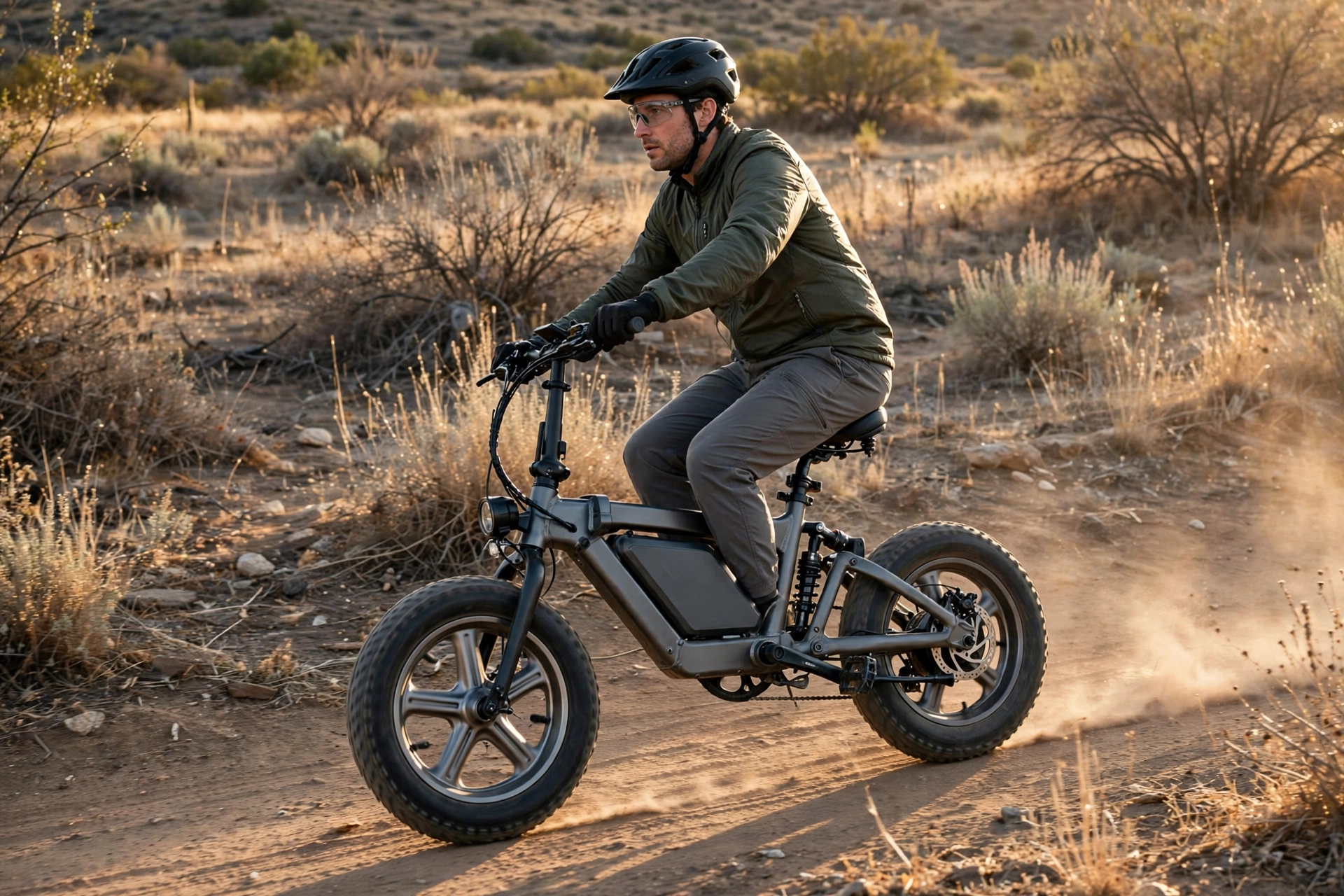
The hardware underneath the claims is a different story, and it is better than the marketing deserves. The current folders run torque sensors rather than the crude on-off cadence switches this price class used to ship. The M20 3.0 stops on four-piston hydraulic brakes with 203 mm rotors — genuine hardware, not decoration. Separate the spec sheet from the brochure and there is real value here. Buy the spec sheet.
What engwe sells in the US right now
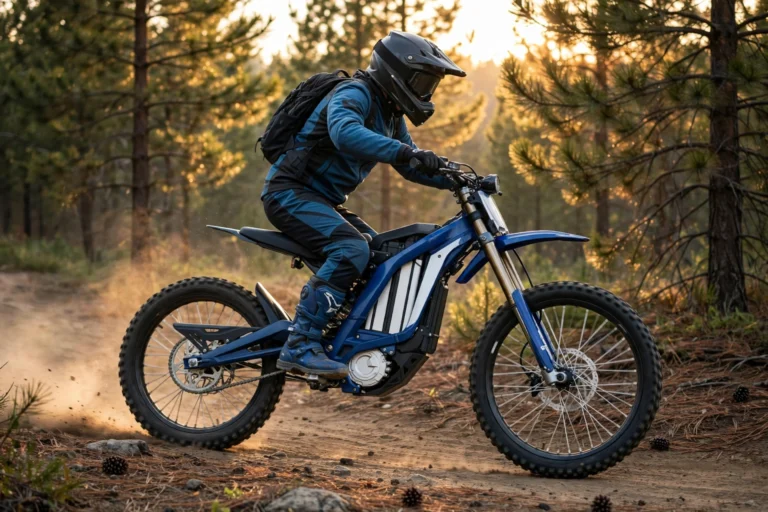
The folder line is the core of the range. The Engine Pro 2.0 is the heavyweight: a 750W rated hub motor (1,200W peak) making a claimed 75 Nm, a torque sensor, a 52V 16Ah battery (832 Wh), full suspension, hydraulic brakes and 20×4-inch tires, at 69.6 lbs. When we checked, the US store listed it at $1,699 and sold out in every colour, with the page steering buyers to the newer EP-2 3.0 Boost instead. That Boost model is the current folder to buy: $1,499, a claimed 90 Nm from its hub motor, a torque sensor, a 48V 13.5Ah battery (648 Wh), dual-piston hydraulic brakes, an 8A charger the brand says refills the pack in about two hours, and a 71.2 lb all-in weight. Around those two sit the step-through L20 models (the L20 2.0 at $699), the dual-motor E26 3.0 at $1,799, and the Eagle at $899 — a 3,200W-peak, 45 mph dirt bike that shares a page with bicycles and shares nothing else with them. More on that in the legal section.
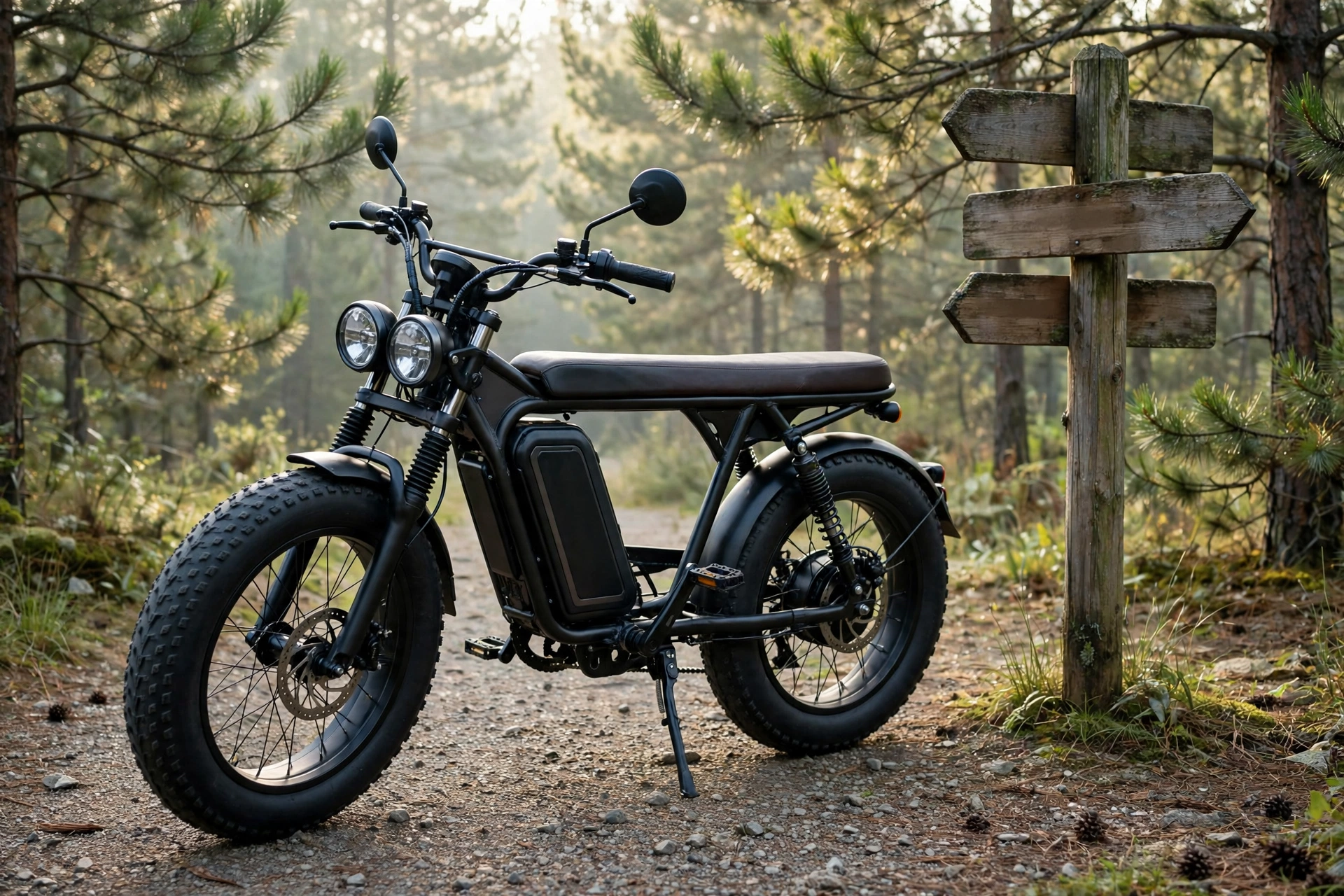
The M20 line is the moped-styled branch: long bench seat, dual headlights, fat tires, café-racer tank panel. The original M20 (750W rated, 55 Nm, one or two 624 Wh batteries) is being phased out — the US store listed it at $1,399 and out of stock when we checked. The M20 2.0 at $999 is the value pick of the family: a 750W rated motor with 1,200W peak, a larger 52V 15.6Ah battery (811 Wh), 180 mm hydraulic brakes, an adjustable rear air shock and an optional second battery. The M20 3.0, launched in 2026, is the escalation: a 60V system with 1,200 Wh in single-battery form or 2,400 Wh with two packs, a claimed 3,300W peak and 120 Nm, four-piston brakes, and prices of $1,399 or $1,699 depending on battery count.
The engwe range claims, translated into miles you will actually ride
Range claims become honest the moment you divide the battery by the miles. Watt-hours per mile is the only dialect that matters, so here is the translation. The Engine Pro 2.0 claim — 832 Wh ÷ 68 miles — works out to 12.2 Wh per mile. BikeRide’s instrumented range tests tell the real story: at the mid PAS 3 setting the same battery delivered just over 40 miles, which is 832 ÷ 40 = 20.8 Wh per mile, and at full assist it managed just over 30 miles, or 27.7 Wh per mile. The claim assumes the bike sips energy at roughly 60% of the rate a real rider on real hills actually uses. Same trick on the original M20: 624 Wh ÷ 47 claimed miles = 13.3 Wh per mile on paper, against 624 ÷ 27 = 23.1 Wh per mile in The Verge’s throttle-heavy test. The European EP-2 Boost test data makes the mechanism plain — one Irish reviewer measured 59 miles on flat ground at gentle assist (10.6 Wh per mile, close to the lab fantasy) and 29.8 miles in the hills at high assist (20.9 Wh per mile). Low assist, flat road, light rider: the claim nearly holds. Anything else: it does not.
So plan with 20 to 25 Wh per mile for mixed riding and divide your battery by 22 for a working number. On that basis the M20 3.0’s 90-mile pedal-assist claim becomes roughly 54 miles of real mixed use (est., from its 1,200 Wh pack at 22 Wh per mile) — and notice that the brand’s own throttle-only figure for the same bike, 40 miles, implies 30 Wh per mile. That throttle number is the most honest figure on the page. Use it as your anchor and treat everything above it as advertising.
Now the money version of the same test — price per tested mile, which is a calculation we run on every brand we cover. Engine Pro 2.0: $1,699 ÷ 40 tested miles = $42.48 per mile of verified range. EP-2 Pro, the older folder BikeRide tested at 41.2 miles: roughly $899 at its common street price (est.) ÷ 41.2 = $21.82 per mile — the best verified value engwe has produced. Original M20: $1,399 ÷ 27 tested miles = $51.81 per mile, the worst of the set. EP-2 3.0 Boost: $1,499 ÷ 44.7 miles = $33.53 per mile (est., using the European Boost model’s mixed-route test of its near-identical 648 Wh platform). Electricity, for perspective, is nearly free in this equation: filling the Engine Pro’s 832 Wh pack at an average US residential rate of about $0.17 per kWh (est.) costs roughly 14 cents, a point our guide to what charging an e-bike costs breaks down properly. The battery is not the expense. Believing the brochure is.
Torque is real. Peak watts are theatre.
Two numbers sit at the top of every engwe product page, and they deserve opposite levels of trust. Torque — 75 Nm on the Engine Pro 2.0, a claimed 90 Nm on the EP-2 3.0, 120 Nm on the M20 3.0 — is at least pointed at something real: how hard the motor twists at the wheel, which is what you feel on a hill start. Hub-motor torque figures are not measured to one shared standard across the industry, so treat them as relative rankings inside the brand’s own line-up rather than laboratory truth (est. basis: no common test standard exists for these published figures). Peak watts deserve open suspicion. A “1,200W peak” or “3,300W peak” badge describes a brief controller burst, not sustained output, and it tells you nothing about legality — what class rules care about is the motor’s rated power and the bike’s assisted top speed. Judge motors on rated watts, torque and the sensor. On sensors, the folders have genuinely improved: the Engine Pro 2.0 and EP-2 3.0 use torque sensors that meter assistance against your pedal pressure, where the M20 2.0 still uses a cadence sensor, which is why testers report ghost pedalling once it spins past 20 mph. Pedals that spin uselessly at speed are not a quirk. They are the sensor telling you it cannot feel you.
Our verdicts: the four engwe models that matter
Engine Pro 2.0 — Our score: 7.5/10. Range honesty: 6/10 · Motor & build: 8/10 · Value: 7/10. The strongest all-round machine in the line: a real torque sensor, the biggest single battery in the folder family, an 8-speed Shimano Altus drivetrain and the best instrumented test results of any model here. BikeRide measured it out-braking and out-ranging its comparison set. The deductions are the sold-out status at $1,699 and a claim-to-tested range gap of 68 versus 40 miles. If it returns at its earlier street prices, the value score climbs a full point.
EP-2 3.0 Boost — Our score: 7/10. Range honesty: 5/10 · Motor & build: 8/10 · Value: 7.5/10. The folder to buy today, mostly for the parts that are not on the poster: dual-piston hydraulic brakes, a torque sensor and an 8A fast charger that makes the charging wait a non-issue. Its 120 km (75-mile) claim against a 648 Wh battery is the most optimistic arithmetic in this guide — plan on 30 to 45 real miles depending on assist and hills (est., from the European test data on the same platform). Honest range, dishonest label, good bike.
M20 2.0 — Our score: 6.5/10. Range honesty: 6/10 · Motor & build: 6.5/10 · Value: 8/10. At $999 this is the cheapest way into the moped-style category with hydraulic brakes and an air shock, and the 811 Wh battery is a genuine upgrade over the original. The cadence sensor, the ghost pedalling above 20 mph and the brand’s “80 miles plus 80 miles” dual-battery framing hold it back. Buy it as a $999 fun machine and it delivers. Buy it as a 160-mile tourer and you will be pedalling a 77 lb (est.) bicycle home.
M20 3.0 — Our score: 6/10. Range honesty: 5/10 · Motor & build: 8.5/10 · Value: 6.5/10. The hardware is the best the brand has shipped: 2,400 Wh in dual-battery form, four-piston brakes on 203 mm rotors, an 8A charger, and acceleration the brand quotes at 0–15 mph in 2.15 seconds. The score is capped by what the machine becomes in its unlocked mode — read the legal section before you fall for the 40 mph headline — and by range claims (90 and 180 miles) that no instrumented test has verified yet. Our fastest e-bike guide covers what speeds like that mean for where you may ride.
Is an engwe street-legal where you ride?
Most US states sort e-bikes into three classes: pedal-assist or throttle up to 20 mph for Classes 1 and 2, pedal-assist up to 28 mph for Class 3, with a 750W rated motor ceiling running through the definitions. Our Class 1 e-bike guide lays out the framework state by state. Against that framework, the folders behave. The Engine Pro 2.0 ships with its throttle capped at 20 mph and pedal assist to 28 mph — a textbook Class 3 configuration. The M20 2.0 uses the same split. No drama, no settings menu required.
The M20 3.0 is where you must read carefully. It leaves the factory limited to 20 mph, which keeps it on the right side of the class system. An off-road mode, unlocked by contacting customer support, releases the full 40 mph and the 3,300W peak. In that mode the machine is not an e-bike under any state’s class definitions — full stop. On a public road it falls into moped or motorcycle territory, with the registration, licence and insurance rules that follow, and on trails it is a motor vehicle wherever motor vehicles are banned. That is not a reason to skip it; private land and OHV areas exist, and the bike is plainly built for them. It is a reason to stop calling it a bicycle once you unlock it. The Eagle dirt bike at 45 mph needs no such nuance: it was never a bicycle. And riders in New Jersey should note that the state’s 2026 law now demands registration and a licence for every e-bike regardless of class — the strict end of a trend worth watching before you buy anything with a settings menu.
Support, shipping and the warranty: the part nobody puts in the brochure
Direct-to-consumer pricing is real because the dealer margin is gone — and so is the dealer. The published warranty runs 12 months on the frame, motor, battery and electronics. Claims start by email, with photos or video, and parts arrive by post. engwe publishes a partner repair-shop map, and some independent shops will service these bikes; plenty will not touch direct-to-consumer brands at any price, so make that phone call before you order, not after the first fault. Budget an hour for final assembly and, if you do not set up bikes yourself, a shop safety check at roughly $60–$80 (est., typical US shop rates for a basic tune and bolt check). Run the full ownership picture — purchase, electricity, tyres, brake pads, a replacement battery in year three or four — through our total cost of ownership calculator before deciding the sticker price is the whole story. One more ownership reality: at 69.6 to 71.2 lbs, the folders fold for storage footprint, not for carrying. An RV garage or a car boot, yes. Three flights of apartment stairs, no — that is a gym membership you did not ask for.
Who should buy one, and who should walk away
Buy one if you can turn a wrench, you price bikes in dollars per tested mile, and you want fat-tire hardware — full suspension, hydraulic brakes, an 800 Wh-class battery — at prices the dealer brands do not match. The EP-2 3.0 Boost is the sensible folder, the M20 2.0 is the cheap thrill, and the M20 3.0 is the private-land toy with the best brakes the brand has ever fitted. Walk away if your commute depends on same-week warranty service from a shop across town, if stairs stand between the bike and your front door, or if any part of your decision rests on a three-digit range claim. A rider who needs dealer support is not being fussy. They are buying a different product — uptime — and this brand does not sell it.
Engwe questions, answered straight
Is engwe a good brand?
It is a good spec-sheet brand and a mediocre promises brand. The hardware at each price — torque sensors on the folders, hydraulic brakes, batteries up to 2,400 Wh — is genuinely competitive, and instrumented tests from BikeRide and others show the bikes perform respectably. The range claims are inflated by roughly half, and support is email-and-parcels rather than a dealer network. Score the brand on the first list and you will be satisfied. Score it on the second and you were warned here.
How far does an Engine Pro 2.0 actually go on a charge?
Plan on about 40 miles at a mid assist setting and about 30 miles at maximum assist, per BikeRide’s instrumented tests with roughly 1,500 feet of climbing — against a claimed 68. Gentle riding at the lowest assist on flat ground will beat those figures; cold weather, a heavy rider and throttle use will cut them. Divide any battery in this line-up by 22 Wh per mile for a planning number you can trust.
Is the M20 3.0 street legal?
As shipped, yes in most states: it leaves the factory limited to 20 mph. Once the off-road mode is unlocked and the bike can reach 40 mph with a 3,300W peak, it no longer meets any e-bike class definition, and public-road use puts it under moped or motorcycle rules in most states. Keep the limiter on for the street. Use the unlock where motor vehicles are welcome.
What does it cost to charge one of these bikes?
Pennies. The Engine Pro 2.0’s 832 Wh battery costs about 14 cents to fill from empty at an average US residential electricity rate near $0.17 per kWh (est.), and even the M20 3.0’s dual 2,400 Wh setup costs only about 41 cents (est.) on the same basis. Charging cost is the least interesting number in e-bike ownership; purchase price per tested mile is where the money hides.
Where do I get one repaired?
Start with the brand’s email support and its partner-shop map; warranty parts ship to you or to a cooperating shop. Independent shops vary — some service any e-bike, others refuse direct-to-consumer brands entirely — so identify a willing local shop before you buy. Consumables (pads, tyres, chains, the Shimano drivetrain parts) are standard and easy. Motors, controllers and batteries are brand-supplied items, which is exactly why the 12-month warranty window matters.