Last updated: October 27, 2026
Start with the only number that matters: what do volkswagen evs actually cost on the day you sign? Not the launch press release. Not the configurator fantasy. The signed paperwork. Because in October 2026, the gap between Volkswagen’s sticker prices and Volkswagen’s transaction prices is the widest in the whole EV market — and if you shop the sticker, you will overpay by five figures.
Here is the honest shape of the range. There are exactly two volkswagen evs on sale in the United States: the ID.4 crossover and the ID. Buzz van. That’s the list. The federal clean vehicle credit that used to knock $7,500 off an ID.4 — it was built in Chattanooga, so it qualified — ended for vehicles acquired after September 30, 2025. What replaced it is better, if you move fast: Volkswagen’s own clearance money on a car it has already stopped building.
Yes, stopped. ID.4 production at Chattanooga ended in April 2026 so the plant could build more petrol Atlas SUVs. Everything on a dealer lot today is inventory — leftover 2025s and a limited run of 2026 models that Volkswagen says should last into 2027. The Buzz is in the same boat, one year further along: no 2026 model exists at all, imports were paused, and the vans in showrooms are 2025s. A 2027 Buzz with a native NACS port has been announced for a return, with first cars expected from August 2026 (some already arriving, supply thin). This guide prices what’s actually buyable, not what’s promised.
Our whole approach is money first, and we show the workings — the same discipline we apply in our wider EV range, charging and costs guide. Prices in this article were checked October 27, 2026. Where a number is our estimate rather than a published figure, it carries “(est.)” and the basis. One more thing before the numbers: if a dealer quotes you anywhere near full MSRP on either of these cars in October 2026, walk out. You’re being charged 2024 prices for a discontinued car.
The real line-up: two volkswagen evs and a gap year
Volkswagen’s own electric vehicles page on vw.com still leads with the 2025 ID. Buzz at $59,995, which tells you how slowly the official story is moving. The 2026 reality, model by model:
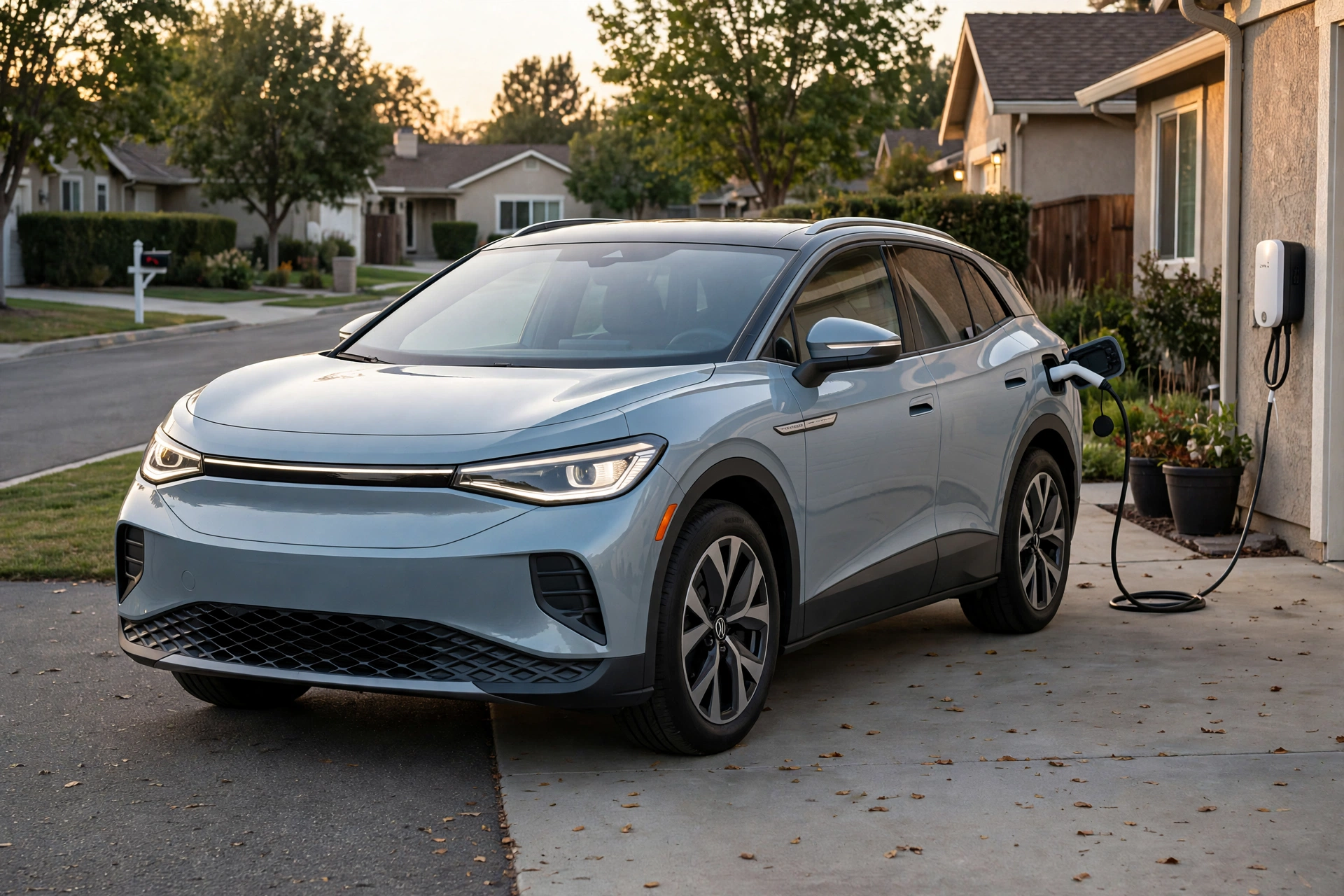
ID.4. The volume car. For 2026 the small 62 kWh battery was dropped, so every 2026 ID.4 carries the 82 kWh pack: Pro RWD at $45,095 (291 EPA miles, 282 hp), AWD Pro at $48,995 (263 miles, 335 hp), Pro S at $50,195, AWD Pro S at $54,095, and the AWD Pro S Plus at $57,655 — all plus a $1,475 destination charge. The leftover 2025 range is wider and cheaper at the bottom: the Limited and S Limited use the 62 kWh pack, manage 206 miles, and started at $39,995 and $45,095. A 2025 Pro is mechanically the same 291-mile car as the 2026. Remember that when we get to the discounts.
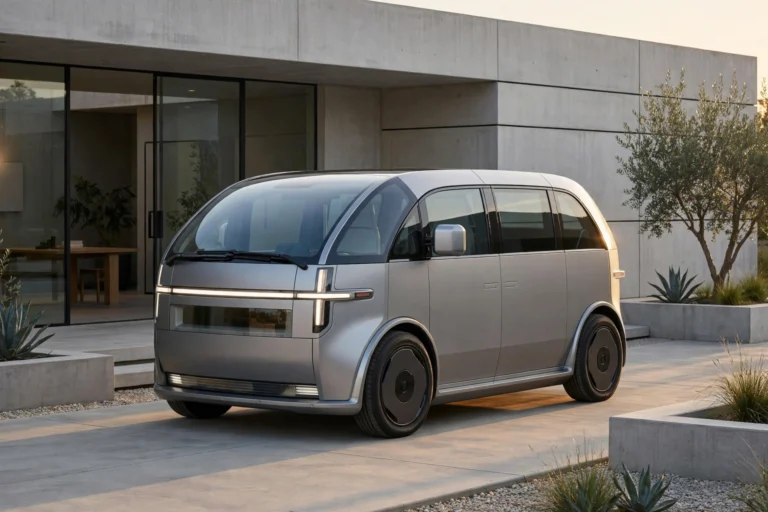
ID. Buzz. The heart car. Three 2025 trims, all with a 91 kWh battery: Pro S at $59,995 (234 miles), Pro S Plus at $63,495 (234 miles; $67,995 with 4MOTION all-wheel drive, 231 miles), and the launch-only 1st Edition at $65,495 ($69,995 in 4MOTION form). Add $1,550 destination. It never qualified for the purchase credit — it’s built in Hannover, Germany — so its price was always the full price. Seven seats, sliding doors, the looks. And 234 miles. Hold those two facts together; the verdict section does the arithmetic on them.
ID.7. The sedan that never came. Volkswagen delayed the ID.7’s North American launch in May 2024 and confirmed in January 2025 that it was cancelled for the US and Canada entirely, citing the challenging EV market. Dealers had reportedly been warning that a $50,000–$60,000 (est.) electric sedan was a hard sell in SUV country, and for once the dealers were right. It lives on in Europe and China. You cannot buy one here, so it gets no score and no more of your time.
What’s next. Reporting points to an ID. Tiguan electric crossover replacing the ID.4 for 2027, with a front trunk and — thank you — more physical buttons. That’s a name and a sketch, not a price. Anyone who tells you to wait for it is spending your patience, not your money. Buy the car that exists at the discount that exists.
Volkswagen EVs after the credit: the discount is the story
The federal credit died on September 30, 2025, and Volkswagen’s US EV sales fell off a cliff — 1,421 cars in the third quarter of 2026, down 90% year on year, with the ID.4 down 92%. A budget hawk reads that chart differently from a headline writer. A 90% sales collapse on a car the factory has already stopped building means one thing: the seller is desperate and the stock is finite. That is the best negotiating position a buyer ever gets.
The headline offer, reported by Autoblog and Electrek and checked October 27, 2026: up to $12,500 off leftover 2025 ID.4s as a customer bonus at participating dealers, running September 1 to November 2, 2026. That drops a 2025 ID.4 Pro from $45,095 to $32,595 before destination — cheaper than the credit ever made it. The 2026 models get a smaller $6,000 customer bonus. Both offers carry the words “very limited inventory,” which for once is not a sales trick: Q3 sales of 989 ID.4s against a shrinking pool means the good colours and the Pro RWD are going first.
The Buzz discount picture is stingier. Volkswagen offered up to $10,000 off late in 2025, then trimmed it: the $2,500 dealer bonus was pulled, and reporting through early 2026 put a $7,500 customer bonus on outright purchases only — not leases (est. for current availability; dealer bulletins change monthly, so confirm in writing). KBB’s fair purchase pricing has been sitting roughly $2,945–$4,945 under MSRP across the Buzz range. So the Buzz is discounted like a car that’s selling. The ID.4 is discounted like a car that isn’t. Price your expectations accordingly.
One trap to sidestep: “up to $12,500” bundles trim- and region-specific money, and some dealers will present the full stack as if it applies to the car in front of you when it doesn’t. Get the discount itemised on the quote — factory bonus, dealer discount, your money — three separate lines. If a dealer won’t itemise, that tells you which line was imaginary.
ID.4 price per mile: the cheapest miles in the class
Our standard test for any EV: divide the price by the EPA range and you get the cost of each mile of range you’re buying. Lower wins. Here is every relevant ID.4, using prices including destination, checked October 27, 2026:
| Model | Price (incl. dest.) | EPA range | Price per mile |
|---|---|---|---|
| 2025 ID.4 Limited (62 kWh) | $41,420 | 206 mi | $41,420 ÷ 206 = $201 |
| 2025 ID.4 Pro RWD (82 kWh) | $46,570 | 291 mi | $46,570 ÷ 291 = $160 |
| 2025 ID.4 Pro RWD, after $12,500 bonus | $34,020 | 291 mi | $34,020 ÷ 291 = $117 |
| ID.4 AWD Pro | $50,420 | 263 mi | $50,420 ÷ 263 = $192 |
| ID.4 AWD Pro S Plus | $58,720–$59,130 | 263 mi | ≈ $223–$225 |
Context, because a number alone is a brochure: a Hyundai Ioniq 5 SE Standard Range starts at $37,850 (est., checked October 27, 2026) with 245 miles — $37,850 ÷ 245 = $155 per mile. A Kia EV6 Light at $42,900 (est.) with 237 miles is $181 per mile. At full sticker the ID.4 Pro is competitive. At the discounted $117 per mile, nothing in the class is close. Nothing. That is what a discontinued car with a desperate maker does to a value table.
Now the five-year fuel maths against the petrol Volkswagen most ID.4 shoppers cross-shop, the Tiguan. Assumptions on the table, all labelled: 15,000 miles a year for five years = 75,000 miles. The ID.4 RWD uses 30 kWh per 100 miles on the EPA cycle, so 75,000 × 0.30 = 22,500 kWh; at $0.17 per kWh home electricity (est., US residential average class) that’s $3,825. A Tiguan at 28 mpg combined (est.) burns 75,000 ÷ 28 = 2,679 gallons; at $3.50 a gallon (est.) that’s $9,375. Saving: $9,375 − $3,825 = $5,550 over five years, before maintenance — and the EPA’s own running-cost estimate for the ID.4 at fueleconomy.gov lands at $650 a year and $1.12 per 25 miles, in the same territory. Our electric car cost per mile guide runs the same sums for the rest of the class if you want the full table.
Our score: 8.6/10 for the discounted ID.4 Pro RWD — Range 8/10 (291 miles is plenty, not class-leading) · Charging 7/10 (175 kW peak, roughly 28 minutes 10–80% (est. from VW’s published curve class); fine, not fast) · Value 10/10 (at $32,595 before destination, it is the cheapest 291-mile EV in America; at full MSRP this score would be 7/10 and the overall 7.4 — the discount IS the review).
ID. Buzz: price per mile exposes it
Run the same division on the Buzz and the nostalgia gets expensive fast:
| Model | Price (incl. dest.) | EPA range | Price per mile |
|---|---|---|---|
| Buzz Pro S | $61,545 | 234 mi | $61,545 ÷ 234 = $263 |
| Buzz Pro S, after $7,500 bonus (est.) | $54,045 | 234 mi | $54,045 ÷ 234 = $231 |
| Buzz 1st Edition 4MOTION | $71,545 | 231 mi | $71,545 ÷ 231 = $310 |
$263 per mile of range is 64% more per mile than the undiscounted ID.4 Pro and more than double the discounted one. The efficiency explains it: the Buzz drinks roughly 39 kWh per 100 miles (est., derived from its 91 kWh pack and 234-mile rating) against the ID.4’s 30 — a brick-shaped van pushing air aside costs money every single mile you drive it. Five years at 15,000 miles a year on home charging (est. $0.17/kWh): about $4,973 in electricity, $1,148 more than the ID.4, for a van that goes 57 fewer miles between charges. We covered the seats, doors and family life in depth in our VW electric van complete guide; this page’s job is the money, and the money says the Buzz is a want, not a buy.
Charging is the one place the Buzz claws something back: up to 200 kW DC, 10–80% in about 26 minutes. On a road trip that’s genuinely good. It still doesn’t repair a 234-mile ceiling — you’ll use that fast charging more often than ID.4 owners use theirs.
Our score: 6.7/10 for the Buzz Pro S — Range 5/10 (234 miles in 2026, at this price, is the weakest number in this guide) · Charging 7/10 (200 kW and a flat curve are real strengths) · Value 4/10 ($263 per mile of range; the $7,500 purchase bonus (est.) only softens it to $231). If you love it, buy it with your eyes open and your heart in charge — just don’t let anyone tell you it’s the sensible family choice. A Kia EV9 exists.

Charging volkswagen evs at home: the running-cost floor
Both cars charge at 11 kW on AC, so a home wallbox refills either overnight. Cost to fill from empty at $0.17 per kWh (est.): the ID.4’s 82 kWh pack is about $13.94; the Buzz’s 91 kWh pack about $15.47. Public DC is where budgets bleed — at $0.45 per kWh (est., typical fast-charge pricing) those same fills are $36.90 and $40.95. Home charging isn’t a lifestyle preference; it’s a $23-per-fill decision, every fill, for the life of the car.
Two 2026 specifics worth money. First, the 2025 ID.4 came with three years of Electrify America Pass+ membership and 500 kWh of included fast charging (per VW’s offer terms) — on a leftover car, confirm that entitlement is still attached and unused before you sign; it’s worth roughly $225 (est.) at public prices. Second, Volkswagen’s official NACS DC adapter is now available through dealers, opening the Tesla Supercharger network to both cars — more than triple the DC fast chargers, per VW’s own count. If you road-trip, that adapter is the best-value accessory on either options list. Everything else on those lists is where we go next.
The options-list trap: where volkswagen evs quietly get expensive
Emma’s rule: every trim step must pay rent in range, charging speed or years of use. Apply it. ID.4 Pro S adds $5,100 over the Pro for massaging leatherette seats, a glass roof and a power tailgate — $0 of range, $0 of charging. The AWD step costs $3,900 and removes 28 miles of range (291 → 263) to buy 53 extra horsepower and a heated windscreen. Snow-belt drivers: fine, that’s rent paid in winter grip. Everyone else: you just paid $3,900 to go less far. The Pro S Plus at nearly $59,000 all-in is the worst offender — at that money you’re within reach of genuinely better cars, and its $223-per-mile figure is the worst in the ID.4 range.
The Buzz repeats the pattern: Pro S Plus adds $3,500 for a head-up display, surround cameras and power sliding doors. Power sliding doors on a family van? Rent paid — that’s the one Buzz upgrade we’d sign. The 1st Edition premium, though, buys badges and a panoramic roof for $5,500 over Pro S, and in 4MOTION form produces the single worst value figure in this entire guide: $310 per mile of range. Hard pass.
Risk check: recalls and resale, priced in
Two risks, both real, both priceable. Resale first: KBB has flagged that the ID.4’s resale value trails its competitors, and a discontinued nameplate won’t help. That’s precisely why the play is the discounted new car — let the $12,500 bonus absorb the depreciation hit up front instead of discovering it at trade-in. Second, recalls: in October 2026 VW recalled 22,524 US ID.4s (model years 2023–2026) over battery cells that could overheat when charged above 80%, with owners told to cap charging at 80% until a remedy ships; notification letters are due November 27, 2026. On any used or leftover ID.4, run the VIN before you negotiate, and treat an unrepaired car as a negotiating lever, not a dealbreaker — the fix is VW’s bill. How we check this kind of thing is laid out on our how we research page.
The used market deserves one sentence of its own: early ID.4s are now among the cheapest used EVs in the country (est., from national listing patterns), which makes a used Pro the budget-hawk alternative if the new-car bonuses vanish from your region.
Verdict: which of the volkswagen evs deserves your money?
One car, one trim, one deadline: the 2025 ID.4 Pro RWD at the full $12,500 bonus. $117 per mile of range, 291 miles, $5,550 of five-year fuel savings against its own petrol sibling. Run it through our total cost of ownership calculator with your own mileage and electricity price and watch it beat cars costing $10,000 more. The offer window closes November 2, 2026 and the inventory is not being replaced — this is the rare case where “buy now” is arithmetic, not pressure.
Second place: a 2026 ID.4 Pro with the $6,000 bonus ($160 → roughly $140 per mile (est.)), same car, less urgency. The Buzz is third and it isn’t close: buy it because no other vehicle makes you feel that way, because at $263 a mile the spreadsheet has left the room. And the ID.7? It never arrived. Spend accordingly.
FAQ: volkswagen evs questions, answered
Are volkswagen evs still eligible for the $7,500 federal tax credit?
No. The clean vehicle credit ended for vehicles acquired after September 30, 2025. The ID.4 used to qualify on purchase because it was built in Chattanooga; the Buzz never did, being built in Germany. The replacement is Volkswagen’s own money — up to $12,500 off leftover 2025 ID.4s — which, unusually, is worth more than the credit was.
Is the ID.4 being discontinued?
Production at Chattanooga ended in April 2026, and dealers are selling through 2025 and limited 2026 inventory that VW expects to last into 2027. A successor — reported as the ID. Tiguan — is expected for 2027, and VW says a future ID.4 version is planned for North America. Parts and warranty support are unaffected by the production pause; the 8-year/100,000-mile battery warranty stands.
Why was the ID.7 cancelled for America?
Volkswagen delayed it in May 2024, then confirmed in January 2025 that the ID.7 would not be sold in the US or Canada at all, citing the challenging EV climate. Dealers had questioned whether a $50,000–$60,000 (est.) electric sedan could sell in an SUV market. It remains on sale in Europe and China.
Which VW EV is cheapest to run?
The ID.4, and it isn’t close. At 30 kWh per 100 miles it costs about $765 a year to fuel at home rates (est.) over 15,000 miles — fueleconomy.gov’s own estimate is $650 a year — against roughly $995 (est.) for the Buzz’s thirstier 39-per-100-miles (est.) appetite, plus the Buzz costs $15,000 more before you’ve driven a mile.
Should I buy a Buzz now or wait for the 2027 model?
If the Buzz is a heart purchase, the leftover 2025 with the $7,500 purchase bonus (est.) is the cheapest a new Buzz has ever been, and the 2027’s upgrades — native NACS port, new software, one-pedal driving — don’t fix the 234-mile range that defines the ownership maths. If range matters to your family, neither Buzz is the answer; buy the ID.4 and bank the difference.