Last updated: October 25, 2026
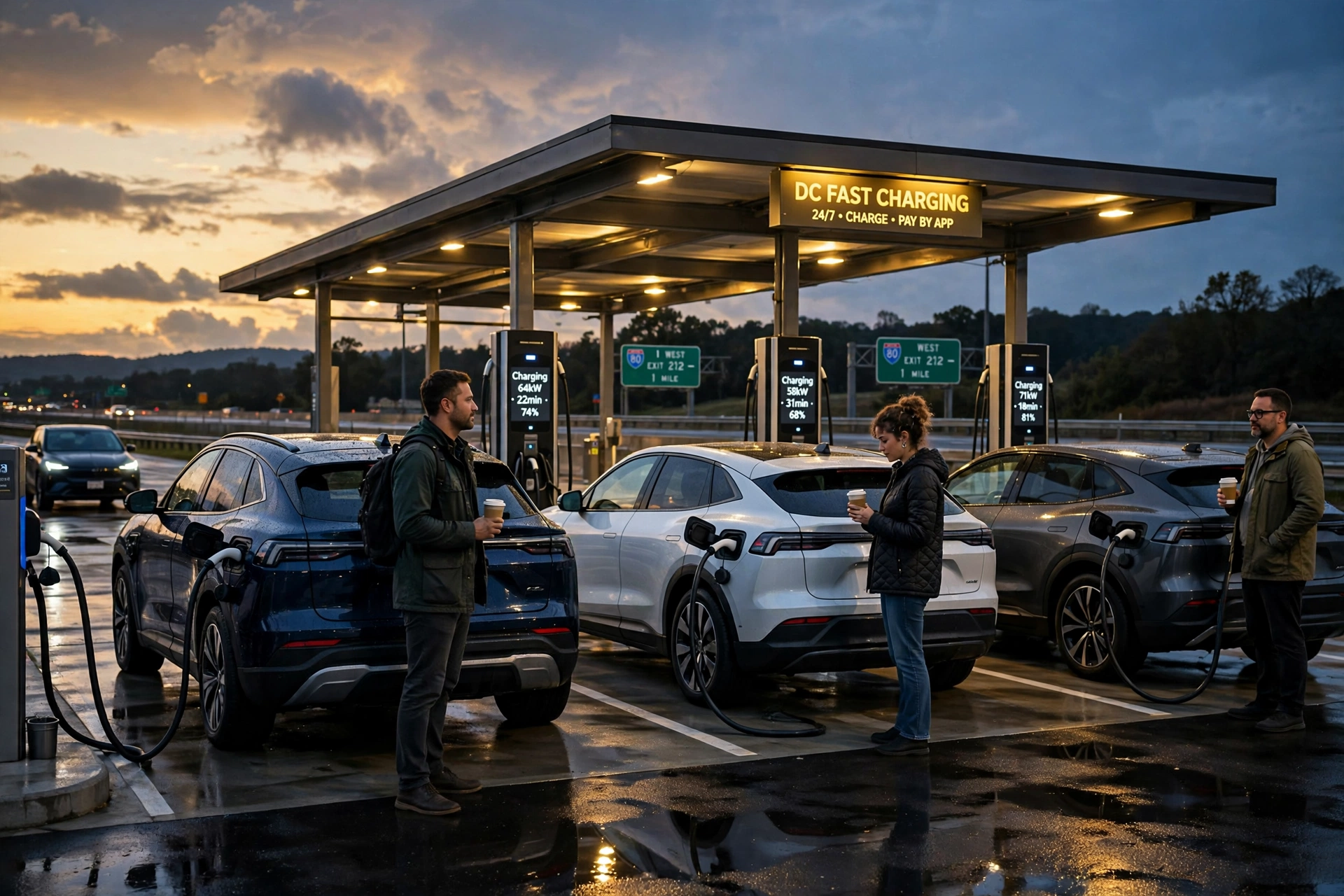
Picture the scene, because you will live it. Friday evening, 6:40 pm, a charging plaza off the interstate, rain deciding whether to commit, and every dc fast charger already has a car on it. You are third in a queue that exists only in the head of the man with the takeaway coffee who keeps announcing “I’m next” to nobody in particular. We have all been that man. We have also all been you, circling the row at walking pace, doing charger maths in our heads and pretending we are not.
This guide is for anyone about to buy an EV that will lean on public fast charging: apartment dwellers with no driveway, road-trippers, one-car households that do 600-mile weekends to see family. Seven things, learned the slow way, in actual queues. Plus the honest answer to the other reading of the title. Yes, you can literally buy one of these machines for your house. No, you almost certainly should not, and Thing 7 will show you the invoice that proves it.
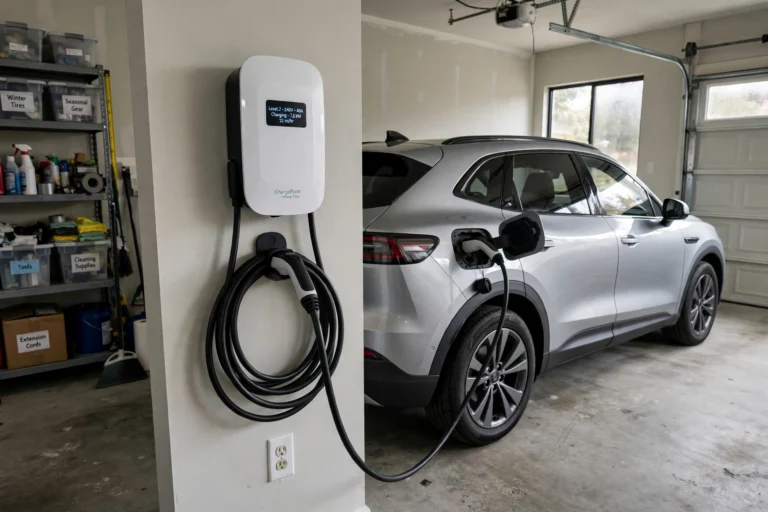
First, the quick version of what the big cabinet actually does. Your home charger sends AC power into the car, and the car converts it to DC for the battery. A dc fast charger does the converting inside the cabinet and pushes DC straight into the pack, which is why the cable is thick enough to wrestle and why a good 20-minute stop can add 150 miles or more. The US Department of Energy’s Alternative Fuels Data Center keeps the official guide to charging equipment and connectors, and it counts fast chargers at more than a fifth of all public charging ports in the US, with the biggest highway units now rated up to 500 kW.
One promise before the seven things: no brochure numbers anywhere below. Every charging speed is the speed real drivers actually see, every price was checked on October 25, 2026, and every queue described here has been stood in, coffee in hand, by somebody exactly like you.
Thing 1: A dc fast charger is only really fast at the start
The number on the cabinet is a peak, not a promise. A charger marked 350 kW and a car advertised at 270 kW will shake hands, negotiate, and deliver whatever the battery can accept at that moment, at that temperature, at that state of charge. Cold battery? Slower. Arrived at 45%? Slower than arriving at 10%. This is the charging curve, and it tapers: fast at the bottom of the battery, gentle in the middle, glacial near the top.
Here is the working rule every road-tripper eventually learns. The honest window is 10% to 80%. An 800-volt car like a Hyundai Ioniq 5 or Kia EV6 can do that window in about 18 minutes on a good day. A typical 400-volt family EV on a 150 kW unit needs roughly 28 to 35 minutes for the same window. Push on to 100% and you can easily double your stop, because the last fifth arrives at speeds your home wallbox would be embarrassed by. We have a whole guide to how long charging an electric car really takes, and its shortest chapter is this: unplug at 80% and drive.
Two habits make the taper work for you instead of against you. Arrive low, somewhere between 5% and 20%, where the curve is tallest. And in winter, navigate to the charger using the car’s own trip planner so it preconditions the battery on the way; a warm pack can charge twice as fast as a frozen one. Skip the preconditioning on a January morning and that 18-minute stop becomes 40 minutes of watching your breath fog. Ask us how we know.
Thing 2: You can pay for the same electrons three different ways
Fast charging pricing is a small chaos, and nobody warned you because nobody can keep up with it either. Most stations now bill per kilowatt-hour, which is the sane way: you pay for energy, like petrol by the litre. Electrify America’s official pricing page shows the model clearly: a guest rate of $0.48 per kWh and a member rate of $0.36 per kWh for Pass+ subscribers, both checked October 25, 2026. Tesla Superchargers usually land somewhere between $0.25 and $0.60 per kWh depending on the state and the hour (est., because Tesla prices by location and time of day and publishes them only in the car and the app). ChargePoint sites are priced by whoever owns the site, so two chargers in the same town can differ by twenty cents.
Some states still bill by the minute instead, a leftover from rules that once stopped non-utilities selling electricity by the unit. Per-minute pricing is a quiet tax on slow-charging cars: a car sipping 60 kW pays the same per minute as a car gulping 240 kW, so the sipper pays up to four times more for the same energy. It should have been retired years ago. If your route crosses a per-minute state, favour the chargers your car can actually exploit, and never start a session there just to top up the slow top end of the battery.
Then come idle fees, the parking ticket of the EV world. Sit on a charger after your session ends and networks charge roughly $0.40 to $1.00 per minute once a short grace period runs out (est., fees vary by network and site and are shown on the charger screen). Tesla applies them hardest at busy sites. Set the app alert, finish the coffee, move the car. The fee is not really about money. It is about the person behind you, who is also holding a coffee, also doing maths, also quietly judging.
Thing 3: Download the apps at home, on your sofa, like a person with foresight
Every network wants its own app, its own account, its own password with one uppercase letter and a symbol you will forget. You will need at least three of them for any serious road trip. The time to create those accounts is on your sofa with a full phone battery, not in a layby at 11 pm in sleet with 4% left and a card reader blinking at you. We have all done the layby version. It builds character and nothing else.
Do these four things before your first big trip. One, install the apps for the networks on your route and add a payment card to each. Two, check whether your car supports Plug & Charge, where the car identifies itself and billing happens with no app dance at all; when it works, it feels like the future remembered you. Three, know that card readers at chargers often place a pre-authorisation hold of $50 or so on a debit card (est.), which startles people checking their banking app mid-trip. Four, plan the route with real station data: our guide to finding EV charging stations covers the locator tools and the sanity checks, like reading recent check-ins to spot the one charger in the row that has been broken since spring.
Thing 4: The queue at a dc fast charger runs on unwritten rules
Nobody publishes the etiquette, so here it is, from years of collective hovering. Do not unplug somebody else’s car, even if it says 100%, even if they are nowhere to be seen; some cars lock the connector, and the argument is never worth it. Do move your car the moment you are done, especially when bays are full. Do leave a little space instead of parking nose-to-tail across two bays. And if you tried a charger and it failed, a quick note in the app’s check-in saves the next driver the same pantomime you just performed.
The one rule above all rules: if people are waiting, 80% is your finish line. Charging from 80% to 100% takes about as long as 10% to 80% did, and doing it in front of a queue is the fastest way to become a story strangers tell at dinner. Charge to 100% at home, overnight, where time is free. On the road, take the fast electrons and go.
Queues themselves are improving. Newer plazas have more stalls, canopies, and layouts that make the order obvious, and most apps now show live availability so you can skip a full site for the emptier one two exits on. Holiday weekends at famous bottlenecks are still a contact sport, mind you. Travel a day early, charge at 7 am, and you will wonder what the fuss was about.
Thing 5: Your battery will survive fast charging, and the data says so
Every new EV owner asks this in a whisper, usually while plugging in: am I hurting it? The best answer we have comes from Geotab, which analysed real battery health from more than 22,700 electric vehicles across 21 brands. Cars that mostly charged gently on AC, or on lower-power DC, lost about 1.5% of battery capacity per year. Cars that frequently fast charged above 100 kW lost up to 3.0% per year. Project that over eight years and the gentle group keeps about 88% of its original capacity while the heavy fast-charge group keeps about 76%. A real difference, and a smaller one than the internet wants you to fear.
Read the shape of those numbers, not just the gap. The wear follows the habit, not the holiday. A driver who fast charges on road trips and tops up at home the rest of the year lands statistically close to the gentle group. The 3.0% group is the daily-fast-charge group, the apartment life with no home plug, and even their batteries are projected to outlast the warranty floor of 70% by a wide margin. Heat is the other villain in the data, adding roughly 0.4 percentage points of loss per year in hot climates, which is one more reason the car, not you, manages the chemistry with liquid cooling and charge curves.
So: fast charge on trips without a shred of guilt. If you have no home charging and fast charging is your whole life, expect a bit more fade over the years, and favour the slower charger when you are not in a hurry. That is the entire truth of it. Anyone telling you one road trip cooks a battery is selling something.
Thing 6: Check your plug before you plan the trip around it
Three connectors share the road. CCS is the big two-part plug on most non-Tesla EVs of the last decade. NACS, standardised as SAE J3400, is the slim Tesla plug that nearly every brand is now adopting, with adapters bridging the gap in the meantime. CHAdeMO belongs to older Nissan Leafs and is quietly retiring; if you are buying a used Leaf for highway work, its shrinking fast-charge map is a genuine reason to pause.
The other number that matters is on your car, not the charger. Your EV has its own maximum DC rate, and plugging a 100 kW car into a 350 kW cabinet buys you exactly 100 kW on your best day. Before you fall in love with a route built on ultra-fast stops, check your model’s real peak and, more useful still, its 10-to-80% time, because the curve matters more than the headline. Cars are converging fast here: new models keep arriving with native NACS ports and 800-volt systems that sip from 350 kW units like they were built for each other. They were. That is the point.
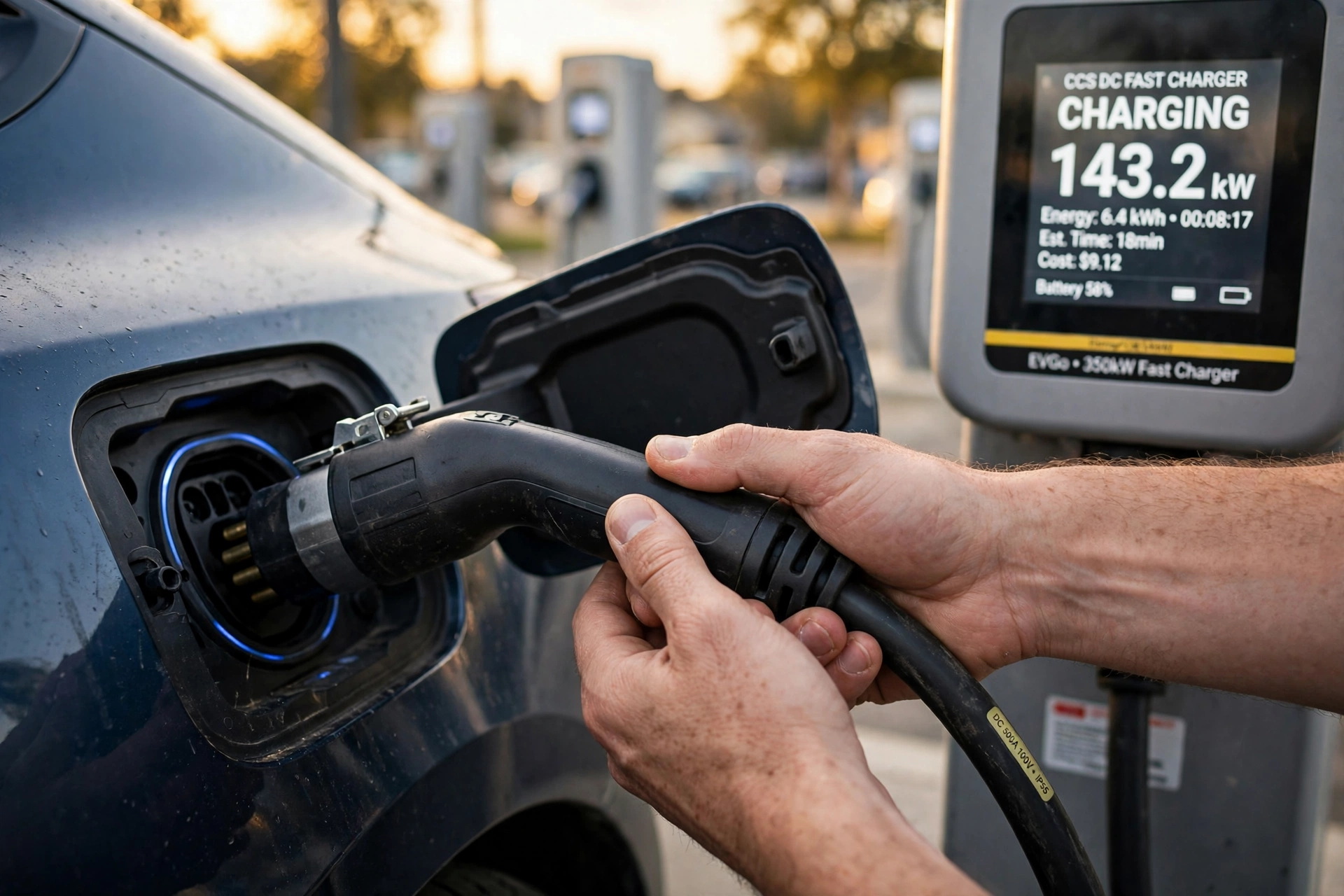
Thing 7: Yes, you can buy a dc fast charger for your home. Please don’t.
Now the literal reading of this article’s title. Home DC units exist. They are wall boxes in the 20 to 28 kW class, roughly two to three times quicker than a good Level 2 home charger, and they are sold by real companies: Primecom lists its 21 kW and 28 kW home DC units at $9,750 to $12,500 (checked October 25, 2026), and Delta’s 25 kW wallbox has been the reference design in this niche for years. Before installation. Installation is where the fun starts.
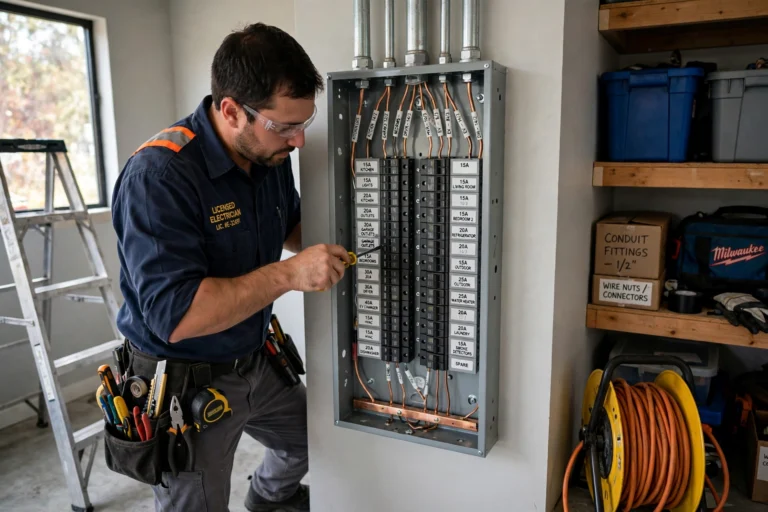
Electricity is the wall you hit. A 25 kW charger at 240 volts pulls about 104 amps, which means a dedicated breaker around 125 amps and a feed your panel must somehow spare. Most homes run a 200-amp service that already feeds the oven, the dryer, the air conditioning and the water heater; surrendering well over half of it to one car is a panel upgrade conversation with quotes that make the charger look cheap. And for what? While you sleep for eight hours, an ordinary 11.5 kW Level 2 charger pours in about 90 kWh, which is more than almost any car battery holds. The DC box fills the same battery by 2 am instead of 5 am, a victory nobody is awake to celebrate.
There are honest exceptions, and they are businesses wearing a house as a hat: a rideshare driver turning the car around twice a day, a small fleet parked at the owner’s home, a farm that runs electric trucks on shifts. For them the maths can work. For the rest of us, the home dc fast charger is a $12,000 solution (est., installed) to a problem that sleep already solves. Buy the Level 2, bank the difference, and spend it on road-trip coffee. You will be holding a lot of coffee.
The maths: one 600-mile road trip, three ways to pay for it
Enough vibes; here is arithmetic, because “fast charging is expensive” means nothing until it has a number. Take a typical family EV using 30 kWh per 100 miles (est., a fair mid-pack figure for a crossover at highway speeds). A 600-mile round trip needs 600 × 0.30 = 180 kWh in total.
All at home: 180 kWh × $0.17 per kWh (a typical US residential rate) = $30.60. This is the fantasy figure, because no current family EV does 600 highway miles on one charge, but it is the yardstick.
The real road trip: you leave home full and buy most of the rest on the highway. Say 150 of those 180 kWh come from fast chargers at the Electrify America guest rate of $0.48: 150 × $0.48 = $72.00, plus 30 kWh of home charging at $5.10, for a trip total of $77.10. Join Pass+ and the same highway energy costs 150 × $0.36 = $54.00, making the trip $59.10.
The petrol car: at 32 mpg (est.) and $3.45 a gallon (est., national average territory in October 2026), 600 miles takes 18.75 gallons and costs $64.69.
Sit with that for a second, because it surprises everyone the first time. At walk-up fast-charge prices, the electric road trip costs more in fuel than the petrol car. With a membership, it undercuts petrol again. Your daily running is where the EV wins its money back at home rates, which is exactly why we keep a whole page on what an electric car costs per mile in real use. Fast charging is a convenience you buy by the kilowatt-hour. Buy it deliberately, at member prices, and it stays a bargain.
Our verdict: the scores
Relying on a dc fast charger network as your main way of fuelling: Our score: 6/10 (Speed 9/10 / Cost 4/10 / Convenience 5/10). It works. People do it in every city, and the networks get better each quarter. Just walk in knowing you are paying restaurant prices for groceries, and that your calendar now includes a recurring 25-minute appointment with a cabinet.
Buying a dc fast charger for your home: Our score: 3/10 (Speed 8/10 / Cost 2/10 / Convenience 4/10). Genuinely fast, genuinely pointless for a normal household, and the electrician’s quote will hurt more than the charger’s price tag. Level 2 overnight remains the best charging deal in the entire EV world, and it is not close.
If you are buying the car anyway, buy it. Fast charging in 2026 is good enough that the queue stories above are seasoning, not a warning. Learn the 80% rule, keep the apps warm, and you will be the calm one at the plaza, coffee in hand, explaining the taper to a stranger. We have all become that person too.
Frequently asked questions
How long does a dc fast charger take to charge my car?
Plan around the 10-to-80% window: about 18 minutes for an 800-volt car on a high-power unit, 28 to 35 minutes for a typical 400-volt family EV, and much longer for the final stretch to 100%, where the charging curve tapers to a crawl. Your car’s own maximum rate matters more than the number on the cabinet.
Why does charging slow down so much after 80%?
The battery protects itself. As the pack fills, the car steadily cuts the power it accepts to manage heat and cell stress, which is why the last 20% can take as long as the first 70%. On a road trip, two short stops to 80% beat one long stop to full, almost every time.
Will fast charging ruin my battery?
No. Geotab’s study of more than 22,700 EVs found frequent high-power fast charging roughly doubles the annual fade rate, from about 1.5% to up to 3.0% per year, which still leaves heavy users around 76% capacity after eight years against a typical 70% warranty floor. Occasional road-trip charging barely registers. Habit and heat matter; holidays don’t.
Why is the price different at every station?
Because there is no single market. Some stations bill per kilowatt-hour, some per minute, some vary by time of day, ChargePoint hosts set their own prices, and memberships cut rates by about a quarter. The price on the charger screen and in the app before you plug in is the one that counts, so glance at it before you commit.
Can I install a fast charger at home instead of Level 2?
Technically yes: 20 to 28 kW home DC units exist, with hardware alone around $9,750 to $12,500. Practically, the unit wants about 104 amps of your panel’s capacity, installation can push the total far higher, and a standard Level 2 charger refills the car overnight anyway. Unless your home is also a workplace for the car, Level 2 is the right buy.