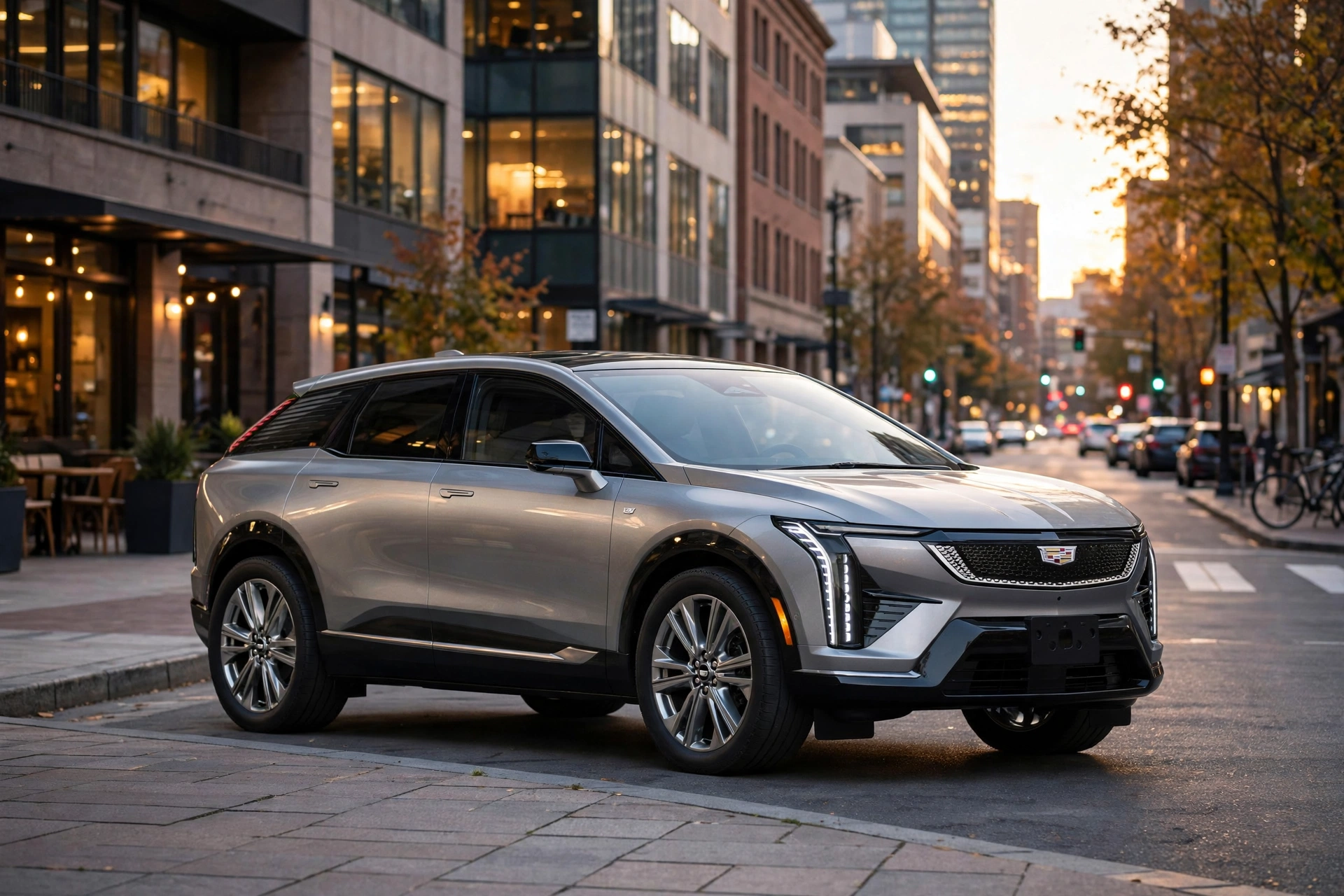

The 2026 Cadillac Optiq is the cheapest way to park a new Cadillac EV in your driveway — and honestly, it might be the smartest buy in the whole Cadillac lineup right now. Starting at $50,900 with up to 317 miles of EPA-estimated range, the Optiq undercuts its bigger sibling, the Lyriq, by nearly $10,000 while keeping the things that actually matter: a genuinely upscale cabin, standard Super Cruise hands-free driving, and now a native Tesla-style charging port. If you’ve been circling the idea of a luxury electric crossover without the luxury-tax-level price tag, this is the one worth your attention.
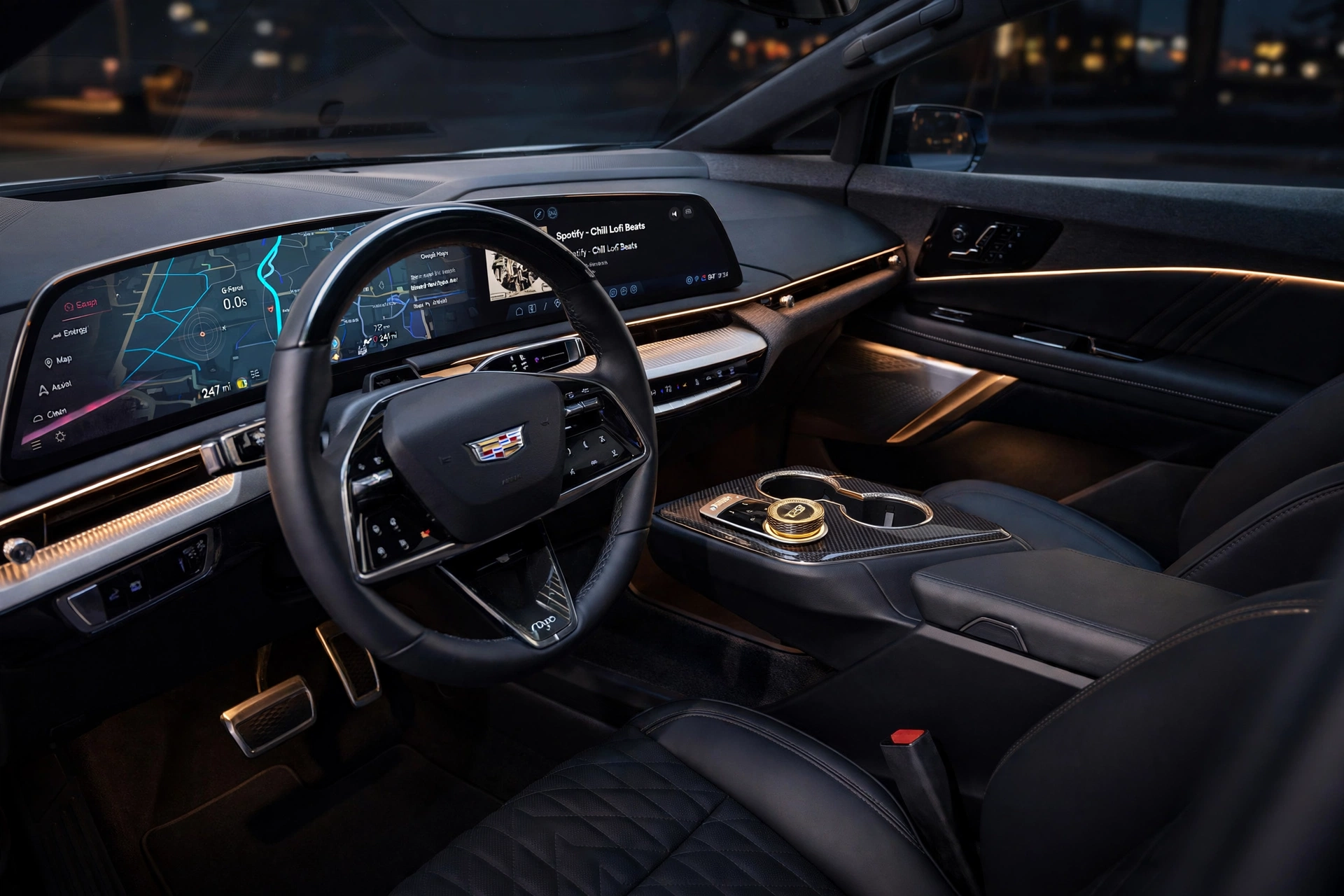
Table of Contents
Cadillac Optiq 2026 specs at a glance
Every Optiq runs the same 85-kWh battery pack, and Cadillac kept the lineup refreshingly simple this year. Three powertrains cover everything from efficient commuter to proper performance machine:
| Configuration | Power | Torque | EPA range | DC fast charging |
|---|---|---|---|---|
| Single-motor RWD (Luxury, Premium Luxury) | 315 hp | 332 lb-ft | 317 miles | 150 kW |
| Dual-motor AWD (Premium Luxury, Premium Sport) | 440 hp | 498 lb-ft | 303 miles | 150 kW |
| Optiq-V dual-motor AWD | 519 hp | 650 lb-ft | 278 miles | 150 kW |
The single-motor rear-drive version is new for 2026 and it’s the headline change: more range, lower price. Cadillac’s independent reviewers have observed real-world efficiency around 3.3 miles per kWh on the RWD model, which lines up nicely with the 317-mile EPA figure — this isn’t a range number that falls apart the moment you leave the lab.
Price and trims: where the value actually lives
Cadillac simplified the trim structure for 2026, and the pricing tells a clear story:
- Luxury RWD — $50,900. The entry point. You still get the 33-inch curved display, Super Cruise, heated front seats, and the full 317-mile range. This is the buy for range-maximizers.
- Premium Luxury RWD — $53,100. The sweet spot for most people. Adds quilted upholstery, heated and ventilated front seats, heated rear seats, a color head-up display, a 360-degree camera, and a power liftgate.
- Premium Sport RWD — $53,600. Mostly an appearance and tuning package — darker trim, sportier styling cues.
- Optiq-V AWD — $67,300. The performance flagship with 519 hp. Quicker, louder in character, but you pay for it in both money and range (278 miles).
A dual-motor AWD upgrade runs roughly $3,500 on the standard trims, and there’s an optional 19.2-kW onboard charger ($1,580) for those with home setups that can feed it. Add destination and you’re looking at roughly $52,395 for a base car on the road — real price parity territory with gas-powered rivals like the Lexus RX, Mercedes GLC, and BMW X3. That’s genuinely rare in the luxury EV world.
Want the full math on what ownership really costs over the years? Run the numbers through our EV total cost of ownership guide — it usually surprises people how close the five-year gap gets once fuel and maintenance are counted.
Range and charging: the honest breakdown
Range is the Optiq’s strongest card against its direct rivals. The 317-mile RWD figure beats the Audi Q4 e-tron’s best numbers and edges the Genesis GV60’s AWD versions by a comfortable margin. The AWD Optiq at 303 miles still out-ranges most of the class.
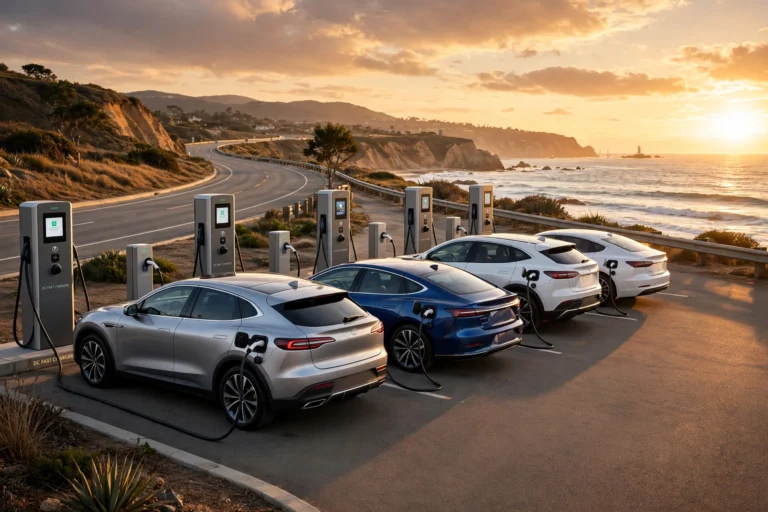
Charging is where the picture gets more mixed. All 2026 Optiqs now ship with a native NACS port — no adapter dance needed at Tesla Superchargers, which massively improves the road-trip story in North America. But the DC fast-charging ceiling stays at 150 kW, meaning a 10–80% stop lands around 30 minutes, adding about 81 miles in 10 minutes at peak. Rivals on 800-volt architectures, like the Genesis GV60 (10–80% in about 18 minutes), pull ahead here. If you mostly charge at home, you’ll never notice. If you’re a frequent road-tripper, it’s the spec sheet’s biggest weakness.
Home charging runs at 11.5 kW on the standard setup (about 36 miles of range per hour), with the optional 19.2-kW charger pushing that to roughly 59 miles per hour. For a primer on how battery tech translates to real-world numbers, see our EV battery explained guide.
Interior and tech: genuinely upscale, with one famous omission
Step inside and the Optiq doesn’t feel like a cut-rate Cadillac. The 33-inch curved LED display dominates the dash, materials are a step above the segment average — quilted upholstery on Premium Luxury trims, ambient lighting, a 19-speaker AKG audio system on upper trims — and the second row is a genuine highlight at 37.8 inches of legroom, best in its class. Cargo is practical too: 26 cubic feet behind the seats, 57 with the rear bench folded.
The elephant in the room: there’s no Apple CarPlay or Android Auto on any trim, and that’s not changing for 2026. GM is betting on its built-in Google-based infotainment. If you’re deeply wired into your phone’s ecosystem, this is a real friction point — test it on a test drive before you commit. Super Cruise, on the other hand, is standard across every trim, and it’s still the most relaxed hands-free highway system you can buy.
How the Cadillac Optiq compares to rivals
Cross-shop honestly and the Optiq’s position becomes clear:
- Genesis GV60: Faster charging (800V), richer-feeling boutique interior, 27-inch OLED display — but shorter, less roomy, and less range for the money.
- Audi Q4 e-tron: Familiar Audi polish, but it’s essentially a Volkswagen ID.4 in a nicer suit, with less range and less standard equipment than the Cadillac.
- Lexus RZ: Improved a lot for 2026, but the Optiq still brings a bigger battery and more range, especially in AWD form.
- Gas rivals (Lexus RX, BMW X3): The Optiq now costs about the same to buy while costing roughly half as much per mile to fuel — check our electric car cost per mile breakdown for the math.
For EPA fuel economy and range verification on any EV you’re comparing, the official source is FuelEconomy.gov.
Ownership costs and warranty
Cadillac covers the Optiq with a 4-year/50,000-mile basic warranty, a 6-year/70,000-mile powertrain warranty, and an 8-year/100,000-mile battery warranty — par for the premium EV course. Roadside assistance runs an unusually generous 8 years with unlimited miles. Max towing is a modest 1,500 pounds across all trims, so this is a people-and-cargo hauler, not a tow vehicle.
Who should buy the Cadillac Optiq — and who shouldn’t
Buy it if: you want maximum range per dollar in a luxury EV, you charge mostly at home, you value Super Cruise and a genuinely roomy back seat, or you’re coming from a gas-powered luxury crossover and want price parity.
Skip it if: you can’t live without CarPlay or Android Auto, you take frequent long road trips where 150-kW charging would slow you down, or you want a genuinely sporty drive — the Optiq-V is quick, but it’s not a driver’s car in the corners.
Our honest verdict
The 2026 Cadillac Optiq nails the assignment it was given: be the most sensible luxury EV you can buy for around $55,000. The new RWD trim fixed the 2025 model’s two biggest complaints — price and range — and the standard NACS port quietly solves the charging-network anxiety that used to dog non-Tesla EVs. The missing CarPlay and the 150-kW charging ceiling are real, durable annoyances, but neither breaks the deal for the home-charging commuter this car is built for. If the Premium Luxury RWD fits your budget, that’s the one to buy.