Last updated: October 27, 2026
Searches for the elon musk tesla battery warning spiked again this month. The pattern is familiar by now. A clipped quote. A scary headline. A comment section doing the rest of the work. So here is the short answer before the long one. In October 2026, Elon Musk issued no new warning to Tesla owners about their car batteries. None. What he talked about was factories.
On Tesla’s third-quarter earnings call on October 21, 2026, Musk said the company’s Megapack storage batteries are nearly sold out through 2027, and Tesla told investors that battery supply is still the main constraint on raising vehicle output. A day later, on October 22, he posted on X: “We are increasing production of Megapacks as much as possible.” That is a supply statement. It is not a message about the pack under your car.
The real record has three parts. Musk has warned for years that battery production limits how fast Tesla can grow. He has given owners charging advice, on the record, a handful of times. And Tesla has issued exactly one battery safety warning of its own recently — a recall of home Powerwall units, not cars.
Timing matters here, because the market moved this month. Tesla ended the third quarter of 2026 with its largest passenger-vehicle backlog in four years and roughly an 11-day supply of inventory. Discounts are shrinking. So the buying question is not “did Musk warn me off?” It is “what do the real numbers say?” This guide checks each quote, each claim, and each figure — and shows its workings. And it starts from one rule: the whole elon musk tesla battery warning archive gets checked before any of it gets repeated.
What the elon musk tesla battery warning actually was in October 2026
Start with the freshest claim, because it is the one driving this month’s searches.
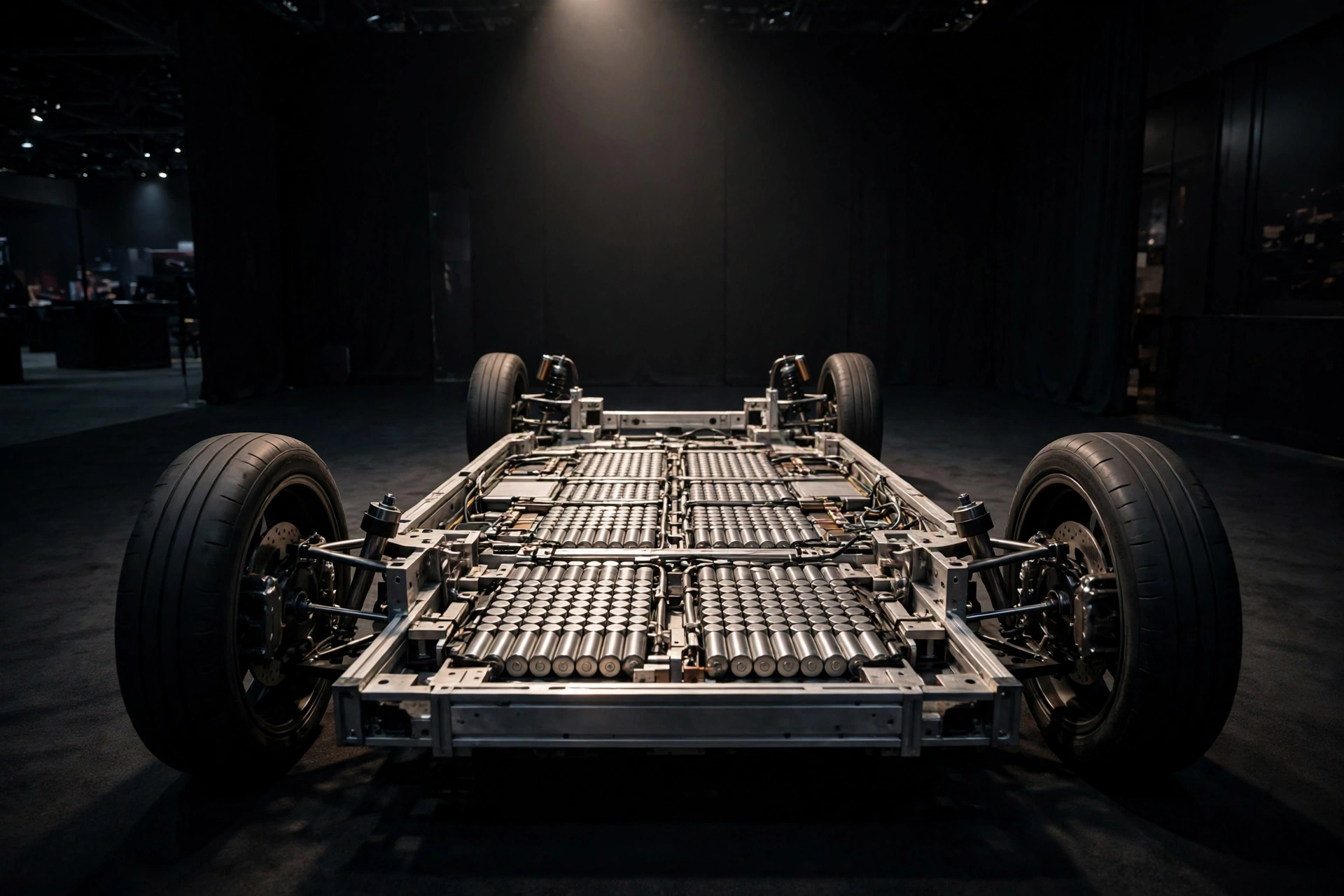
In its second-quarter 2026 shareholder letter, Tesla said battery pack production was “the primary constraint on increasing vehicle output in the short term,” a line CoinDesk and others quoted straight from the letter. On the first-quarter call, chief financial officer Vaibhav Taneja put it plainly: “the limiter is not the cells itself. It’s the battery pack capacity.”
The third-quarter call on October 21, 2026 kept the same theme. Deliveries hit 486,532 vehicles. The backlog grew anyway. Musk’s battery comments were about Megapack storage units — nearly sold out through 2027 — and about ramping production as fast as the company can.
Read those quotes again. Every one of them is about making batteries, not about batteries failing.
The warning, if you insist on calling it one, is aimed at investors and suppliers: Tesla cannot build cars faster than it can build packs. Your car is not in that sentence.
Our position is simple. If a post tells you Musk warned owners this month that their batteries are in danger, that post is inventing a quote. Treat it that way.
Every verified elon musk tesla battery warning quote, with dates
Strip away the noise and four moments actually matter. All four are on the record. Here they are, oldest first.
March 25, 2014. Asked for his ideal daily charging window, Musk replied on Twitter: “80% to 30%”. Three words and two numbers. As Electrek’s coverage of Tesla battery expert Jeff Dahn’s recommendations noted when it reprinted the exchange, that short answer still roughly matches the shape of today’s advice for nickel-based packs.
April 2019. A Model 3 Standard Range owner whose commute nearly maxed out her range asked whether she should charge to 100 percent. Musk’s answer: “charge to 90% to 95% & you’ll be fine.” His reasoning, reported at the time, was that regenerative braking does nothing at a full 100 percent, so the last slice of charge buys less than people think.
August 26, 2021. This is the quote that split Tesla charging advice in two. Posting about the new lithium iron phosphate (LFP) version of the Model 3, Musk wrote: “I’d personally slightly opt for iron pack, as it wants to be charged to 100%, whereas nickel prefers ~90%.” CnEVPost carried the full exchange the next day. One chemistry wants full charges. The other prefers to stop short. That distinction still runs Tesla ownership in 2026.
January 27, 2021. On the fourth-quarter 2020 earnings call — yes, the call date is 2021; the quarter was 2020 — Musk explained why the Tesla Semi was delayed: “there is fundamentally a constraint on battery cell output.” A Semi, he pointed out, uses roughly five times the cells of a car without selling for five times the price. Cell supply decided the product plan. It still does.
Now notice what is missing from that list. No deadline. No failure prediction. No instruction to sell anything.
The guidance quotes tell you how to charge. The supply quotes tell you why cars are scarce. Neither one tells you your pack is about to die.
The one real Tesla battery warning: a home battery recall
There is a genuine Tesla battery warning on the books. It just is not about cars.
On November 13, 2025, the U.S. Consumer Product Safety Commission and Tesla announced recall 26-092, covering about 10,500 Powerwall 2 home battery systems. The units were sold between November 2020 and December 2022, at about $8,000 each.
The cause was a defect in lithium-ion cells from a third-party supplier. The CPSC recorded 22 reports of overheating. Six units smoked. Five caught fire, causing minor property damage. Nobody was injured.
Tesla’s fix was free replacement, and the company remotely discharged affected units that were online to make them safe while replacements were arranged. Australia had recalled the same product two months earlier, in September 2025. TechCrunch, the CPSC notice, and Tesla’s own recall page all tell the same story, with the same numbers.
Here is the distinction that matters. A Powerwall is a home battery that hangs on a wall. No equivalent recall covers Tesla car packs. Car batteries carry an eight-year warranty with a guaranteed minimum of 70 percent capacity retention, whichever model you buy.
This is what a real battery warning looks like. It has a recall number, a regulator, and a free fix. The viral version has none of those three things.
The viral elon musk tesla battery warning that never happened
Now the other layer. The invented one.
Every few months, posts circulate claiming Musk has warned that Tesla batteries will fail en masse, or that owners face a deadline to sell, or that a hidden defect is about to surface. The packaging varies — a doctored screenshot, a clipped video, an AI-generated voice reading words he never said.
We checked for a matching statement in the places a real warning would have to exist: Tesla’s earnings-call transcripts, Tesla’s support and recall pages, and Musk’s verified posts, all checked on October 27, 2026. There is no record of this. Not a quote, not a filing, not a recall notice.
The machinery behind these posts is documented. This month alone, fact-checkers at Meaww examined a viral Musk quote about fuel prices, traced it to a parody network that labels its own output as fiction, and concluded there was no evidence he ever said it. The battery versions run on the same machinery with a different topic pasted in.
There is also a commercial strain. Consumer-protection reporting has repeatedly flagged fake Musk endorsements selling plug-in “energy-saving” devices that promise to slash electricity bills. The famous name is the entire product.
So apply one test. If a so-called warning ends with a link to buy something, or a countdown, or an instruction to act today, it is an ad or a hoax wearing a headline as a costume.
Real warnings arrive differently. They arrive the way the Powerwall recall did — through a regulator, with a number attached.
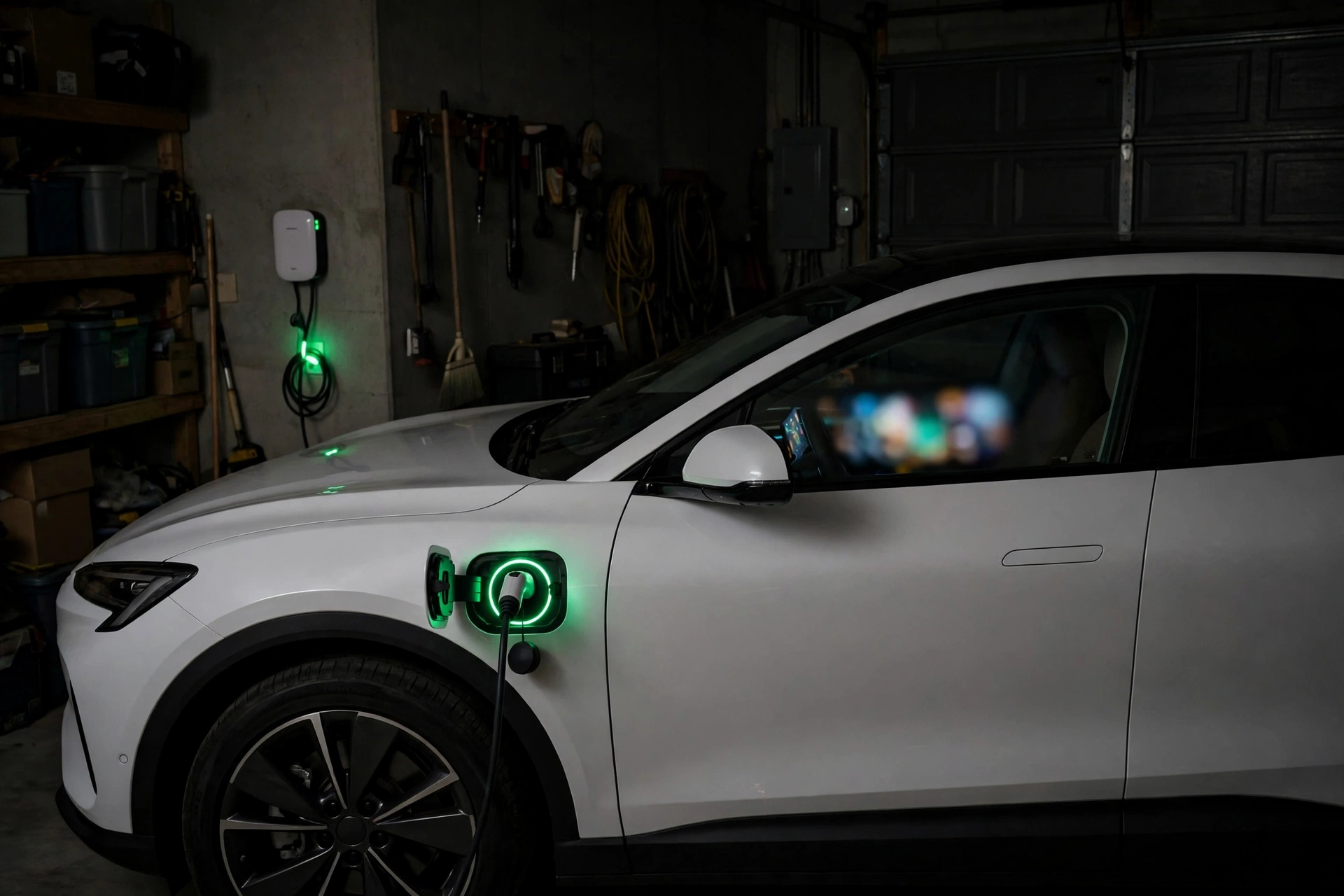
Tesla’s own rules: charge limits are chemistry, not folklore
Forget the feed for a moment. Here is what Tesla itself tells owners, in writing.
The Model Y owner’s manual page on maximizing battery health says: “For vehicles with a recommended daily charge limit of 80%, keep your daily charge limit at about 80. Save 100% for those times when you’ve got a long drive ahead of you.” The same page advises charging frequently rather than waiting for a low battery, avoiding long periods near 0 or 100 percent, and storing the car at around 50 percent, plugged in.
LFP cars flip that guidance. If your Tesla has a lithium iron phosphate pack — fitted to many Standard Range and rear-wheel-drive Model 3 and Model Y cars — Tesla recommends keeping the charge limit at 100 percent and completing a full charge at least once a week.
The reason is calibration, not toughness. LFP cells hold a nearly flat voltage across most of their range, so the battery management system cannot judge the charge level from voltage alone. Regular full charges give it a fixed reference point. Skip them and the displayed range drifts.
Nickel-based packs — NCA and NMC, in Long Range, Performance, Model S, Model X and Cybertruck — get the opposite routine. Daily limit at 80 percent on current guidance. One hundred percent only before a trip, and drive soon after reaching it.
Not sure which pack you own? The car will tell you. Go to Controls, then Software, then Additional Vehicle Information. If the high-voltage battery type reads “Lithium Iron Phosphate,” you have LFP. Anything else is nickel. Our EV battery explainer walks through what the chemistry difference means for range, cold weather and lifespan.
Two chemistries. Two routines. One touchscreen that already knows which one applies to your car. That is the entire real-world content of a decade of elon musk tesla battery warning headlines about charging.
The degradation maths behind the headlines
Warnings thrive on vibes. Degradation runs on arithmetic. Here is the arithmetic.
Tesla’s own fleet data, published in its Impact Report, shows Model 3 and Model Y Long Range packs losing about 15 percent of capacity after 200,000 miles on average. That means 85 percent retained at a mileage most cars never reach.
Run it on a real car. Take a Long Range model rated at 330 miles when new (est., a typical recent rating). Tesla battery researcher Jeff Dahn’s published fleet figures show roughly 5 percent gone by 50,000 miles: 330 × 0.95 = 313.5 miles. At 200,000 miles, Tesla’s average says 330 × 0.85 = 280.5 miles. Still a road-trip car.
Time makes the point sharper. At 13,500 miles a year, reaching 200,000 miles takes 200,000 ÷ 13,500 ≈ 14.8 years. The battery warranty covers the first eight of those years, with at least 70 percent retention guaranteed.
Independent fleet data lands in the same place. Geotab’s 2026 fleet analysis puts average EV battery loss at about 2.3 percent per year. Recurrent, which tracks more than 30,000 EVs, reports that fewer than 4 percent have ever had a battery replaced outside major recalls — including cars over ten years old.
And if the worst did happen after the warranty? Real invoices collected by Recurrent put a fitted replacement at roughly $15,000 to $22,000, with a Model 3 averaging about $15,800 (est., Recurrent invoice data, prices checked October 27, 2026). Tesla publishes no fixed price list, so treat any single quote as an estimate. Per unit of energy, that Model 3 figure works out at $15,800 ÷ 75 kWh (est. usable pack size) ≈ $211 per kWh installed.
Painful, yes. A surprise that ambushes every owner at 100,000 miles, no. Our guide to Tesla battery replacement costs breaks the numbers down by model, and the battery replacement cost estimator lets you run the maths on your own mileage.
Degradation is a slope, not a cliff. Plan for roughly 280 miles at 200,000, and the scary version of this story falls apart.
Should the elon musk tesla battery warning change when you buy?
Short answer: no. Longer answer: your timing should react to the market, not the rumor.
Tesla finished the third quarter of 2026 with its largest passenger-vehicle backlog in four years, an 11-day inventory supply, and deal trackers reporting Model Y discounts thinning out after the October 21 call. Anyone waiting for a fat year-end discount this quarter is gambling, not planning.
There is also no rescue technology on the calendar that should delay a purchase. This week’s actual battery news was Tesla giving its 4680 cell another outing in the low-volume Roadster, per Autoblog’s October 26 report. Interesting. Irrelevant to a Model 3 or Model Y decision this winter.
The chemistry choice is the one real decision the warning saga points to. If you will never babysit a charge slider, buy the LFP car, set it to 100 percent, and do the weekly full charge. If you road-trip hard, the nickel Long Range car at an 80 percent daily limit still hands you more usable miles. Our Model Y problems guide covers the rest of the ownership picture, batteries included.
Buy on price, inventory and chemistry. Not on a screenshot.
Our score for the warning itself
Our score: 4/10
- Claim accuracy: 3/10 — the supply-constraint half of the story is real and documented; the owner-danger half is invented.
- Owner impact: 6/10 — the genuine charging guidance behind the noise does affect daily range and pack life, so the topic earns its keep even though the headline does not.
- Evidence behind the media hype: 2/10 — no transcript, no recall notice and no Tesla statement backs the viral version.
The verified record is boring in the best way: a company short on battery packs, an eight-year warranty, and a charge slider that already knows what your battery needs. The elon musk tesla battery warning, checked properly, is a charging tip plus a supply-chain complaint — nothing more.
Questions owners keep asking
Did a new elon musk tesla battery warning come out in October 2026?
No. On the October 21, 2026 earnings call, Musk discussed battery supply constraints and Megapack storage units being nearly sold out through 2027. Nothing was addressed to car owners, and Tesla issued no new battery warning, recall or guidance change for its vehicles that month.
What charge limit should I actually use every day?
It depends on chemistry. LFP packs: 100 percent, with a full charge at least once a week for calibration. Nickel packs (NCA/NMC): 80 percent daily, 100 percent only before long trips. Your touchscreen shows the recommendation for your specific car, and Controls > Software > Additional Vehicle Information names the battery type.
How much range will my Tesla lose as the battery ages?
On Tesla’s own fleet data, roughly 5 percent by 50,000 miles and about 15 percent by 200,000 miles for Long Range Model 3 and Model Y packs. A car rated at 330 miles new (est.) would sit near 313 miles at 50,000 and about 280 miles at 200,000. The eight-year warranty guarantees at least 70 percent retention.
Was there a real Tesla battery recall?
Yes — for a home battery. Recall 26-092, announced November 13, 2025, covered about 10,500 Powerwall 2 units sold from November 2020 to December 2022, after 22 overheating reports including five fires. Tesla replaced units free. No Tesla car battery pack was part of it.
What does a replacement battery cost once the warranty ends?
Real invoices collected by Recurrent run about $15,000 to $22,000 fitted, with a Model 3 near $15,800 (est., prices checked October 27, 2026). Tesla publishes no fixed price list. Fewer than 4 percent of EVs in Recurrent’s data have ever needed a replacement outside major recalls, so for most owners this stays a hypothetical.
Should I delay buying a Tesla because of battery news?
No product reason says wait. There is no new owner warning, no car battery recall, and no announced pack change for the mainstream models. The live factors are price and stock: backlog is at a four-year high and discounts narrowed in October 2026, so a good deal in hand beats a hoped-for deal in December.
So the bottom line on the elon musk tesla battery warning is straightforward: there was no new owner warning in October 2026, only a supply story. If you see another elon musk tesla battery warning shared online, check it against the earnings transcript and any recall notice before you believe it. That simple check turns the elon musk tesla battery warning from a scare headline into a useful charging and buying guide.
Remember that any future elon musk tesla battery warning should be judged the same way: check the source, not the headline. That habit keeps the elon musk tesla battery warning debate grounded in facts, not fear.