Last updated: October 27, 2026
There is a particular pleasure in a small machine that asks very little of you. No fuel queue, no warm-up, no ceremony — just a padded bench seat, a twist of the wrist, and a quiet street unspooling ahead. That is the promise folded into every cheap electric moped on sale this autumn, and it is a real promise, provided you read the phrase carefully. “Moped” in a 2026 listing can mean a bicycle wearing a motorcycle costume, pedals tucked low against the frame, or it can mean an actual registered motor vehicle with a plate, paperwork and an insurance bill. The two machines look similar in photographs. They live in entirely different legal and financial worlds, and the difference matters more than any specification sheet.
The prices in this guide were checked on October 27, 2026, and they describe a market with a soft floor and a hard ceiling. At the bottom sits a seated scooter from Razor at a street price near $390. In the middle, between roughly $1,000 and $1,500, the moped-style e-bikes gather — long seats, fat tyres, batteries of genuine usefulness. At the top, just under $2,000, you will find closeout metal from a brand that no longer exists, which is its own kind of bargain and its own kind of warning. Step past $2,000 and you have left this guide’s territory; the Super73-Z Miami Core, the style reference for the whole category, starts at $1,995 with a small 480Wh battery, and its SE sibling costs more.
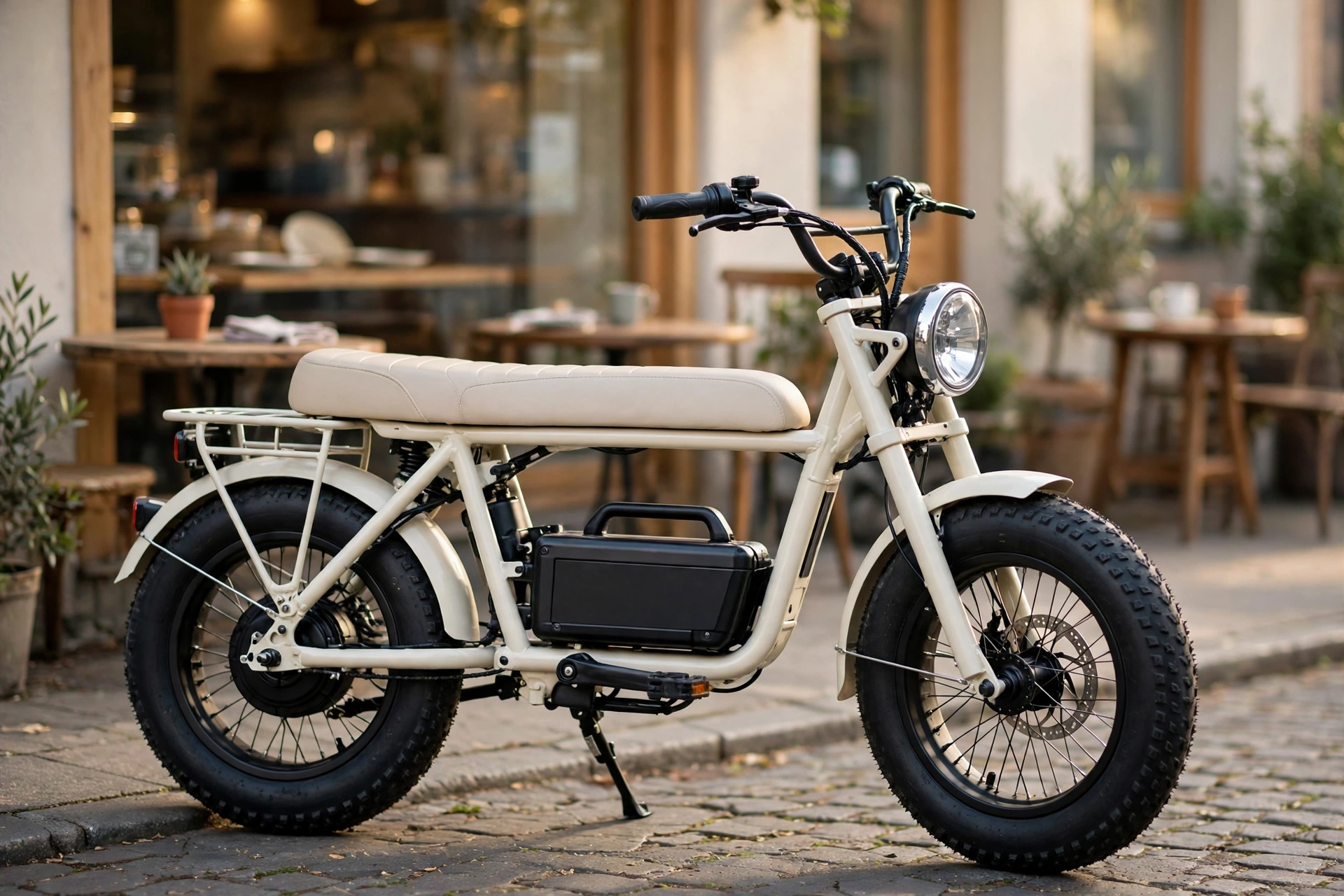
What draws people to these machines is rarely the motor. It is the seat. A conventional bicycle saddle is an instrument of negotiation — narrow, height-sensitive, unkind to anyone in a skirt or with a bad knee. The bench seat of a moped-style bike is closer to a café chair: long, flat, padded, indifferent to what you are wearing. You sit down the way you sit down at a kitchen table. Add an upright riding position, a low step-over, tyres wide enough to forgive cracked pavement, and you have the most approachable shape in electric two-wheeled transport. The details decide whether that approachability survives the first month — seat foam that keeps its shape, stitching that does not fray where your leg rubs, a battery that lifts out without a wrestling match.
So this guide proceeds slowly. It separates the bicycles from the motor vehicles, prices each honest mile rather than each advertised one, and pays attention to the small luxuries and small annoyances that a specification table politely ignores. Where a range figure comes from an independent test, it is labelled as tested. Where it is our own estimate, it carries “(est.)” and the reasoning behind it, the same research habit described on our research method page. Nothing here is dressed up. A cheap machine bought with open eyes is a delight; bought on a fantasy range figure, it is a heavy ornament for the hallway.
Cheap electric moped is two different machines wearing one name
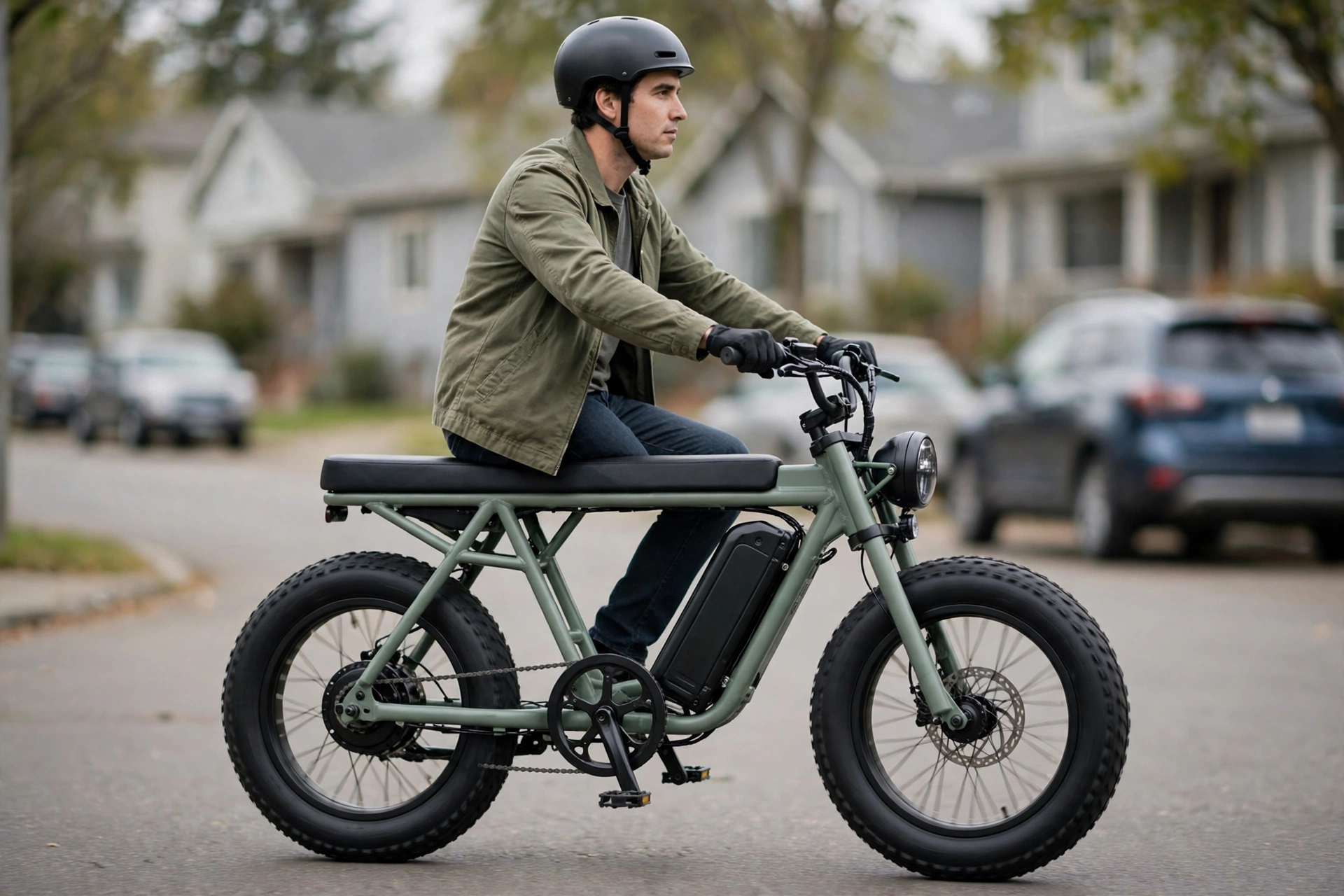
The first machine is an electric bicycle in the eyes of the law and a moped in the eyes of everyone at the café. It has working pedals, a motor rated at 750 watts or less, and a top assisted speed of 20 mph with a throttle (Class 2) or 28 mph on pedal assist (Class 3). The long bench seat, the round headlamp, the fat 20-inch tyres — all theatre, delightful theatre, over a bicycle’s legal skeleton. The second machine is a moped in the legal sense: no pedals at all, a seat you straddle over a floorboard or a central tunnel, a speedometer that climbs past 30 mph, and a manufacturer who expects you to visit a DMV. Between the two sits a grey, heavily marketed borderland of “off-road modes” and unlock codes, and that borderland is where buyers get into trouble.
The construction tells the stories apart if you look closely. A moped-style e-bike carries its battery in or on the frame’s triangle, wears bicycle components — a chain, a derailleur or single-speed cog, bicycle brake rotors — and can, in principle, be pedalled home when the battery dies, though at 80 to 115 pounds that principle is mostly theoretical. A true electric moped carries its battery under the seat or the floorboard, uses scooter tyres on smaller wheels, and offers no pedal fallback at all; when it stops, you push it or you phone someone. For a fuller sense of how the small motorcycle-shaped machines blur into one another, our guide to the electric mini bike motorcycle class walks the same border from the other side.
Weight is the quiet specification nobody photographs. The seated Razor weighs about 65 pounds; the dual-battery Heybike Saturn, our range pick below, weighs 115. A cheap electric moped that lives up a flight of stairs is not cheap in any currency that matters, so measure your storage before your commute. These machines are happiest rolling from rest to street without ever being lifted.
The legal line, drawn in pedals and watts
In most US states, an e-bike that stays inside the three-class system — motor at or under 750W, throttle capped at 20 mph, pedal assist capped at 28 mph, class label on the frame — is treated as a bicycle. No driving licence, no registration, no mandatory insurance. The detail of where each class may ride is laid out in our Class 1 e-bike guide, and the principle extends across the classes: stay inside the lines and the paperwork stays at zero. A few states add wrinkles of their own, so a two-minute check of your state DMV page remains the cheapest accessory in this guide.
True electric mopeds — the seated, pedal-free kind sold by brands such as NIU, with a VIN and a top speed around 28 to 45 mph — mostly begin north of $2,000 new in the US (est., based on current NIU and dealer listings), which is why the honest centre of this guide is the moped-style e-bike. A true moped also crosses into motor-vehicle law. Expect, in most states, a driving licence (a standard car licence is enough for moped-class machines in many states, though some ask for a motorcycle endorsement above certain speeds), vehicle registration with a plate, and liability insurance that typically runs $75 to $250 a year (est., from current insurer quote ranges for moped-class policies). None of this is ruinous. All of it is permanent — it renews, it must be carried, and it attaches to the machine for as long as you own it. The paperwork is precisely what the moped-style e-bike exists to avoid.
The trap is the unlock. Several bikes in this price band ship as polite Class 2 machines and offer an “off-road mode” that lifts the cap to 30 mph or beyond. The moment the machine can exceed the class limits on a public road, it stops being an e-bike in the eyes of the law and becomes an unregistered motor vehicle — with the fines, and in some states the impound risk, that follow. My position is simple and I will not soften it: if you intend to unlock it, register it, plate it and insure it, or keep your riding to private land. Riding a 34 mph machine on a bicycle’s legal privileges is not a loophole. It is a liability wearing a costume.
Four cheap electric moped picks, priced per honest mile
Advertised range is written by optimists. A fairer measure, and the one used throughout this guide, is price divided by the miles a charge genuinely returns — tested miles where an independent test exists, a labelled estimate where it does not. Run the four picks below through that arithmetic and the ladder rearranges itself. The Razor EcoSmart Metro, at a street price near $390 and a realistic 9 miles (est., from its 40-minute runtime and lead-acid pack), costs about $43 per mile of range. The ENGWE M20 2.0 at $999, over an estimated 35 miles, lands near $29 a mile. The Heybike Saturn at $1,499, over a tested 50-plus miles, lands near $30 a mile. The closeout Juiced HyperScorpion at $1,899, over a tested 35 throttle-only miles, costs about $54 a mile. The cheapest machine is not the cheapest transportation. It rarely is.
Razor EcoSmart Metro — the seated scooter at the very bottom
The EcoSmart Metro is the only true seated scooter in this guide, and Razor’s own product page describes it plainly: a 500W chain-driven motor, a top speed of 18 mph, up to 12 miles per charge, a padded seat over a bamboo deck, 16-inch pneumatic tyres and a detachable rear basket. The MSRP is $859.99, while street prices checked on October 27, 2026 sat near $388 to $420 depending on the variant — a gap wide enough that you should never pay the printed figure. The materials are the surprise. Bamboo has no business being this pleasant underfoot, the seat padding is honest, and the whole machine has the unhurried charm of a market bicycle.
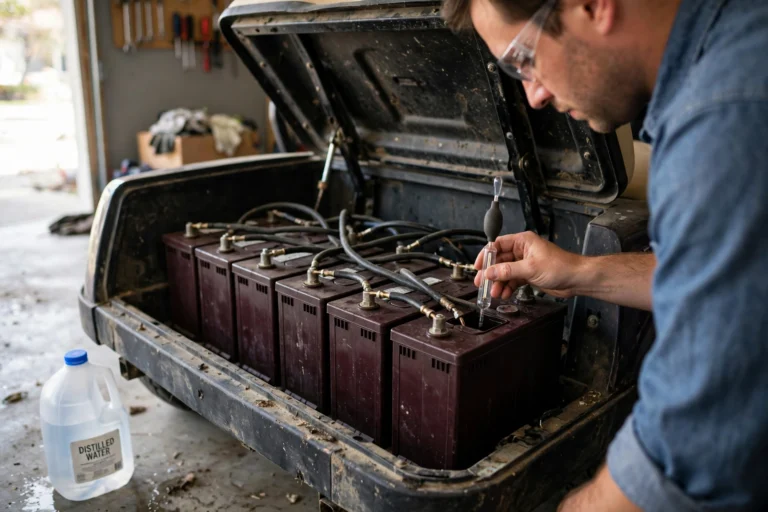
The compromises live in the battery tray: three sealed lead-acid blocks, 36 volts, heavy for their capacity and slow to charge — up to 12 hours (est., from owner-reported charge times). Range is a neighbourhood tool, not a commuter: 8 to 10 miles of realistic riding (est.). The chain drive mutters where a hub motor would be silent, and there is no suspension beyond those kind air-filled tyres. None of this matters if your world is a flat mile to the shops and back. Our score: 6.4/10 (Range: 3/10 · Comfort & materials: 7/10 · Value: 8/10).
ENGWE M20 2.0 — the thousand-dollar bench seat
The M20 2.0 is where the moped silhouette becomes convincing: a long two-person bench, twin headlamps, fat tyres, rear suspension, and a 750W hub motor fed by a 52V 15.6Ah battery — 811 watt-hours, a serious store of energy at this price. The single-battery version was listed at $999 on sale when checked on October 27, 2026, with a dual-battery option above it. ENGWE’s claimed range stretches to figures I would treat as poetry; a defensible estimate for mixed riding with a throttle-leaning hand is 30 to 40 miles (est., worked from the 811Wh pack at roughly 22 watt-hours per mile). Hydraulic disc brakes are standard, which matters on a machine of roughly 88 pounds.
The annoyances are small and specific. The seat foam is firmer than the Heybike’s and the stitching sits where a passenger’s boot will scuff it. The display is bright to the point of rudeness at night. The pedals, as on nearly every machine here, are decorative for anyone over five-foot-eight — the seat does not rise, so tall riders pedal with knees high and dignity low. As transport rather than exercise, though, the M20 2.0 is the point where the category stops being a toy. Our score: 7.8/10 (Range: 7/10 · Comfort & materials: 6/10 · Value: 9/10).
Heybike Saturn — the range pick, and the one to buy
The Saturn is the cheapest machine here that behaves like a vehicle rather than an outing. Two batteries totalling 1,766Wh, a 1,000W motor peaking at 1,800W, full suspension, 20-by-4-inch tyres and a 330-pound payload rating, at $1,499 when checked on October 27, 2026. In RiderGuide’s testing, the dual-battery Saturn returned more than 50 miles of real-world riding — a tested figure, rare and welcome at this price, and the reason it anchors this guide. The seat is the best in this group: long, level, with foam that had clearly been sat on by someone at the factory who intended to sit again.
Its sins are size and weight. At 115 pounds it is a garage machine, full stop; first-floor walk-up owners should close this tab and look at the ENGWE. The two-piston brakes are adequate rather than generous for the mass they govern. Neither flaw dents the central fact: at about $30 per tested mile, the Saturn is the cheap electric moped I would recommend to a friend without a follow-up apology. Our score: 8.6/10 (Range: 9/10 · Comfort & materials: 8/10 · Value: 9/10).
Juiced HyperScorpion — the magnificent closeout, bought with eyes open
On specification alone this is the finest machine in the guide: a 1,000W motor, a 995Wh battery, full suspension, turn signals, mirrors, an alarm, a 2,000-lumen headlamp — the full motorcycle wardrobe at a closeout price of $1,899, against an original $2,499. Freshly Charged measured 35 miles on throttle alone and a tested top speed of 31.5 mph in its unlocked mode. It rides like the category’s ceiling. Then the sober paragraph: Juiced Bikes went out of business, its assets sold at auction, and remaining stock now moves through resellers. A warranty from a closed company is a framed certificate, nothing more.
So the HyperScorpion is a purchase for a particular person — someone with a competent local e-bike shop willing to service a machine whose maker has gone, who values the hardware at $54 per tested mile and accepts that a controller failure in year three is their own expense. The bench seat is excellent, the switchgear feels a class above everything else here, and the ride is genuinely plush. I admire it entirely. I would buy the Heybike. Our score: 7.1/10 (Range: 8/10 · Comfort & materials: 8/10 · Value: 5/10).
Two near-misses deserve a sentence each. The GOTRAX Mustang, around $1,500, hides its 720Wh battery inside the frame and managed 28.7 throttle-only miles in Electric Bike Report’s testing of moped-style e-bikes — tidier and lighter than the Saturn, with less than half its legs. The Ride1Up Revv1 HT, at $1,795, suits riders who want the café-racer silhouette with a larger dealer network behind it. Neither beats the Saturn’s arithmetic.
Living with a cheap electric moped: seats, stitching and small annoyances
Begin with the arithmetic of an ordinary year, because this is where a cheap electric moped quietly humiliates a car. Take an eight-mile round trip, ridden 240 days a year: 1,920 miles. The Heybike Saturn’s full dual-battery charge is 1.766 kilowatt-hours; at an average US residential price of $0.17 per kilowatt-hour (est.), a full charge costs 1.766 × $0.17 = $0.30. At a tested 50 miles per charge, the year needs 1,920 ÷ 50 = about 38 charges, or roughly $11.50 of electricity. The ENGWE, sipping from its smaller 811Wh pack, costs about $8 a year on the same pattern. A modest petrol car at 30 mpg burns 1,920 ÷ 30 = 64 gallons; at $3.45 a gallon that is $220.80, before oil, tyres or parking. Run your own household’s figures through our total cost of ownership calculator and the gap widens further once insurance and servicing join the ledger.
Daily life is decided by smaller things. A removable battery is a luxury that stops feeling like one the first time you carry 12 to 15 pounds of it up to a kitchen counter in the rain — the HyperScorpion’s pack weighs about that, and the Saturn asks you to manage two. Fat tyres at low pressure forgive broken pavement and tramline grooves, and they also hiss softly on smooth tarmac, a sound you will either find companionable or maddening by week two. Bench seats are kind to passengers for about twenty minutes; past that, the rear perch’s thin foam announces itself, and a pillion’s feet have nowhere elegant to go on most of these frames. None of these are reasons to abstain. They are reasons to choose with your eyes open, which is the whole art of buying at this end of the market.
Set aside a small, honest maintenance purse from the day you buy. Brake pads on a 90-to-115-pound machine wear faster than bicycle intuition suggests — budget $30 to $60 a year (est.). Fat-tyre tubes and tyres are the other consumable, and a spare tube kept at home converts a puncture from a ruined evening into a twenty-minute task. The lead-acid Razor will ask for a replacement battery set in roughly two to three years of regular use (est., from lead-acid cycle life), a cost of around $100 to $150 that lithium machines defer far longer. Choose the cheap electric moped whose consumables you can buy without a treasure hunt, and the ownership stays as serene as the marketing promised.
Questions worth asking before you pay
How far does a cheap electric moped really go on one charge?
Between 8 and 55 miles, and the honest answer lives in the battery size, not the brochure. The lead-acid Razor manages 8 to 10 realistic miles (est.). The dual-battery Heybike Saturn passed 50 miles in independent testing. As a working rule, divide the watt-hours by 22 for throttle-heavy riding or by 15 for gentle pedal assist, and treat any printed figure above that result as a fair-weather promise.
Do I need a licence or insurance for a moped-style e-bike?
In most states, no — a labelled Class 1, 2 or 3 e-bike at or under 750W is a bicycle in law. The obligations begin when the machine has no pedals, exceeds those limits, or has been unlocked past them; then licence, registration and insurance generally follow. A few states add registration wrinkles even for e-bikes, so check your DMV’s page before the first ride, not after the first ticket.
Is a lead-acid battery a problem in 2026?
At $390, it is a fair trade; at $700, it is not. Lead-acid is heavy, slow to charge and shorter-lived than lithium, and every machine in this guide above the Razor uses lithium for good reason. My line is firm: do not buy any new cheap electric moped with a lead-acid pack unless the whole machine costs less than a decent lithium battery bought alone.
Can two people actually ride on the bench seat?
Yes, within the payload rating — 275 to 330 pounds across these picks — and for short, gentle journeys. The seat length is real; the passenger footrests usually are not, and rear foam thins quickly. Treat two-up riding as an occasional pleasure rather than a daily arrangement, and keep total weight, including bags, inside the printed limit.
What should I check in the first week of ownership?
Brake bedding and bolt torque, in that order. New pads need a dozen firm stops to seat properly, and stems, axles and seat clamps deserve a wrench check after the first rides. Then photograph the serial number and class label on the frame — if the machine is ever stolen, or ever questioned, those photographs are the difference between a story and a document.
The category’s charm is that it asks so little: no licence queue, no fuel, no ceremony, just a bench seat and a quiet street. Buy the Heybike Saturn if range matters, the ENGWE M20 2.0 if the budget is firm at a thousand, and the little Razor if your world is a flat mile wide. A cheap electric moped chosen on honest numbers keeps paying you back every morning — in silence, in parking spaces, and in change left over for coffee.