Last updated: October 25, 2026
Quick confession before the spec sheet: the Surron Light Bee S is the small one. Not a knockoff, not a detuned toy — a deliberately smaller, lighter youth version of the Light Bee X, sized for riders roughly 10 to 16 years old. Shorter seat. Smaller wheels. Less weight to pick up off the dirt. If you have ever watched a kid wrestle a full-size bike that outweighs them, you already understand the entire design brief.
Here is the twist that shapes this whole review. Sur-Ron stopped building the Surron Light Bee S in 2025 and rolled out the Hyper Bee as its new youth model. So the S is now a stock-hunting exercise: leftover dealer bikes, demo units, and a healthy used market. That sounds like bad news. It is actually a pricing opportunity, and we will get to the numbers.
The fundamentals first. A mid-drive motor rated at 2 kW with roughly 2.9 to 3 kW on tap at peak. A removable 48-volt battery. A top speed of 31 mph. A curb weight of 105 lb. Every one of those figures is smaller than the X, and every reduction points the same direction — a bike a 12-year-old can start, stop, turn, and lift without a parent sprinting over to help.
Our verdict, up front, because burying it helps nobody: for a rider under about 5 foot 4, the S is the Light Bee to buy, full stop. The X is a better machine on paper and the wrong machine in a smaller rider’s hands. Read on for the receipts.
Surron Light Bee S Specs, Minus the Brochure Fog
The spec sheet below pulls from Sur-Ron’s distributor listings and the S-versus-X comparison Cycle News published for the 2024 model, which remains the cleanest side-by-side anyone has printed. One warning before you cross-shop: the internet constantly pastes X numbers onto S listings. If a seller claims a 60-volt battery or a 45 mph top speed for an S, they are describing the wrong bike. Walk away, or at least renegotiate.
| Motor | Mid-drive BLDC, FOC sine-wave controller, 2 kW rated / approx. 2.9–3 kW peak |
| Peak torque | 220 Nm (162 lb-ft) at the rear wheel |
| Battery | 48V 20Ah removable lithium (960 Wh) on most US bikes; some markets list a 50.4V 26Ah pack — check the actual bike |
| Top speed | 31 mph (50 km/h) |
| Claimed range | 40 miles at 12 mph (US listing); 34 miles at 25 mph (Cycle News) |
| Charge time | About 3 hours (US spec sheet) to 4.5 hours (distributor listing, 5A charger) |
| Weight | 105 lb curb |
| Seat height | About 30 in (760 mm distributor figure; US sheet lists 30.7 in) |
| Max load | 165 lb |
| Wheels and tires | 17-inch spoked wheels front and rear, CST 70/100-17 knobby tires |
| Suspension | Inverted front fork, 150 mm (5.9 in) travel; rear shock, approx. 76 mm travel |
| Brakes | Four-piston hydraulic discs, front and rear |
| Frame | Forged 6061 aluminum alloy |
| Colours | Black, Red |
| Ride modes | Sport and ECO, with regenerative braking in Sport |
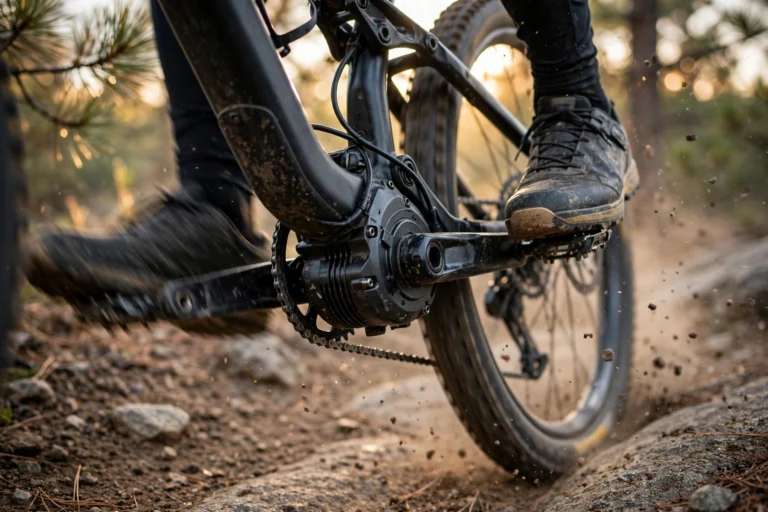
Notice the gearing. The S runs a 58-tooth rear sprocket against the X’s 48-tooth, which is a quiet admission of intent: less top speed, punchier pull away from a standstill, happier climbing at kid speeds. The motor sits low in the middle of the frame where it belongs, driving the rear wheel through a belt primary and a chain. No exhaust, no hot pipe near small legs, no petrol smell in the garage. Parents notice that last one within a week.
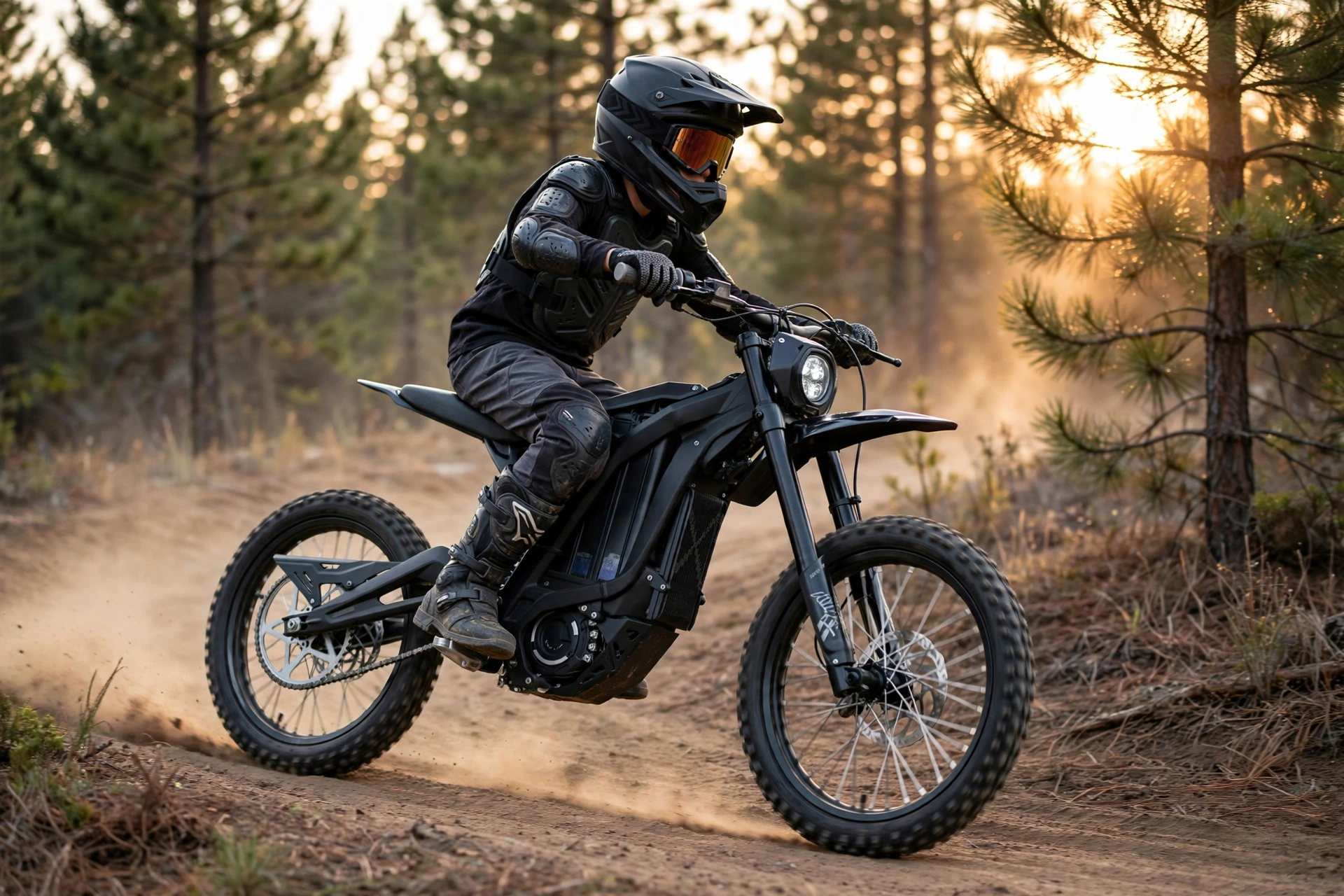
Design-wise, the S is the X put through a shrink ray with the proportions kept honest. Same angular shrouds, same long flat seat, same high front fender and beaky number plate. The giveaway is scale: 17-inch wheels at both ends instead of 19s, a 49.2-inch wheelbase, and ground clearance of 8.7 inches against the X’s 10.6. Australian distributor Electric Kicks lists the Surron Light Bee S youth bike at 48 kg with that 760 mm seat, which matches what your tape measure will tell you in the showroom.
Surron Light Bee S Range and Speed, Translated From Marketing
Range claims for this bike arrive in three flavours, and the flavour depends entirely on speed. Sur-Ron’s US material quotes 40 miles — at 12 mph, a pace your rider will tolerate for about four minutes. The Australian listing quotes 70 km (43 miles) at an average of 20 km/h. Cycle News, to its credit, printed the honest version: 34 miles at a steady 25 mph. That is the figure to plan around.
Now the trail reality. A teenager in Sport mode, on loose dirt, with hills, will not see 34 miles. Budget 20 to 30 miles (est., based on the 960 Wh pack and typical off-road consumption of 30–45 Wh per mile) before the battery calls time. In ECO with a lighter rider on flatter ground, the low 30s are realistic. Independent speed guides file the Surron Light Bee S in the 25–35 mph youth performance tier alongside 65cc–85cc petrol bikes, and its 31 mph ceiling is real, repeatable, and — this matters — genuinely enough. Thirty-one mph on dirt, on a bike this light, feels fast. Because it is fast.
Sport and ECO are not marketing garnish here; they are two different range budgets. ECO trims the throttle response and caps the pace, and on a steady trail loop it can stretch a charge by a third or more (est., based on owner reports and the smaller pack’s behaviour under lighter loads). Sport spends the pack at full enthusiasm and lands you at the bottom of that 20-to-30-mile window. Teach a new rider in ECO, let them graduate to Sport on familiar ground, and the battery — and the rider — lasts longer. Simple sequencing, usually ignored.
One more number for the spec-sheet traps: torque. The S makes 220 Nm at the rear wheel after gearing, which is why it pulls so hard off the line despite the modest kilowatt figure. Riders feel torque, not spec sheets. The delivery is instant, silent, and — in ECO — tame enough for a first week of riding. Keep new riders in ECO until their braking is boring. Boring braking is the goal.
Charging: The 16-Cent Fill-Up
Do the arithmetic with us, because this is where the S gets almost silly. The standard pack is 48 volts × 20 amp-hours = 960 watt-hours, call it 0.96 kWh. At an average US residential electricity price of $0.17 per kWh (checked October 25, 2026), a full charge costs 0.96 × $0.17 = $0.163. Sixteen cents. Add a rough 10% for charger losses and you are still under 18 cents for a full “tank.” The bikes we benchmark in our guide to how much it costs to charge an electric bike mostly land in the same pocket-change territory, and the S is at the cheap end of it.
Per mile, it gets better. Sixteen cents spread over the 34-mile Cycle News figure works out to about 0.48 cents per mile. Even using the pessimistic 20-mile trail estimate, you are at roughly 0.8 cents per mile. A small petrol youth bike drinking a gallon every 70 miles (est.) at $3.40 a gallon burns about 4.9 cents per mile in fuel alone — before oil, filters, and the spark plugs kids somehow foul monthly. The S’s fuel bill is close to a rounding error.
Charge time depends on which charger the bike ships with: the US spec sheet claims about 3 hours to full, while distributor listings with the 5A charger quote 4 to 4.5 hours. The pack unclips and lifts out, which changes daily life more than any of these numbers. Charge it in the kitchen. Charge it in a dorm-adjacent hallway. Charge it wherever the socket is, while the bike sleeps in a cold garage. For apartment families, that removable pack is the whole ballgame.
Surron Light Bee S vs Light Bee X: Buy the Size, Not the Speed
This is the section most buyers actually need, so here it is without hedging. The Light Bee X is faster (46 mph), stronger (about 6 kW peak from its 60V system), and longer-legged. It is also 18 lb heavier, sits more than two inches taller at the seat, rolls on 19-inch wheels, and costs $1,700 more at MSRP. For an experienced 16-year-old, none of that is a problem. For a 90 lb 12-year-old, every line of it is a problem.
| Light Bee S | Light Bee X | |
| MSRP (2024, Cycle News) | $2,799 | $4,500 |
| Weight | 105 lb | 123.4 lb |
| Seat height | About 30 in | 32.6 in |
| Battery | 48V 20Ah | 60V 40Ah |
| Top speed | 31 mph | 46.6 mph |
| Range claim | 34 miles at 25 mph | 46.6 miles at 25 mph |
| Max load | 165 lb | 220 lb |
| Wheels | 17-inch | 19-inch |
Run our favourite piece of maths on both. Price per mile of claimed range: the S is $2,799 ÷ 34 = $82.32 per mile. The X is $4,500 ÷ 46.6 = $96.57 per mile. The little bike is the cheaper way to buy range. Price per pound is funnier still: $2,799 ÷ 105 lb = $26.66 per pound for the S, against $36.47 per pound for the X. You pay more per pound for the bigger bike and then hand the extra pounds to a smaller human. No.
So who steps up to the X? Riders over about 5 foot 6, riders pushing past the S’s 165 lb load limit, and riders with a season or two of dirt experience who have genuinely outgrown 31 mph. Everyone else — every first-time rider, every rider still growing, every parent who will be the one picking the bike up after a tip-over — should buy the S and put the savings into a helmet, boots, and a second battery. That is not a compromise purchase. That is the correct purchase.
Living With It: Lifting, Storing, and Keeping It Yours
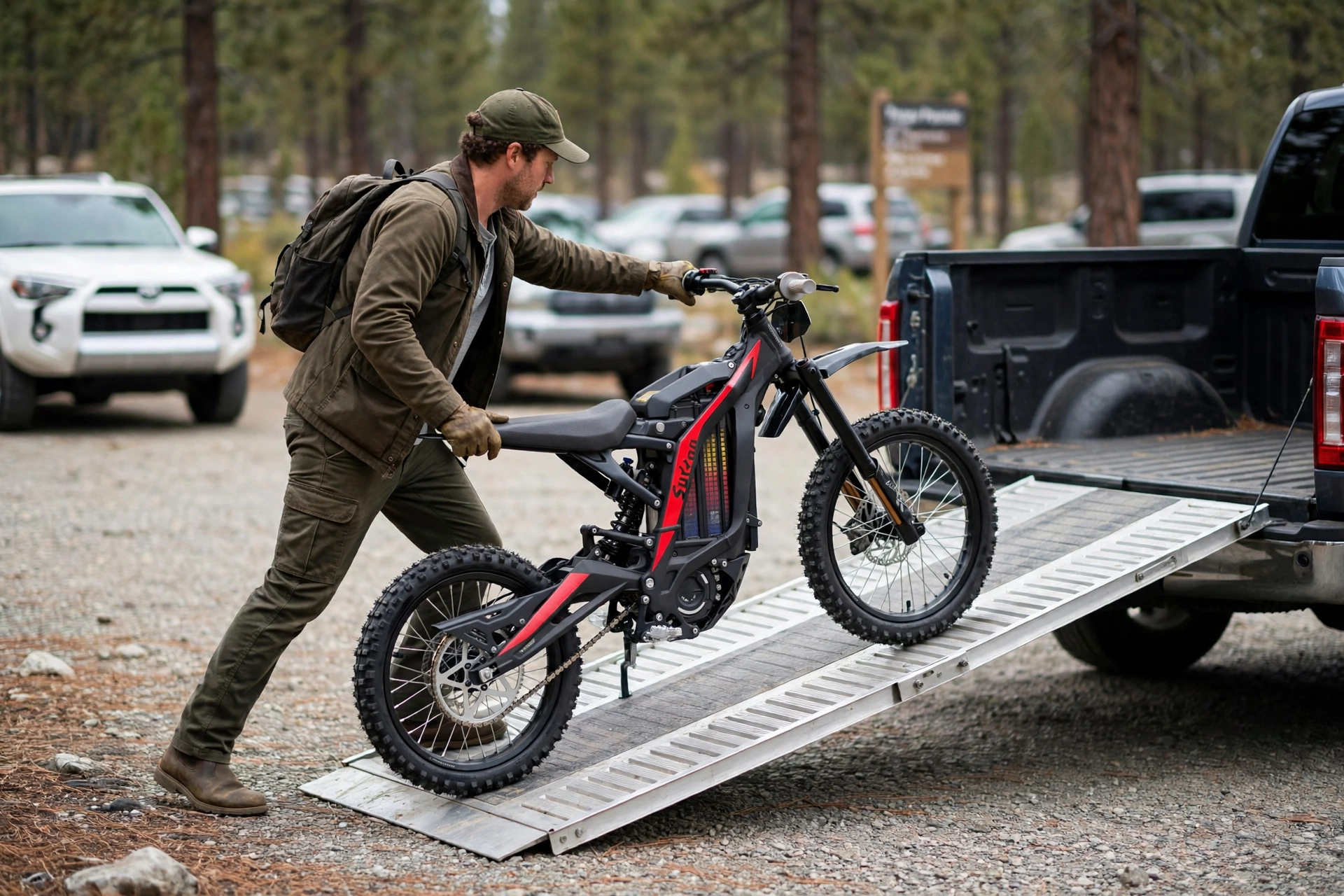
Zoe’s rule of family vehicles applies double here: the spec that decides your life is the one you deal with daily, and on this bike that spec is 105 lb. Two adults lift it into a pickup bed without drama. One determined adult with a ramp manages fine. It leans into a garage corner in less floor space than a lawn mower, and at 72.4 inches long it fits across most SUV cargo areas with the front wheel turned (est., measure your own hatch before promising anything to a teenager).
Theft is the section nobody wants to read and everybody needs to. Light, desirable, and easy to carry is a thief’s favourite combination, and a Surron Light Bee S is all three. The removable battery is your first security system: the pack lives indoors, and a bike without its pack is worth a fraction of its price and half its fun. Add a heavy chain through the frame — through the frame, not a wheel — and a disc lock for trailhead stops. Store the bike out of sight from the street.
A $30 tracker tucked under the seat is cheap insurance on a $2,800 machine, and if your teenager disagrees, show them the local stolen-bike group. There is always a local stolen-bike group.
Upkeep is a five-minute monthly ritual, not a workshop hobby. Check spoke tension with a fingertip flick, keep the chain clean and lightly lubed, glance at the brake pads, and store the pack between roughly 40% and 80% charge if the bike will sit for weeks. Lithium packs hate two things: being stored stone-dead and being stored full in a hot shed. A shaded shelf indoors dodges both. That is genuinely the whole maintenance sermon for this machine.
Ownership costs stay friendly. No oil, no air filter soaked in two-stroke mix, no clutch plates. Your recurring spend is tyres, brake pads, chain lube, and eventually a battery. Packs do age out, so run a replacement figure through our e-bike battery replacement cost estimator before buying used — a tired pack is the one expensive surprise this bike can hand you, and it shows up as range that falls off a cliff in the last third of the gauge.
Where You Can Actually Ride It
Straight answer: not on the road. The Surron Light Bee S is an off-road machine with no pedals, so it does not qualify as a Class 1, 2, or 3 e-bike anywhere, and it is not street legal in any US state in stock form. Private land, OHV parks, motocross tracks, and trails that explicitly allow motorised use are its world. Some trail systems welcome it; many mountain-bike trails do not, and riding anyway is how venues get closed for everyone. Our breakdown of electric dirt bike rules, classes, and trail access walks through the categories if you want the full map.
Noise is the S’s quiet superpower here — pun accepted, unavoidable. At trailhead volume it is closer to a mountain bike than a petrol 85, which keeps neighbours, landowners, and rangers calmer. Several riding areas that banned small petrol bikes tolerate quiet electric ones on a trial basis. Ask first. Bring the spec sheet. A 31 mph youth bike with an ECO mode is an easy yes for most land managers.
Price Check: What One Costs Right Now
Sticker history, checked October 25, 2026: the 2024 Surron Light Bee S carried a $2,799 US MSRP against the X’s $4,500. Dealer pricing since then has floated — some US listings sit near $3,299, Canadian dealers advertise the model at CAD $4,100 with fees included, and the Australian youth listing sits at AUD $4,299, currently sold out. Because production ended in 2025, what remains at dealers is finite stock, and finite stock at model-year changeover usually means negotiating room. Ask. The worst answer is a polite no.
Used, expect roughly $2,000 to $2,900 depending on battery health and crash history (est., from current marketplace listings). At those prices the S undercuts its own replacement: the new Hyper Bee runs a 52-volt system with 5 kW peak and a 40 mph top speed, aimed at the same 10-to-16 crowd. It is newer and quicker. It is also the one without a discount, without a giant owner community, and without five years of forum threads answering every question you will ever have. For a first dirt bike, mature beats new.
Our Verdict
Our score: 8.1/10 — Range: 7/10 · Charging: 9/10 · Value: 9/10
The Surron Light Bee S loses points on range because 20 honest trail miles is merely fine, and on nothing else that matters to its actual rider. Sixteen-cent charges, a battery a kid can carry upstairs, brakes and suspension borrowed from a bigger bike, and a price that keeps sliding as dealers clear the last of them — this is the youth dirt bike we would buy with our own money in 2026. Buy the S. Gear the rider properly. Spend the X-money you saved on a second season of tyres and track fees.
For families weighing the Surron Light Bee S against bigger youth bikes, the Surron Light Bee S stands out for its light weight, low running costs, and easy charging. In short, the Surron Light Bee S is the youth dirt bike we would buy first.
Surron Light Bee S FAQs
How fast is the Surron Light Bee S?
31 mph (50 km/h), flat out, from the factory. That figure is consistent across Sur-Ron’s US spec sheet, Cycle News, and distributor listings. Anyone advertising 45 mph for an S is quoting Light Bee X numbers, knowingly or not.
What age and size rider is the S built for?
Sur-Ron’s distributors pitch it at riders aged 10 to 16. Fit matters more than birthdays: the seat sits about 30 inches high, the max load is 165 lb, and the bike weighs 105 lb. A rider who can get both feet down and pick the bike up after a gentle drop is ready. A rider who cannot do either needs another season on something smaller.
How long does the battery take to charge?
Between about 3 and 4.5 hours from empty, depending on the charger bundled with the bike — the US sheet says roughly 3 hours, listings with the 5A charger say 4 to 4.5. The pack removes in seconds, so charging happens indoors, off the bike, wherever a socket lives.
Is the Light Bee S street legal?
No. It has no pedals, tops out at 31 mph, and ships as an off-road vehicle, so it sits outside every e-bike class and outside road registration in stock form. Trails, tracks, OHV areas, and private land only.
S or X for a 13-year-old?
The S, unless the 13-year-old is already tall, heavy, or experienced enough to have outgrown it — which is rare. The S’s lower seat, lighter weight, lower load on a parent’s wallet, and 31 mph ceiling are features at that age, not limitations. Move to the X when the rider outgrows the 165 lb limit or the speed, whichever arrives first.
Is the Light Bee S discontinued?
Yes — production ended in 2025, with the Hyper Bee taking over as Sur-Ron’s youth model. Remaining S stock is dealer inventory plus the used market. Parts support is not a worry in practice: the S shares its architecture and a huge aftermarket with the Light Bee family, and wear items like tyres, pads, and chains are generic sizes.