Last updated: October 27, 2026
Start with the number nobody puts on the box: weight. A freeboy electric scooter can weigh 56 lbs or 99 lbs depending on the model, and that single figure decides whether you will happily carry it up one flight of stairs or start leaving it at home. I am Lisa Chen, and I cover scooters the careful way — honest range figures first, top-speed bragging last. Freeboy sells some of the cheapest big-tired scooters in the United States right now. Some of them are sensible buys. One of them, I would not let a family member commute on. Here are the seven things to sort out before any money moves.
Freeboy’s storefront is confusing on first visit, so let me tidy it up. The brand, selling since 2015, lists a shelf of J-series scooters that share the same basic shape: a folding stem, a wide flat deck, chunky off-road tires and a battery under your feet. Under that shared shape sit very different machines. The J03 is a small 350W commuter with 8.5-inch solid tires. The J11 family uses a 1200W motor and 11-inch tires. The J15 Max adds a seat option. And the J30 Max is a dual-motor machine with a claimed 50 mph top speed — a different category of risk altogether, whatever the product photos suggest.
Every figure below comes from the manufacturer’s own listings or from published rider reports, and where a number is our estimate it is marked “(est.)” with the reason next to it. That is the same standard we describe on our research method page, and it matters here because Freeboy’s listings occasionally disagree with each other — you will see one example in Thing 2. Claimed range, in particular, should be treated as a ceiling measured under gentle conditions, never as a promise for your street, your hills and your body weight.
Prices first, because they move. All prices in this guide were checked October 27, 2026 on Freeboy’s US store: the J11 was listed at $460 (marked down from $500), the J11 Max at $559, the J15 Max from $500 in its seated version, and the J30 Max from $1,149.99. Sale prices on this store change often, so treat those numbers as a snapshot of the day we checked, not a fixed price list. If a price looks wildly lower than the figure quoted here, check which battery variant you are actually looking at — Freeboy sells the same model name with different battery sizes, and the cheaper listing is usually the smaller battery. One more piece of housekeeping before the seven things. Nothing in this guide is a substitute for your local rules. Scooter law in the United States is a patchwork of city and state decisions, and several Freeboy models can travel far faster than most cities allow on public roads. I will flag the legal problem properly in Thing 4. If you only take one habit from this page, take this one: buy the scooter that fits your actual route — distance, hills, stairs, storage — not the one with the biggest number on the box.
Thing 1: The lineup is really four choices, not a dozen
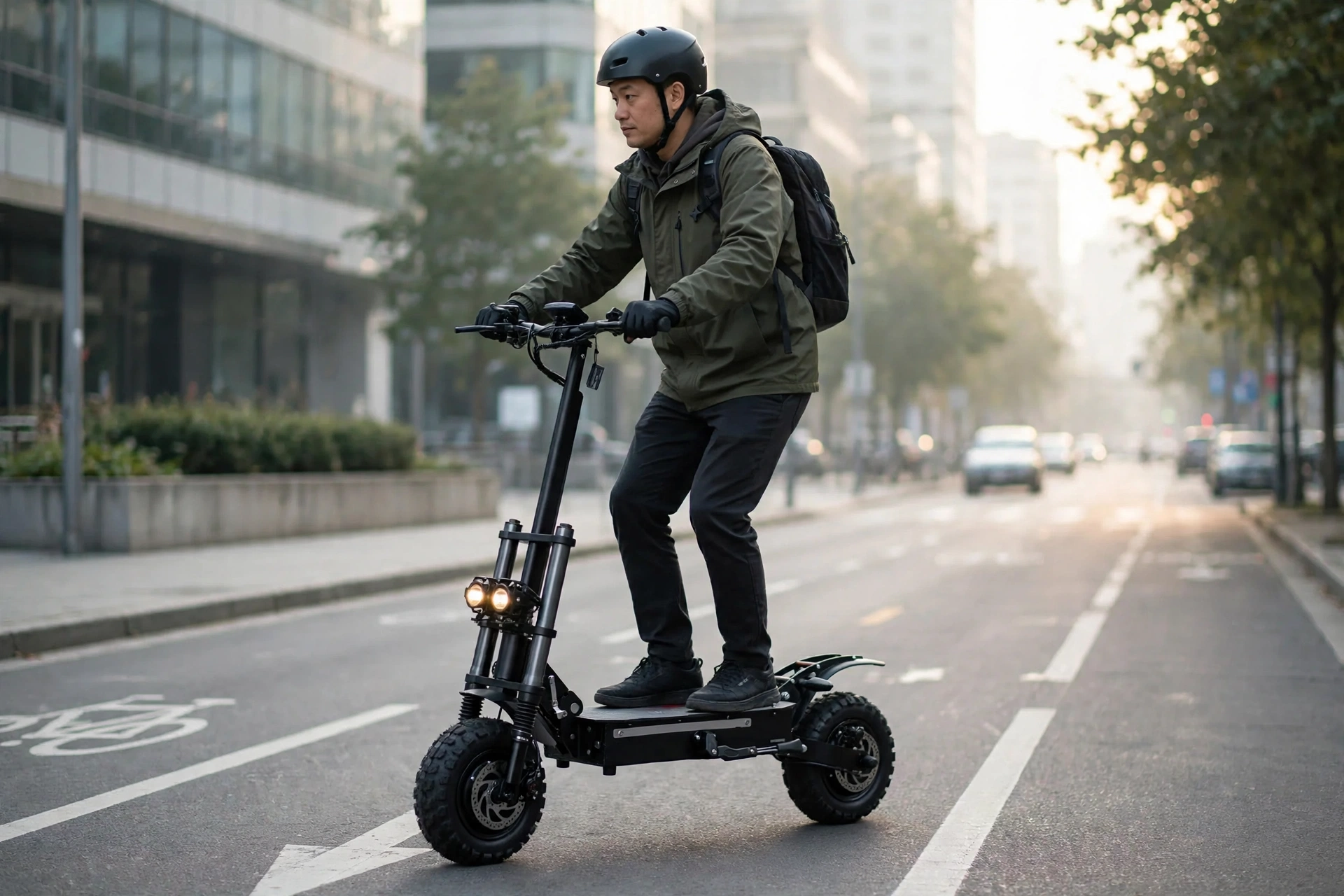
Strip away the variant names and the Freeboy range reduces to four decisions. The J03 (350W, 36V 10.4Ah, 19 mph, 22 miles claimed, 8.5-inch solid tires) is the budget commuter for short, flat trips. The J11 (1200W, 48V 15.6Ah, 34 mph, 37 miles claimed, 11-inch off-road tubeless tires) is the core model most people should look at. The J11 Max (1200W, 34 mph, 28 miles claimed on the US store) and the J15 Max (1200W, 48V 18.2Ah, 31 mph, 30 miles claimed, 10-inch pneumatic tires, optional seat) are variations on that theme. The J30 Max (dual 3000W motors, 60V battery, 50 mph claimed) is the flagship.
You can browse the full range with current variant pricing on Freeboy’s official scooter store, and it is worth doing, because the same model name can hide three different batteries. The J30 Max, for example, is sold with 25Ah, 35Ah and 38Ah packs, at 40 mph or 50 mph, with and without a seat. Comparing a $1,219.99 Basic J30 Max against a cheaper listing elsewhere is meaningless until the battery line matches. Read the variant name in full before you compare anything.
Thing 2: Freeboy electric scooter range claims vs the miles you will actually get
Here is my standing rule for every scooter brand, and Freeboy is no exception: take the claimed range, then plan your life around roughly two-thirds of it. Freeboy claims 37 miles for the J11. Plan on 22–27 miles (est.) — and that estimate has published evidence beside it. UK retailer TrailSurge publishes a real-world figure of 35–45 km (about 22–28 miles) for the J11 Max, which carries a similar or larger battery. One long-term owner reporting on The Hull Truth forum rode his J11 for 12 miles at speeds between 20 and 32 mph and still showed roughly three-quarters of his battery bar — encouraging, though battery bars are flattering liars and drop faster in the second half. Both data points say the same thing: a freeboy electric scooter is a genuine 20-something-mile machine, not a 37-mile one.
The same discount applies at the top of the range. The J30 Max claims 55–56 miles from its 60V 38Ah pack. At a steady gentle pace on one motor, that is plausible. Ridden the way people actually ride a dual-motor scooter — both motors on, traffic speeds, hills — plan on 34–42 miles (est.). And at the bottom of the range, an editorial summary of owner reviews for the small 350W commuter model put real-world range at about 12.5 miles against a 19–22 mile claim. The pattern is consistent across the whole catalogue: the claim is the best case, your case will be lower, and a heavier rider or a cold morning lowers it further.
There is also a listing problem you should know about. The US store shows the J11 Max with a 48V 15.6Ah battery, while several other Freeboy listings and retailers show the J11 Max with a 48V 18Ah battery. Those are not the same machine, and the 18Ah version should go a little further. Before paying, screenshot the battery specification on the exact listing you are buying from. If the support reply cannot confirm which pack ships, walk away — battery size is the one specification you cannot upgrade later.
Thing 3: The weight problem nobody mentions until delivery day
A folding scooter is only portable if you can lift it. The J11 weighs about 56 lbs according to the owner report mentioned above (est. — Freeboy does not headline the figure), and the J11 Max is listed at 61.3 lbs net. That is manageable for a ground-floor garage or a car trunk. It is a miserable carry up three flights of apartment stairs, twice a day, in February. Be honest with yourself about which life you actually live.
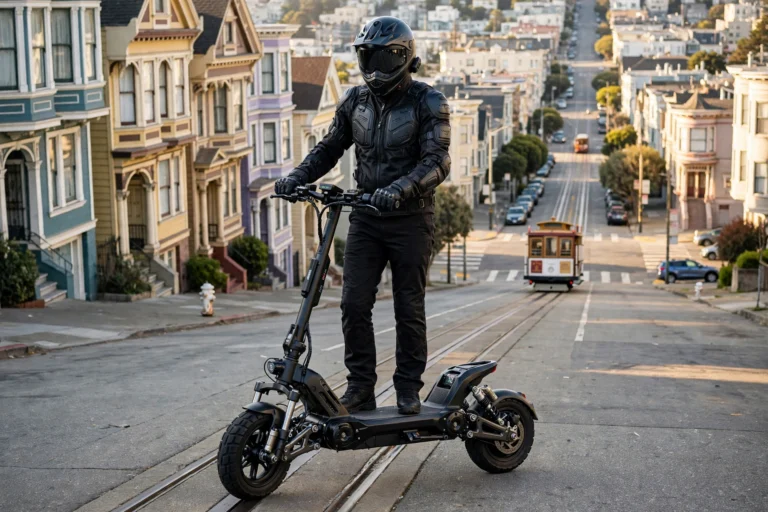
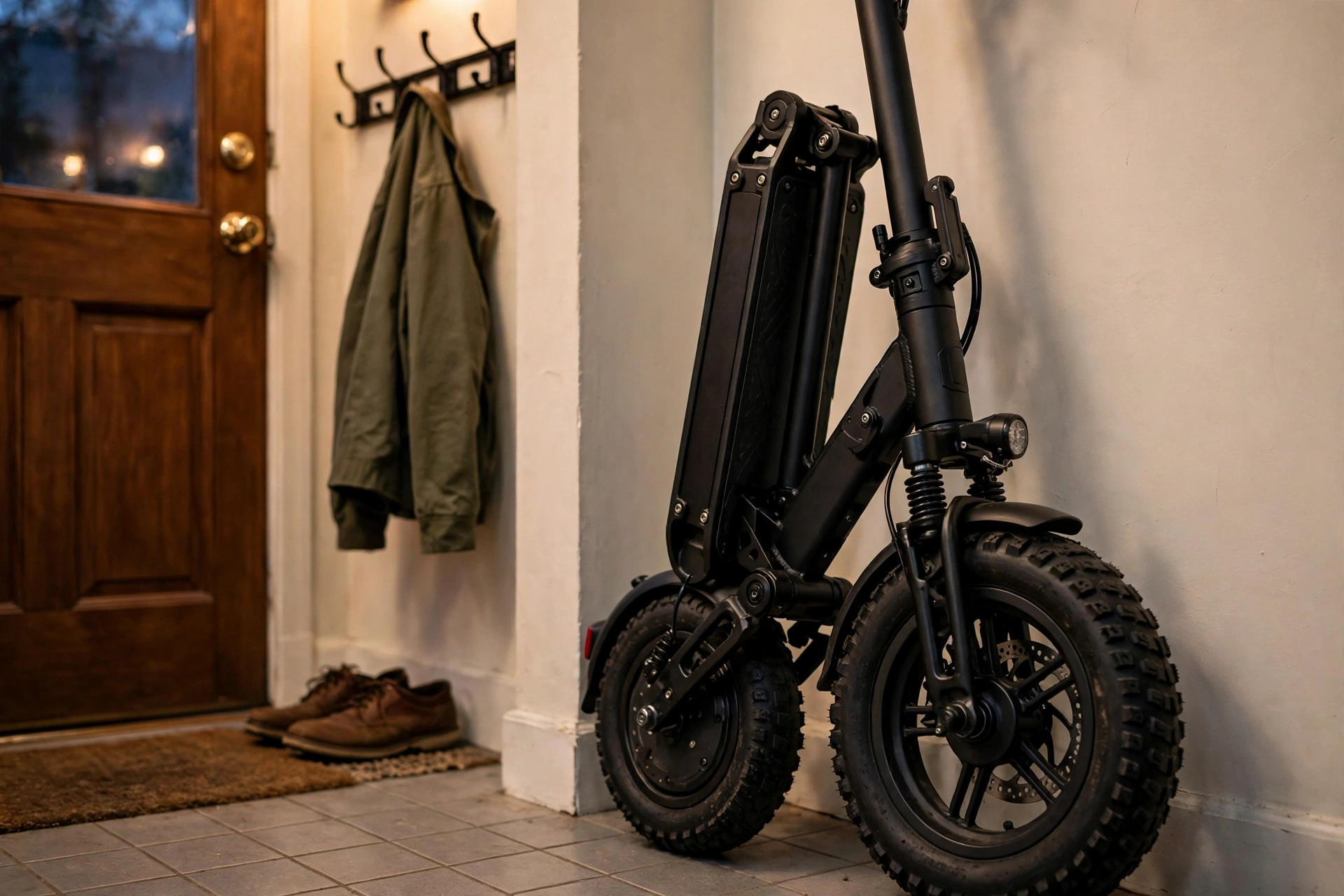
This is the unglamorous truth about every freeboy electric scooter above the J11: the specification sheet sells speed, and your staircase collects the bill. The J30 Max ends this conversation entirely: 99.2 lbs net weight, over 121 lbs in its shipping box. Yes, the stem folds. No, that does not make it portable — it makes it a 99 lb object you can roll into a corner. If your storage plan involves stairs, an elevator-free building or a bus, the J30 Max is the wrong purchase no matter how attractive the price per horsepower looks. Riders with a garage, a ground-floor lockup or a pickup bed can ignore this warning; everyone else should treat weight as the first filter, before motor size, before range, before colour.
Thing 4: A 50 mph freeboy electric scooter is not a bike-lane vehicle
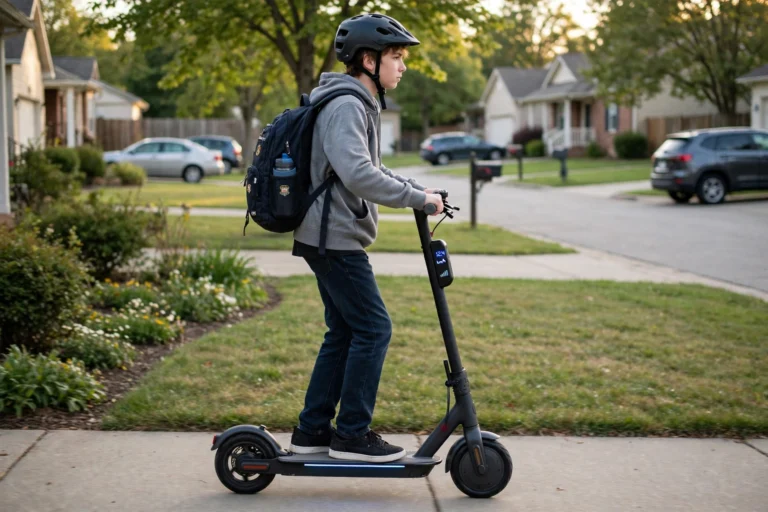
Now the safety section, and I will be blunt. Most US cities that allow scooters on public roads cap them at 15–20 mph; some states allow up to 25 mph. A J11 limited to its lower speed modes can live inside those rules. A J30 Max travelling at 40–50 mph cannot — in most jurisdictions that speed puts you in moped or motorcycle territory, with registration, licensing and insurance questions attached, and it is flatly illegal on bike lanes and shared paths. Freeboy sells these machines with speed settings, and using the limiter is your responsibility, not the manufacturer’s.
Certification deserves the same care. Freeboy’s store states its products carry UL, CE, FCC and RoHS certification, and some cities — New York is the strictest example — require a UL 2272-certified scooter for legal sale and use. Before buying, ask Freeboy support for the certificate that names your exact model, not a brand-level claim. If they cannot produce it, and your city requires it, choose a different scooter. A sensible benchmark for a certified commuter is the machine in our Segway Ninebot Max G30P guide: slower, duller, and legal almost everywhere. Dull is a feature when the alternative is a confiscated scooter.
Braking hardware, to Freeboy’s credit, is generally dual disc brakes across the J11 and J30 families, with dual suspension and wide tires that genuinely help on broken pavement. Ride within what those brakes can do. At 34 mph on 11-inch wheels, your stopping distance is long, your margin for a pothole is thin, and a helmet is not optional equipment — it is the whole safety plan, along with gloves and lights. The J30 Max’s IPX5 rating, shared with much of the range, means light rain resistance. It does not mean ride through a storm and store it wet.
Thing 5: Charging is slow, cheap and easy to get wrong
Charging a freeboy electric scooter costs pennies; it just takes patience. Listings put charge times at roughly 8–10 hours for the J11 family and 6–12 hours for the J30 Max depending on variant and charger. That is an overnight appliance, not a top-up-at-lunch one. Plan your routine around a full overnight charge and avoid running the battery to empty daily — lithium packs last longer when they live between roughly 20% and 90% charge.
Here is our own arithmetic, which you can check with a pencil. The J11’s battery is 48V × 15.6Ah = 748.8Wh, call it 0.75 kWh. A full charge at the US average residential rate of $0.17/kWh costs 0.75 × $0.17 = about $0.13 — thirteen cents, or roughly 15 cents once charger losses (est.) are counted. The J30 Max’s big pack is 60V × 38Ah = 2,280Wh = 2.28 kWh, so a full charge costs 2.28 × $0.17 = about $0.39. Spread over realistic range, the J11’s energy cost works out near half a cent per mile. Ride 3,000 miles in a year and your electricity bill for the scooter is roughly $16 (est.). The running cost is never the problem with these machines; tyres, brake pads and your time are the real budget lines.
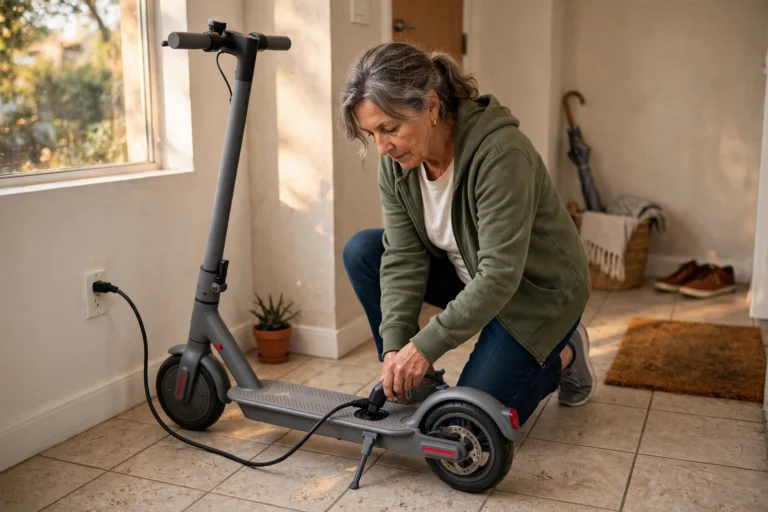
Two safety rules for charging. First, only ever use the charger supplied for your exact model and voltage — a 60V charger on a 48V pack is a fire risk, not a shortcut — and run any second-hand charger purchase through our EV charger compatibility checker before plugging anything in. Second, charge on a hard floor away from exits, never overnight in a bedroom, and let a hot battery cool before charging after a hard ride. If you want the wider picture on what small EV charging really costs, our guide to the cost of charging an electric bike uses the same maths and the same rates.
Thing 6: Build quality is honest for the money, with homework on delivery day
Freeboy’s value comes from simple, widely used hardware: cable disc brakes, spring and hydraulic suspension parts, generic displays and controllers. The upside is that parts are cheap and any e-bike shop can understand the machine. The owner feedback tells a consistent story about the details. The Hull Truth owner quoted earlier praised his J11’s power and battery life, and you can read his full owner report here — but he also had to tighten several bolts on arrival, found the folding-latch holder flimsy and noted the headlight mount bends easily when carrying the scooter. An editorial round-up of reviews for the small commuter model raised sharper concerns about electrical faults and slow support responses on that cheaper machine.
So if you buy a freeboy electric scooter, do the delivery-day checks, in this order. Tighten every stem, axle and brake bolt before the first ride — treat the factory torque as a suggestion. Test both brakes at walking pace, then at 15 mph. Photograph the battery label and the serial number, and save them with your order confirmation; if you ever need the 1-year warranty Freeboy advertises, those photos are your evidence. Keep the box for the first month. None of this is a reason to avoid the brand. It is the normal tax on a scooter that costs $460 instead of $900, and it is cheaper paid in an hour of checks than in a failed folding latch at speed.
Thing 7: Our verdict — which freeboy electric scooter should you actually buy?
My recommendation is simple, and it is not the flagship. On the US store’s own numbers, the standard J11 at $460 is the sweet spot of the whole catalogue: the same 1200W motor and 11-inch tires as its siblings, the longest claimed range in the family at 37 miles, and the lowest price. Here is the unusual bit our calculator makes obvious. Divide price by realistic range — $460 ÷ 24 miles (est.) = $19.17 per mile of usable range. Do the same for the J30 Max — about $1,150 ÷ 38 miles (est.) = $30.26 per mile. The flagship costs roughly 58% more for every real mile it gives you. That gap buys speed you mostly cannot legally use.
J11 — Our score: 7/10 (Range: 6/10 · Value: 9/10 · Safety & build: 6/10). The sensible default for flat-to-hilly suburban riding, garage stored, with the delivery-day bolt check done properly.
J11 Max — Our score: 7/10 (Range: 7/10 · Value: 7/10 · Safety & build: 7/10). Worth the extra $99 only if your listing genuinely ships the larger 18Ah battery — confirm it in writing first, because the US store’s own page says 15.6Ah.
J15 Max — Our score: 6/10 (Range: 6/10 · Value: 6/10 · Safety & build: 6/10). The seat is its reason to exist. If you will ride seated nearly all the time, it makes sense; if not, you are paying for hardware that adds weight and folds awkwardly.
J30 Max — Our score: 6/10 (Range: 7/10 · Value: 5/10 · Safety & build: 6/10). Enormous power, dual disc brakes, a 441 lb load rating — and 99 lbs of metal that cannot legally use its speed on public roads in most cities. As a private-land or rural machine it is a lot of hardware for the money, and riders cross-shopping serious performance scooters should compare it against the machine in our Kaabo King GTR guide before deciding. As a commuter, buy something else.
And the J03, the cheapest freeboy electric scooter of all? It scores on price alone. For a flat two-mile hop on solid tires it is fine transport. For anything longer, the small battery’s real-world range — around 12.5 miles in owner reports — leaves too little margin, and a scooter that arrives home on fumes every day teaches you to stop riding it. Stretch to the J11 if your budget possibly can.
Freeboy electric scooter: frequently asked questions
Is a freeboy electric scooter legal to ride on city streets?
It depends on the model and your city. Most US cities cap scooters at 15–20 mph on roads and bike lanes, which a J11 in its lower speed modes can satisfy; a J30 Max at 40–50 mph exceeds scooter law almost everywhere and may be treated as an unregistered moped. Some cities also require UL 2272 certification. Check your municipal code before buying, and ask Freeboy for the certificate for your exact model.
How far does a Freeboy scooter really go on one charge?
Plan on about two-thirds of the claimed figure. The J11 claims 37 miles and realistically delivers 22–27 miles (est.), supported by a published retailer real-world figure of 22–28 miles for the J11 Max and by owner reports. The J30 Max claims 55–56 miles and realistically delivers 34–42 miles (est.) at mixed speeds. Rider weight, hills, cold weather and high speed modes all reduce these numbers.
How long does a Freeboy scooter take to charge?
Listings put the J11 family at roughly 8–10 hours and the J30 Max at 6–12 hours depending on battery variant and charger. These are overnight machines. A full charge costs about $0.13 for the J11 and about $0.39 for the J30 Max at $0.17/kWh, using the battery maths shown in Thing 5.
Can a Freeboy scooter handle hills and heavier riders?
The 1200W J-series motors climb moderate hills far better than 350W commuters, and the load ratings are generous on paper — 330 lbs for the J11 Max and 441 lbs for the J30 Max. Heavier riders should still expect range to fall and should favour the larger-battery variants. The little J03, with 350W and solid 8.5-inch tires, is a flat-ground machine; hills and rough pavement are outside its brief.
Is the J30 Max worth it over the J11?
For commuting, no. Our price-per-realistic-mile maths puts the J11 at $19.17 per mile of usable range and the J30 Max at $30.26, and the J30 Max weighs 99 lbs against the J11’s roughly 56 lbs. The J30 Max only makes sense if you have private land or rural roads where its speed is usable, ground-level storage, and a genuine need for its load rating and dual-motor traction.