
Shopping for your first e-bike? You’ll run into the phrase “Class 1” on almost every product page. A class 1 ebike is the simplest and most widely allowed type of electric bike sold in North America: the motor only assists while you’re pedaling, it stops helping at 20 mph, and there is no throttle. That’s it — no license, no registration, and you can ride it just about anywhere a regular bicycle is allowed. But the details matter, because the class system quietly decides which trails you can ride, whether you need a helmet, and whether that bike in your cart is actually street-legal where you live. This guide covers everything: what Class 1 means, how it compares to Class 2 and Class 3, the 2026 laws across the US and Canada, which models are actually Class 1, and how to pick one without overpaying.
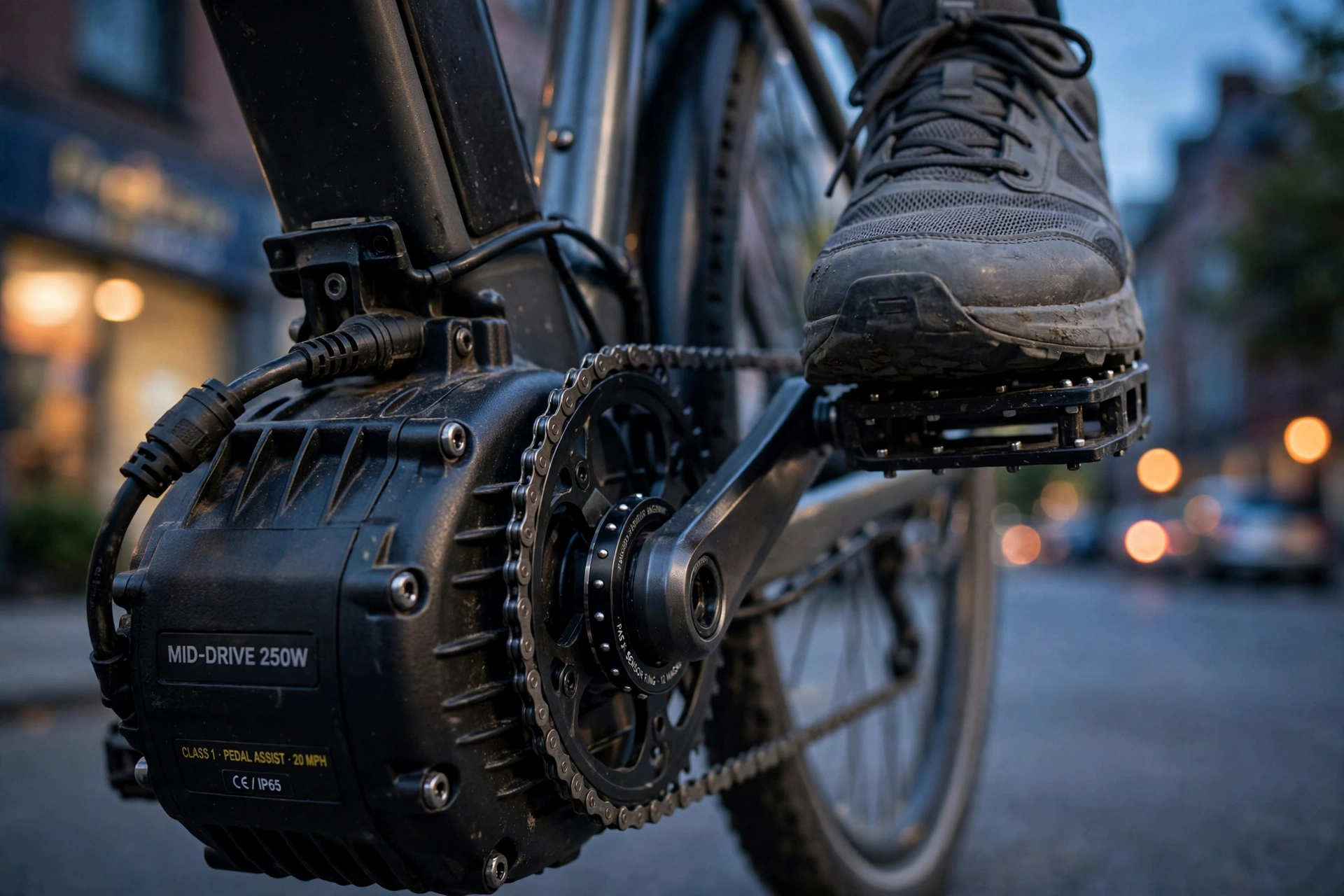
Table of Contents
What Is a Class 1 Ebike?
A Class 1 e-bike is a bicycle with an electric motor of 750 watts or less that provides assistance only when the rider is pedaling and ceases to provide assistance when the bicycle reaches 20 miles per hour. That definition comes from the three-class e-bike system first adopted by California and now used by 36 US states plus the District of Columbia. Three things define the class:
- Pedal-assist only. The motor engages when you pedal and disengages when you stop. There is no throttle button or twist grip — if a bike can be propelled without pedaling, it isn’t Class 1.
- 20 mph assist cutoff. Above 20 mph the motor goes silent and you’re on leg power alone. A Class 1 bike can physically be ridden faster downhill, but the motor never helps past 20.
- 750-watt motor limit. Federal and state definitions cap the motor at 750 W for the bike to count as an electric bicycle rather than a moped or motorcycle.
Class 1 e-bikes must also have fully operable pedals and a permanent label on the frame stating the classification number, top assisted speed, and motor wattage. Check for that label before you buy — it’s required in states like California and Washington, and a missing label is a red flag that a bike may be misclassified or imported outside the rules. In practice, Class 1 covers most commuter e-bikes, city e-bikes, and trail-friendly e-mountain bikes from big brands: they’re the default choice for riders who want an e-bike that behaves like a bicycle.
Class 1 vs Class 2 vs Class 3 E-Bikes
The class number changes two things: how the motor engages and how fast it assists. Here’s the full picture:
- Class 1 — pedal-assist, 20 mph. Motor only while pedaling. No throttle. The most broadly permitted class — generally allowed anywhere regular bikes go, including multi-use paths and most trails.
- Class 2 — throttle, 20 mph. A throttle can propel the bike without pedaling, capped at 20 mph. Same access rights as Class 1 in most states, but throttles draw attention on trails and some trail systems restrict them.
- Class 3 — pedal-assist, 28 mph. Faster, with trade-offs: riders typically must be 16 or older, helmets are required, and Class 3 bikes are banned from most Class I multi-use paths unless a local ordinance says otherwise. A speedometer is required.
One nuance worth knowing: a low-speed “walk-assist” or launch feature that powers the bike up to about 3.7 mph without pedaling is legal on all three classes — that’s not a throttle, and it doesn’t change the classification. Also, many mid-priced e-bikes (Aventon, Rad Power Bikes, Lectric) ship as Class 2 or Class 3 but let you lock them to Class 1 mode through the display settings, which can be handy for trail access. If you buy one of these, check the label and the app settings so you know what class you’re actually riding in.
Where Can You Ride a Class 1 E-Bike?
This is Class 1’s biggest selling point. Because it’s treated like a regular bicycle under the law in most states, a Class 1 e-bike can generally be ridden:
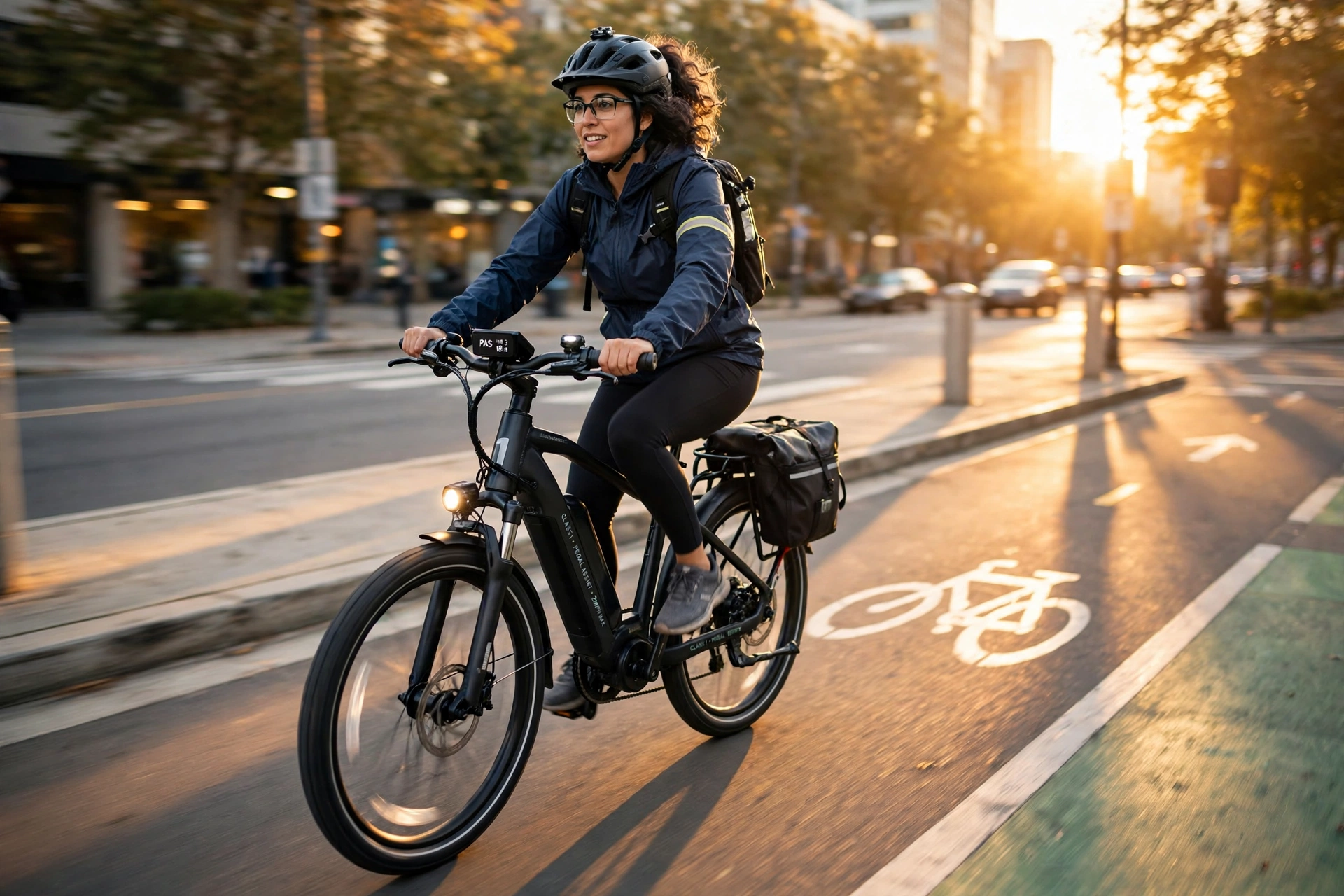
- In bike lanes and on roads, following the same rules as bicycles.
- On multi-use and shared-use paths — the paved greenways most cities build for runners and cyclists. Class 3 bikes are usually excluded from these; Class 1 is welcome.
- On many natural-surface trails, including a growing number of mountain-bike trail systems. Land managers like the US Forest Service and Bureau of Land Management have been opening non-motorized trails to Class 1 e-bikes on a case-by-case basis, and many local trail organizations now explicitly allow Class 1 but not Class 2 or 3.
The catch: access is decided locally. A trailhead sign or a city ordinance can override the general rule, so check before you ride — especially in parks and on federal land. The pattern to remember is simple: Class 1 gets bicycle access; Class 2 and 3 often don’t. If riding trails matters to you, Class 1 is the safe choice.
Class 1 E-Bike Laws in 2026
The legal landscape keeps moving, and 2026 brought several changes worth knowing about before you buy.
United States. As of 2026, 36 states plus the District of Columbia use the three-class framework. In the vast majority of them, Class 1 and Class 2 e-bikes are treated exactly like bicycles: no driver’s license, no registration, no insurance. Fourteen states do their own thing — New Jersey formally scrapped the three-class system in 2026 and now treats all e-bikes as motorized bicycles, while states like Alaska and Massachusetts still slot e-bikes into motorcycle or moped categories. Recent updates include Washington’s SB 6110 (in effect June 2026), which tightened the rules so a device that can exceed 20 mph on motor power alone no longer qualifies as an e-bike at all, and North Carolina’s three-class law taking effect December 1, 2026. In California, the first state with the class system, throttles were banned on Class 3 bikes starting in 2025, and retailers now face enforcement action for selling non-compliant bikes — so buy from sellers who label the class properly.
Canada. Federally, a power-assisted bicycle needs operable pedals, a motor of 500 W or less, and assistance that cuts off at 32 km/h. The provinces add their own layers: Ontario is modernizing its rules in 2026 with a new two-class proposal — Class 1 e-bikes would be lightweight pedal-assist bikes (maximum 55 kg) with no licence, insurance, or registration required, while heavier throttle-style machines get a separate class. Quebec and British Columbia have their own long-standing frameworks. If you ride in Canada, check your province’s current rules, because the Ontario update is the most significant shake-up in years.
Bottom line for 2026: Class 1 is the least regulated e-bike category on the continent. Wherever e-bikes are legal at all, Class 1 is legal.
Who Should Buy a Class 1 E-Bike?
Class 1 fits a specific rider profile — and it’s a big one. You’re a good candidate if:
- You commute or run errands by bike. Twenty miles per hour of pedal-assisted speed flattens hills and headwinds, and arriving without a sweat-soaked shirt is the whole point of commuting on an e-bike.
- You’re new to e-bikes. No throttle to manage, no 28 mph learning curve. Class 1 rides like the bike you already know, just with a tailwind that never stops.
- You ride trails. As covered above, Class 1 is the class trail managers actually allow.
- You want zero paperwork. No license, registration, or insurance in the states that use the three-class system. Buy it, charge it, ride it.
- You ride with a non-electric partner. Class 1’s modest assistance levels make it easy to match pace with someone on a regular bike — a stronger rider on an acoustic bike can still keep up.
Class 1 is not for you if you want to cruise without pedaling (that’s Class 2), you need 28 mph to keep up with fast commuter traffic (that’s Class 3), or you regularly ride steep hills with heavy cargo — where a higher-torque mid-drive or a Class 3 bike may suit you better.
What to Look for When Buying a Class 1 E-Bike
Prices for decent Class 1 e-bikes run roughly $800 to $3,500 in 2026 — budget city bikes at the low end, premium commuters and e-MTBs at the high end. Here’s what actually matters when you compare:
- Motor type. Hub motors (in the wheel) are cheaper and fine for flat commuting. Mid-drive motors (at the cranks, from Bosch, Shimano, or Yamaha) cost more but climb better and feel more natural, because they work through the gears. For hilly terrain, mid-drive is worth the premium.
- Battery size and real range. Look for 400–700 Wh batteries. Real-world range is 30–60 miles per charge depending on assist level, hills, and rider weight — ignore fantasy figures calculated at the lowest assist setting on flat ground. If you want to know what charging actually costs, it’s pennies: see our breakdown of how much it costs to charge an electric bike.
- Torque. For commuting, 50–70 Nm is plenty. For steep hills or cargo, look for 80+ Nm. Torque matters more than raw wattage for hill-climbing.
- Weight. Class 1 commuters weigh 45–65 lbs. Lighter is better if you carry the bike up stairs or load it onto a car rack — but ultralight e-bikes cost more.
- Battery safety certification. After several years of battery fires from uncertified packs, look for UL 2849 (whole e-bike system) or UL 2271 (battery) certification. This is non-negotiable for a bike you charge in your home.
- Fit and dealer support. E-bikes come in frame sizes like regular bikes, and a local dealer who can service the electronics is worth a few hundred dollars over a direct-to-consumer deal — especially for mid-drive systems.
Best Class 1 E-Bike Models in 2026
These are established models sold in a Class 1 configuration — all from brands with real dealer or service networks. Street prices move around, so treat these as ballparks.
- Specialized Turbo Vado 3.0 (~$3,000). The benchmark commuter e-bike: Specialized’s own smooth mid-drive motor, integrated lights, fenders, and a rack. Quiet, refined, and sold through hundreds of dealers. Pure Class 1.
- Trek Allant+ 7 (~$3,600). Trek’s Bosch-powered commuter with a big 625 Wh battery and comfortable upright geometry. Another true Class 1 from a major brand, with service at any Trek shop.
- Aventon Level.2 (~$1,900). The value pick. Ships as Class 2 but can be switched to Class 1 (or Class 3) in the display settings, so you can match the rules of wherever you ride. Torque-sensor pedal assist feels natural, and the price undercuts the big brands by a lot.
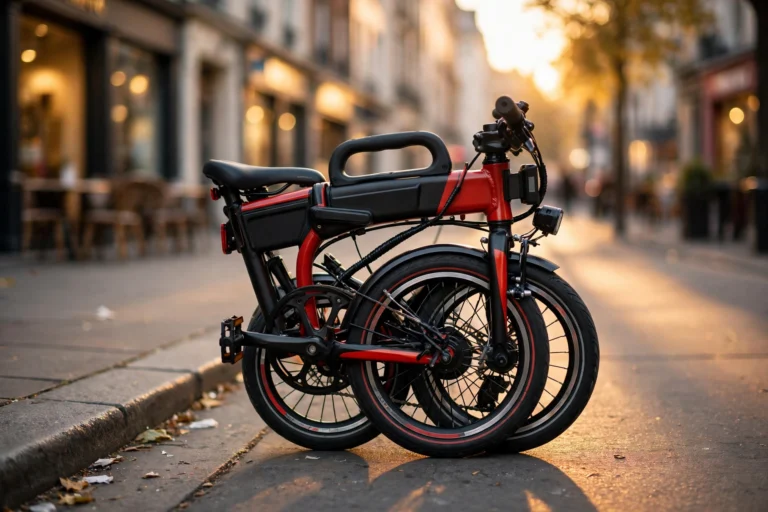
- Lectric XP 3.0 (~$1,000). The best-selling budget e-bike in the US. A folding fat-tire bike that ships Class 2 but offers Class 1 mode — popular with commuters who want a cheap, compact ride that can still access bike paths legally.
- Rad Power Bikes RadRover 6 Plus (~$1,800). A fat-tire all-rounder with a Class 1 riding mode, good for riders who split time between pavement and light trails.
Notice the pattern: even bikes that can run as Class 2 or 3 are often ridden in Class 1 mode — which tells you how useful the bicycle-like access of Class 1 really is. If you want more detail on one popular budget model, our Jetson e-bike guide walks through specs, range, and pricing for a compact city bike.
Charging, Maintenance and Battery Safety
Owning a Class 1 e-bike is low-drama. Charging takes 3–6 hours from a standard wall outlet and costs roughly 10–20 cents of electricity per full charge — a full year of daily commuting costs less than a single tank of gas. The battery is the most expensive part of the bike, so treat it well:
- Charge on a hard surface away from exits, and never leave a charging battery unattended overnight.
- Store the battery at room temperature; avoid charging a frozen battery straight from a cold garage.
- Expect 500–1,000 full charge cycles before noticeable capacity loss — roughly 3–5 years of regular riding. Replacement packs typically run $300–$800.
- Use only the charger that came with the bike. Third-party chargers are the most common cause of battery fires.
- Keep the drivetrain clean — an e-bike’s extra torque wears chains faster than a regular bike. Budget for a new chain yearly if you ride a lot.
Maintenance otherwise mirrors a regular bicycle: brakes, tires, and gears. Any bike shop can handle the mechanical side; the electronics rarely need attention.
Class 1 E-Bike FAQ
Do I need a license to ride a Class 1 e-bike?
In the 36 states (plus DC) that use the three-class system, no. Class 1 e-bikes are legally bicycles — no license, registration, or insurance. The exceptions are the handful of states with their own frameworks, so check your state’s DMV if you live outside the three-class states.
Can I ride a Class 1 e-bike on bike trails?
Generally yes — that’s the class’s biggest advantage. Class 1 bikes are allowed on multi-use paths and a growing number of natural-surface trails, while Class 2 and especially Class 3 face more restrictions. Always check local trail rules first.
Can a Class 1 e-bike go faster than 20 mph?
The motor can’t help past 20 mph, but you can pedal faster on your own, and gravity works downhill. The 20 mph limit applies to motor assistance, not to the bike’s speed.
Is 750W enough for hills?
For most riders, yes — especially with a mid-drive motor that multiplies torque through the gears. Riders over 220 lbs or with very steep commutes should prioritize high torque (80+ Nm) over headline wattage.
How is a Class 1 e-bike different from an e-moped?
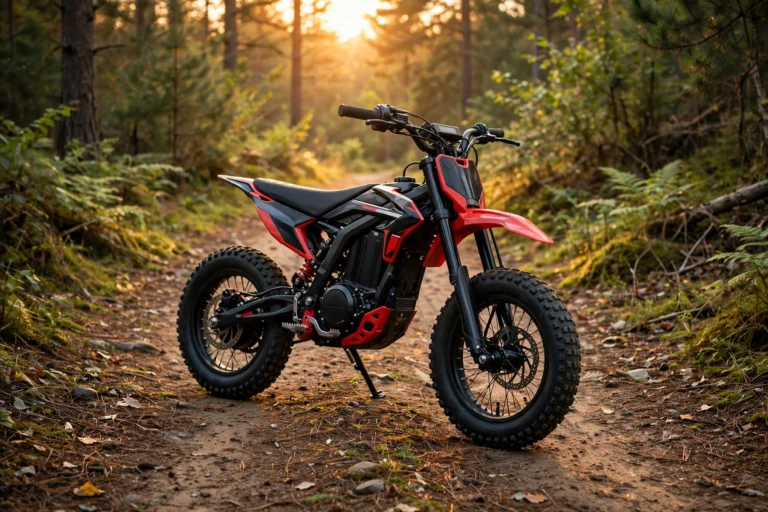
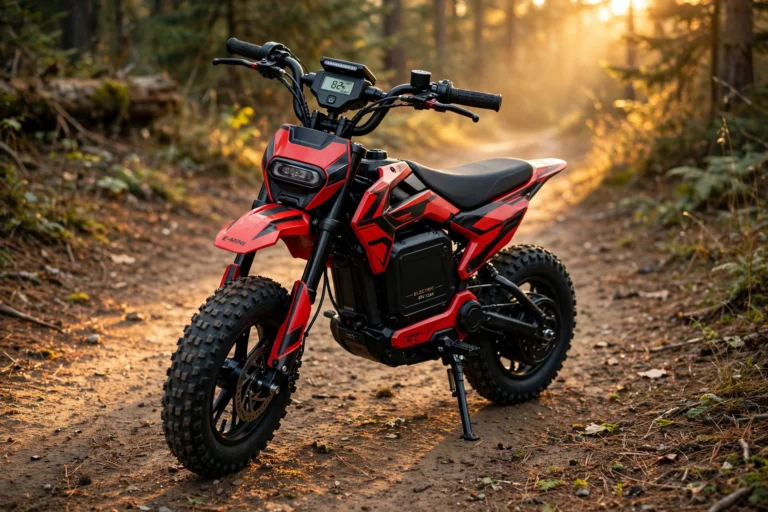
An e-moped or e-moto has a throttle, no meaningful pedals, and speeds well past 20 mph — machines like the RTR electric bikes are off-road-only and not street-legal as bicycles. A Class 1 e-bike is a real bicycle with pedals you must use; the motor just multiplies your effort.
Are Class 1 e-bikes allowed in Canada?
Yes, broadly. Federal rules allow power-assisted bicycles up to 500 W with assist cutting off at 32 km/h, and Ontario’s 2026 modernization explicitly carves out lightweight pedal-assist bikes as licence-free. Provincial details vary, so confirm locally.
The Bottom Line
A Class 1 e-bike is the closest thing the e-bike world has to a do-everything default: pedal-assist up to 20 mph, no throttle, no license, no registration, and access to the same paths and lanes as a regular bicycle. If your riding is mostly commuting, errands, fitness, and the occasional trail — and you don’t mind actually pedaling — Class 1 gives you 90% of what an e-bike offers with the fewest legal headaches. Spend $1,000–$2,000 for a solid commuter like the Aventon Level.2 or Lectric XP 3.0 in Class 1 mode, or $3,000+ for the refined mid-drive experience of a Specialized Turbo Vado or Trek Allant+ 7. Either way, check the frame label, buy a UL-certified battery, and enjoy the tailwind. For more on how e-bike batteries work and what to expect from them, see our EV battery explainer — and for the official federal picture, the Alternative Fuels Data Center’s electric vehicle basics page is a solid starting point.