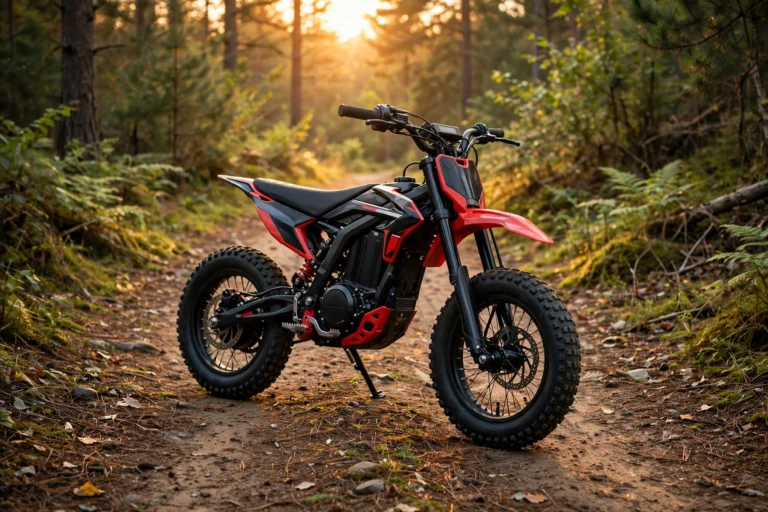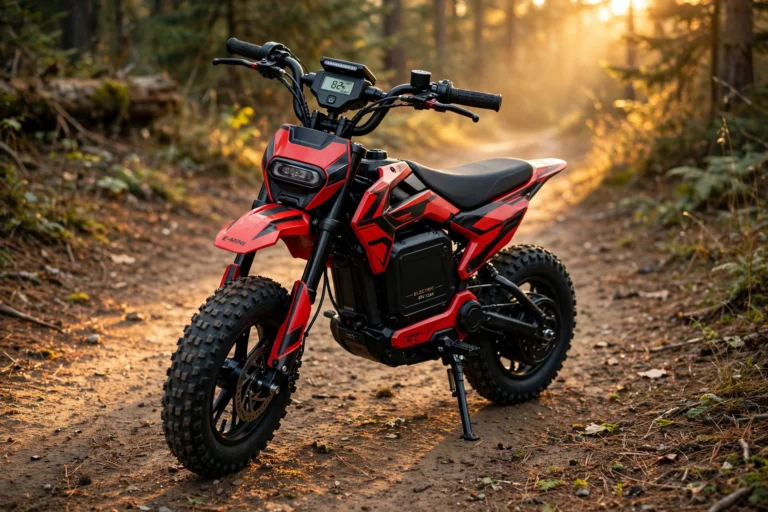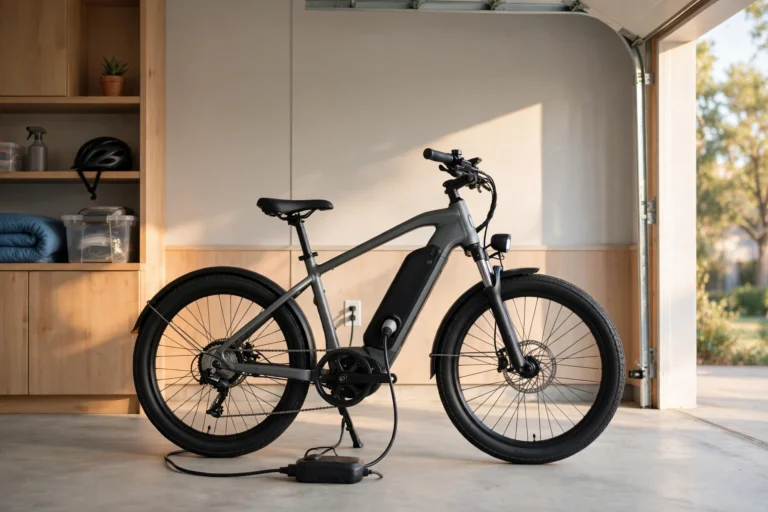

If you’ve priced electric bikes lately, you’ve probably felt the sticker shock: most decent full-size models start around $1,000 and climb fast from there. That’s the gap the Jetson e bike lineup was built to fill. These compact, folding electric bikes sell for a few hundred dollars — often under $400 on sale — and they keep showing up on Amazon bestseller lists, inside Costco warehouses, and parked outside college lecture halls.
But “cheap” always raises the same question: what are you actually giving up? In this guide I’ll break down every current Jetson model — the Bolt Pro, Bolt Pro Max, Haze, LX10, and J5 — with verified 2026 specs, translate the marketing range claims into real-world numbers, do the charging-cost math, and give you an honest verdict on who should buy one.
Table of Contents
What Is a Jetson E Bike, Exactly?
Jetson is a US-based brand that made its name on budget electric rides — hoverboards, kick e-scooters, and eventually e-bikes. You won’t find Jetson in specialty bike shops; their turf is Amazon, Walmart, Costco, and big-box retailers, and the prices reflect that. The whole lineup is built around one idea: a small, light, affordable e-bike for short trips.
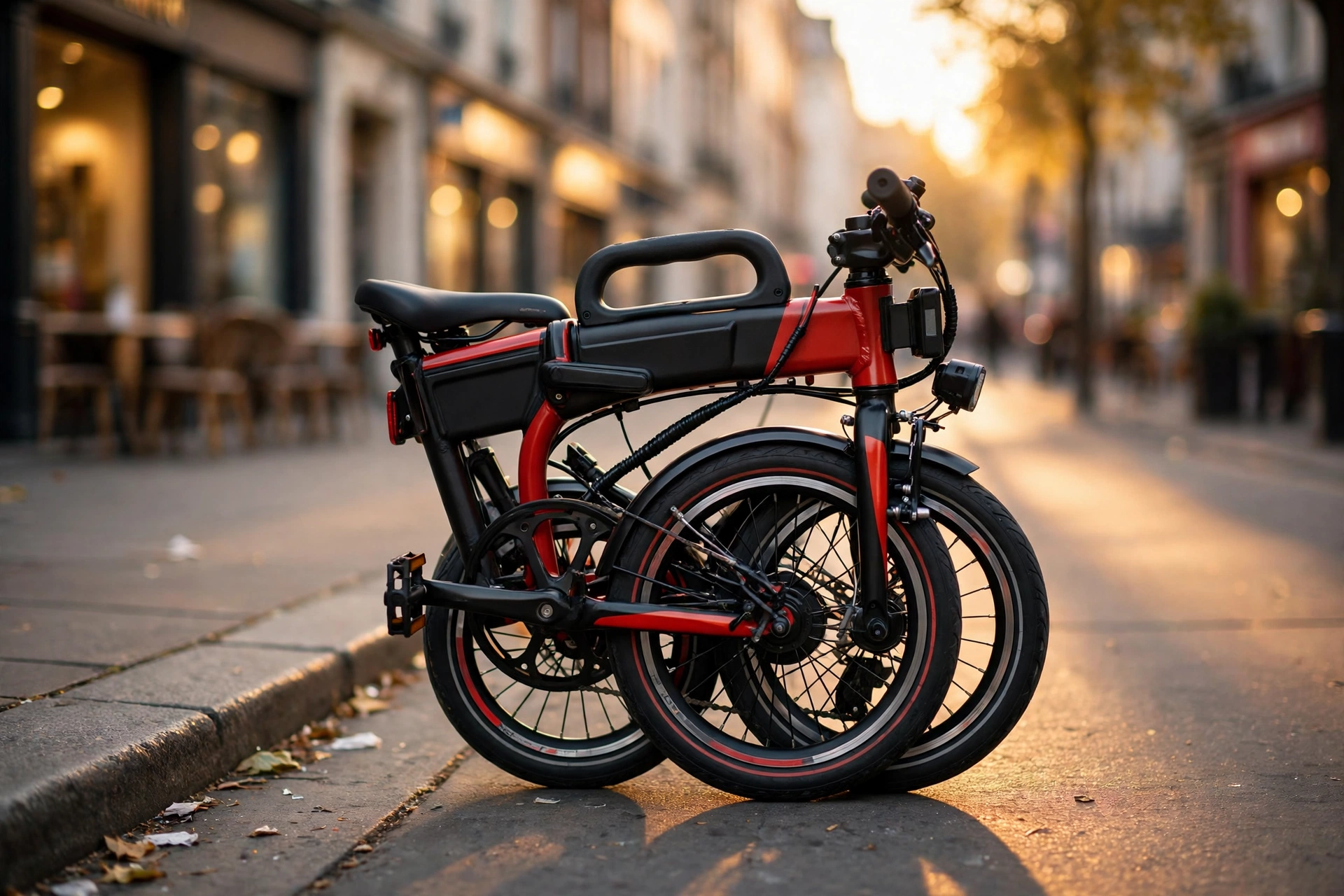
Every Jetson e bike shares the same basic formula. Small wheels (10 to 14 inches), a modest hub motor (250 to 350 watts), a top speed capped at 15.5 mph, and a folding or fold-down design with a built-in carrying handle so you can stash it in a trunk, a dorm room, or an RV compartment. These are last-mile machines — campus runs, grocery trips, campground cruising — not replacements for a full-size commuter e-bike.
That 15.5 mph cap is deliberate. It keeps every model comfortably under the 20 mph limit that defines Class 2 e-bikes under US federal guidelines, which means they’re street-legal just about everywhere regular bicycles are allowed. Local rules still vary, so it’s worth a quick check with your city or state before you ride — the US Department of Energy’s Alternative Fuels Data Center (afdc.energy.gov) is a solid starting point for e-bike regulations by state.
The 2026 Jetson E Bike Lineup: Every Model Compared
Jetson doesn’t do model-year refreshes the way car companies do — the lineup evolves slowly, and familiar names stick around for years with small revisions. Here’s where things stand in 2026:
| Model | Motor | Top speed | Throttle range | Pedal-assist range | Wheels | Weight |
|---|---|---|---|---|---|---|
| Bolt Pro | 350W rear hub | 15.5 mph | ~15 mi | ~30 mi | 14 in. | ~41 lb |
| Bolt Pro Max | 350W rear hub | 15.5 mph | ~15 mi | ~25 mi | 14 in. | ~42 lb |
| Bolt (base) | 350W rear hub | 15.5 mph | ~15 mi | N/A (pegs) | 14 in. | ~41 lb |
| Haze | 350W hub | 15.5 mph | ~15 mi | 3 levels, ~15–30 mi* | All-terrain | ~48 lb |
| LX10 | 250W hub | 15.5 mph | ~15 mi | N/A (pegs) | 10 in. | ~36 lb |
| J5 | 350W hub | 15.5 mph | ~15 mi | ~30 mi | 14 in. | ~37.5 lb |
*Haze range doubles with the optional spare battery. Ranges are manufacturer claims; real-world numbers come later in this guide. All models are rated for riders 12 and up, with weight limits of 260–265 lb depending on the model.
Jetson Bolt Pro — the one most people buy
The Bolt Pro is the flagship of the lineup and the best-selling Jetson e bike by a wide margin. The specs: a 350-watt rear hub motor, a 36V 6.0Ah lithium-ion battery (216 watt-hours), twist throttle plus pedal assist with a single-speed crank, cruise control, dual disc brakes, 14-inch pneumatic tires, an LED headlight and taillight, and a simple LED battery display. The handlebar folds down and there’s a carrying handle molded into the frame, which is genuinely useful when you’re hauling 41 pounds up apartment stairs.
Charging takes up to 5 hours from empty. The seat and handlebar are height-adjustable, and the bike carries a UL-2849 electrical certification, which matters more than it sounds — it’s the same fire-safety standard bigger e-bike brands certify to.
Price is the Bolt Pro’s whole argument. It listed around $500–650 earlier in the year but has sold for about $400 during 2026 sales events, with dips even lower. At that price, it’s roughly a third of what a name-brand full-size e-bike costs.
Jetson Bolt Pro Max — the cargo-friendly sibling
The Pro Max is nearly identical to the Bolt Pro — same 350W motor, same 15.5 mph cap, same 36V 6.0Ah battery — but it adds a rear cargo rack that’s the base of Jetson’s RackIt Smart Cargo System, so you can click on bags, baskets, or a cooler. Range is rated at 25 miles with pedal assist and 15 on throttle. In 2026 it’s dipped as low as $350 on sale, making it arguably the better buy whenever it’s priced near the standard Pro.
Jetson Bolt (base model)
The original Bolt skips pedals entirely in favor of foot pegs — it’s throttle-only, which makes it simpler but also means you’re fully dependent on the battery. One disc brake instead of two, no pedal assist, and a lower price to match. It’s fine as a toy or a campground runabout, but the Pro is worth the step up for most buyers.
Jetson Haze — the “adventure” one
The Haze adds all-terrain tires, three levels of pedal assist, cruise control, and a three-way folding frame. At 48 pounds it’s the heaviest Jetson, and the 15.5 mph top speed is unchanged, but the interesting trick is the optional spare battery: buy a second pack and you can double the throttle range to around 30 miles. It sits higher in the lineup on price, so it only makes sense if the all-terrain tires and folding frame matter to you.
Jetson LX10 — the ultra-compact
The LX10 is the minimalist of the family: a 250W motor, tiny 10-inch wheels, and just 36 pounds, with a 36V 6Ah battery good for about 15 miles. It’s UL-2272 certified, folds small, and is basically the cheapest way to get a powered two-wheeler that still counts as a bike. The small wheels and lower power make it a short-trip specialist — think large campuses and flat neighborhoods.
Jetson J5 — the comfort pick
The J5 pairs the 350W motor with dual suspension and an LCD display showing speed, battery, and assist mode, plus three speed modes. It’s the most comfortable-riding Jetson and claims up to 30 miles with pedal assist. If your local roads are rough, the suspension alone may justify it over the Bolt Pro.
Real-World Range: What a Jetson E Bike Actually Delivers
Here’s where I translate the marketing. Jetson’s range claims — 30 miles with pedal assist, 15 on throttle — assume a light rider, flat ground, no headwind, and gentle riding. Real life is heavier. So let’s do the physics instead of trusting the box.
The Bolt Pro’s battery holds 216 watt-hours. On throttle alone, the 350W motor draws roughly 200–250 watts at cruising speed. Divide: 216 Wh ÷ ~225W ≈ 0.96 hours of runtime, and at 15.5 mph that works out to about 14 miles in perfect conditions. Real riders consistently report 10–14 miles on throttle alone, which lines up.
With pedal assist, your legs contribute, so consumption drops to roughly 15–20 Wh per mile. That’s 216 ÷ 18 ≈ 12 miles of motor contribution — but since you’re pedaling, total trip distance stretches further. In practice, a 170-pound rider pedaling at a moderate effort can expect 18–25 miles before the battery gives out. The advertised 30 is reachable, but only if you’re light, the route is flat, and you’re doing a meaningful share of the work.
A few things that eat range faster than you’d think:
- Hills. Small hub motors work hard on grades. A hilly 5-mile commute can consume what 10 flat miles would.
- Rider weight. A 240-pound rider will see noticeably less range than a 140-pound one — the motor is only 350W, so every extra pound counts.
- Cold weather. Lithium batteries lose 10–20% of usable capacity in near-freezing temperatures, just like EV car batteries.
- Throttle-only riding. It’s tempting, but it roughly halves your range versus pedaling. Use cruise control on long flat stretches instead of holding the throttle.
Rule of thumb for any Jetson e bike: cut the marketed throttle range by about a third for a realistic number, and assume pedal-assist claims need ideal conditions. Plan your rides around 10 miles of throttle range and you’ll never be caught pedaling a 41-pound bike home unassisted — which, trust me, is a workout nobody signed up for.
Charging Time and Running Costs: The Math
A full charge takes up to 5 hours on the included charger (the LX10 is a bit quicker at around 4). Overnight charging is the obvious move — plug it in when you get home, ride in the morning. There’s no fast-charging option and no removable-battery trick on most models, so plan around it.
Now the fun part: the cost. A full charge is 0.216 kWh of electricity. At the US average residential rate of about $0.17/kWh, that’s under 4 cents per charge. Four cents. Even if you ride it every single day for a year, you’re looking at roughly $13 in electricity.
Put it per mile: a full charge delivers, say, 12 miles of mixed riding for $0.04 — that’s about 0.3 cents per mile. Compare that to a car at 15–20 cents per mile in fuel alone, and the Jetson starts to look less like a toy and more like the cheapest motorized transport you can own. If you want the full breakdown of what e-bike charging really costs, including bigger bikes with larger batteries, see our guide on how much it costs to charge an electric bike.
Jetson E Bike vs. Bigger E-Bikes: An Honest Comparison
It’s worth being clear about what a Jetson is not. A typical budget full-size e-bike — something like the Lectric XP Lite at around $799 — gives you 20 mph, 40+ miles of range, and 20-inch wheels for roughly double the Jetson’s sale price. Step up to performance e-bikes like the RTR electric bikes and you’re in a different universe entirely: multi-kilowatt motors and 45+ mph, built for off-road rather than sidewalks.
So what does the Jetson give up for its price? Speed (15.5 mph vs. 20–28 mph), range (216 Wh vs. 500–700 Wh batteries), wheel size and ride comfort, and component quality — mechanical disc brakes instead of hydraulic, basic displays, no suspension on most models. What it keeps: genuine electric assist, portability no full-size bike can match, and a price that makes it an impulse buy rather than a financing decision.
The fair comparison isn’t really other e-bikes — it’s the alternatives at the same price: a regular bicycle (more exercise, zero running cost, but you arrive sweaty), a kick e-scooter (similar price, less stable, no seat), or rideshare (about $2–3 per mile versus the Jetson’s fraction of a cent). Against those, the Jetson looks very good for short trips.
Who Should Buy a Jetson E Bike — and Who Shouldn’t
Buy one if: you’re a student or campus commuter doing 2–8 mile round trips on flat ground; you live in an apartment and need something that folds small; you want a campground, RV-park, or vacation runabout; you’re e-bike curious and want to try the concept for $400 instead of $1,200; or you need a last-mile companion to pair with a car or transit commute. Students in particular get a lot from these — cheap to buy, nearly free to run, and easy to carry into a dorm. Our guide to EVs for students and young drivers covers the broader picture.
Skip it if: your commute is 10+ miles each way, your route has real hills, you’re over the 265-pound weight limit, you need to keep up with 20+ mph traffic, or you want to haul groceries or a kid. In those cases, saving for a full-size e-bike with a 500Wh+ battery and 20 mph assist will make you much happier — the Jetson will feel limiting within a month.
One more honest note: tall riders (over about 6’1″) often find the 14-inch wheels and compact frame cramped. If possible, try to sit on one at a Costco or Walmart display before buying — five minutes in the aisle tells you more than any spec sheet.
Safety, Certifications, and Maintenance
Two certifications are worth knowing. The Bolt Pro carries UL-2849 certification, the standard for e-bike electrical systems covering fire and shock hazards. The LX10 carries UL-2272, the personal-mobility-device standard. Cheap no-name e-bikes sometimes skip these; Jetson having them is a genuine point in its favor, especially if you’ll be charging indoors.
Beyond that, the usual rules apply: wear a helmet (15.5 mph into pavement still hurts), use the headlight and taillight after dark, and respect the 12+ age recommendation — these aren’t toys for small kids.
Maintenance is minimal but not zero. Check tire pressure weekly — small tires lose air fast and underinflation murders both range and handling. Inspect the mechanical disc brake pads every few hundred miles; they’re effective but need periodic adjustment as they wear. Keep the chain (on pedal-assist models) lightly lubed. And if you’re storing the bike for winter, leave the battery at 50–70% charge and top it up every couple of months — storing a lithium battery fully dead is the fastest way to kill it.
Jetson E Bike FAQ
Are Jetson e bikes street legal?
Generally, yes. With 250–350W motors and a 15.5 mph top speed, they fit comfortably inside the federal Class 2 e-bike definition (under 750W, under 20 mph), so they’re allowed wherever bicycles go in most states. A few cities have their own rules about e-bikes on paths and sidewalks, so check locally.
How long does the battery last before needing replacement?
Expect 2–4 years or roughly 500–800 full charge cycles before capacity drops to about 80%. Replacement batteries are available through Jetson and third-party sellers, typically around $100–150 — one of the perks of a small 216 Wh pack.
Can adults ride a Jetson e bike?
Yes, up to the 260–265 lb weight limit depending on model. That said, they’re compact — riders much over 6 feet tall may find the riding position cramped. The adjustable seat and handlebar help, but there’s only so much they can do with 14-inch wheels.
Is the Bolt Pro worth it over the base Bolt?
For most buyers, yes. Pedal assist effectively doubles your practical range, dual disc brakes stop better than the base model’s single brake, and the price gap is small during sales. The base Bolt only makes sense as a pure throttle toy.
Do Jetson bikes come assembled?
Mostly. They ship with partial assembly required — typically attaching the handlebar, seat, and pedals (or pegs), which takes about 20–30 minutes with the included tools. The battery arrives partially charged; give it a full charge before your first ride.
The Verdict
The Jetson e bike is exactly what it claims to be: the cheapest credible way to get electric assist on two wheels. The Bolt Pro at around $400 on sale delivers a UL-certified 350W bike with real pedal assist, disc brakes, and running costs measured in pennies — nothing else at that price comes close.
Just go in with clear eyes. Fifteen miles of real throttle range, 15.5 mph, and a compact frame mean this is a short-trip specialist, not a car replacement. If your life fits inside a 5-mile radius of flat ground — a campus, a downtown apartment, a campground — a Jetson is one of the best value buys in all of electric mobility. If it doesn’t, you’ll outgrow it fast, and that’s the most honest thing I can tell you.