Last updated: October 25, 2026
There are two ways to buy a tesla model s plaid in 2026, and they cost wildly different amounts of money. Order one of the last new ones and the sticker says $109,990 before destination. Buy a four-year-old one with the same 1,020 hp, the same tri-motor layout and the same independently tested 2.1-second 0-60 time, and the average asking price in current listings is $56,548. Same speed. Roughly half the money. Everything else in this guide is detail — but the detail is where Plaid owners actually spend, so let’s count it properly.
A Plaid’s purchase price is only the first bill. This is a 4,776-pound sedan that eats $2,300 sets of tyres, sits in an insurance bracket normally reserved for supercars, and carries a battery pack that costs five figures to replace once the warranty clock runs out. The cheap way into this car is obvious. The expensive mistakes aren’t, and most of them happen in the first month of ownership.
So here are the seven things that matter, in roughly the order your bank account will meet them: the real new price and what’s bundled into it, the used prices that make it look silly, tyres, insurance, charging, the checks that protect you when buying used, and a five-year cost table that puts new and used side by side. Every price was checked on October 25, 2026. Anything we had to estimate is marked (est.) with its basis shown.
Short version, if you’re in a hurry: the used car wins, and it isn’t close.
A tesla model s plaid rewards careful used buying, because the same car costs far less second-hand. That is why this tesla model s plaid guide focuses on the five-year numbers rather than the launch figures alone.
Thing 1: What a new tesla model s plaid actually costs in 2026
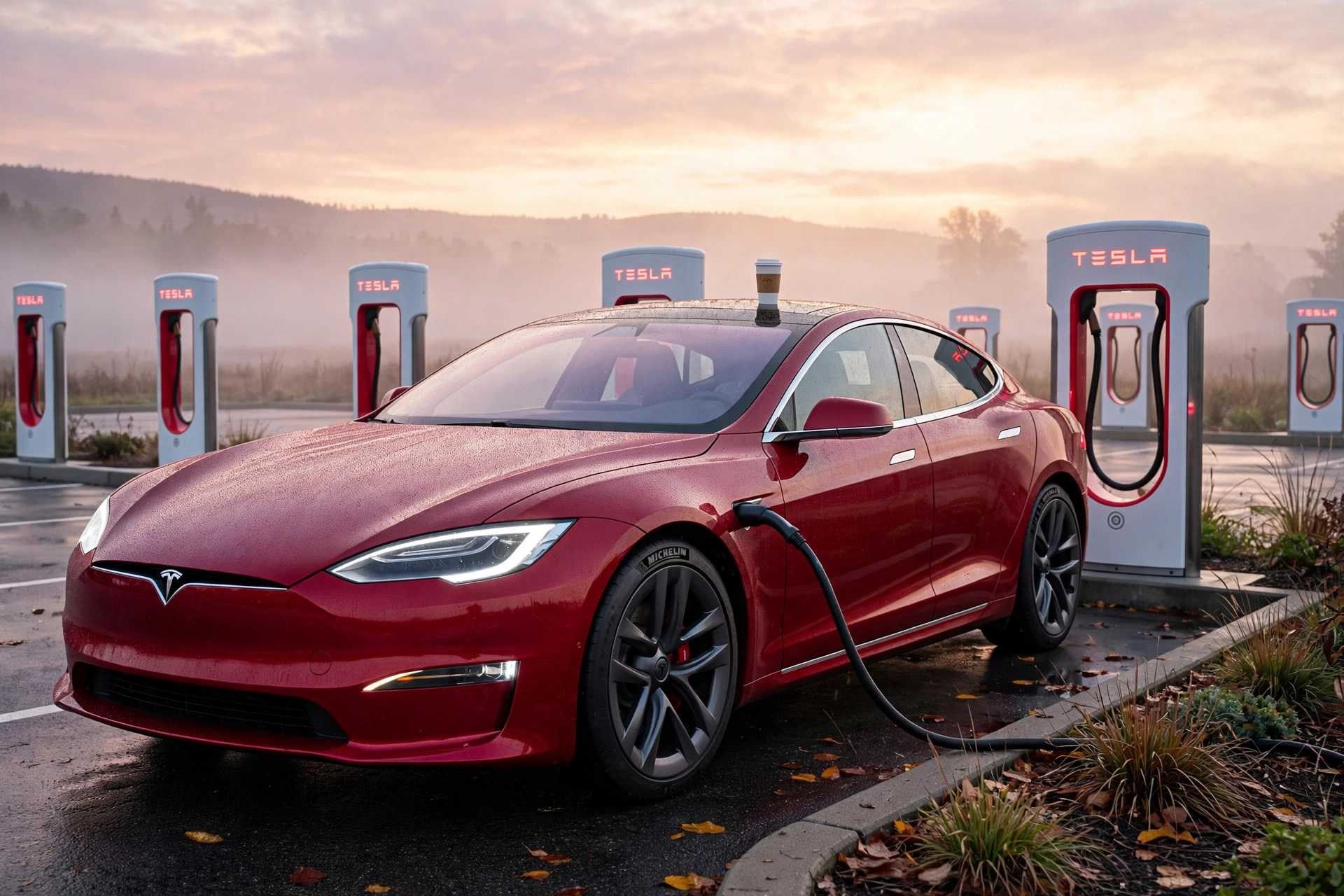
The headline price is $109,990, or $111,380 once destination is added, per the Edmunds and Kelley Blue Book listings checked on October 25, 2026. The Model S page on tesla.com is where remaining cars are sold, and the number you can’t dodge is that one. There’s no cheaper way to configure a new tesla model s plaid, because Tesla has largely stopped letting you delete things: Full Self-Driving (Supervised) is now standard, and the bundled Luxe package folds in free Supercharging plus four years of premium service that includes wheel-and-tyre protection and windshield protection.
Generous? Partly. Optional? No. You’re paying for FSD whether you trust it or not, and a budget-minded buyer should count that as several thousand dollars of the sticker buying software they may never switch on.
The 2026 refresh itself is mild: a front bumper camera, adaptive headlights, new wheel designs, a more aerodynamic front bumper on the Plaid, animated ambient lighting inside and better sound insulation. The hardware that matters is unchanged — 1,020 hp from three motors, a claimed 0-60 mph time of 1.99 seconds and an EPA range rating of 368 miles on the standard 19-inch wheels, dropping to 309 miles on the 21-inch wheels most buyers pick.
Treat the 1.99 claim with suspicion. It was set on a prepped drag-strip surface with rollout subtracted; Car and Driver tested the car on ordinary asphalt and recorded 2.1 seconds, with a 9.4-second quarter mile. Still absurdly fast — but the tested number is 2.1, and 2.1 is the number this guide uses for every cost-per-speed calculation below. We found exactly the same claim-versus-tested gap when we pulled apart the Tesla Model Y speed and range test results, so this is a Tesla habit, not a Plaid defect.
Two more facts belong in this section, because both hit the price. First, top speed: 2026 refresh coverage lists the Plaid’s limit at 149 mph, down from the old 200 mph headline, which always required the $20,000 Track Package anyway. Second, supply: several 2026 reports say Tesla built the last Model S at Fremont in spring 2026, and that the final leftover inventory was marked up by $15,000, to a reported $124,990 for the Plaid. Listings services still showed $111,380 when we checked on October 25, 2026, so treat the mark-up as reported rather than universal. Either way, the opinion here is free: paying a scarcity premium for a discontinued sedan is the single worst deal on this page.
Thing 2: A used tesla model s plaid is the same speed for half the money
Now the numbers that ruin the new car’s case. Average asking prices from current US listings data (iSeeCars, checked October 25, 2026): a 2021 Plaid averages $54,528, a 2022 averages $56,548, and a 2023 averages $71,705. Kelley Blue Book’s fair purchase price for a 2021 Plaid is $51,100.
The cheapest plausible car we saw in the data was a 2021 with 41,591 miles listed at $44,495. These are the same cars that stickered between $129,990 at the June 2021 launch and $141,190 for later 2021 builds. By KBB’s figures, a 2021 Plaid has shed about $90,090 of value in five years. The 2023 car started at $137,190 and now averages around $68,600 — half its price gone in roughly three years. Somebody else paid for the steepest part of that curve. It does not have to be you.
Here’s our own arithmetic, because this is the comparison Tesla’s configurator will never show you. Car and Driver’s tested 2.1 seconds is 21 tenths of a second. Divide the price by 21 and you get the cost of each tenth:
New tesla model s plaid at $111,380: $5,304 per tenth of a second. A 2022 used car at $56,548: $2,693 per tenth. A 2021 at KBB’s $51,100: $2,433 per tenth. Per horsepower it’s $109 new against $55 used. The Lucid Air Sapphire, scored below, charges $249,000 for a claimed 1.89 seconds — $13,175 per tenth, and that’s for a manufacturer’s claim rather than a tested time. The used Plaid isn’t a compromise purchase. On cost per unit of speed, it’s the cheapest way into a tested 2.1-second car that has ever existed, full stop.
One footnote: don’t budget for a tax credit to sweeten either route. The federal EV credits ended in September 2025, and this sedan was priced out of them long before that.
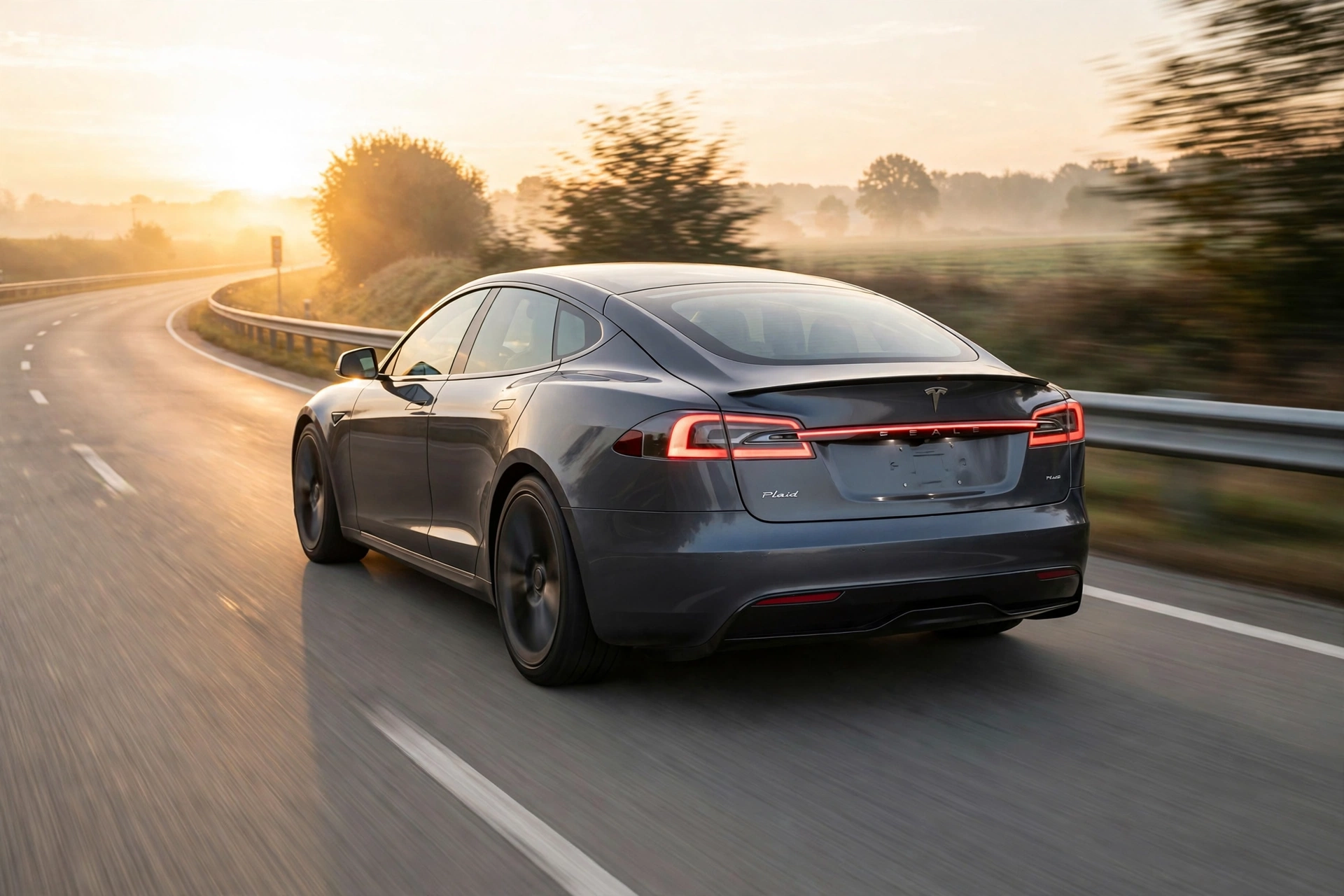
Thing 3: Tyres — the bill nobody puts in the brochure
Every tesla model s plaid on the optional 21-inch wheels wears Michelin Pilot Sport 4S rubber in a staggered fitment: 265/35ZR21 up front, 295/30ZR21 at the back. Current tyre prices (checked October 25, 2026) run about $538.99 for each front and $598.99 for each rear, which makes $2,276 for a set of four — call it $2,300 before fitting, and roughly $2,500 fitted (est., tyres plus mounting, balancing and fees).
Because the front and rear sizes differ, you can’t rotate them to even out the wear. Owner reports put a set’s life at around 20,000 miles of mixed driving, and hard launches shorten that considerably. The rear pair also wears its inner shoulders first thanks to the factory camber settings, which is why camber shim kits exist for this exact car. Budget for the full set, on schedule, forever.
Translated into the only unit that matters: $2,300 over 20,000 miles is 11.5 cents per mile in tyres alone. As Thing 5 shows, charging the car at home costs about 5.6 cents per mile. The rubber under a Plaid costs roughly twice as much per mile as the electricity inside it. The 19-inch wheels are the budget escape hatch: a set of tyres costs around $1,400 (est., based on current 19-inch fitment prices) and typically lasts longer, and you gain range instead of losing it — the 21s cut the new car’s EPA rating from 368 to 309 miles, and Car and Driver’s 75-mph highway test of a 21-inch car returned 280 real miles.
If a used Plaid you like sits on 19s, that is a feature, not a downgrade. Price it that way.
Thing 4: Insurance quotes will test your sense of humour
Published full-coverage averages for this car scatter widely, which is itself the lesson. Insuraviz’s rate study puts a 2024 Plaid at $3,250 a year for a 40-year-old driver with a clean record. CarInsurance.com’s average for the Model S line is $5,074 a year, and Insure.com’s is $5,285. So a clean-record adult should expect somewhere between roughly $3,250 and $5,100 a year, and a young driver should sit down first: the same Insuraviz data shows $5,998 at age 20 and $9,049 at age 18. The reasons are boring and permanent — aluminium body panels, expensive parts, long repair times and 1,020 hp of claim potential.
Don’t assume the used car fixes this. Premiums follow repair costs at least as much as vehicle value, and a $56,548 used Plaid generates exactly the same repair bills as a $111,380 new one, so quotes for the two land surprisingly close. Practical moves: get a quote on the actual VIN before you agree to buy anything, because the spread between insurers on this car can run to four figures a year; check whether Tesla Insurance operates in your state, since its rates undercut the big carriers for some drivers; and treat any quote gathered after purchase as a self-inflicted wound. This line item alone can erase the monthly-payment saving that made a particular car look cheap.
Thing 5: Charging is the cheap part — if you do it at home
The EPA consumption figures published at fueleconomy.gov rate the refreshed Plaid at 30.6 kWh per 100 miles and the 2021 car at 33 kWh per 100 miles. At an average US residential electricity price of about $0.17 per kWh (est.), that’s $5.20 to $5.61 per 100 miles — 5.2 to 5.6 cents a mile — and a full charge from empty costs roughly $18 (est., about 108 kWh from the wall). Home charging is the one place this car is genuinely frugal.
Supercharging is another story: the Plaid peaks at 250 kW and Edmunds measured an average of 523 miles of range added per hour in its charging test, so it’s quick, but at typical Supercharger prices of around $0.40–$0.50 per kWh (est.) the same 100 miles costs $13–$17. That’s more per mile than the tyres. Live on Superchargers and electricity becomes your biggest per-mile cost; charge at home and it’s your smallest.
This is where the new car’s bundle earns back a little respect. Free Supercharging is included with a new Plaid under the current Luxe package. If you road-trip heavily and would otherwise Supercharge most of your miles, that perk is worth up to about $1,800 a year (est., 12,000 miles at 33 kWh/100 miles and $0.45 per kWh); if you charge in your own garage, it’s worth close to zero.
Used buyers get no such cushion: Plaid-era cars were sold with pay-per-use charging or promotional free miles tied to the first owner, so treat any listing that advertises “free Supercharging for life” as unverified until you see it active in the car’s Tesla account. Paying a premium for somebody else’s expired perk is a classic used-Plaid trap.
Thing 6: What to check before you hand over money for a used tesla model s plaid
Six checks, in the order we’d do them. First, the half-shaft test. The Plaid’s front half-shafts are a known weak point: owners describe a shudder or vibration under hard acceleration, worst with the suspension at Standard or High ride height. Tesla issued service bulletin SB-21-39-001 for it, and reported repair costs range from around $350 under bulletin terms to roughly $1,650 at full price, per an NHTSA complaint from an owner whose shafts failed twice. On the test drive, set the suspension to Standard, find a quiet road, and launch it. A steering wheel that buzzes under power is a negotiating lever at best and a walk-away signal at worst.
Second, warranty dates. The basic 4-year/50,000-mile warranty is finished on 2021 and 2022 cars, but the battery and drive units are covered for 8 years or 150,000 miles from the car’s original in-service date — so a 2021 car is covered into 2029 and a 2022 into 2030. Confirm the in-service date in the Tesla app before you buy, because those two components are the five-figure ones; our Tesla battery replacement cost guide shows what a pack costs anyone unlucky enough to face one out of warranty.
Third, battery health. Charge the car to 100% and compare the displayed rated range with the 348 miles a 19-inch-wheel 2021 car showed when new. A healthy example should display roughly 313–330 miles (est., reflecting the 5–10% degradation typical at this age); a car showing under 300 miles (est.) needs a much lower price or a different buyer.
Fourth, tyres and wheels: a matching set of Pilot Sport 4S with even wear is the sign of a careful owner, while cheap mismatched rubber on a 1,020 hp car tells you exactly how it was maintained. Check the rear inner shoulders and expect curb rash on the Arachnid wheels. Fifth, the small stuff that still costs money: peeling finish on the early yoke steering wheel (a factory round-wheel swap exists if it bothers you), air suspension that sags overnight, door handles that present slowly, and a missing mobile charging connector, which is about $300 (est.) to replace.
Sixth, the paperwork: clean title, accident history, and whether Full Self-Driving was bought outright — a purchased package stays with the car, while a subscription is worth nothing at resale. The S also shares the wider Tesla family habits of trim niggles and software quirks that we catalogue in our Tesla Model Y problems guide; on the Plaid they’re merely more expensive when they stop being funny.
Thing 7: The tesla model s plaid five-year maths, new versus used
Here’s the whole argument in one table. Assumptions, all stated: 12,000 miles a year for five years, home charging, clean-record insurance, 21-inch wheels on both cars. The new car is a 2026 bought at $111,380 including destination; the used car is a 2022 bought at the $56,548 average asking price. Everything marked (est.) is our estimate, with the basis in the sections above.
| Five-year cost (est.) | New 2026 Plaid | Used 2022 Plaid |
|---|---|---|
| Depreciation (to ~$50,000 new / ~$27,000 used) | $61,380 | $29,550 |
| Insurance (5 years) | $20,750 | $19,500 |
| Tyres | $5,000 | $5,000 |
| Electricity (home charging) | $3,120 | $3,370 |
| Repairs and extras reserve | $1,200 | $4,800 |
| Total five-year cost | ~$91,450 | ~$62,220 |
| Cost per mile | $1.52 | $1.04 |
Read it carefully and the shape of the deal is unmistakable. Tyres and electricity are nearly identical. Insurance barely separates them. The used car needs a real repairs reserve — we’ve allowed $4,800 (est.) against the new car’s $1,200, which covers a half-shaft episode, suspension wear and the small stuff with room to spare.
And in fairness, the new car’s bundle claws something back: free Supercharging, four years of service and tyre-and-windshield protection could be worth $4,000–$6,000 (est.) if you use all of it. Even after handing the new car every one of those credits, the used tesla model s plaid still comes out roughly $23,000–$29,000 ahead over five years (est., the gap between the totals above, adjusted for the bundle). Depreciation is the whole game. The first owner already lost it. Let them.
Our verdict: new or used tesla model s plaid?
New 2026 tesla model s plaid — Our score: 7.4/10. Range: 8/10 — 368 EPA miles is strong, though the popular 21-inch wheels cut it to 309. Charging: 8/10 — 250 kW peak, the best network in the business, and free Supercharging bundled. Value: 5/10 — $111,380 for a car at the end of its production run, with software you can’t delete from the invoice and the steepest depreciation curve in the range still ahead of it.
Used 2022 tesla model s plaid — Our score: 8.6/10. Range: 7/10 — 348 EPA miles when new, less now, still more than most drivers use in a week. Charging: 8/10 — same 250 kW hardware, same network, you just pay for what you use. Value: 10/10 — a tested 2.1-second car at $2,693 per tenth of a second, with battery and drive-unit warranty running to 2030. This is the cheap winner, and it isn’t a sentimental pick; it’s the arithmetic.
Lucid Air Sapphire — Our score: 8.1/10. Range: 10/10 — 427 EPA miles embarrasses everything here. Charging: 9/10 — faster peak charging than the Plaid, on a smaller network. Value: 3/10 — $249,000 for 1,234 hp and a claimed 1.89 seconds works out to $13,175 per tenth. A magnificent car and a terrible deal, and those two facts coexist happily at that price.
Buy the 2022. Bank the roughly $55,000 you didn’t spend at the configurator, keep $4,800 of it in a repairs pot, and enjoy the exact same launch that made a new-car buyer feel special in 2022. The Plaid was never the problem. The invoice was.
Tesla model s plaid questions, answered
Is a used tesla model s plaid a good buy in 2026?
Yes — it’s the best-value way to own this car, provided it passes the checks in Thing 6. The 2022 is the sweet spot: average asking price $56,548 in current listings, battery and drive-unit warranty running to 2030, and the same tested 2.1-second performance as a new one at half the price.
How much does it cost to insure a Model S Plaid?
Published full-coverage averages run from about $3,250 a year (clean-record 40-year-old, Insuraviz) to about $5,074 a year (CarInsurance.com’s Model S average), checked October 25, 2026. Drivers under 25 pay far more. Always quote the actual VIN before buying — the spread between insurers on this car is unusually wide.
How long do the 21-inch tyres last, and what do they cost?
Owner reports put a set of Michelin Pilot Sport 4S at around 20,000 miles, less with frequent launches. A set costs about $2,276 at current prices — roughly $2,300 before fitting. The staggered sizes can’t be rotated, and the rear tyres wear their inner shoulders first.
What warranty is left on a 2021 or 2022 Plaid?
The basic 4-year/50,000-mile warranty has expired on both. The battery and drive units are covered for 8 years or 150,000 miles from the original in-service date, so a 2021 car is covered into 2029 and a 2022 into 2030. Confirm the in-service date in the Tesla app, and ask whether the half-shaft service bulletin (SB-21-39-001) has already been applied.
Does a used Plaid come with free Supercharging?
Almost never in any form you can bank on. Plaid-era cars were sold with pay-per-use charging or first-owner promotional miles, and Tesla can remove promotional charging when a car changes hands. Only believe it if the car’s own Tesla account shows it active — and don’t pay a premium for the claim either way.
How much does it cost to charge a Plaid at home?
At the 2021 car’s EPA figure of 33 kWh per 100 miles and an average residential price of about $0.17 per kWh (est.), 100 miles costs about $5.61, and a full charge from empty works out to roughly $18 (est.). That’s less than the tyres cost you over the same distance — which is the most Plaid sentence in this entire guide.