Last updated: October 24, 2026
If you put down a deposit on a Ram 1500 REV a couple of years ago, here is the plain truth up front: the all-electric truck you reserved is not coming. Not late. Not delayed again. Cancelled. Ram’s parent company, Stellantis, pulled the plug on the battery-electric REV in September 2025, and the name you remember now belongs to a different truck entirely — one with a gasoline engine under the hood that works as a generator. This guide walks through what the original Ram 1500 REV promised, what actually happened to it, what the badge means today, and what your family should buy instead if you still want an electric truck in the driveway.
I know that stings if you waited. Plenty of folks did. The REV was unveiled at the New York Auto Show in April 2023 with the kind of numbers that make a parent doing mental math at the kitchen table sit up straight: up to 500 miles of range. That is a full school week of drop-offs, two soccer practices, a grocery run, and a Saturday trip to Grandma’s house two counties over, all without thinking about a charger. It sounded like the first electric truck built for how families actually live.
It never shipped. Not one. So let us be useful about it.
The Ram 1500 REV Story: A 500-Mile Promise That Became a Generator
Start with what was promised, because the promise was genuinely good. The battery-electric REV was built on Stellantis’s STLA Frame platform, with a dual-motor all-wheel-drive setup making a targeted 654 horsepower and 620 lb-ft of torque. Ram quoted a 0–60 mph time of 4.4 seconds, towing up to 14,000 pounds, and payload up to 2,700 pounds — numbers that topped every electric truck on sale at the time.
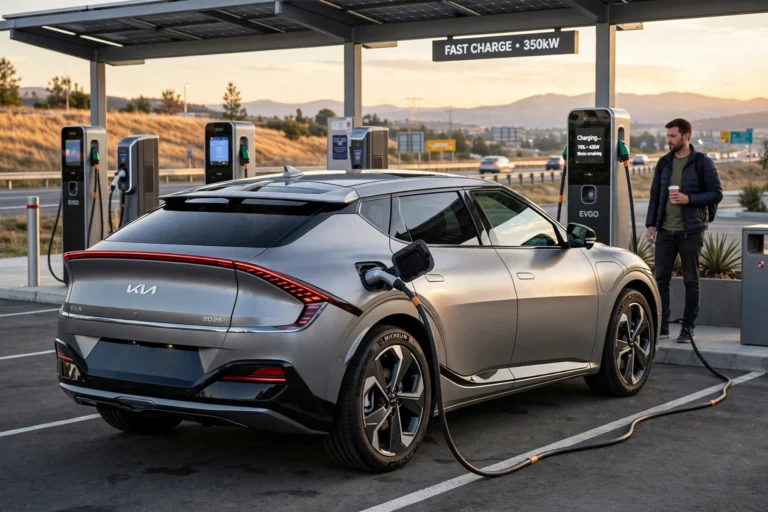
Two batteries were on the menu. The standard pack was a huge 168 kWh unit targeting 350 miles of range. The optional pack was a monster 229 kWh battery targeting 500 miles, numbers Ram published in its own 2025 product information. Charging ran on an 800-volt architecture at up to 350 kW, good for roughly 110 miles of range added in about 10 minutes. There was a 15-cubic-foot front trunk, a bed power panel putting out up to 7.2 kW, and trims running from a work-ready Tradesman up to a leather-lined Tungsten.
Read that spec sheet again. On paper, this was the truck that ended range arguments.
Then the schedule started slipping. The launch target moved from late 2024 to 2025, then to 2026. In September 2025, Stellantis stopped pretending. The company’s statement, widely reported at the time, said it plainly: “As demand for full-size battery-electric trucks slows in North America, Stellantis is reassessing its product strategy and will discontinue development of a full-size BEV pickup.” The 500-mile electric Ram was done.
Here is my honest take, and I will not soften it: cancelling the truck was defensible, but handing its name to a different vehicle was a shabby way to treat the people who had waited two years. A badge is a promise. When a family reserves a Ram 1500 REV, plans a home charger install around it, and then finds out the “REV” arriving later is a truck with a gas tank, that is not a pivot. That is a bait and switch wearing a familiar badge. Ram should have let the REV name rest and kept calling the range-extended truck what it was originally called — the Ramcharger, which is a fine name with real history behind it.
What the Ram 1500 REV Badge Means Now
So what is the REV today? It is the truck Ram developed alongside the BEV under the Ramcharger name, renamed in September 2025. The basics, per Ram’s own published figures on its official Ram 1500 REV page: it is still an electric-drive truck — two electric drive modules turn the wheels, and nothing else ever does. The difference is where the electricity comes from when the battery runs low.
Specs, as Ram currently publishes them. The battery is a 92 kWh pack tucked inside the frame rails. On a full charge, Ram targets about 145 miles of electric-only driving. Behind that sits a 3.6-liter Pentastar V6 that never touches the wheels; it spins a 130 kW generator to keep the battery fed. With the battery full and the 27-gallon gas tank topped off, Ram targets up to 690 miles of total range. Output in Ram’s latest revised figures is 647 horsepower and 615 lb-ft of torque, with a 0–60 mph time around 4.5 seconds. Early materials said 663 hp; the numbers have been trimmed as production nears, and we are using the newer figures.
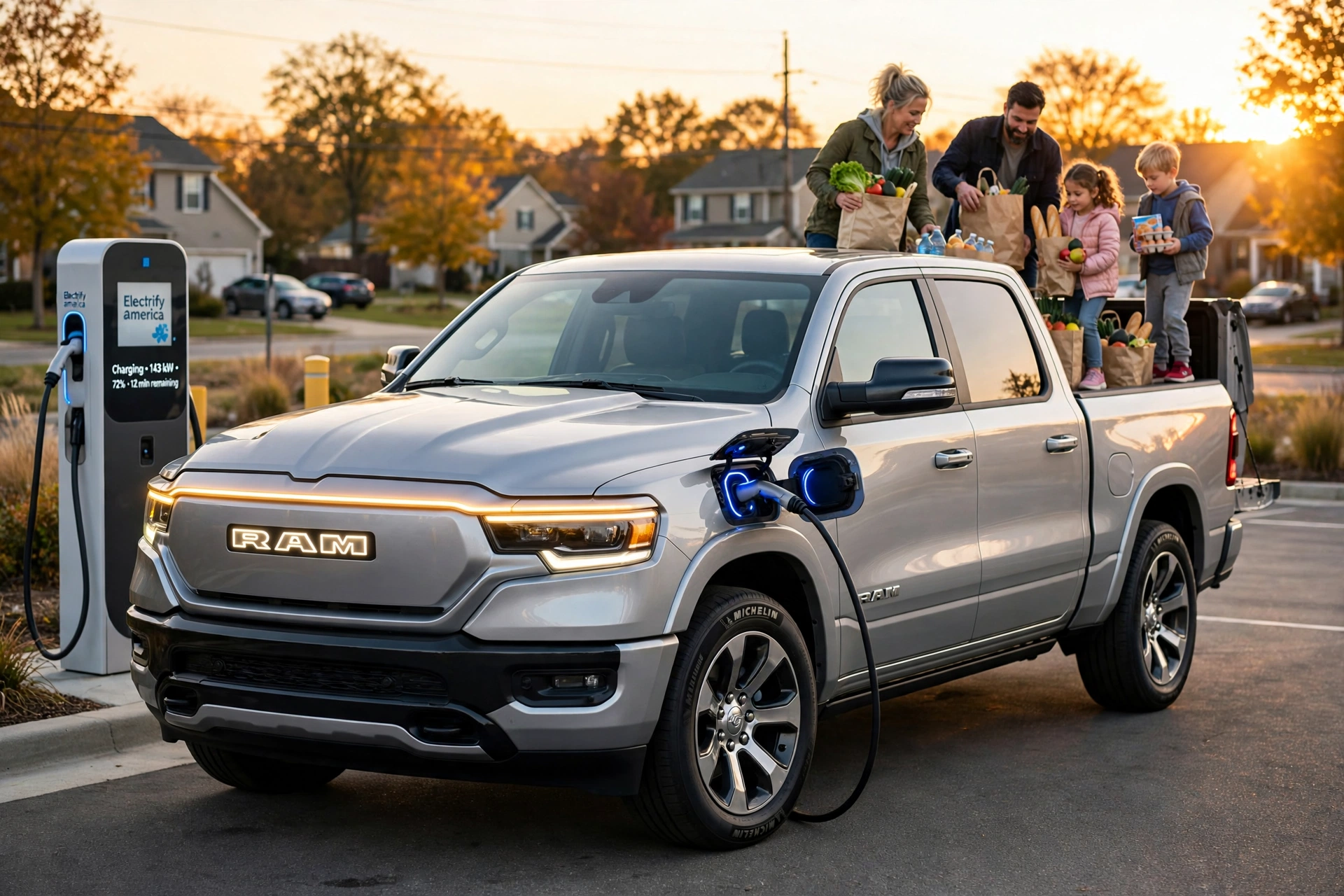
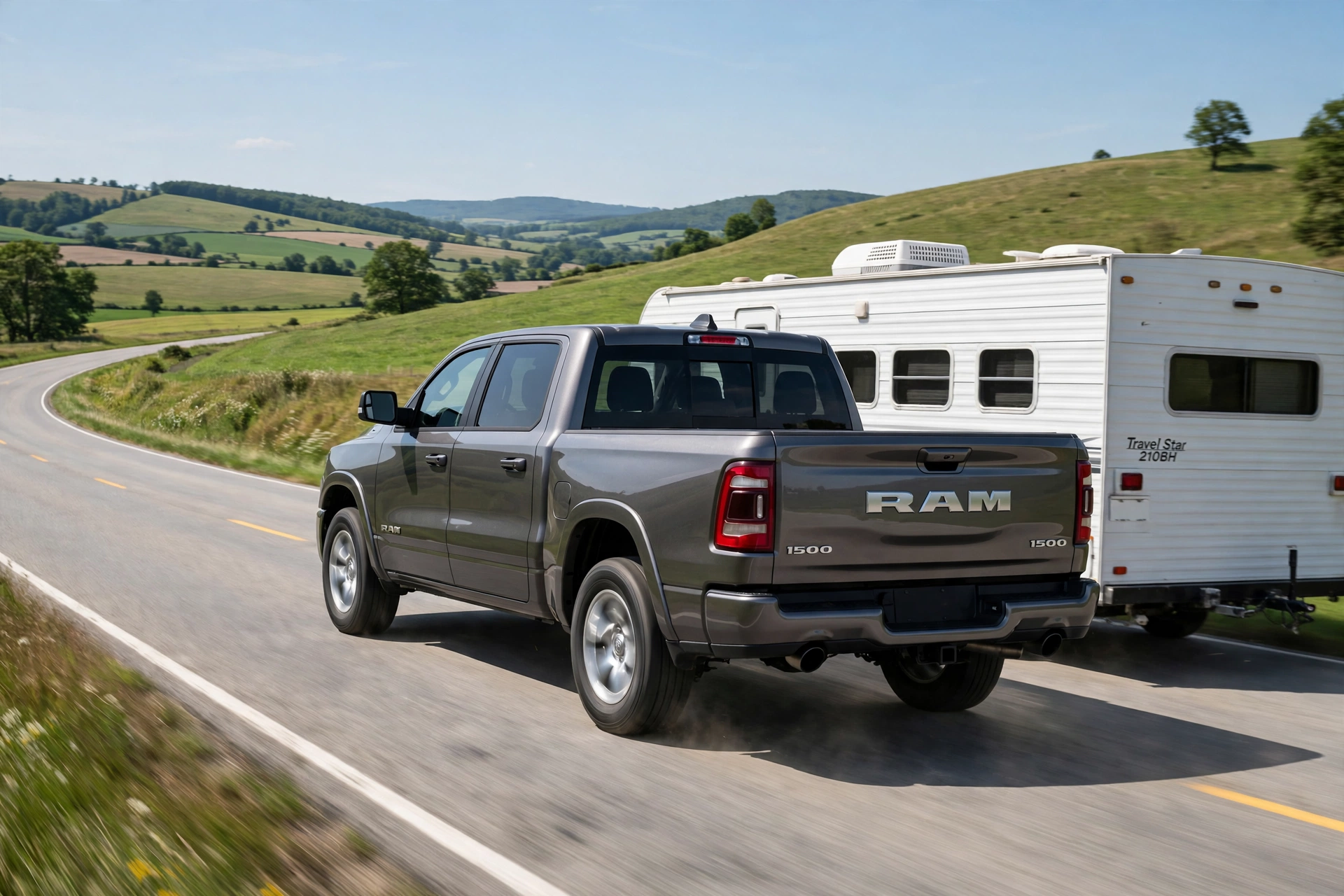
Capability did not shrink in the swap. Ram still targets a best-in-class 14,000 pounds of towing and about 2,625 pounds of payload, crew cab only, with a 5-foot-7 bed. DC fast charging peaks at 145 kW — Ram says that adds up to 50 miles of electric range in about 10 minutes — and there is a 7.2 kW onboard power panel for tools, tailgates, or keeping a fridge alive during an outage.
Now the schedule, because this matters if you are planning a purchase around it. Production was most recently reported to start in mid-April 2027, pushed back again from a late-2026 target, with the truck sold as a 2027 model. Pricing has not been announced and EPA ratings are not final. Any starting price you see quoted today — most estimates cluster around $70,000 (est.), based on the truck’s positioning above the gas 1500 line and earlier Ramcharger expectations — is an educated guess, and we label it that way everywhere it appears in this guide. Prices of the rival trucks below were checked October 24, 2026.
One more plain-spoken point before the numbers. For a lot of families, this range-extended setup is honestly the better tool. A 145-mile electric buffer covers the school run, the commute, the hardware-store trip — the entire weekday — on cheap home charging. Then, twice a year, when you hook up a camper and drive 600 miles to see family, the generator just handles it. No charging-stop negotiations with tired kids in the back seat. I wanted the 500-mile BEV to exist. But the truck Ram is actually building solves the problem most households actually have.
Ram 1500 REV Specs, Then and Now, Next to the Trucks You Can Buy
| Spec | Ram 1500 REV BEV (cancelled) | Ram 1500 REV range-extended (2027) | Chevy Silverado EV (2026) | Ford F-150 Lightning (used) | Rivian R1T (2026) |
|---|---|---|---|---|---|
| Powertrain | Battery-electric, dual motor | Electric drive + 3.6L V6 generator | Battery-electric, dual motor | Battery-electric, dual motor | Battery-electric, dual/tri/quad motor |
| Battery | 168 kWh / 229 kWh | 92 kWh | Up to ~205 kWh (Max Range) | 98 kWh / 131 kWh | Up to ~141 kWh (Max) |
| Range | 350 mi / 500 mi targeted | 145 mi electric, 690 mi total targeted | Up to 493 mi EPA (WT Max) | Up to 320 mi EPA (Extended Range) | Up to 420 mi EPA (Dual Max) |
| Power | 654 hp targeted | 647 hp (Ram’s latest figures) | Up to 760 hp | Up to 580 hp | 533–1,025 hp |
| Towing | 14,000 lb targeted | 14,000 lb targeted | Up to 12,500 lb | Up to 10,000 lb | Up to 11,000 lb (Max pack) |
| DC fast charging | 350 kW, 800V targeted | 145 kW | 350 kW | 150 kW | Up to 240 kW |
| Starting price | Never announced | Not announced; ~$70,000 (est.) | $54,895 (WT) | ~$46,600 avg. used, 2023 models | $72,990 |
| Status | Cancelled Sept 2025 | Production reported from April 2027 | On sale now | Production ended Dec 2025; used only | On sale now |
A quick note on that Lightning line, because it surprises people: Ford ended F-150 Lightning production in December 2025, and its replacement is also expected to be a range-extended truck, arriving around 2027. So the used market is now the only Lightning market. That is not a dismissal — keep reading, because used might be the smartest money in this whole guide.
Our Math: Filling the REV’s Battery, Feeding Its Generator
Here is the calculation we ran ourselves, because nobody publishes it for a truck you cannot buy yet. The REV’s 92 kWh battery, filled at home at an average U.S. residential electricity price of about 17 cents per kWh (est.), costs about $15.64 for a full charge — call it sixteen bucks for 145 miles of silent, electric school-run driving. That is roughly 11 cents a mile, about what a compact hatchback costs to fuel on a good day, in a truck that can tow a boat.
Now the generator math, which Ram does not headline. Total range is 690 miles; 145 of those come from the battery. The remaining 545 miles come from a 27-gallon tank, which works out to roughly 20 mpg (est., our calculation from Ram’s published range and tank figures) while the V6 is generating. That is thirstier than a modern hybrid car and about what a gas Ram 1500 manages on the highway — no surprise, since the same engine family is doing the work, just through a generator. The takeaway is honest and simple: the REV is frugal in town, ordinary on the open road. If your life is mostly the weekday shuffle, you win big. If your life is mostly highway towing, you bought a very clever gas truck.
We also ran price per mile of range across the trucks in the table, using prices checked October 24, 2026. The Silverado EV Work Truck with the Max Range pack: $76,295 divided by 493 EPA miles is about $155 per mile of range — the best figure of any new electric truck here. The Rivian R1T Dual Max comes to roughly $212 per mile. A used Extended Range Lightning at the current average asking price near $46,600 works out to about $146 per mile, the cheapest of the lot. And the range-extended REV at an estimated $70,000 (est.)? On electric miles alone it is about $483 per mile, which sounds terrible — until you count all 690 miles, where it lands near $101 per mile. Both numbers are true. Which one matters depends on how much of your driving is electric, and for most households plugging in nightly, the honest answer is: most of it.
If you want to run these ownership numbers for your own mileage and electricity rates, our EV total cost of ownership calculator does the five-year math in a couple of minutes, and it is the same tool we used to sanity-check the figures above.
What to Buy Instead While Ram Sorts Itself Out
If you need a truck this year — and families usually need the truck when they need it, not when a launch calendar cooperates — you have three real options and one patient one. Here is how we score them, weighing the things that matter around a household: range for real trips, charging that does not eat a Saturday, and value for money that could have gone to a lot of other things.
Chevrolet Silverado EV — the one to buy today
Our full Silverado EV guide covers the details, but the short version is this: it is the only electric truck that kept the REV’s original promise. The Work Truck with the Max Range battery is EPA-rated at 493 miles — a whisker from the Ram’s famous 500 — and LT versions with the Max pack are rated at 478 miles. It charges at up to 350 kW, tows up to 12,500 pounds, and the 2026 Work Truck starts at $54,895. It is a big, heavy, honest truck, and it exists, which counts for a great deal.
Our score: 8.6/10 — Range: 10/10 · Charging: 9/10 · Value: 8/10
Rivian R1T — the clever one, at a price
The R1T is the truck for the family whose weekends involve trailheads. Up to 420 miles of EPA range in Dual Max form, a gear tunnel where the stroller or the camp chairs actually fit, and build quality that feels a class up. The catch is the bill: $72,990 to start, $88,885 for the Dual Max most people will want, and the full 11,000-pound tow rating only comes with the Max battery. Wonderful truck. Your wallet will know you bought it.
Our score: 7.9/10 — Range: 8/10 · Charging: 8/10 · Value: 6/10
Ford F-150 Lightning — the used-market bargain
Ford stopped building the Lightning in December 2025, and prices on used examples have slid to roughly half of original sticker — 2023 models average about $46,600, and tidy ones change hands near $40,000. For that money you get up to 320 miles of EPA range in Extended Range form, a huge front trunk that swallows a week’s groceries, and home-backup power. You also get a truck with no new-production future, so buy on condition and remaining battery warranty (8 years/100,000 miles on the EV components), not on hope. At these prices, I would take a clean used Lightning over a new entry-level anything for a family that tows light and charges at home. That is not a close call.
Our score: 8.1/10 (as a used buy) — Range: 7/10 · Charging: 7/10 · Value: 9/10
The Ram 1500 REV itself — wait only if you tow far, often
And the patient option. If your household tows a camper or a boat long distances several times a year, the range-extended REV’s pitch is real: electric manners all week, 690 miles of total range, 14,000 pounds of towing, no charger anxiety at a lakeside campground. Check the official ratings against your own driving once the EPA publishes them — fueleconomy.gov will carry the REV’s official electric range and fuel figures when they land — and treat every pre-launch number in this guide as a target, not a promise kept. Ram has used up its benefit of the doubt on this nameplate.
Our score: 7.4/10 (provisional, pending price and EPA figures) — Range: 9/10 · Charging: 6/10 · Value: 6/10 (est., price unannounced)
One last piece of plain advice. If you are cross-shopping everything here against gas trucks and still deciding whether electric fits your family at all, our overview of EV cars, their range, charging and costs lays out the ownership basics without the sales pitch. And if you had a REV reservation deposit sitting with a dealer, ask for it back in writing. You have waited long enough, and the truck it was holding a place for no longer exists.
Frequently Asked Questions
Is the Ram 1500 REV cancelled?
The all-electric version is, yes. Stellantis discontinued development of the battery-electric REV in September 2025, citing slowing demand for full-size electric trucks. The Ram 1500 REV name now belongs to the range-extended truck previously called the Ramcharger, which pairs a 92 kWh battery with a gasoline V6 generator.
What is the range of the Ram 1500 REV?
For the range-extended truck now carrying the name, Ram targets about 145 miles on battery power alone and up to 690 miles total with a full battery and a full 27-gallon fuel tank. Both figures are manufacturer targets (est.) until the EPA publishes official ratings. The cancelled electric version had targeted 350 miles, or 500 miles with its larger 229 kWh battery.
How much will the Ram 1500 REV cost?
Ram has not announced pricing. Estimates from analysts and earlier Ramcharger reporting cluster around $70,000 to start (est.), with well-equipped trims like the Limited and Tungsten expected to cost considerably more. Until Ram publishes a price, treat any specific figure — including ours — as an estimate with that basis.
When can I buy the Ram 1500 REV?
Production was most recently reported to begin in mid-April 2027, after earlier targets of late 2024, 2025, and late 2026 all slipped. It will be sold as a 2027 model. Given this nameplate’s history, we would not plan a purchase around that date until trucks are visibly on dealer lots.
Is the Ram 1500 REV a hybrid?
It is a range-extended electric vehicle. Electric motors — and only electric motors — drive the wheels. The 3.6-liter V6 works purely as a generator to recharge the 92 kWh battery on the move, and the truck also plugs in like a regular EV, including 145 kW DC fast charging. So it drives like an electric truck, with a gas engine along to extend the trip.
What should I buy instead of the Ram 1500 REV?
Today, the Chevrolet Silverado EV is the closest match to what the electric REV promised, with up to 493 miles of EPA range and prices from $54,895. The Rivian R1T (from $72,990, up to 420 miles) suits adventure-leaning families, and a used Ford F-150 Lightning — production ended in December 2025, with clean examples near $40,000–$46,600 — is the value pick. Wait for the REV only if you tow long distances often and can charge at home the rest of the time.