
The RTR electric bikes from California’s Electro & Company have quietly become one of the most talked-about electric pit bikes in the US. RTR stands for “Ready to Rip” — and with a 2026 lineup stretching from a $2,199 entry-level 60V mini to a $4,299 flagship that tops 70 mph, these compact off-road machines sit in a sweet spot between e-bikes and full-size electric dirt bikes. This guide lays out the real specs, the honest range numbers, what each trim costs, the street-legality catch, and whether an RTR belongs in your garage in 2026.
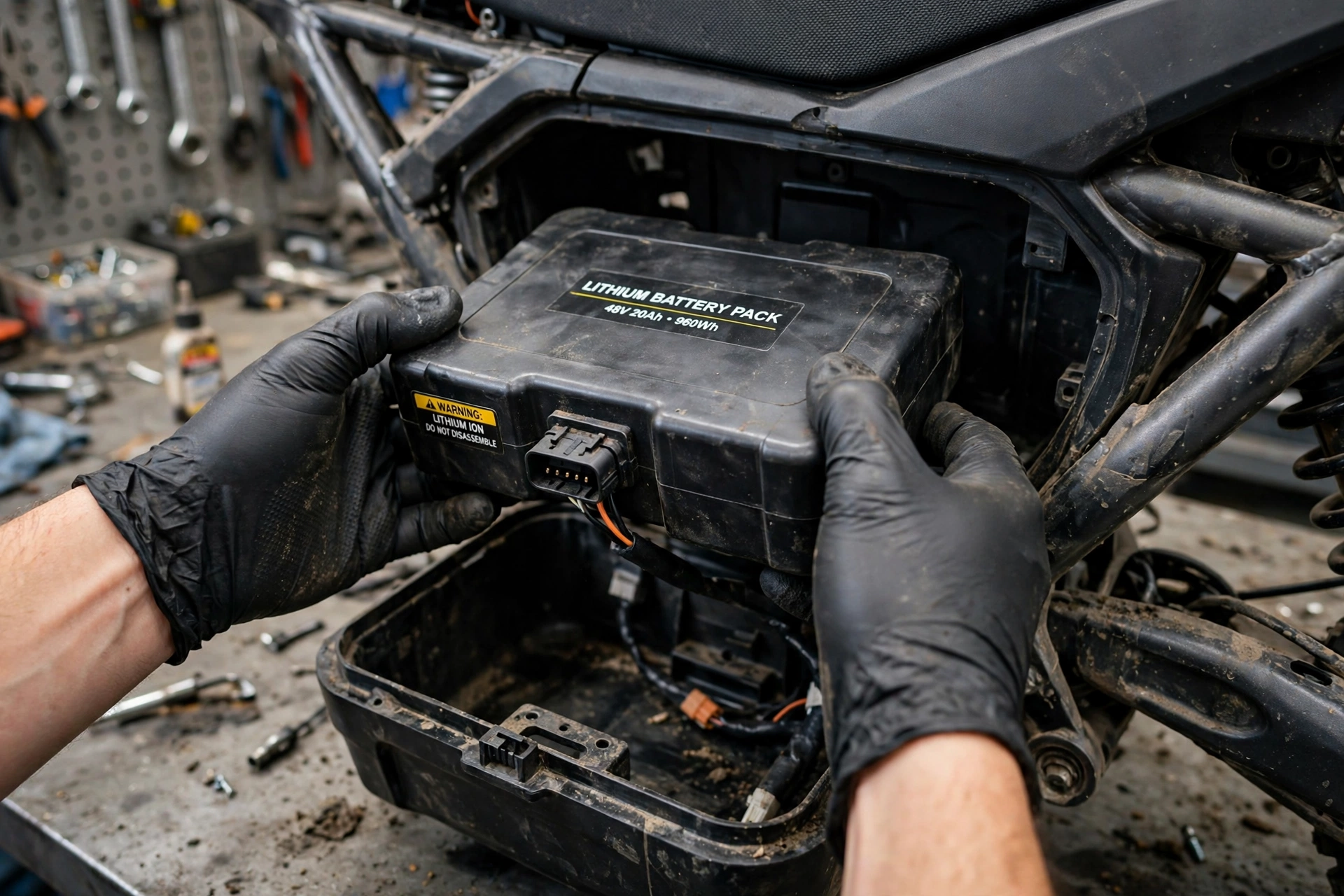
Table of Contents
What RTR Electric Bikes Actually Are
First, a clarification that saves a lot of confusion: RTR electric bikes are not street e-bikes, and they aren’t made by any big motorcycle brand. They come from Electro & Company (styled Electro & Co, or E&C), a California company that hand-builds electric pit bikes and trail machines. “RTR” — Ready to Rip — is the model family name, and the bikes ship under the ETM label you will see at dealers across the country.
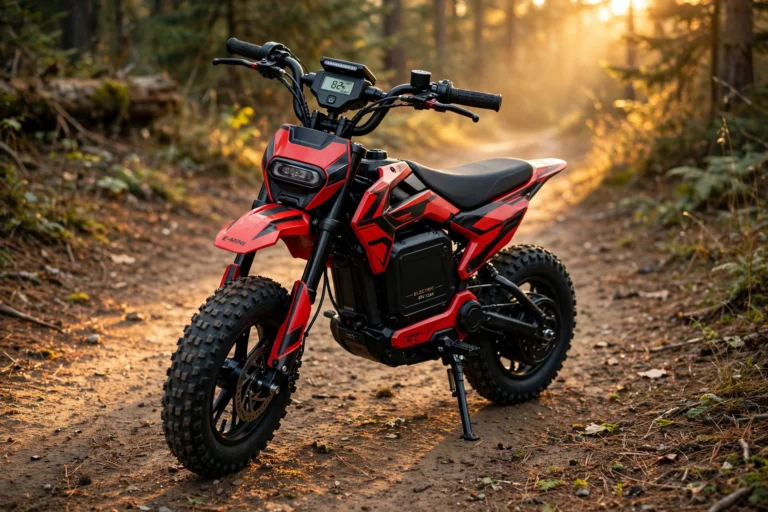
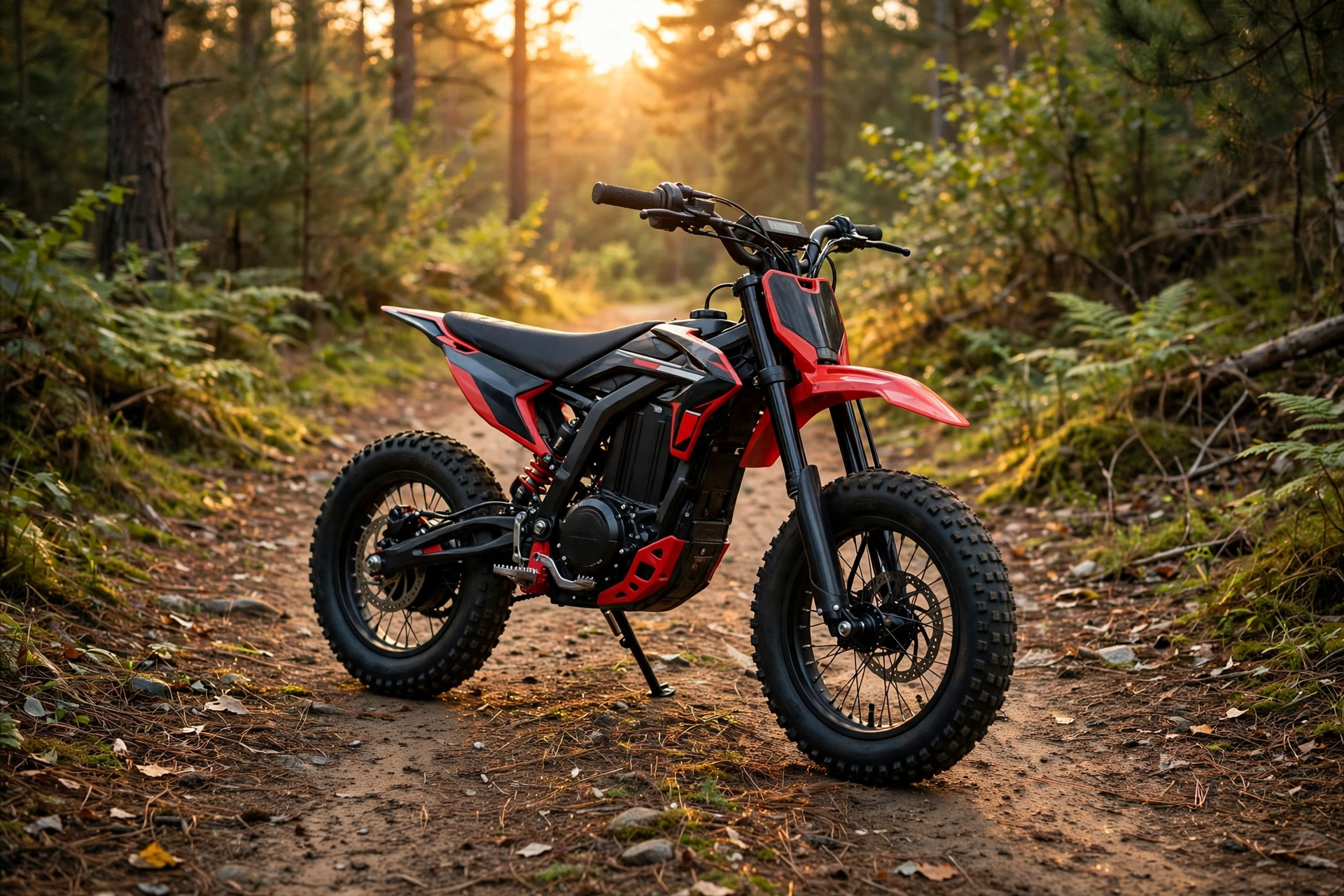
The entire lineup shares the same DNA: a compact, pit-sized frame that weighs roughly 120–130 lbs, a brushless motor between the wheels, and a battery that hot-swaps out from under the seat in seconds. The idea is simple — a machine small enough to toss in a truck bed or a shed, but with real torque and real range instead of toy-bike performance.
One critical thing to know up front: these are off-road machines only. They ship without lights, plates, or any road registration, and they roll on knobby MX tires. You ride them on private land, tracks, and trails — the same rules as any electric pit bike. That shapes the entire value equation, and we will come back to it.
RTR Electric Bikes: 2026 Specs, Range and Price by Trim
Electro & Co and its dealers position the 2026 RTR range as a four-rung ladder. Here is how it breaks down, using figures published by the company and its authorized dealers:
| Trim | Motor | Top Speed | Battery | Real-World Range | Price |
|---|---|---|---|---|---|
| RTR Lite | 5 kW / 60V | 45+ mph | 60V 20Ah (1.2 kWh) | ~20 miles stock | ~$2,199 |
| RTR Sport | 8 kW / 72V Revolver IPM | 55+ mph | 72V 25Ah (1.8 kWh) | 30–50 miles | ~$2,999 |
| RTR XL | 16 kW / 72V | 65+ mph | 72V 35Ah Samsung (2.5 kWh) | 30–60 miles | ~$3,799 |
| RTR Alpha | 18 kW / 92V+ | 70+ mph | upgraded pack | per riding style | ~$4,299 |
Prices and specs are 2026 figures verified across Electro & Company and multiple dealers — but confirm with a dealer before you buy, because small running changes are common on niche machines like this.
RTR Lite: The $2,199 Gateway
The cheapest way onto the platform is the RTR Lite, and it is an interesting machine at the price. Its 5 kW (roughly 6.7 hp equivalent) brushless motor pushes the 120-pound bike past 45 mph, with a 0–30 mph sprint in the 1.8-second neighborhood. The 60V 20Ah lithium pack is good for roughly 20 miles of honest trail riding, and it supports riders up to about 250 lbs with a 30-inch seat height that works for teens and smaller adults.
What makes the Lite more than a cheap entry bike is what it shares with its bigger siblings: the same frame, the same geometry, and the same hot-swappable battery system. The stock 60V pack can be upgraded later to a 72V 45Ah unit, and the frame comes with pre-drilled controller mounts. You buy a 5 kW bike today; the chassis is ready for more when you are. Four-piston hydraulic disc brakes (203 mm front and rear) are standard, which is proper moto-grade stopping power on a $2,200 bike. For a full deep dive, see our complete RTR Lite 2026 guide.
RTR Sport: The One Most Buyers Land On
The 2026 RTR Sport at ~$2,999 is the value sweet spot of the line — and the trim most buyers end up choosing. This year’s Sport added the new Revolver IPM motor rated at 8 kW peak, a hot-swappable 72V 25Ah pack expandable to 45Ah, a reinforced swingarm, upgraded brakes, and the fix owners had been asking for: a proper 420-grade moto chain replacing the old bicycle-style chain that wore out fast under hard riding.
Output works out to 55+ mph top speed with a quoted 30–50 miles of range depending on terrain and throttle hand. At 130 lbs it is still light enough to load solo, and at $2,999 it undercuts the big-name benchmark — the Sur-Ron Light Bee X — while matching it on the spec sheet. The Sport even ships with a 4.5-amp charger (12-amp fast charging supported) and a 6-month limited powertrain warranty.
RTR XL and Alpha: The Serious Ones
Step up to the RTR XL (~$3,799) and you are in proper adult-moto territory: 16,000W peak power, a 72V 35Ah pack built on Samsung cells, 65+ mph, and 4-piston hydraulic brakes front and rear that can actually haul down the mass. The frame geometry grows too — taller riders fit properly instead of perching. Range lands in the 30–60 mile band, heavily dependent on how hard you ride.
The RTR Alpha (~$4,299) is the no-compromise halo build: 18,000W, 92V+, 70+ mph, full CNC components, and aluminum wheels with stainless spokes. Nothing on it needs upgrading — it arrives at the top of the spec sheet. For most riders this is more bike than they need; for experienced riders who want the fastest electric pit bike on the planet, it is the one.
Real Range: What the Spec Sheets Don’t Tell You
Range claims on small electric machines are notoriously optimistic, so here is the honest math. A 60V 20Ah pack holds 1.2 kWh of energy. Ridden the way pit bikes are ridden — hard acceleration, hills, wheelspin — you will burn through that in about 20 miles. Ride gently on flat fire roads and you might stretch it toward 30. The 72V 25Ah Sport pack (1.8 kWh) lands in the 30–50 mile band in the real world, and the XL’s 2.5 kWh pack lands at 30–60 miles depending on your right wrist.
Two things soften the range limits: charging is cheap and fast, and the packs hot-swap. A full charge on the Lite’s 1.2 kWh pack costs about 20 cents at average US electricity rates — and at 20 cents, range anxiety is more about ride time than money. Read our breakdown of what it actually costs to charge an electric bike for the full math. A second battery roughly doubles your day for a few hundred dollars, and swapping takes seconds — no tools, no fuss.
Running Costs: Almost Nothing Compared to Gas
This is where small electric machines genuinely shine. There is no oil, no fuel, no air filter, no spark plug, no clutch, no exhaust packing to replace. Your consumables are brake pads, tires, and the occasional chain and sprocket — the Sport’s new 420-grade moto chain should last far longer than the old bicycle chain. Electricity costs pennies per ride: even the big XL pack costs under 50 cents to fill at average US rates.
Compare that with a gas 110cc pit bike, which drinks fuel, needs regular oil changes, and gets louder every year. Over a couple of riding seasons, the RTR’s total running cost is a rounding error next to the gas bike’s fuel and maintenance bill. Our electric cost-per-mile calculator walks through the same math for bigger EVs if you want to see the pattern scale up.
The Street-Legality Catch
This is the one thing every prospective buyer must understand: RTR electric bikes are not street legal. They have no headlight, no taillight, no turn signals, no mirrors, and no VIN structure for road registration. They are classified and sold as off-road recreational vehicles, full stop.
What that means in practice: you can ride on private land, at motocross tracks, on OHV trails where permitted, and in your own backyard. You cannot ride them on public roads, and you cannot treat them like an e-bike on bike paths or sidewalks — at 45–70 mph, they are motorcycles in everything but registration, and local law enforcement will see it that way. A few owners fit lights and attempt street-titling through various loopholes, but that is a gray area with real seizure and insurance risk. Buy the bike for the dirt, or buy something else.
RTR vs the Competition
The benchmark here is the Sur-Ron Light Bee X (~$3,500–4,400 depending on dealer and year), the machine that defined this segment: roughly 6 kW peak, 60–75 mph capability, and a massive aftermarket. The RTR Sport undercuts it on price while offering 8 kW and a bigger 72V pack. The Talaria Sting MX4 is the other big rival — aggressive torque, reinforced frame, and a strong owner community, priced in the low-to-mid $4,000s.
Where the RTR line wins: price per kilowatt, the hot-swap battery system shared across the lineup, and the upgrade-path design (the Lite’s frame accepts bigger packs and controllers later). Where it loses: the dealer and aftermarket network is far smaller than Sur-Ron’s, long-term reliability of the new Revolver motor is still being proven in the field, and some buyers report unresponsive support after purchase — a common complaint with small-volume brands. Buy through a reputable dealer with a service relationship, not just the cheapest online listing.
Who Should Buy an RTR Electric Bike?
- Buy the Lite ($2,199) if you are new to electric dirt bikes, a teen stepping up from a 110cc gas pit bike, or a parent buying for a younger rider. It is the cheapest real entry to the platform, and the upgrade path means it won’t be obsolete in a year.
- Buy the Sport ($2,999) if you want the best value in the lineup. The 2026 Revolver motor, proper moto chain, and 30–50 miles of range make it the pick for most adult riders.
- Buy the XL ($3,799) if you are an experienced rider who will use the extra power and taller geometry — or if you simply want the Samsung-cell pack’s durability.
- Buy the Alpha ($4,299) if you race, film riding content, or just want the halo build with nothing left to upgrade.
- Don’t buy any of them if you need a street-legal commuter. Get a Class 3 e-bike or a road-legal electric motorcycle instead — the RTR is an off-road toy and nothing else.
Frequently Asked Questions
How much does an RTR electric bike cost in 2026?
Prices run from ~$2,199 for the RTR Lite to ~$4,299 for the RTR Alpha, with the popular RTR Sport at ~$2,999 and the RTR XL at ~$3,799. Dealer pricing can vary, and freight or assembly fees may apply.
What is the range of an RTR electric bike?
Stock range is roughly 20 miles (Lite), 30–50 miles (Sport), and 30–60 miles (XL) depending on terrain and riding style. Larger battery upgrades (up to 72V 45Ah) extend that, and packs hot-swap in seconds.
Are RTR electric bikes street legal?
No. They ship as off-road-only machines with no lights, plates, or road registration. Ride them on private land, tracks, and permitted OHV trails — not public roads or bike paths.
Who makes RTR electric bikes?
Electro & Company (Electro & Co), a California-based builder of electric pit bikes and trail machines. RTR stands for “Ready to Rip.”
How long does charging take?
The Sport ships with a 4.5-amp charger (a few hours for a full charge) and supports 12-amp fast charging. Small packs and cheap electricity mean a full “tank” costs well under a dollar — see the US Department of Energy’s guide to electric vehicles for background on how EV charging economics work.
The Honest Verdict
The RTR electric bikes earn their hype. The Lite is genuinely the best-value electric pit bike entry point at $2,199, the Sport is the smartest buy at $2,999 with its 2026 upgrades, and the XL/Alpha give experienced riders room to grow. The hot-swap battery platform and upgrade-friendly chassis are thoughtful engineering, and running costs are laughably low next to any gas equivalent.
The caveats are real, though: off-road only (no street legality, no exceptions worth banking on), a smaller support network than the Sur-Ron/Talaria ecosystem, and early-days reliability data on the new Revolver motor. If you have access to private trails or a track and you buy from a dealer who will pick up the phone, an RTR is one of the most fun per-dollar electric machines you can own in 2026. If you need something to ride to work, look elsewhere.