Last updated: October 27, 2026
Type “honda battery replacement” into a search bar and you will be quoted for three completely different parts. One costs about $200 and lives under the hood. One costs $2,000 to $5,000 and hides behind the rear seat of a hybrid. One is an 85 kWh electric SUV pack that nobody should be paying for yet, because a warranty covers it. Owners mix these up constantly, and plenty of shops let them. This guide separates the three, names the real prices, and tells you which symptoms belong to which battery.
Start with the uncomfortable truth from the workshop floor: a large share of “your hybrid battery is dead” quotes are wrong. A Honda hybrid that refuses to start, lights up its dashboard like a Christmas tree and throws hybrid-system warnings is very often a car with a dying 12-volt battery. The little battery boots the computers. When it sags, the computers panic, and the panic looks expensive. Any shop that quotes you a traction pack before testing the 12V and pulling the fault codes is selling, not diagnosing.
Second, check the warranty before you check your savings. Honda’s High Voltage Battery Capacity Limited Warranty covers hybrid and Prologue packs for 8 years or 100,000 miles, and Honda’s own warranty booklet stretches that to 10 years or 150,000 miles in the 17 states that follow California emissions rules. The full wording sits in Honda’s official warranty coverage summary. Read the fine print, though: gradual capacity loss is expected wear and is not covered. Honda covers a pack that degrades faster than normal, and a dealer makes that call, not you.
Third, the safety line, stated once and plainly. Traction batteries in Honda hybrids run at 100 to 300 volts, and the Prologue pack runs near 400. That is specialist work: insulated gloves, insulated tools, training, and a healthy respect for orange cables. There is no DIY section for traction packs in this guide because there should not be one. The 12-volt battery is the only battery on these cars that belongs in a home garage.
The route through the rest of this page: two-motor hybrid packs first, with dealer and independent prices side by side. Then the older IMA cars and their nickel-metal hydride packs. Then the arithmetic that decides whether fixing an old Honda makes sense. Then the Prologue, and finally the $200 battery that impersonates a $4,000 failure.
Honda battery replacement on two-motor hybrids: what the dealer charges, what an independent charges
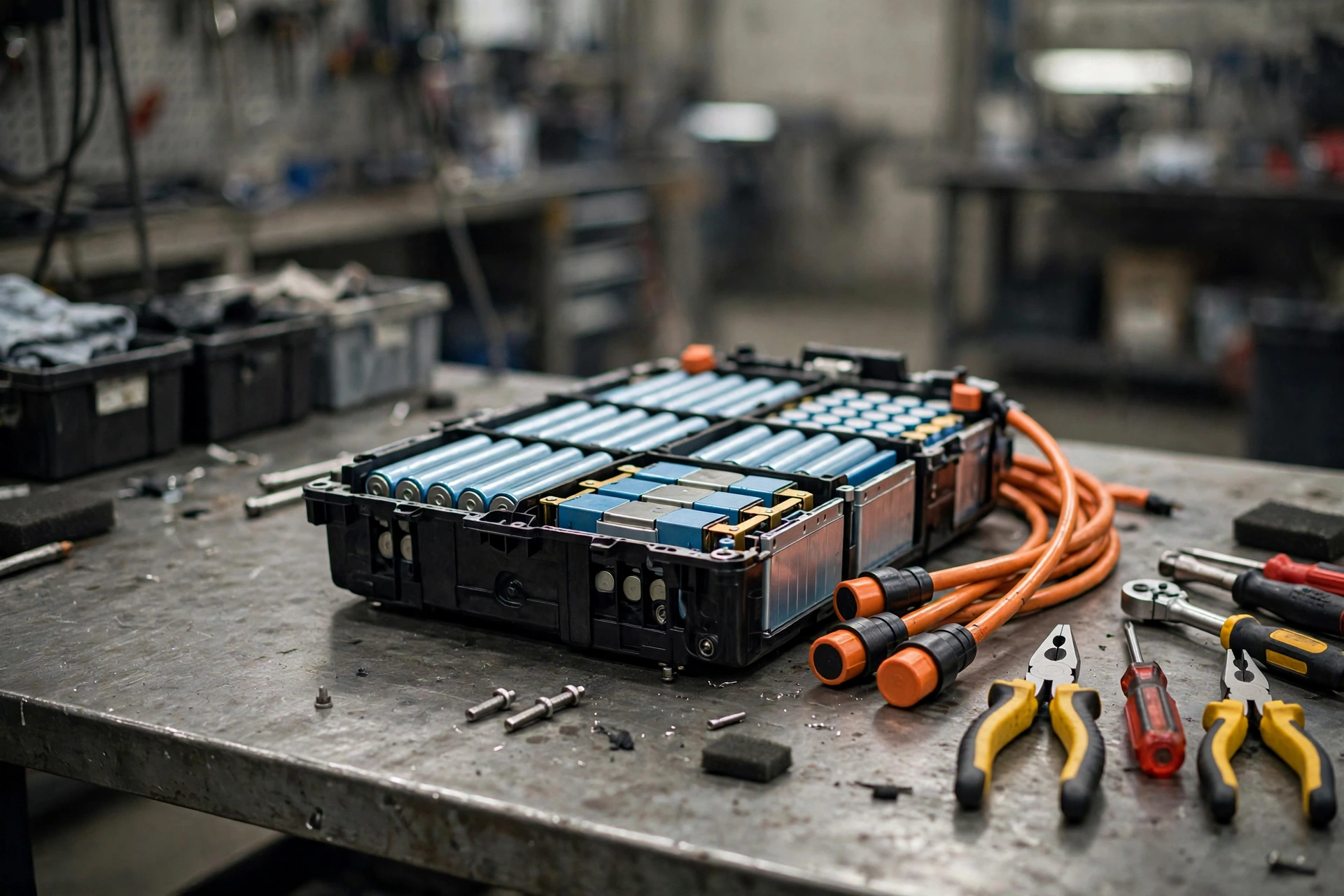
The current Honda hybrids — Accord Hybrid, CR-V Hybrid, Civic Hybrid and the 2019–2022 Insight — use Honda’s two-motor system with a small lithium-ion pack, roughly 1 to 1.5 kWh, packaged under the rear seat or floor. These packs rarely die young. Typical lifespan is 8 to 15 years or 100,000 to 150,000 miles, and plenty run past both numbers. Heat is the main enemy, along with a clogged cooling intake: the pack breathes cabin air through a vent near the rear seat, and a filter choked with dog hair and dust quietly cooks the cells.
When a pack does fade, the symptoms are a fuel-economy slide of 5 to 10 mpg, a charge gauge that swings wildly, the engine running almost constantly, and hybrid-system or check-engine warnings.
Now the prices, checked October 27, 2026. RepairPal’s estimator data, the benchmark most repair-cost sites lean on, puts an Accord Hybrid pack replacement at $4,249 to $4,477 all-in at dealer-grade pricing. Honda’s own parts catalog lists the Accord Hybrid pack module at $3,111.05 before labor, tax and the small parts nobody remembers until the invoice prints. TopSpeed’s breakdown of the RepairPal figures and Honda’s catalog pricing is worth reading before you accept any quote, because it shows how much of the bill is the part and how much is the building it was fitted in.
Across the two-motor range, dealer quotes for a new pack, fitted, generally land here: Accord Hybrid (2014–2017) around $3,500 to $5,000, Accord Hybrid (2018–2023) around $3,000 to $5,500, and CR-V Hybrid around $4,000 to $7,000 — ranges compiled from RepairPal data and published estimator roundups, checked October 27, 2026. Independent hybrid specialists fitting a remanufactured pack with a written warranty typically quote $2,000 to $3,500 installed for the same cars.
Suppliers in the GreenTec Auto mould rebuild packs with tested, matched cells and back them for one to three years. That gap is the whole story of this section: the dealer sells you a new part at a new-part price; the specialist sells you back your own range and mpg for roughly half.
My position, no hedging: on an out-of-warranty two-motor Honda, the dealer pack is the wrong buy in almost every case. You are not purchasing reliability the remanufactured pack lacks — you are purchasing a logo on the box and a longer warranty on a part that will likely outlast the car either way. Spend the savings on the diagnosis instead: a proper pack health report with cell-level voltage data costs $100 to $200 and tells you whether you need a pack at all.
What does a proper diagnosis actually look like? The technician connects a scan tool that can read Honda’s hybrid data — not a generic code reader — and records the voltage of each cell block in the pack, under load, not just at rest. A healthy pack shows blocks within a few hundredths of a volt of each other. A dying pack shows one or two blocks sagging away from the rest while the total voltage still looks respectable, which is exactly why a cheap scanner misses it.
The report should also include the pack’s recorded capacity estimate, the cooling fan’s operation, and any stored codes. If a shop’s entire diagnostic process is “the light is on, you need a battery,” walk out. A real honda battery replacement diagnosis fits on one printed page, and any honest shop will hand it to you and explain it line by line.
The IMA generation: honda battery replacement on nickel-metal hydride packs
The older cars are a different world. The 2000–2006 and 2010–2014 Insight, the 2003–2011 Civic Hybrid and the CR-Z use Honda’s Integrated Motor Assist system with a nickel-metal hydride (NiMH) pack of around 0.9 to 1 kWh. If you want the plain-English background on how these mild-hybrid systems differ from the current two-motor setup, our guide to what a hybrid car is and how the systems work covers it without the sales language.
IMA packs announce themselves politely, then rudely. First come the “recals” — the charge gauge suddenly empties and refills as the system recalibrates around weakening cells. Then the gauge only uses the middle bars, assist fades on hills, fuel economy drops from the mid-40s toward the high-30s, and finally the IMA light arrives, often with code P1447, Honda’s capacity-deterioration code, stored once usable capacity falls to roughly a third of new.
Heat murders these packs; a Phoenix or Las Vegas IMA car lives a shorter battery life than the same car in Portland. Eight to fifteen years is the honest lifespan band, and every one of these cars is now well inside the danger zone on age alone.
Costs are friendlier than the two-motor cars, because the aftermarket had two decades to mature. A remanufactured IMA pack, fitted by a specialist, typically runs $995 to $2,100 installed depending on model and warranty length — the Insight sits at the cheap end, the Civic Hybrid close behind. A dealer fitting a new pack will quote $3,000 to $5,000 for a car that may be worth $3,500, which tells you everything about who that quote serves.
One warning, because the internet pushes it hard: swapping individual weak modules to save money is whack-a-mole with a soldering iron. A NiMH pack is a series string, and a string performs at the level of its weakest module. Replace one tired module and the next weakest becomes the ceiling within months. A properly remanufactured pack has every module tested, the weak ones replaced, and the whole string balanced. That is the product worth buying. The $600 salvage-yard pack with no test data is not a bargain; it is a lottery ticket with a core charge.
The maths nobody does before signing a honda battery replacement quote
Here is the worked example I wish every owner ran. Take a 2016 Accord Hybrid with 160,000 miles. Clean examples list at $8,000 to $9,500 in most US markets (est., based on October 2026 used listings). The pack is tired. Dealer quote: $4,477, the top of RepairPal’s range. That is 50% of the car’s value — $4,477 ÷ $8,950 ≈ 0.50. A remanufactured pack fitted by a specialist: $2,200, or about 25% of the car’s value.
Now cost it per year, the way our electric car cost per mile guide costs everything else. Say the dealer pack serves 8 more years: $4,477 ÷ 8 = $560 per year. Say the remanufactured pack serves 4 more years, a fair planning figure: $2,200 ÷ 4 = $550 per year. Nearly identical. The dealer’s extra $2,277 buys years 5 to 8 — years a 160,000-mile car may never ask for, because something else will retire it first. Unless you are certain you will keep the car past 2032, the remanufactured pack is the rational cheque.
And the “just live with it” option is not free either. A two-motor Accord with a depleted pack still drives, but the engine does the work the battery used to share, and economy falls from around 47 mpg toward 35 mpg. At 12,000 miles a year: 12,000 ÷ 47 ≈ 255 gallons versus 12,000 ÷ 35 ≈ 343 gallons. The difference, 88 gallons at $3.40 a gallon (est.), is roughly $300 a year in wasted fuel — every year you postpone. Run your own car’s numbers through our EV battery replacement cost estimator before you decide; the point of the tool is exactly this decision, and it takes two minutes.
The Prologue: a honda battery replacement the warranty should always pay for
The Prologue is Honda’s battery-electric SUV, built with General Motors on the Ultium platform, with an 85 kWh pack under the floor. Honda has confirmed production ends in December 2026, closing the model after the 2026 model year, with sales continuing into early 2027 and full support — service, parts and warranty coverage — pledged to owners. That pledge matters, and the car’s situation is still unusual: the oldest Prologue is a 2024 model, so every pack on the road sits inside Honda’s 8-year/100,000-mile battery warranty until at least 2032.
The Ultium design has one genuine virtue for owners: the pack is built from individual modules that a dealer can service and replace one at a time. A failed module does not have to mean a failed pack. Honda and GM do not publish a retail price for a complete Prologue pack, so treat any precise figure you read elsewhere with suspicion.
Our estimate, labelled as one: at the per-kWh prices seen across recent EV pack replacements, a full 85 kWh pack fitted out of warranty would land around $15,000 to $20,000 (est.), while a single-module repair would plausibly run $1,500 to $3,000 plus labor (est.). Those are planning numbers built from pack size and industry pricing, not quotes. For contrast, Tesla publishes far more of its pricing, and our Tesla battery replacement cost guide shows what those packs actually cost owners — the comparison makes Honda’s silence look worse, because owners cannot plan around a number nobody prints.
The practical advice for Prologue owners is short. You have a warranty until 2032 or 100,000 miles. Use it. Report range loss early, keep your service records, and let Honda and GM argue about whose parts bin the module comes from. Paying out of pocket for Prologue pack work in 2026 is volunteering to fund someone else’s warranty programme.
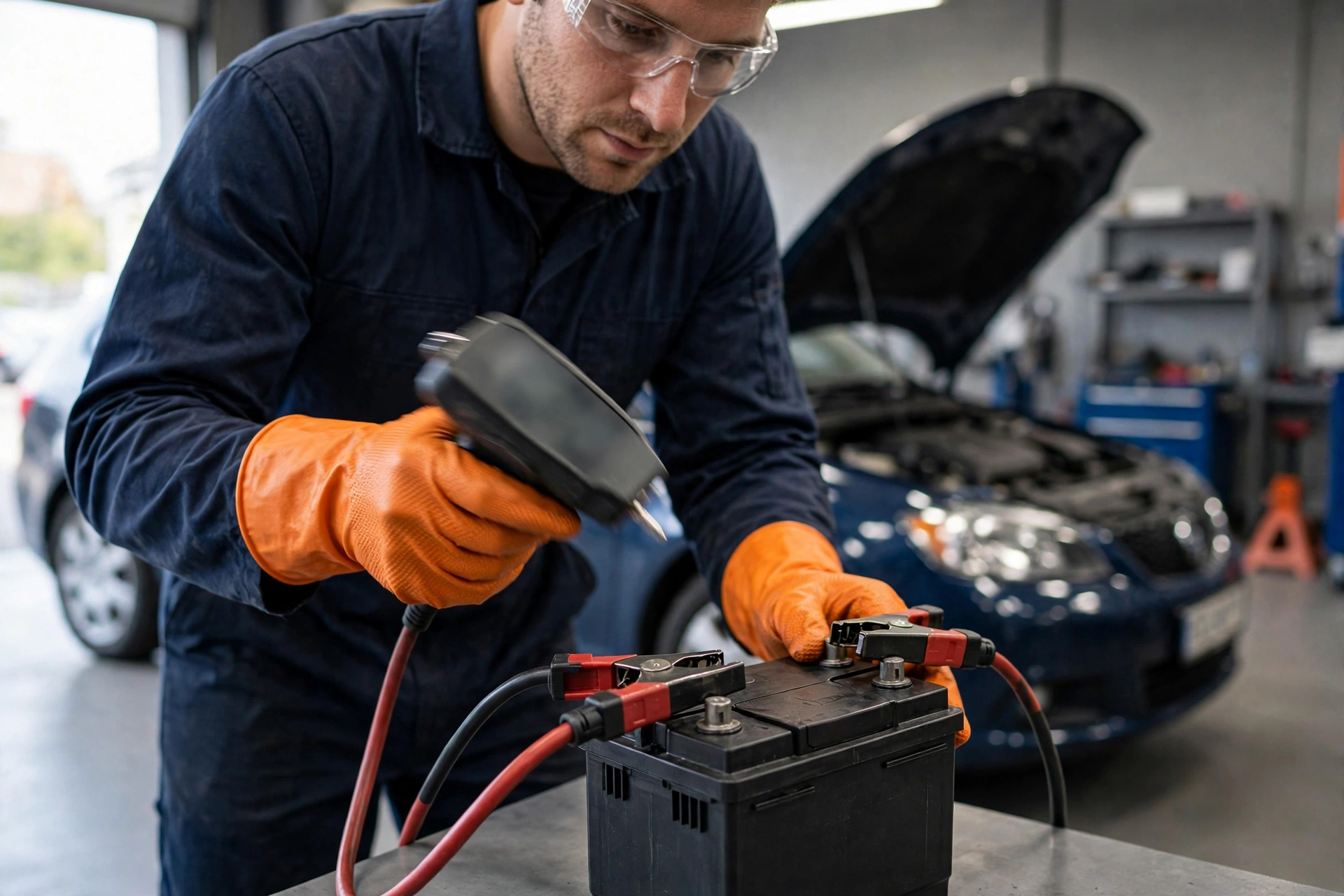
The 12-volt honda battery replacement that impersonates a $4,000 failure
Every Honda in this article carries a second, ordinary 12-volt battery — a Group 51 or 51R in most hybrids — and its job is booting the electronics and closing the contactors that wake the traction pack. When it weakens, the car may refuse to enter Ready mode, crank nothing at all (hybrids have no conventional starter motor to crank), or light up hybrid-system, brake-system and charging-system warnings simultaneously. Owners read that dashboard as a dead hybrid battery. It is, very often, a $200 battery at the end of its 3 to 5 year life.
The prices, checked October 27, 2026: $120 to $250 for the battery itself if you fit it, and RepairPal’s average for a shop-fitted Honda 12-volt battery sits around $230 to $251 installed. This is the one genuine DIY job in this guide: negative terminal first, no drama, though many parts stores will test your old battery free and fit the new one in the car park. Some later Hondas also want the new battery registered with a scan tool so the charging system treats it correctly — a five-minute job for any decent shop, and worth asking about rather than discovering later via a warning light.
So the diagnostic order is fixed, and I will die on this hill: test the 12V first, pull the codes second, discuss traction packs third. A shop that reverses that order has told you how it makes its money.
Our verdict on honda battery replacement
Our score: 7/10 — Cost fairness: 6/10. Longevity of the fix: 8/10. DIY-ability: 2/10.
Cost fairness splits down the middle because the market does. The remanufactured route is fairly priced and honest; dealer pack pricing on an ageing car is not, and Honda’s refusal to publish Prologue pack pricing drags the score down further.
Longevity scores well because a properly rebuilt pack genuinely restores the car for years — this is one of the few big repairs that pays you back in fuel every single week. DIY-ability scores 2 out of 10 and earns it: the traction side is high-voltage specialist work, full stop. The 2 points are for the 12-volt battery, the one part of this job a home mechanic should touch — and the part that, tested first, saves more Honda owners more money than everything else in this article combined.
Frequently asked questions
How much does a honda battery replacement cost?
It depends which battery, which is the point of this entire guide. A 12-volt battery runs $120 to $250 fitted at home, or around $230 to $251 installed at a shop per RepairPal. A remanufactured hybrid traction pack, fitted, runs about $995 to $2,100 for the older IMA cars and $2,000 to $3,500 for the current two-motor Accord, CR-V and Civic hybrids. Dealer-fitted new hybrid packs run $3,000 to $7,000 depending on model, with RepairPal putting the Accord Hybrid at $4,249 to $4,477. All prices checked October 27, 2026.
How long does a Honda hybrid battery last before replacement?
Plan on 8 to 15 years or 100,000 to 150,000 miles. Hot climates, a clogged pack cooling intake and lots of short trips pull a pack toward the early end; gentle highway use in a mild climate stretches it. Many packs outlive the car around them, which is why a health report beats guessing from the odometer.
Will Honda’s warranty pay for my battery?
If the car is inside 8 years or 100,000 miles — or 10 years or 150,000 miles in the 17 states following California emissions rules — and the pack has degraded more than Honda considers normal, yes. Gradual capacity loss alone is excluded, and a dealer makes the determination. The Prologue’s 85 kWh pack carries the same 8-year/100,000-mile coverage, which runs to at least 2032 on the earliest cars.
Can I replace a Honda hybrid battery myself?
The 12-volt battery, yes — it is a simple, low-risk job on most models. The traction battery, no. It is a high-voltage pack that demands insulated tools, training and proper isolation procedure, and a mistake can kill. Buy the pack from whoever you like, but have a qualified hybrid specialist fit it. That is not caution for its own sake; it is the line between a repair bill and a hospital bill.
A shop quoted me $4,500 for my 2016 Accord Hybrid. Should I pay it?
Not before two things happen: a test of the 12-volt battery and a written second quote from an independent hybrid specialist for a remanufactured pack with a warranty — expect $2,000 to $3,500. On a car worth $8,000 to $9,500 (est.), the dealer quote spends half the car’s value to buy years of battery life the car may never use. If the car is otherwise sound, the remanufactured pack at roughly $550 per year of added life is the fix that makes sense.
Before you book anything, remember the order in this guide: test the 12-volt battery first, then get a written honda battery replacement quote from an independent specialist. Comparing that honda battery replacement quote with the dealer price, and checking your warranty first, is the simplest way to make a sensible honda battery replacement decision and avoid paying for a pack you do not yet need.
That is the whole point of this guide: a careful honda battery replacement starts with testing, not spending. Get the written quote, compare it like-for-like, and only then commit to a honda battery replacement. With the warranty checked and the 12-volt battery ruled out, a honda battery replacement becomes a planned repair, not a panic purchase.