Last updated: October 27, 2026
Short version first, because that is how most people actually shop: a nakto electric bike is the bike-lane equivalent of a budget airline ticket. The seat is real, the price is genuinely low, and almost every comfort you assumed was included costs extra or was never there. For short, flat city trips — the café run, the station hop, the school-gate dash — that trade can make perfect sense. For hills, stairs or long commutes, it falls apart fast.
This guide to the nakto electric bike walks the current range model by model, translates the brochure range numbers into miles you can plan around, and does the unglamorous maths on weight, because weight is the number that decides whether you still like the bike in month three.
Nakto is a direct-to-consumer budget brand that sells through its own store and the big marketplaces. The line-up splits into four shapes. There are step-through city bikes built around the long-running Camel name, a swept-bar cruiser called the Santa Monica, a fat-tyre folder called the Folding OX, and two genuinely small machines: the 16-inch Skylark 2 folder and the 20-inch Pony cargo bike. Prices below were checked on nakto.com on October 27, 2026, and the core range runs from $399 for the Skylark 2 to $1,199 for the Santa Monica and Folding OX at full list.
Bigger fat-tyre models (the F2 at $1,099, the F4 at $1,799) sit above that; they are a different conversation about power, and not the bikes most city riders cross-shop.
One number matters more than any other here, and it is not the motor wattage. Almost every full-size nakto electric bike weighs between 58 and 70 lbs. That is normal for cheap hub-motor bikes with steel in the frame, and it is the single fact that shapes daily life with one. A 62 lb bike rides fine. It carries up two flights of stairs like a grudge.
Keep that in your head through every section that follows, because this brand’s brochure leads with range claims, and range is honestly the least reliable number on the page. Our checking process for claims like these is set out on our research method page, and it is why every range figure below carries either a test result or an (est.) tag with its working shown.
What you get for the money on a nakto electric bike is consistent across the range: a rear hub motor, a removable battery you can carry indoors, six or seven Shimano gears, basic lights, fenders and a rear rack on most models, and a one-year warranty. The bikes arrive about 90% assembled with free US shipping. Nothing in the range is fancy. The question is never “is it good?” — it is “is it good enough for my exact streets, my exact stairs, my exact lock-up spot?” So let us get specific. Range first, because that is where budget brands tell their biggest stories.
Nakto electric bike range claims, translated into real miles
Here is the pattern for a nakto electric bike. Nakto advertises “up to 60 miles” on the Santa Monica and the Folding OX. Those figures come from the friendliest possible test: a light rider, the lowest assist level, flat ground, no stops. Your commute has stops. It probably has a headwind and at least one hill you have feelings about.
A saner planning rule for this class of bike is to work from the battery, not the brochure, because a nakto electric bike battery is small by design: take the watt-hours and divide by roughly 20 Wh per mile for mixed city riding with real pedalling. A 360 Wh pack plans out at about 18 miles. A 480 Wh pack, about 24. The OX’s 576 Wh pack, about 29.
Is that rule too harsh? Consumer Reports lab-tested the original Skylark — same 36V 10Ah, 360 Wh battery formula the brand still uses — and measured 9 miles of range in its testing, against claims in the mid-20s. Nine. You can read Consumer Reports’ Nakto Skylark test data yourself; it is the most useful reality check in this whole article.
Owner reports collected by review roundups are kinder to the bigger bikes — Camel riders typically report 22–25 miles with gentle pedalling and nearer 18 miles on throttle alone — which fits the watt-hour rule rather than the box copy. Plan on the rule. Treat anything above it as a pleasant surprise, never as the basis of a commute.
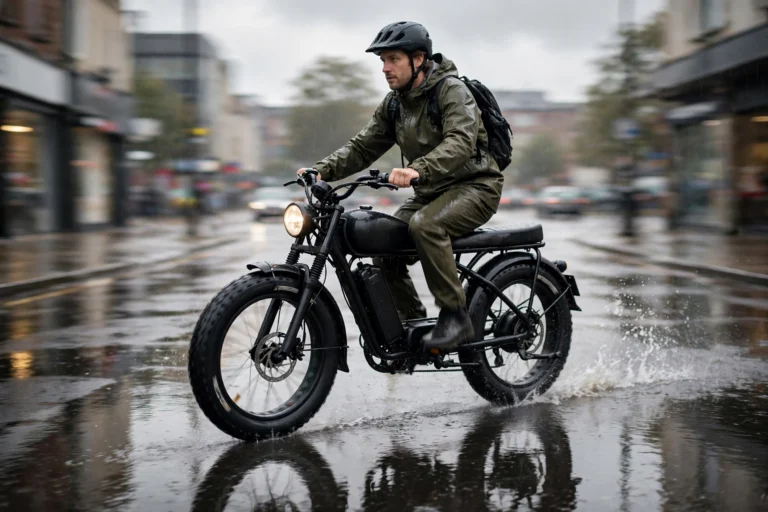
Top speeds need the same treatment. Most of the nakto electric bike range is Class 2: pedal assist and throttle up to 20 mph. The Santa Monica’s motor can push past that in some listings’ claims of 28 mph, which would make it a Class 3 machine with the rules that follow — our Class 1 e-bike guide explains the class system and why it decides where you may ride. If a listing promises 28 mph and a throttle, read the small print twice before it goes in the basket.
The Camel: the default Nakto, for better and worse
The Camel is the nakto electric bike that built this brand: a 26-inch step-through cruiser with swept-back bars, a padded saddle, a front basket on many versions and a rack-mounted battery behind the seat. The current Camel Step-Thru on Nakto’s store pairs a 500W rear hub motor with a 48V 10Ah (480 Wh) battery at $795; older 36V 250W Camels still fill marketplace listings at lower prices, so check which specification is actually in the box before paying.
The drivetrain is a Shimano 6- or 7-speed, braking is by disc on the newer bikes and a front V-brake/rear drum pairing on the oldest stock, and the whole thing weighs roughly 60–68 lbs depending on version (est., from reviewer scales and dealer spec sheets).
As a ride, it is exactly what the shape promises. Upright, calm, unhurried. The step-through frame is low enough for skirts, bad knees and frequent stops, and the removable battery — about 7.25 lbs on the classic 36V pack — pops out for indoor charging, which matters in apartment buildings with no power in the bike room.
Claimed range runs to 28 miles; plan on about 20 (est., using the watt-hour rule above, and consistent with the 22–25 miles owners report when pedalling gently). Hills are its weak point. A 250–500W geared hub on a 60 lb bike with a 180 lb rider is a combination that slows to a determined crawl on anything steep, and no assist level fixes physics.
Our score: 7.6/10 — Range: 6/10 · Carry & size: 6/10 · Value: 9/10
Verdict: the Camel is the nakto electric bike to buy if your riding is flat, your storage is on the ground floor, and your trips are under eight miles each way. It is a lot of honest transport for $795.
Santa Monica: the nakto electric bike that wants to be a motorcycle
The Santa Monica takes the cruiser idea and adds muscle: a 500W rear hub motor (750W peak), a 48V 10Ah battery, wide 26×3-inch tyres and a long, low stance that looks genuinely handsome in photos. Nakto lists it at $1,199, and independent reviewers who tested it in 2026 found a comfortable, cushy ride let down by the usual budget parts — and that “up to 60 miles” range claim deserves a direct answer.
No. A 480 Wh battery does not do 60 miles at real speeds. Plan on 24–30 miles (est., from the watt-hour rule with the wider tyres’ extra drag), which is still perfectly usable for beach-path and neighbourhood riding.
Weight is the other catch: around 68 lbs (est., from lineup spec roundups). That is a two-handed lift onto any car rack and a firm no for walk-up apartments.
It also raises the theft stakes, because a $1,199 bike locked with the free cable lock in the box is a $1,199 donation. My position is blunt: never buy the Santa Monica at full list. Nakto’s own sale events have cut it to $699 repeatedly, and at $699 the maths flips from questionable to genuinely good. At $1,199, established brands will sell you a bike with a dealer network and a torque sensor. Patience is the whole strategy with this model.
Our score: 7.2/10 — Range: 7/10 · Carry & size: 4/10 · Value: 8/10 (at sale prices; 5/10 at full list)
Folding OX: it folds, and that is the only small thing about it
The Folding OX is the extrovert of the nakto electric bike range: 20×4-inch fat tyres, a 500W motor (750W peak), the biggest battery in this guide at 48V 12Ah (576 Wh), full fenders, a rear rack, a headlight and a horn, all folding at the frame hinge. List price is $1,199 and it is the most discounted model in the range — $739 in Nakto’s Black Friday event is the kind of figure it actually sells at. Independent testers clocked it at a true 23 mph and liked the flip-up seat that makes battery removal genuinely easy. Claimed range is again “up to 60 miles”; plan on about 30 (est., watt-hour rule), which leads this group.
Now the folded-size honesty check, because this is where folders get bought for the wrong reason. Yes, this nakto electric bike folds — down to a lump that fits a car boot and a hallway corner. What it is not is light: 66–70 lbs depending on the listing (est.).
Folding solves a storage problem. It does not solve a lifting problem, and a folded 68 lb bike is in some ways more awkward to carry than an unfolded one, because all the weight sits in one dense lump with sharp pedals. If your use case is “fold it into the SUV and ride at the campsite,” excellent. If your use case is “carry it onto a train twice a day,” this is the wrong bike wearing the right costume.
Our score: 7.8/10 — Range: 7/10 · Carry & size: 5/10 · Value: 9/10
Skylark 2 and Pony: the small nakto electric bike options
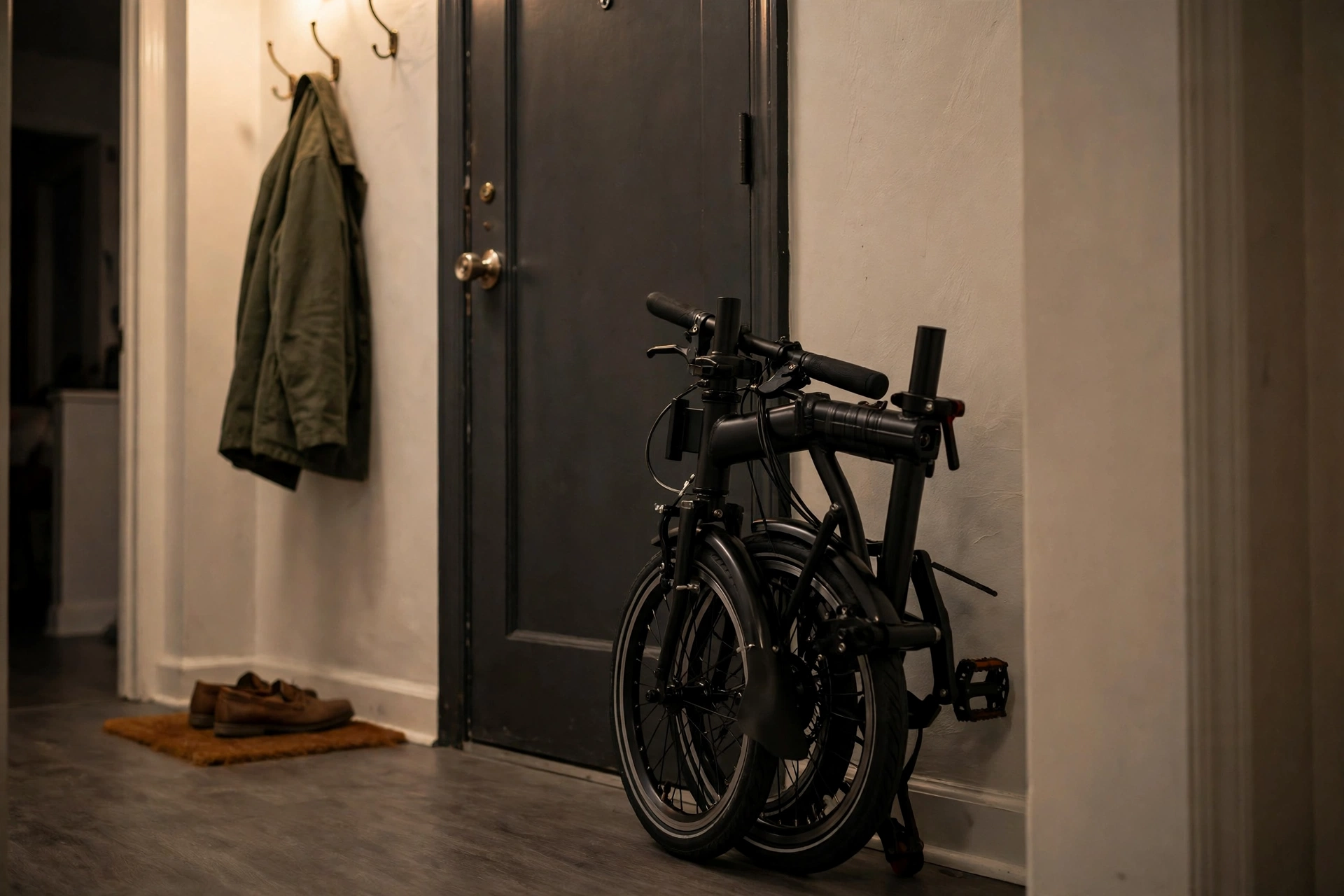
The Skylark 2 is the cheapest way into the brand: $399 on nakto.com, a 16-inch-wheel folder with a 250W motor and a 36V 10Ah battery. This is the one model here with proper independent lab data behind it — Consumer Reports weighed the original Skylark at 47 lbs, the lightest figure in this guide by a wide margin, and that carry-friendly weight is the entire point of the bike.
The trade is range: remember that 9-mile tested figure for a nakto electric bike. The Skylark 2 is a last-mile machine for short, flat hops — station to office, dorm to lecture hall — and judged on that job, the price is remarkable. Judged as a commuter, it is under-batteried. Both things are true; your postcode decides which one matters.
Our score: 6.4/10 — Range: 4/10 · Carry & size: 9/10 · Value: 7/10
The Pony is the quiet overachiever: a 20-inch step-through cargo bike at $529, with a 250W motor, a 36V 10Ah battery and a sturdy rear rack rated for the weekly shop. At roughly 50 lbs (est., from lineup spec roundups) it is the lightest full-utility option here, and the small wheels keep the load low and manageable. Range claims hover around 30 miles; plan on about 18 (est., watt-hour rule). For a rider whose entire transport world is a two-mile radius of shops, school and station, the Pony makes a stronger case than the Camel at $266 less.
Our score: 7.0/10 — Range: 6/10 · Carry & size: 7/10 · Value: 8/10
The maths nobody does: price per real mile
Enough impressions. Here is the computation that should actually drive the decision, using the planning ranges from the watt-hour rule and the prices checked on October 27, 2026. Five models, five divisions, one honest league table for the nakto electric bike range:
- Camel: $795 ÷ 20 planned miles = $39.75 per real mile of range
- Santa Monica at list: $1,199 ÷ 28 = $42.82 — at its recurring $699 sale price: $699 ÷ 28 = $24.96
- Folding OX at list: $1,199 ÷ 30 = $39.97 — at $739: $739 ÷ 30 = $24.63
- Pony: $529 ÷ 18 = $29.39
- Skylark 2: $399 ÷ 9 miles (the Consumer Reports tested figure for the original) = $44.33
Read that last line again. The cheapest bike in the range is the most expensive per mile of usable range, because its battery is tiny and its claimed range is the least honest. The OX and Santa Monica only make sense bought on sale, at which point they become the value picks of the whole range.
And running costs barely register: a full 360 Wh charge for a nakto electric bike is 0.36 kWh, about 6 cents at typical US residential rates (est.), which is why our guide to what it costs to charge an electric bike keeps concluding that electricity is the smallest line in the budget. Ownership cost is tyres, brake pads and one eventual battery — run any of these through our total cost of ownership calculator and the purchase price still dominates everything.
The stairs maths is just as decisive. Say you carry the bike up two flights, morning and evening, five days a week. The OX at ~70 lbs asks for 70 × 2 × 5 = 700 lbs of lifting a week. The Skylark at 47 lbs asks for 470. That is roughly 230 extra pounds of lifting, every week, forever — or one hernia, whichever arrives first. Popping the battery out first trims 7–8 lbs and is the only version of this routine I would sign off on.
Living with one: theft, parts and rain
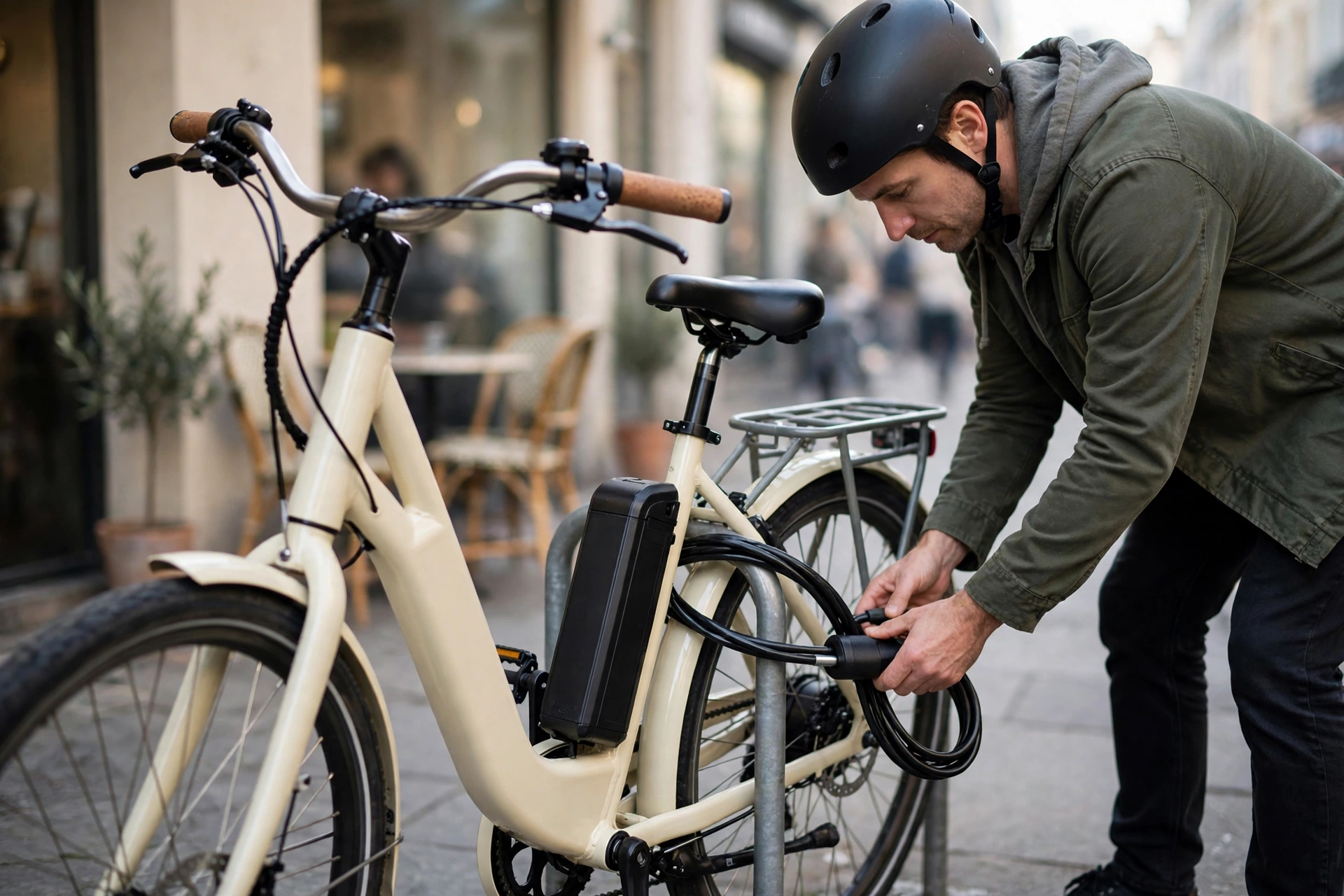
Cheap bikes get stolen at exactly the same rate as expensive ones, and a nakto electric bike has two specific vulnerabilities. The battery is the most valuable single part and it is also the most portable — always take it with you; a locked frame with no battery is a far less interesting target and a far cheaper loss. Second, the cable lock bundled or bought cheap is a visual deterrent and nothing more. Budget $60–$90 for a proper U-lock or heavy chain and lock the frame, not the front wheel, to something immovable. Two minutes of locking discipline is worth more than any tracker.
The ownership upside is real, though. Almost everything on these bikes is generic: Shimano drivetrains, standard pads, common tyre sizes, hub motors any e-bike shop has seen. There is no proprietary app holding your bike hostage and no exotic part with a six-week wait.
The one-year warranty is short by industry standards, and a replacement battery runs for a nakto electric bike about $200–$350 (est., based on Nakto’s spare-pack pricing and comparable generic packs) — cheap for the class. Rain? The electrics are splash-resistant in the way all budget hub bikes are, meaning a wet commute is fine and a pressure washer is vandalism. Wipe the contacts, dry the chain, charge indoors. Riders who want to see how a budget brand stacks up for mixed on/off-road use should also read our RTR electric bikes verdict — a useful contrast in what a bit more money buys.
Who should buy one, and who should walk away
A nakto electric bike makes sense if your riding is flat, your trips are short, your storage is at ground level or your route genuinely suits the little Skylark, and you catch the bigger models on sale. The OX at $739 for a car-boot adventure bike and the Camel at $795 for neighbourhood errands are defensible purchases. Full list of current models and sale prices live at Nakto’s official store, and the sale price — never the list price — is the one to judge.
Walk away from a nakto electric bike if you have serious hills, a third-floor flat with no lift, a commute over ten miles each way, or any need for a shop to fix things under warranty without a postcode lottery. And one firm rule to end on: do not buy any model in this range because of its claimed range figure. Buy it for the geometry, the price you actually paid, and the weight you can actually carry. Get those three right and a budget bike will serve you well. Get the weight wrong and it becomes very expensive storage.
Frequently asked questions
Is a nakto electric bike worth it for a daily commute?
For a flat commute under about eight miles each way, yes — the Camel or Pony will do it for very little money, and a charge costs pennies. Past ten miles each way, the honest range figures in this guide say you will be charging at work daily and wishing for a bigger battery. Commute distance, not price, is the deciding question.
How far does one really go on a charge?
Plan on roughly 18–20 miles from the 360–480 Wh models and about 30 from the Folding OX’s 576 Wh pack, riding normally. The “up to 60 miles” claims assume the lowest assist setting and a light rider. Consumer Reports measured just 9 miles from the original Skylark in lab testing, which is why we plan from watt-hours instead of brochures.
Can I ride one in the rain?
Yes, with the usual budget-bike care. The motors and batteries on a nakto electric bike shrug off wet roads and drizzle; what they dislike is being stored wet and charged damp. Dry the battery contacts before charging, keep the chain lubed, and never aim a pressure washer at the hub or the battery mount.
What does a replacement battery cost when the original fades?
Budget about $200–$350 (est.) for a spare or replacement pack in these sizes, based on Nakto’s own spare-pack pricing and comparable generic batteries. That is genuinely cheap for the e-bike world, and it is one of the better arguments for the brand: the bike will not be orphaned by a $900 battery bill.
Do I need a licence or registration?
In most US states, no — a Class 2 bike with a 20 mph limit is treated as a bicycle. Local rules vary, trailers and bike lanes have their own restrictions in some cities, and any model derestricted past its class limits changes legal category entirely. Check your state and city rules before assuming.
Which model is easiest to live with in a small flat?
The Skylark 2, and it is not close: 47 lbs and a 16-inch fold that tucks behind a door. The Pony is the pick if you also need to carry shopping. The Folding OX folds small but weighs as much as a full-size bike, so it solves the cupboard problem while keeping the staircase problem fully intact.
So, is a nakto electric bike right for you? If your trips are short, flat and ground-floor friendly, a nakto electric bike can be a smart, low-cost way to ride more and drive less. Just buy it on sale, plan around real range, and choose the nakto electric bike whose weight you can actually carry. For the right rider, a nakto electric bike is hard to beat on value.