Last updated: October 27, 2026
Nobody dreams about an isinwheel electric bike. People dream about the expensive German folder with the belt drive and the waiting list. Then rent is due, the train fare rises again, and the search changes. That is where this brand lives: the bottom shelf of the e-bike market, where a bike costs less than three months of rail commuting and the spec sheet promises suspiciously much. Some promises hold up. Some dissolve the first time it rains.
First, a plain fact about the badge. Isinwheel is a scooter company. Scooters are its real business, sold in big numbers through Amazon and its own store. The bicycles are a sideline: a short U-series of small folding and step-through models, one conventional 26-inch bike called the M10, and a fringe of fat-tire machines with motorcycle styling and motorcycle wattage. Expect a deep, carefully developed bike range and you will be disappointed. Expect two or three usable commuter tools at very low prices and you will be closer to the truth.
Prices in this article were checked on October 27, 2026, against the official isinwheel store and US marketplace listings. Budget-brand prices move weekly, sometimes daily, so treat every figure as the price on that morning rather than a promise. Where a number comes from the brand alone, it is labelled. Where our own judgement fills a gap, it says (est.) and shows its working. That is how every guide on this site is put together; our research method is published if you want the detail.
The judging here is commuter judging. Not trail judging, not spec-sheet judging. Can it climb the hill on your route without you arriving damp? Does it stop properly on wet tarmac? Will it still work in month fourteen, in February, with road salt on the chain? A bike that answers those three questions well is a good bike, whatever the brochure says about peak watts.
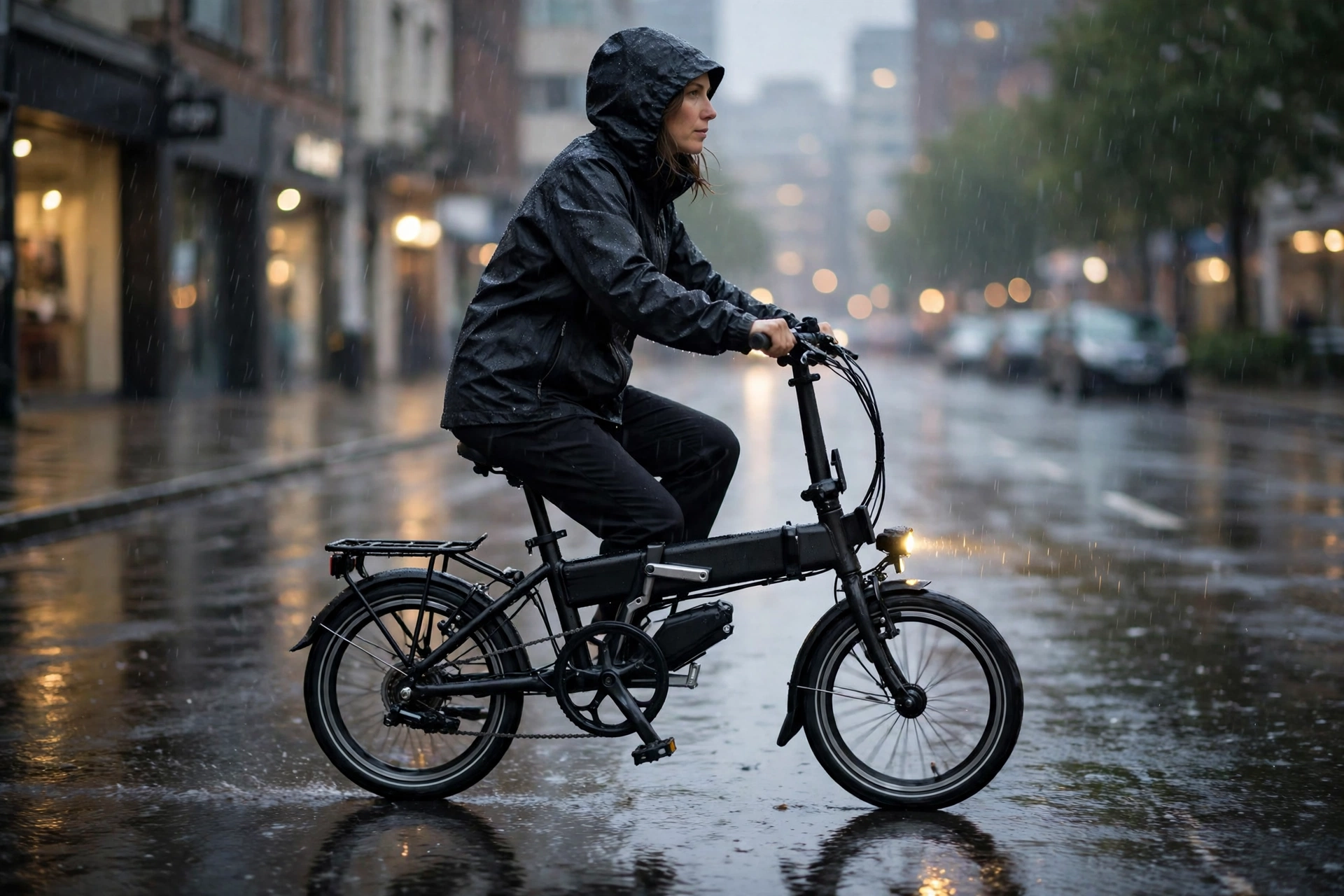
Start with the smallest one. It is the easiest to understand.
What an isinwheel electric bike actually is in 2026
Strip away the regional storefronts and the alphabet soup, and the isinwheel electric bike range that a US buyer can realistically order in October 2026 comes down to four machines. The U1 is a tiny 14-inch folding bike for short hops. The U5 is a 20-inch folder with a bigger battery. The U7 is a step-through cargo-leaning bike on 20-inch fat tyres, with racks at both ends. The M10 is a normal-looking 26-inch hardtail, part commuter, part light trail bike.
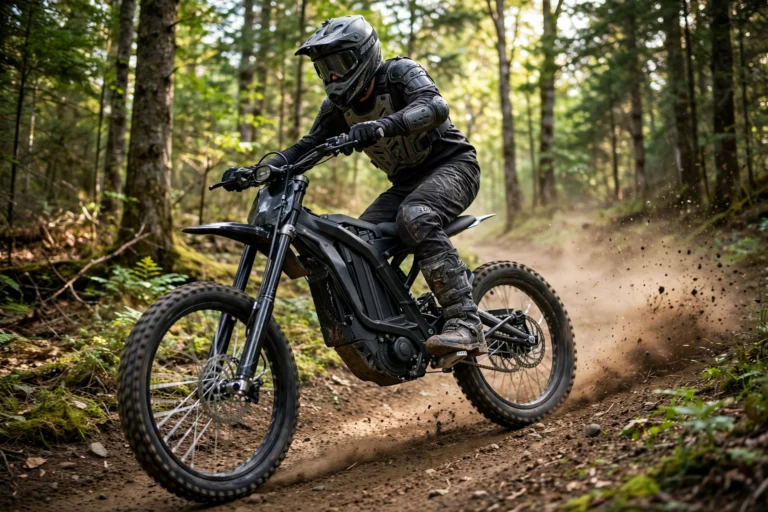
Around those four sits a penumbra of high-power fat-tyre models — 1,000W, 1,500W, claims of 75 to 80 miles — plus an electric dirt bike, the Monster Pro, at $1,699.99. Weekend toys: heavy, legally awkward in many places, and no sane person commutes on one through winter. They get one paragraph in this guide, and this is most of it.
One more honesty note, because it shapes everything below. Isinwheel’s own paperwork is untidy. The same bike appears with different motors, different weights and different load limits on different pages. The U7’s manual says a 4–5 hour charge; the marketing says 3–4 hours. The U1 is listed with a 350W motor in one place and a 500W motor in another.
This is normal at this price, and it is also why the range figures printed in large type should be read as a ceiling, never a plan. Plan around roughly 70 percent of the claimed pedal-assist range for mixed commuting with hills and a headwind, and you will rarely be stranded. That 70 percent rule is our estimate, stated once here and used throughout: claimed range × 0.7 = working range (est.).
The U1: the isinwheel electric bike that folds to almost nothing
The U1 is a kettle-sized thing. Fourteen-inch wheels, a folding aluminium frame, a single gear, and a 36V 7.8Ah battery sealed into the frame — 281 watt-hours, not removable. The motor is a 350W unit that peaks at 500W, whatever the headline on a given listing says. Top speed is 20 mph unlocked. Claimed range is 28 miles. Working range, by the rule above, is about 19 miles (est.), and on a cold morning with the assist up high, call it 16. The whole bike weighs 51 lb (23.2 kg), which is not light in absolute terms and is very light for something with a motor in it.
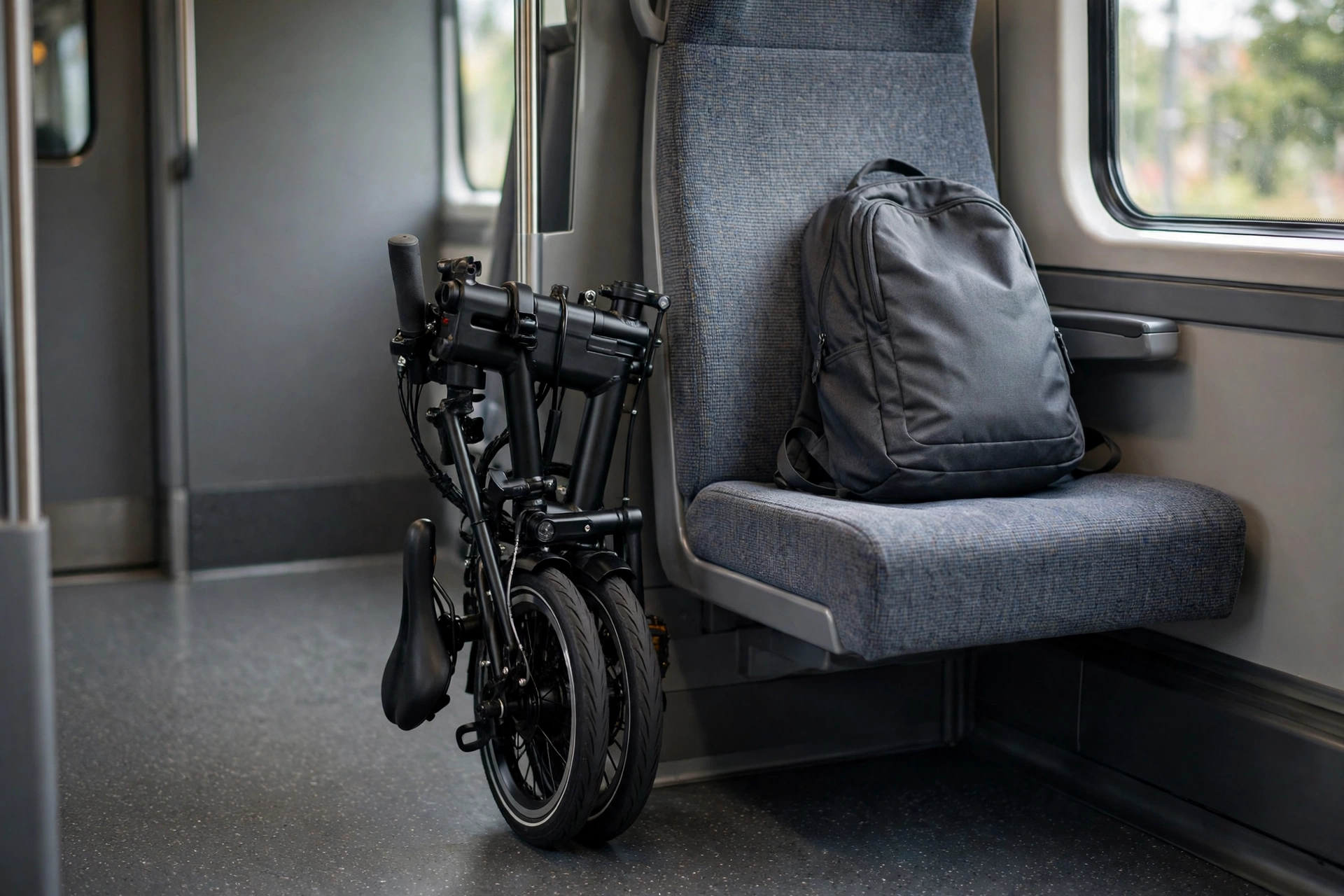
Who is this for? The train person. The U1 folds to under 0.15 cubic metres — luggage rack, hallway corner, the gap beside a desk. Two miles to the station, three at the other end, home on one charge with room to spare.
The U1 does that job for $299.99 at US marketplace sellers on the day we checked: the cheapest ticket into legal, pedal-equipped electric transport that we would actually recommend. Short trips are also where its weaknesses stop mattering. Single-speed gearing is miserable on a long climb and perfectly fine for a flat mile and a half. Small wheels feel nervous at speed and turn on a coin at walking pace, which is what station forecourts ask for.
The compromises are structural. The battery does not come out, so the bike must live within cable reach of a socket; if your building bans e-bikes from lifts and your flat is on the fourth floor, this is a problem with no workaround. There are no mudguards worth the name in most listings, so a wet road paints a stripe up your back. And 14-inch wheels drop into potholes that a 26-inch wheel rolls over. None of that is hidden. It is a short-hop tool priced like one.
The U5 folds too — and that is where the good news thins out
On paper the U5 is the grown-up folder. Twenty-inch wheels, a removable 48V 7.8Ah battery (374Wh), a claimed 35 miles on throttle and 50 on pedal assist, a 2–3 hour charge, cruise control, $395.99 when we checked. Working range: about 35 miles (est.) — a 12-mile round-trip commute with a day of margin. If the spec sheet were the whole story, this would be the folder to buy.
It is not the whole story. BikeRide’s testers and owner reports document a pattern that should make any buyer pause: some U5s have arrived with a 350W motor instead of the listed 500W unit, one tester measured pedal assist taking eight seconds to wake up, and owners report squeaky brakes, a harsh ride, play in the folding stem, sticky hinges and a battery gauge that guesses. Isinwheel does replace faulty electronics, per those same reports; it is also described as slow to answer.
A commuter bike is not a raffle ticket. You buy it because the 7:42 train does not wait while a replacement display crosses an ocean. Our position is simple: skip the U5 until the quality reports improve. The U1 below it is cheaper and more honest, and the U7 above it carries more and complains less.
The U7 is the isinwheel electric bike built for errands
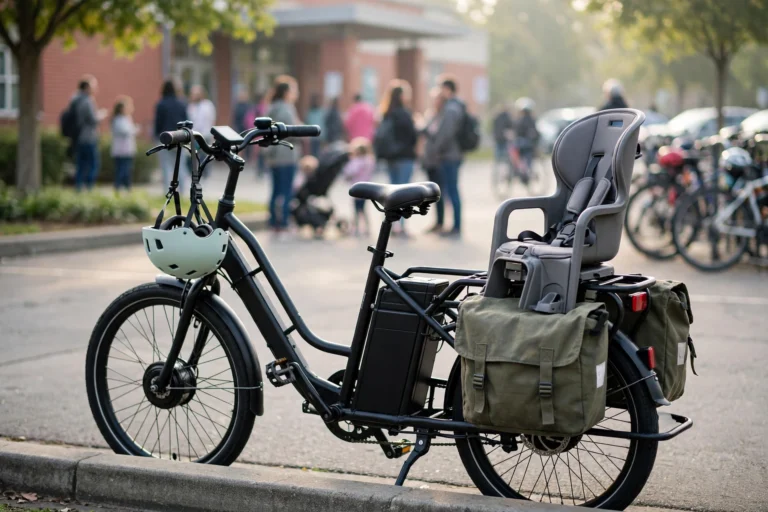
The U7 takes a different brief: carry things, carry them upright, do not make the rider swing a leg over a high frame in a skirt or with a crate of shopping on the back. Step-through frame, 20 × 3-inch fat tyres, front and rear racks fitted as standard, a 330 lb total load rating, and a sprung saddle.
The motor is a 500W hub unit peaking at 1,000W. The battery is the biggest of the sensible range: 48V 10.4Ah, 499Wh, removable, with a claimed 55 miles of pedal-assist range. Working range on our rule: about 38 miles (est.). Charge time is quoted at 3–4 hours by the brand and 4–5 hours in its own manual, so budget the longer figure and be pleasantly surprised occasionally.
It weighs roughly 66 lb. You will not carry it up stairs. You will not want to. What you get in exchange is the only bike in this range that can genuinely replace a car for the grocery run: two racks, a stable low frame, tyres that shrug at broken glass and tram tracks, and enough battery that a week of three-mile errands fits inside one charge.
US street prices on October 27, 2026 sat under $500 at most sellers — call it $499.99 (est.) as a working figure, since listings vary by colour and coupon. The newer U7S variant, at $729.99 spotted at Amazon, buys range the base bike’s owners rarely use; for errand duty the standard U7 is the smarter spend.
Hill climbing is adequate, not strong. The brand rates it for 15-degree inclines, covering city hills and overpass ramps. On a long 8 percent grade with shopping aboard, you will pedal in a low gear and sag into single figures near the top. That is fine. Arriving is the metric.
Range claims, translated: what each isinwheel electric bike costs per real mile
Brochure range is marketing. What matters is the range you can plan a Tuesday around, and what you paid for each of those miles. Here is our original comparison, using working ranges from the 70 percent rule — except the M10, where published testing gives us something better. GoEBikeLife’s reviewers rode the M10 and reported mid-40s to over 50 miles at moderate assist on flatter routes, dropping to the high 30s ridden throttle-heavy. We use 45 miles as its working figure, anchored to that test.
| Model | Price checked Oct 27, 2026 | Claimed range | Working range | Price per working mile |
|---|---|---|---|---|
| M10 | $249.99 | 45–55 mi (PAS) | 45 mi (tested) | $249.99 ÷ 45 = $5.56 |
| U5 | $395.99 | 50 mi (PAS) | 35 mi (est.) | $395.99 ÷ 35 = $11.31 |
| U7 | $499.99 (est.) | 55 mi (PAS) | 38 mi (est.) | $499.99 ÷ 38 = $13.16 |
| U1 | $299.99 | 28 mi (PAS) | 19 mi (est.) | $299.99 ÷ 19 = $15.79 |
Read the table the way a commuter should. The U1 looks cheap and is, in cash terms; per usable mile it is the most expensive bike here, because a 281Wh battery simply does not go far. The M10 is the opposite: the lowest sticker price of the four on the day we checked and nearly three times the U1’s working range, which is how it lands at $5.56 a mile. If you want the fuller maths of what any of these costs across five years of tyres, pads and chains, our total cost of ownership calculator takes the same approach with your own numbers.
The M10: plain, 26-inch, and the pick of the range
The M10 looks like a bicycle. That is its charm and its strategy. A high-step hardtail frame, 26-inch CST all-terrain tyres, a front suspension fork, a Shimano 7-speed drivetrain, mechanical disc brakes, and a 500W rear hub motor fed by a removable 36V 10.4Ah battery — the same 374Wh as the U5, put to better use. Top speed is 20 mph, which puts it squarely in Class 2 territory; if the classes are new to you, our Class 1 e-bike guide explains where throttle bikes like this sit in US rules.
It weighs about 45–47 lb, light enough to haul up a porch step without planning the lift. It carries UL 2849 system certification with a UL 2271-compliant battery, the paperwork that matters if you charge indoors or your employer asks questions.
One catch, and it is not small. The M10 drifts in and out of US stock; reviewers have flagged that it can be hard to find new from major retailers, and the official Canadian store lists its M10S commuter variant at C$699.99 while US marketplace sellers have offered the M10 at $249.99. Treat that as a when-you-see-it price. In stock near that figure, buy it over everything else in this article. If it is not, the U7 is your fallback — roughly double the money for a heavier, non-folding, better-equipped machine. Availability is the M10’s only real weakness, and it is a stocking problem, not a design problem.
Rain, hills, and the ride to work in February
This is the section most budget e-bike reviews skip, because their test week was dry. Commuting is a wet-weather activity that occasionally happens in sunshine, so judge accordingly.
Water resistance first. The U1 and U7 carry IPX4 ratings — splash-proof, fine for drizzle and wet roads, not rated for a storm or a pressure washer. Some U5 listings claim more, some say IPX4; the inconsistency is the brand’s, not ours. Practical rule for any isinwheel electric bike: ride home in the rain without worry, then dry the chain and connectors indoors, and never charge a soaked battery until it has sat for a few hours. The M10’s certification story is the strongest of the range, and its removable pack makes the indoor-drying routine easiest of all.
Brakes next. Every model here uses mechanical disc brakes. Cables stretch, pads are cheap, any bike shop on Earth can service them — the reliability argument is real. The wet-weather argument is also real: mechanical discs need a firmer squeeze than hydraulics and bite a fraction later on a soaked rotor. Leave a bigger gap, brake earlier, and budget for better pads in the first month; a $15 fix that transforms the feel.
Hills, finally: these 500W-class hub motors flatten rolling terrain and help honestly on proper climbs, but they will not carry a heavy rider up a 12 percent grade on throttle alone. Pedal, use the low gears, arrive slightly warm rather than soaked. That trade is the whole point of a 20 mph commuter.
Mudguards deserve their own sentence, because they decide whether you arrive presentable. None of these bikes ships with full-length guards as standard in US spec — the M10 is sometimes shown with clip-on fenders, which are better than nothing and not by much. If your route includes wet roads, a proper guard set is the first accessory to buy. The pattern repeats across the budget end — look at the RTR electric bikes we covered recently: the bike is cheap partly because the wet-weather kit is sold separately.
What an isinwheel electric bike costs to run
Electricity is the rounding error. A full charge costs the battery’s capacity in kilowatt-hours times your tariff. At an assumed US average of $0.17 per kWh (est.): the U1’s 281Wh pack fills for about 5 cents (0.281 × 0.17 = $0.048); the 374Wh packs in the U5 and M10 for about 6 cents; the U7’s 499Wh pack for about 9 cents. Run a 10-mile round-trip commute on the U7 and the motor sips roughly 130Wh a day (est., at about 13Wh per mile), which is 2.2 cents of electricity — around $5.30 across a 240-day working year (est.). Our breakdown of what it costs to charge an electric bike goes through the same sums in detail.
The honest costs are the bicycle costs. A chain every 1,500–2,000 wet miles, brake pads twice a year if you ride through winter, tyres when the tread goes smooth. Call it $120–$200 a year (est.) for a daily rider — less for the single-speed U1, more for the U7’s fat tyres.
Every model here uses standard, widely stocked parts, which is the quiet advantage of the range. Nothing is proprietary except the batteries, and that is where the real risk sits: a replacement pack for a discontinued budget model can be hard to source in year three. Buy the bike whose battery is removable, and store it half-charged indoors. Boring advice. It is also the difference between a three-year bike and a seven-year bike.
Verdict scores: the isinwheel electric bike range, ranked
isinwheel M10 — Our score: 8/10. Range 8/10 · Charging 8/10 · Value 9/10. The sensible one: certified, light, standard parts, tested range that backs up the brochure, and the lowest price per working mile of anything here. Availability is the asterisk.
isinwheel U7 — Our score: 7.5/10. Range 8/10 · Charging 7/10 · Value 8/10. The errand machine. Racks, load rating, the biggest battery of the sensible four, and a frame anyone can step through. Heavy, and the charge-time paperwork contradicts itself.
isinwheel U1 — Our score: 6.5/10. Range 5/10 · Charging 8/10 · Value 7/10. A station bike, honestly priced and honestly limited. Buy it for a short, flat, fold-heavy commute and it will not let you down. Ask it for more and it will.
isinwheel U5 — Our score: 6/10. Range 7/10 · Charging 9/10 · Value 6/10. The best folder on paper and the one we would not buy, because too many owners report receiving something other than what the paper describes. Fast charging cannot fix a quality lottery.
And the fat-tyre fringe — the 1,000W and 1,500W machines and the Monster Pro dirt bike? Not commuters. Several are not road-legal as bicycles in much of the US, and at 76 lb and up they fail the stairs test before anything else. If your commute involves a motorway, buy a motorcycle. If it involves a bike lane, buy the M10.
Questions people ask before buying
Is an isinwheel electric bike legal to ride on US roads and bike paths?
The U1, U5, U7 and M10 are built around 20 mph assist with throttles, which places them in Class 2 in states that use the three-class system; most roads and bike paths open to bicycles accept them, though a few trail systems restrict throttle bikes. The high-power fat-tyre models exceed class limits on wattage or speed and are a different legal story — check your state and city rules before assuming.
How far will one actually go on a charge?
Plan on roughly 70 percent of the claimed pedal-assist figure for mixed commuting (est.): about 19 miles for the U1, 35 for the U5, 38 for the U7. The M10 is the exception with published testing behind it — mid-40s to low-50s of miles at moderate assist on flatter routes, high-30s ridden hard. Cold weather, hills and high assist all take their cut, in that order of surprise to new owners.
Can I ride one through a wet winter?
Yes, with routine. The bikes carry splash-level water resistance (IPX4 on the U1 and U7), so rain on the ride is fine; dry the chain afterwards, store the bike under cover, and let a soaked battery sit before charging. Fit full mudguards — they are not standard — and expect mechanical disc brakes to need earlier, firmer braking on wet roads.
Which model handles a hilly commute best?
The M10, because it pairs the 500W motor with proper 7-speed gearing and the lightest weight here, so your pedalling actually helps. The U7’s peakier motor is fine on city grades with a load. The single-speed U1 is the wrong tool for hills; it is a flat-land folder and knows it.
What is most likely to go wrong, and can I fix it myself?
The ordinary bicycle things: stretched brake cables, worn pads, a dry chain, punctures. All fixable at home with basic tools, and parts are standard sizes. The reported weak points specific to this brand are electrical niggles on the U5 — displays, batteries, slow support responses — which is why the simpler models score higher here despite smaller spec sheets.
So, for most commuters, an isinwheel electric bike is a sensible budget choice when the model fits the trip. Check the isinwheel electric bike range, prices and stock before you buy, and pick the isinwheel electric bike that matches your commute.
An isinwheel electric bike for short, flat trips is easy to live with. The best isinwheel electric bike for you is the one you will actually ride every day, so test an isinwheel electric bike before you commit and compare the isinwheel electric bike range again.