Last updated: October 27, 2026
Start with the fact the ads skip. GOTRAX is a scooter company. A good one, by budget standards — but scooters pay the rent in that building, and bicycles are the side line. So a gotrax electric bike asks a fair question before you spend anything: can a scooter brand build a bicycle that survives real roads, real hills and a rider who weighs more than the brochure model? Sometimes, yes. The Tundra proves it.
Sometimes the answer is a range claim held together with optimism, and this guide names which is which, model by model, with tested numbers next to the marketing ones.
Expectations, set properly. You are not buying dealer-network polish. You are buying Bafang motors, Shimano shifters and battery packs sized in honest watt-hours, assembled into frames that cost half what the big names charge. The trade is support. GOTRAX sells direct and through Amazon and big-box stores, warranties run one year, and owner forums fill up with stories about slow replies and parts on backorder. None of that makes the bikes bad. It makes homework non-negotiable.
The current line-up, stripped of the naming fog: one full-size fat-tire bike (Tundra), one city step-through (CTI3, with older CTI and CTI2 versions still floating around retail), two near-identical folders (F1 V2, also sold as the F1 2.0 and F2 depending on the channel).
A moto-styled Ranger in 20-inch and 16-inch sizes, a tiny 16-inch folder (EBE1), and the Fitz16, which is a kids’ electric dirt bike and not a bicycle at all. Prices below were checked October 27, 2026, against GOTRAX’s store, Amazon and Best Buy listings.
Three numbers decide whether any of these deserve your money. Torque, in newton-metres, because watts alone tell you nothing about hills. Watt-hours, because that is fuel, and fuel is range. And brake hardware, because a 78 lb fat-tire bike at 28 mph on mechanical discs is a physics problem with your name on it. Hold every model in this guide against those three numbers and the marketing gets very quiet, very fast.
Range claims first, because that is where this category lies the hardest. GOTRAX is not the worst offender we test, but it plays the same game: a headline figure earned by a light rider, on flat ground, at the lowest assist level, in weather that does not exist. The fix is arithmetic, not trust. Divide the battery size by the claimed range and you get the consumption the claim requires. Real hub-motor bikes burn 15 to 25 Wh per mile in mixed riding. Any claim that needs less than 13 Wh per mile is fiction until a tester proves otherwise.
The gotrax electric bike range claims, translated into physics
Run the division. The Tundra carries a 48V 20Ah pack: 48 × 20 = 960 Wh. GOTRAX claims up to 74 miles. 960 ÷ 74 = 13.0 Wh per mile — the very bottom edge of plausible, achievable only by a patient rider on gentle terrain. Credit where earned: Great Lakes Bike Ski Boat actually tested the Tundra on a hilly route with a 250 lb rider at assist level 3 and recorded 55.0 miles before the pack died. That is 960 ÷ 55 = 17.5 Wh per mile, a thoroughly believable consumption figure, and 55 real miles is still a big day’s riding.
The claim is inflated by about a third. The bike underneath it is genuinely strong.
The folders show the claim problem in pure form. The F1 V2 packs 48V 10.4Ah = 499.2 Wh and claims 50 miles. 499.2 ÷ 50 = 10.0 Wh per mile. No. Not on 2.6-inch tires, not with a rider over 120 lb, not anywhere we have ever measured.
Plan on the same 17 Wh per mile a real bike uses: 499.2 ÷ 17 ≈ 29 miles of mixed riding (est.), which matches the 15-to-25-mile real-world reports from the earlier F1 generation once you add the bigger battery. Twenty-nine honest miles is fine for a folder. Pretending it is fifty is not.
The Ranger is the worst offender. Its 48V 10Ah pack holds 480 Wh, the claim is 50 miles, and the implied consumption is 480 ÷ 50 = 9.6 Wh per mile — a number a bicycle achieves going downhill. Electric Bike Review’s instrumented test of the Ranger returned 23 miles on throttle alone. 480 ÷ 23 = 20.9 Wh per mile, right in the honest band for a heavy moto-style bike ridden without pedalling. Pedal and you will stretch it. Just know which half of the brochure the truth lives in.
Tundra: the one we’d buy first
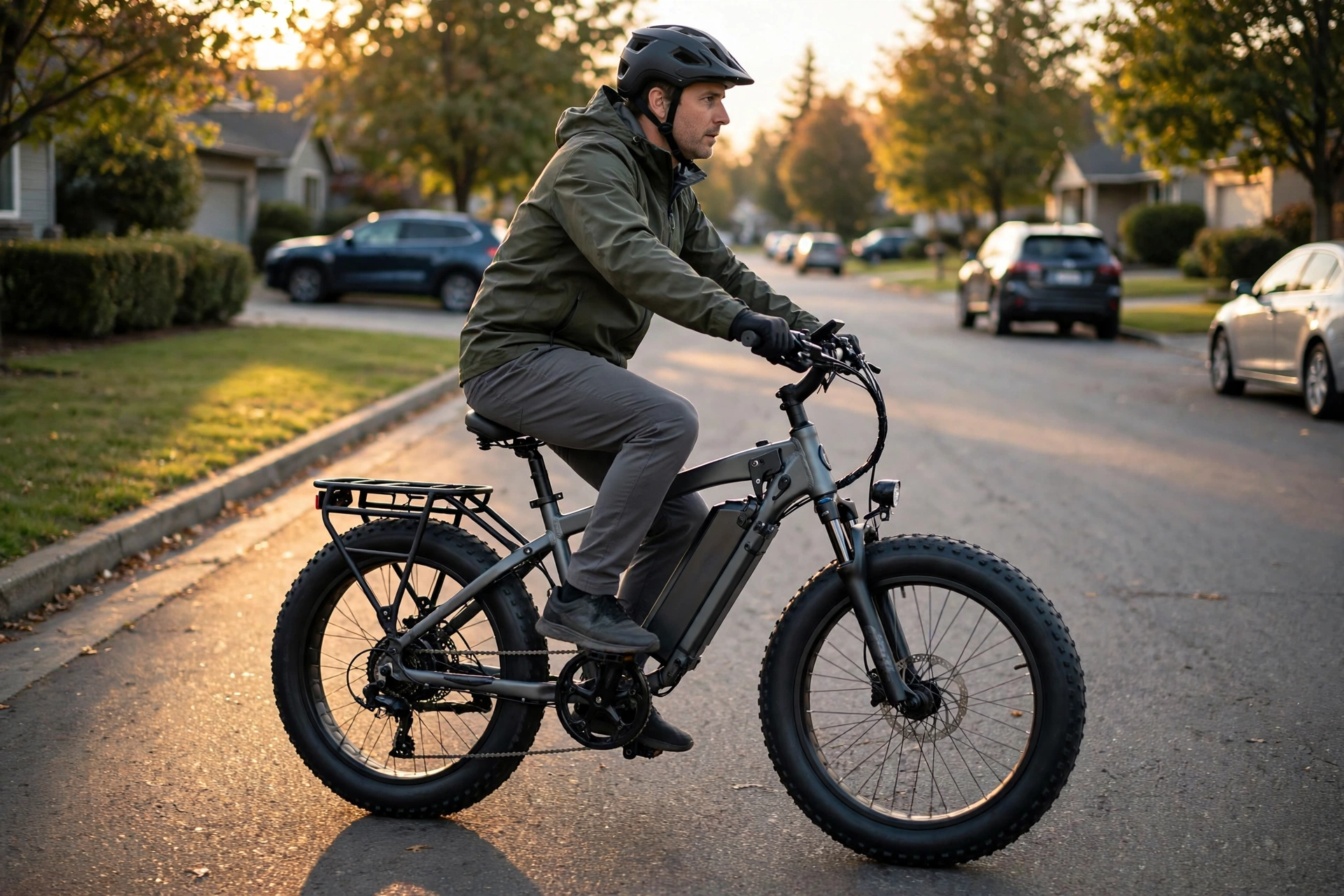
The Tundra is the exception that makes this guide worth writing. A Bafang 750W rear hub motor with a claimed 80 Nm of torque and — the detail that matters — a properly tuned torque sensor, the part budget bikes usually fake with a cadence switch. Freshly Charged called it one of the most sensitive torque sensors they have tested on any bike at any price, and the bike pulls cleanly to 28 mph in the top assist level, which makes it a Class 3 e-bike as shipped: throttle to 20 mph, pedal assist to 28. Brakes are dual hydraulic discs. Finally, hardware that matches the speed.
The spec sheet, straight: 48V 20Ah (960 Wh) removable pack, 26 × 4-inch Chaoyang fat tires, coil front suspension, Shimano 7-speed, full-color display, integrated brake light, 78 lbs, rider limit 300 lbs.
Range, honestly: 74 claimed, 55 tested on hills with a heavy rider, and it still beat the Aventon Aventure 2’s 44 miles on the same test route while costing less. Street price runs about $1,299 against a $1,799 list, checked October 27, 2026. Filling that pack costs roughly 16 cents at the US household average of $0.17 per kWh — our guide to what it costs to charge an electric bike shows the maths across brands.
Faults, because there are some. Seventy-eight pounds is a lot of bike to haul up stairs or onto a rack. The motor is audible. Size choice is limited. And GOTRAX’s own store copy cannot agree with itself on the rider limit — 265 lbs in one listing, 300 in another — so treat 265 as the working ceiling (est.) until the company picks a number and sticks to it. None of that dethrones it. At this money, nothing else pairs a 960 Wh pack, a real torque sensor and hydraulic brakes.
Our score: 8.1/10 — Range honesty: 7/10 · Build & brakes: 8/10 · Value: 9/10
F1 V2 and F2: the folders that carry the brand
If the Tundra is GOTRAX’s proof of competence, the F1 family is its volume seller: a 20-inch folding commuter with a 350W rear hub (500W peak), a 48V 10.4Ah battery and a 20 mph ceiling. That ceiling is precise, and it matters legally — throttle and assist both stop at 20 mph, so this is a Class 2 e-bike as shipped, legal anywhere e-bikes are allowed. Read our Class 1 e-bike guide for how the class labels work before you buy anything with a throttle.
Testers like the package more than the spec sheet suggests. Freshly Charged weighed it at 46.8 lbs, praised the color display and the included extras — lock, phone holder, mirror, seat bag — and found the throttle available at full speed in every assist level.
Brakes are mechanical discs on 160mm rotors, adequate at 20 mph and unremarkable. GOTRAX’s own electric bike buyer’s guide pushes the folder line hard for apartment riders, and the pitch is honest in one respect: a bike that folds in ten seconds and fits a car trunk gets ridden more than a better bike that lives in a storage unit.
Pricing is a shell game, so play it awake. The F1 V2 tested at $699. The near-identical F1 2.0 was $559 on Amazon in October 2026 against a $799 list. Same bones, three badges, prices swinging $240 by channel. Buy whichever badge is cheapest that week and pocket the difference. And buy the claim at 29 miles (est.), not 50.
Our score: 7.3/10 — Range honesty: 5/10 · Build & brakes: 6/10 · Value: 9/10
CTI3 and Ranger: a city bike and a moto toy walk in
The CTI3 is the commuter your aunt would pick: step-through frame, 500W hub motor, 48V 14Ah (672 Wh) pack, rear rack, front suspension, 20 mph top speed, Class 2. The claim is 60 miles. 672 ÷ 60 = 11.2 Wh per mile, so plan on 672 ÷ 17 ≈ 40 miles (est.) of real commuting, which is still a full week of short trips for most riders.
Sale pricing has sat at $899 against a $1,499 list, checked October 27, 2026. It is a perfectly reasonable appliance. It is also the least interesting gotrax electric bike here, and its older CTI sibling — 350W, 36V, mechanical discs — should only be bought at a steep discount.
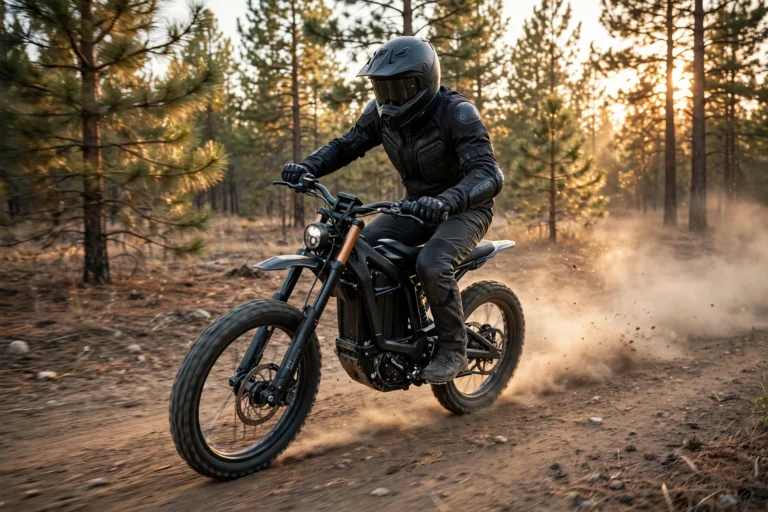
The Ranger is not an appliance. It is a mini-moto with pedals bolted on to keep it in e-bike clothing: 20 × 4-inch fat tires, an elongated saddle, a 500W motor and a claimed 25 mph that technically makes it Class 3. The pedals sit where pedals sit on all moto-style bikes — too low and too far back to pedal seriously — so treat it as a throttle bike that happens to be legal.
Two things redeem it. Hydraulic disc brakes with motor cutoffs, rare under $1,000. And UL 2849-certified electrics, which matters on a bike this cheap. At $899 with a tested 23 throttle-only miles, you are buying fun, not transport.
Our score: CTI3 — 6.8/10 — Range honesty: 5/10 · Build & brakes: 6/10 · Value: 8/10
Our score: Ranger — 6.5/10 — Range honesty: 4/10 · Build & brakes: 8/10 · Value: 7/10
EBE1 and Fitz16: small wheels, small jobs, one impostor
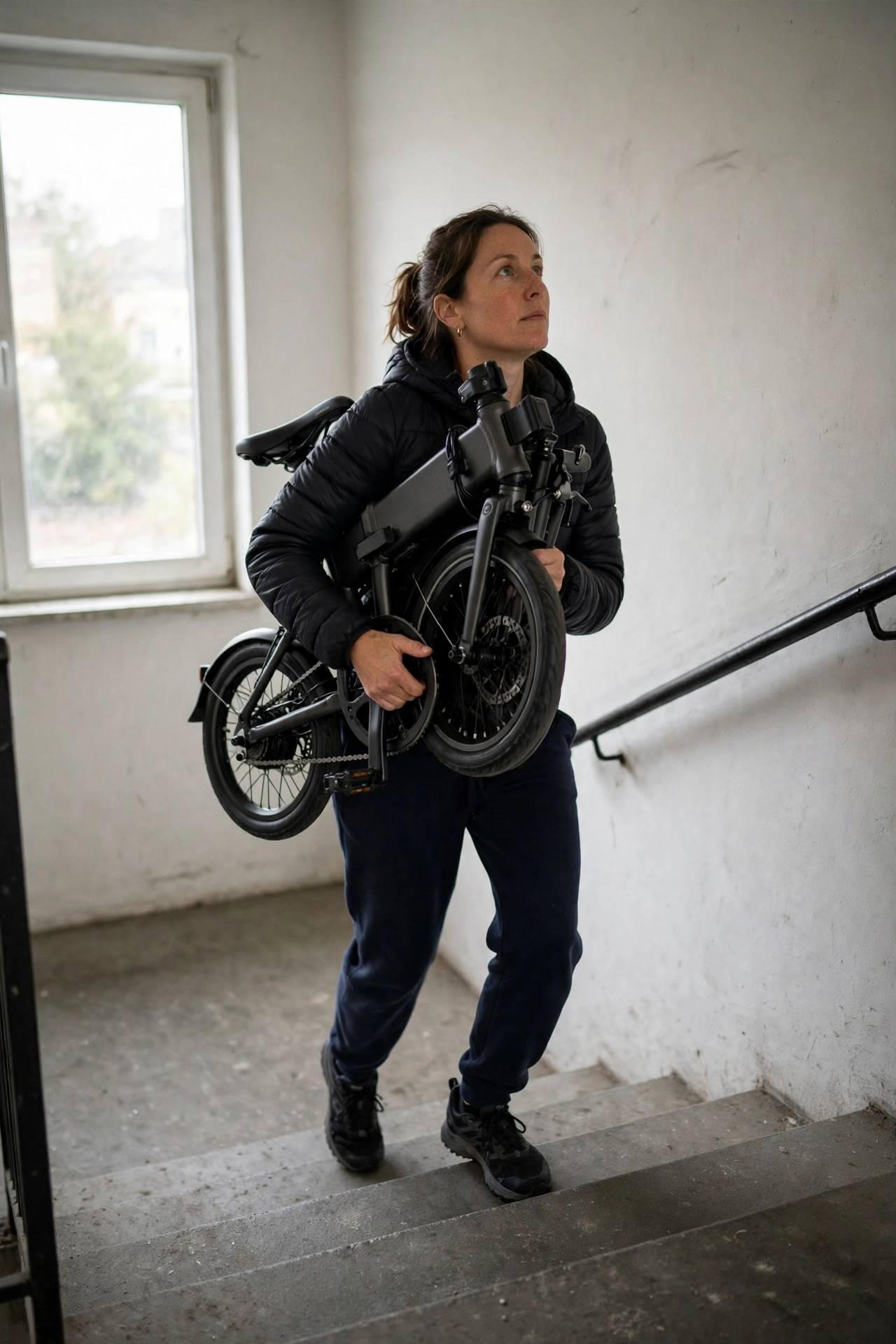
Every gotrax electric bike below this point is a specialist tool, starting with the EBE1, the smallest adult folder: 16-inch wheels, a 350W motor, a 36V 7.8Ah pack — 36 × 7.8 = 281 Wh — and a claimed 45 km (28 miles) of pedal-assist range. For once the implied maths nearly behaves: 281 ÷ 28 ≈ 10 Wh per mile is still optimistic, so call it 16 to 20 real miles (est.) and the bike makes sense as a last-mile tool for flat cities.
It weighs about 45 lbs, carries 264 lbs, and costs around $599 in most listings (est., stock drifts between US and Canadian channels). Small wheels ride harshly and wander at speed. On smooth pavement, for short hops, fine.
The Fitz16 is a different species wearing the family name. No pedals you can use, a 350W motor, a 36V 7.8Ah (281 Wh) pack, 15.5 mph, 16 miles claimed, and a size and saddle built for children aged 6 to 12. It is an electric dirt bike, certified to UL 2272 — the hoverboard standard — not UL 2849, because it is not a bicycle in any legal sense.
GOTRAX sells it honestly as a kids’ starter motocross bike, and judged as one it is decent: dual suspension, disc brakes, a real display, $549.99 at Best Buy against a $699 MSRP, checked October 27, 2026. Just do not let a listing anywhere file it under commuter e-bikes for adults.
Our score: EBE1 — 5.9/10 — Range honesty: 6/10 · Build & brakes: 5/10 · Value: 7/10
Our score: Fitz16 (as a kids’ dirt bike) — 6.2/10 — Range honesty: 7/10 · Build & brakes: 6/10 · Value: 6/10
Legal classes and UL stickers: check before you pay
Class precision, quickly. Tundra: Class 3 as shipped — no throttle past 20 mph, assist to 28, and some cities ban Class 3 from bike paths, so check your local rules. F1 V2, CTI3, EBE1: Class 2, throttle and assist capped at 20 mph. Ranger: Class 3 on paper, and the paper is doing heavy lifting given the pedalling position. Ranger 16: capped at 165 lbs maximum rider weight, which quietly makes it a teen bike whatever the marketing says.
Certification is the second label that matters. The F1 V2 and both Rangers carry UL 2849 system certification, the standard that tests the whole electrical system rather than one component. The Tundra’s pack is UL-certified, and its independent testers — including the Great Lakes Tundra review that produced the 55-mile figure — treat its electricals as sound, though GOTRAX is vaguer about full-system listing on this model than on the folders.
Ask the question before purchase on any variant not named here. A brand that cannot answer a yes-or-no certification question in one email is telling you something.
Support and spares: the gotrax electric bike tax nobody lists
Here is the blunt part. BikeRide’s owner research on the Tundra flags a pattern that repeats across the brand: product faults happen, and customer service is the weak link when they do — slow responses on shipping damage and failed components top the complaint list. One-year warranties across the range. No dealer network to walk into. If a controller dies in month three, you are emailing a warehouse.
Price that risk in rather than pretending it away. GOTRAX bikes cost 30 to 50 percent less than equivalently specced rivals, and a slice of that saving is the support you are not getting.
Our research method weights exactly this trade, and for handy riders it often still wins: the wear parts — pads, tires, chains, Shimano 7-speed bits — are standard and cheap anywhere. It is the proprietary electricals you cannot fix at a local shop. Compare the whole ownership picture with our total cost of ownership calculator before deciding the saving is free money.
What a gotrax electric bike costs per tested mile
One computation to keep, because it cuts through every brochure in this guide. Take the street price, divide by the miles a tester — not a brochure — actually got:
- Tundra: $1,299 ÷ 55 tested miles = $23.62 per tested mile
- F1 V2: $699 ÷ 29 realistic miles (est.) = $24.10 per mile
- Ranger: $899 ÷ 23 tested throttle miles = $39.09 per mile
- Fitz16: $549.99 ÷ 12 realistic miles (est.) = $45.83 per mile
The ranking writes the buying advice on its own. The big bike and the folder deliver miles at near-identical cost, so choose by job: hills and distance, Tundra; stairs and trunks, F1. The moto toys charge you a 60 to 90 percent premium per mile for styling. And the same honesty applies across the whole budget class — we applied it to the Jetson e-bike range too, where the numbers were considerably worse.
Frequently asked questions
Is a gotrax electric bike actually any good, or is it just cheap?
Both, depending on the model. The Tundra is genuinely good — torque sensor, 960 Wh pack, hydraulic brakes, 55 tested miles. The folders are honestly cheap and honestly built for the price. The claims are the problem, not the hardware: divide every range figure by the battery maths in this guide and buy the number you get.
How far will the Tundra really go on one charge?
Plan on 45 to 55 miles in mixed riding. The 55-mile figure comes from an instrumented test on a hilly route with a 250 lb rider at assist level 3. Gentler terrain and lower assist will stretch it; cold weather, hills and throttle-heavy riding will cut it. The 74-mile claim needs 13 Wh per mile, which a careful rider on flat ground might approach once.
Are GOTRAX e-bikes street legal?
The bicycles, yes, within their classes: Class 2 for the F1 V2, CTI3 and EBE1 (20 mph cap), Class 3 for the Tundra and Ranger (assist to 28 mph, throttle to 20), subject to local path and helmet rules. The Fitz16 is the exception — it is a kids’ electric dirt bike for private land and trails, not a street-legal bicycle anywhere.
Which GOTRAX should I buy for a hilly commute?
The Tundra, and it is not close. Torque is the hill number: 80 Nm through a torque sensor climbs grades that leave 350W cadence-sensor folders walking. If your commute involves carrying the bike up stairs daily, take the F1 V2 and accept slower climbs as the price of 47 lbs.
What does it cost to run a gotrax electric bike?
Electricity is nearly free at this scale: the Tundra’s 960 Wh pack costs about 16 cents to fill at $0.17 per kWh, and the folders cost about 9 cents. Your real running costs are brake pads, tires and one replacement battery years down the road — budget for those, and for your own labour, since there is no dealer network doing it for you.
Bottom line: a gotrax electric bike rewards buyers who read spec sheets and punishes buyers who read headlines. Buy the Tundra if you ride real distances, buy the F1 on its cheapest-badge week if you fold and carry, and treat every range claim in this catalogue as a negotiation opening bid. The hardware, mostly, is better than the marketing deserves.
For a final check, a gotrax electric bike is worth shortlisting when its tested range, torque and brakes match your route, and a gotrax electric bike bought on that evidence — rather than on a headline claim — is the gotrax electric bike most likely to still feel like good value a year later.
Before you decide, compare a gotrax electric bike on tested range and brakes rather than on a headline claim, because a gotrax electric bike chosen that way — and ridden as a gotrax electric bike should be, with realistic range expectations — is far less likely to disappoint.