Last updated: October 27, 2026
Let’s settle the title question first, because everything else hangs off it. An electric bike for adults 50 mph does not exist in US law. Not as a bicycle. The three-class system that most states have adopted tops out at 28 mph, and a machine that runs to 50 mph is, in the eyes of every state vehicle code I can find, a moped at best and a motorcycle at worst. That does not make the machines imaginary — some of them are genuinely well engineered. It makes the label a lie, and the label is what gets riders ticketed, insured wrongly, and thrown off trails.
This guide names the machines that truly run at 50 mph, shows the maths behind the speed, and scores each one on whether its maker tells you the truth about what you just bought.
The ceiling is not a vibe. It is a definition. PeopleForBikes, the industry group that drafted the model e-bike legislation most states copied, prints the classes in full: Class 1 assists only while you pedal and stops at 20 mph; Class 2 adds a throttle, still 20 mph; Class 3 assists while you pedal up to 28 mph, with a motor of 750 watts or less under the federal definition.
Forty-plus states now run some version of that framework. Notice what is missing. There is no Class 4. There is no asterisk for private roads, quiet mornings, or a rider who promises to behave. Above 28 mph of assistance, or above 750 watts, the vehicle leaves the bicycle chapter of the code entirely.
What it becomes instead is paperwork. In most states a 50-mph two-wheeler registers as a motorcycle or, in the friendlier states, a motor-driven cycle or moped. That means a licence with a motorcycle endorsement, registration and a plate, insurance, a DOT-approved helmet, and lights, mirrors and a horn that meet equipment rules.
None of that is optional, and none of it is waived because the machine also has pedals fitted. California has gone furthest in naming the problem: its SB 586 law created an “eMoto” category effective January 1, 2026, specifically for the Sur-Ron and Talaria class of machine. Read that law carefully before you cite it at a traffic stop. It classifies eMotos. It does not make them street legal.
Trails are stricter, not looser. The US Forest Service classes every e-bike as a motor vehicle, so even a gentle Class 1 pedal-assist bike belongs only on motorised routes unless a local designation says otherwise.
A 50-mph machine on a non-motorised singletrack is not a grey area and it is not a victimless shortcut. It is a motorcycle on a trail where motorcycles are banned, and it is the single fastest way I know to get e-bikes of every class thrown off a trail system. I have no tolerance for it, and neither do the land managers who hold the keys. Keep these machines on OHV areas, motorised trails, private land and — once registered — the road.
The favourite loophole deserves its own burial. Sellers love a display menu that switches a bike between Class 2, Class 3 and “off-road mode,” as if a software setting rewrites the vehicle code. It does not.
In the class-law states, what the machine is capable of as sold is what it is; an unlocked bike ridden gently is still an unregistered motorcycle being ridden gently. Our Class 1 e-bike guide lays out where the legal classes may actually go, and our research method page explains how every figure in this guide was checked. Hold the physics in your head as you read the scores below: at 50 mph, the law is not the only thing that stops calling your machine a bicycle. Aerodynamics got there first.
The physics: 50 mph is a power bill, not a display setting
Air is the whole story. Drag rises with the cube of speed, which is why the jump from 28 mph to 50 mph is not a 79% increase in anything. It is a fivefold one. For an electric bike for adults 50 mph, run the numbers for a 115 kg rider-and-machine combination, upright, at a drag area (CdA) of about 0.55 m² (est. — a normal upright position):
At 50 mph (22.35 m/s): drag power = ½ × 1.225 × 0.55 × 22.35³ ≈ 3,760 W just to push the air aside. Rolling resistance on knobby tyres (Crr ≈ 0.01) adds 0.01 × 115 × 9.81 × 22.35 ≈ 250 W. Total at the wheel: roughly 4,000 W, and after drivetrain losses the motor must sustain about 4.5 kW continuously — call it 4–6 kW once a heavier rider or a headwind joins in.
Now the same maths at 28 mph (12.5 m/s): drag ≈ 660 W, rolling ≈ 140 W, total ≈ 800 W at the wheel. Fifty mph needs five times the continuous power of the fastest legal e-bike class. That is not a settings menu. That is a different vehicle.
This is also where the word “peak” goes to die. A motor advertised at 5,000 W peak for an electric bike for adults 50 mph typically sustains somewhere between 1,500 W and 2,500 W before heat pulls it back (est., from published continuous ratings for comparable motors) — enough for a brief surge past 40 mph with a light rider, then sag. Sustaining 50 mph means holding roughly 4.5 kW without cooking the windings, which is why every honest machine below carries a motor rated at 5 kW nominal or better, a battery that can feed it, and cooling to match. A legal 750 W motor supplies under a fifth of the power 50 mph demands.
Electric bike for adults 50 mph: the machines that actually do it
Four machines below genuinely run at or past 50 mph — the real population hiding behind the search term electric bike for adults 50 mph — and a fifth makes the list as the country’s most famous “unlocked” bike, which tops out well short. Prices are manufacturer or US dealer list prices, checked October 27, 2026.
Talaria Sting MX5 Pro — the benchmark
Talaria’s flagship Sting is what this class looks like when it stops pretending. A 72V, 40Ah battery (2,880 Wh) built on Samsung 50S cells feeds an air-cooled IPM motor rated 5.5 kW nominal and 13.4 kW peak. Talaria’s market sheets quote 55–60 mph depending on territory; US dealers list the bike at $4,990 and quote 60 mph, and independent dyno and GPS testing on this platform backs the claim (est., based on dealer-tested figures).
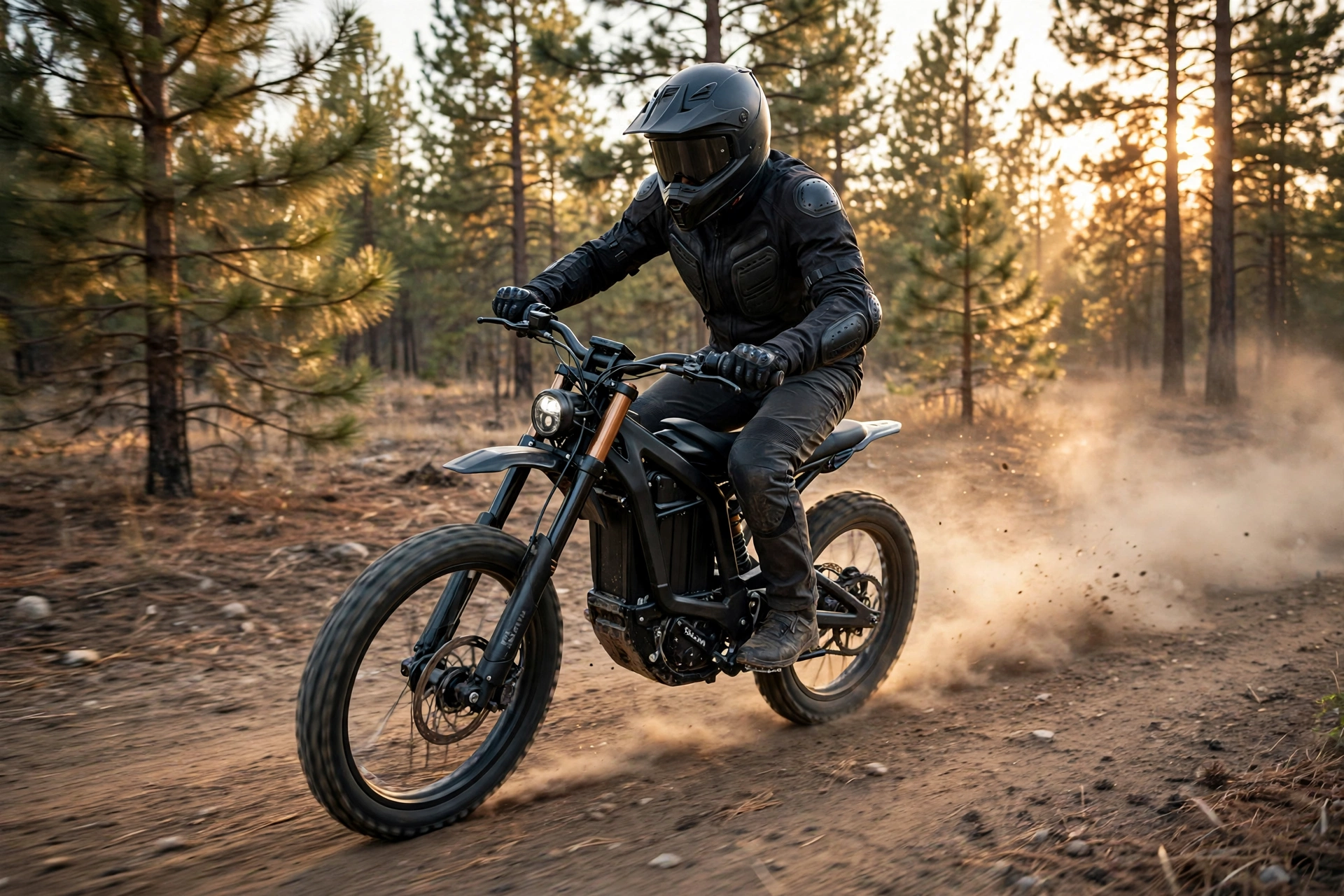
There are no functional pedals on this electric bike for adults 50 mph — footpegs, a 33.1-inch seat, 159–163 lb of motorcycle. US dealers state plainly that it is not street legal in stock form and belongs on private land and OHV areas. That honesty is rarer in this market than 13.4 kW.
Our score: 8.6/10 — Speed honesty: 9/10 · Road legality clarity: 9/10 · Value: 9/10 ($4,990 ÷ 59 mph ≈ $85 per claimed mph, the cheapest honest speed in this guide)
Onyx RCR 80V — the café racer with a paperwork path
The RCR 80V is a different animal: a retro-styled road machine on 17-inch wheels with a removable 80V, 45Ah (3.6 kWh) pack, an advertised 8 kW nominal hub motor, hydraulic discs on 220 mm rotors, turn signals, and a TFT dash with phone mirroring. Onyx’s own product page lists the Street model at $4,699 and the Dual Sport at $4,899, and claims 65–75 mph depending on configuration — advertised for off-road use, with the 140-mile range figure tied to a 15 mph eco tune.
Treat the top-speed claim for this electric bike for adults 50 mph as unverified: I found no independent instrumented test of the 80V bike in the sources checked for this guide (October 2026). Onyx’s saving grace is legal literacy. The company sells the RCR with the lighting and signals fitted and points buyers at moped or motor-driven-cycle registration, which genuinely exists in a number of states. That is a real path. It is also homework the buyer must do state by state.
Our score: 6.8/10 — Speed honesty: 5/10 · Road legality clarity: 7/10 · Value: 7/10 ($4,699 ÷ 65 mph ≈ $72 per claimed mph — the best ratio here, and the least proven number)
Stealth B-52 — the original, priced like a relic
The Australian B-52 has been doing an honest 50+ mph (80 km/h) for over a decade, and its hardware still reads like a motocross parts bin: a hub motor in the 6 kW peak class, 180 mm of front travel, 200 mm at the rear, 250 mm rotors with four-piston calipers, and regen blended into the left brake lever.
It also carries pedals and has been marketed as an electric bike for adults 50 mph for most of its life — precisely the labelling disease this article exists to cure. A 6 kW, 130 lb (est.) machine is a motorcycle that happens to accept pedal input. US dealer pricing sits at $10,450, with the higher-spec B-52X listed higher still — motorcycle money, now that real electric motorcycles exist at similar prices.
Our score: 7.4/10 — Speed honesty: 8/10 · Road legality clarity: 6/10 · Value: 4/10 ($10,450 ÷ 50 mph ≈ $209 per claimed mph)
Hi-Power Cycles Revolution — hand-built, nosebleed money
Hi-Power Cycles builds its Revolution in the US around gearless Crystalyte hub motors and a proper SRAM drivetrain. The standard build runs a 5,000 W nominal motor and a claimed 55 mph from $10,500; the 9,000 W option adds $3,000 and claims 65+ mph; the flagship Revolution X9 specification reaches $18,325. The component choices — downhill-grade dual-crown forks, real suspension — are the correct answers to the braking and chassis questions below. The labelling is not. These are sold as an electric bike for adults 50 mph at speeds no e-bike class reaches, and the buyer inherits every legal consequence of that gap. Superb machines, absurd prices. Buy with your eyes open and a trailer to reach legal ground.
Our score: 6.9/10 — Speed honesty: 7/10 · Road legality clarity: 5/10 · Value: 3/10 ($10,500 ÷ 55 mph ≈ $191 per claimed mph)
Wired Freedom — the famous unlock that still is not 50
The Wired Freedom ($1,999, checked October 27, 2026) is often sold as an electric bike for adults 50 mph, but it ships as a Class 2 fat bike with a 3,200 W peak geared hub motor, dual 60V batteries totalling 2,100 Wh, four-piston hydraulic brakes on 203 mm rotors, and UL 2849 system certification. Unlocked, Wired claims 40+ mph. Testers with GPS units have recorded 39 mph in structured reviews and up to 43–44 mph in others — genuinely fast, genuinely fun, and roughly 7–11 mph short of the number in this article’s title.
Run the drag maths above with its ~3.4 kW observed peak draw and you will land in exactly that high-30s-to-low-40s window. The Freedom is the best of the unlockable fat bikes, and it is also the cleanest proof that the gap between 40 and 50 mph is not a menu. It is 4.5 kW of continuous power that a 1,500 W-continuous drivetrain does not have. Our complete guide to the fastest e-bikes covers this end of the market in full.
Our score: 7.8/10 — Speed honesty: 7/10 · Road legality clarity: 6/10 · Value: 9/10 ($1,999 ÷ 39 GPS-tested mph ≈ $51 per tested mph — and it never claimed to be a 50 mph bike; the internet claimed it for them)
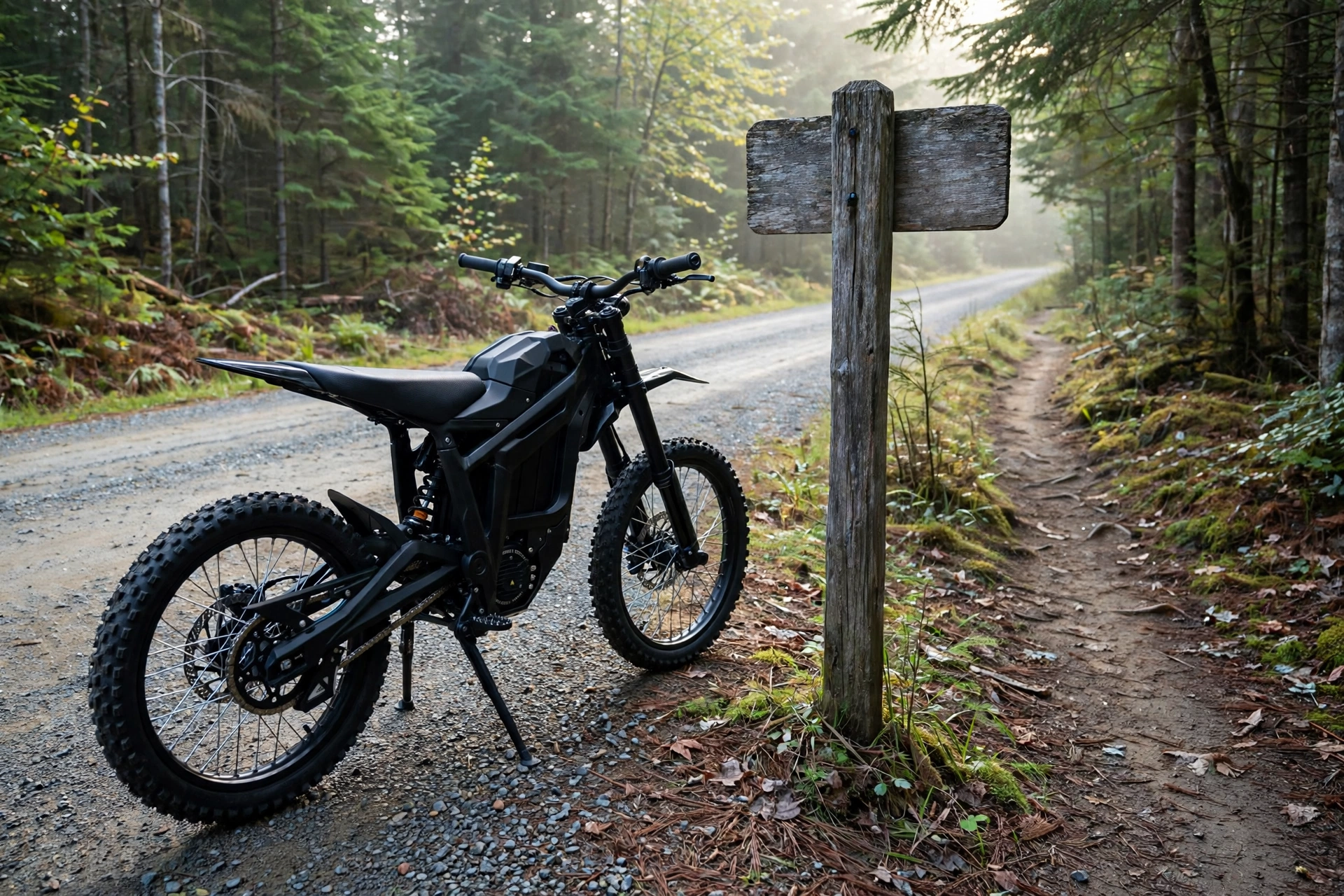
Brakes, forks and tyres: what 50 mph does to bicycle parts
Speed is cheap. Stopping is the invoice. Kinetic energy rises with the square of velocity, so a rider and machine carrying (50 ÷ 28)² ≈ 3.2 times the energy at 50 mph must dump all of it through two small brake rotors. At a firm 0.5 g deceleration, the braking distance from 50 mph is 22.35² ÷ (2 × 4.9) ≈ 51 metres (167 feet); add one second of reaction time at 22.4 metres and the total is roughly 73 metres.
From 28 mph the same maths gives 16 metres of braking plus 12.5 metres of reaction — about 28 metres all-in. You need roughly two and a half times the road to stop, and your brakes must absorb over three times the heat doing it.
Now look at what the honest machines fit, and copy the pattern. The Talaria runs motorcycle brakes because it is one. The Stealth’s 250 mm rotors and four-piston calipers look oversized until you do the energy sum above. The Onyx’s 220 mm hydraulics are the minimum credible kit for its weight and speed. Then look at the typical unlocked fat bike: 180 mm rotors, two-piston calipers, resin pads that fade on one long descent, a flexy single-crown fork, and quick-release axles — hardware developed for a 20 mph bicycle, asked to survive motorcycle energy.
Suspension is the same story. At 50 mph on rough ground, fork flex becomes steering wobble and a folding front end becomes a crash; the dual-crown downhill forks on the Hi-Power Cycles builds and the long-travel moto forks on the Talaria exist because trail riders learned this the hard way. Tyres matter just as much: a bicycle-rated fat tyre at 50 mph is outside its design envelope, full stop. If an electric bike for adults 50 mph has brakes, fork and tyres that would look at home on a $900 commuter, its top speed is a liability figure, not a feature.
The $600 “5000W, 50 mph” listing is a lie with a checkout button
Every marketplace carries them: an enduro-shaped frame sold as an electric bike for adults 50 mph, a headline figure of 5000W, and a price between $500 and $900, delivered from a warehouse with no service network behind it. Apply two tests. First, the power test from the physics section: 50 mph needs roughly 4.5 kW sustained, and the “5000W” in these listings is a peak number the controller may touch for seconds.
Second, the battery test. A typical pack in this price class is 48V and about 13Ah — 624 Wh. Even if the motor could pull 4.5 kW, that pack is empty in 624 ÷ 4,500 ≈ 0.14 hours, about eight minutes, and in reality the cells cannot discharge anywhere near that rate without voltage sag shutting the show down far earlier.
What arrives is an electric bike for adults 50 mph that surges to perhaps 35–40 mph with a light rider on the flat (est.), overheats on hills, and carries a battery with no UL certification. The frame style is borrowed from the Stealth bomber school, which is why our e-bike dirt guide treats bomber clones as their own category of caution. Cheap speed is the most expensive kind: you pay for the bike, then you pay for the lesson.
Electric bike for adults 50 mph, or the honest alternatives
Two legal doors lead out of this article, and both are good ones. Door one: a Class 3 e-bike done properly — 28 mph of pedal assist, hydraulic brakes, decent suspension, UL-certified electrics — which covers real commuting at speeds that already feel fast on a bicycle, with full access to roads and bike lanes and no DMV involvement. Door two: skip the costume and buy an actual electric motorcycle.
A registered, insured, DOT-legal electric bike for adults 50 mph gets you 50 mph and far beyond, with brakes and tyres certified for the job and a title that survives a traffic stop; the Talaria-class bikes remain strong value as off-road motorcycles for trails and private land.
What does not work is the middle path of an overpowered “e-bike” used as an unregistered motorcycle on public roads. One crash with an uninsured, unregistered vehicle and the legal and medical bills will exceed the price of every machine scored above, combined. Riders whose garage already runs an electric car can sanity-check the charging side of ownership with our EV charger compatibility checker — the e-moto itself sips from a normal outlet; it is the paperwork, not the plug, that makes it a motorcycle.
Frequently asked questions
Is there an electric bike for adults 50 mph that I can ride on bike paths?
No. Bike paths and lanes are for bicycles, and the fastest legal e-bike class stops assisting at 28 mph. A machine capable of 50 mph is a motor vehicle in every state’s code, path access is closed to it, and riding one there risks a ticket, impoundment in stricter jurisdictions, and personal liability if anything goes wrong. If your route is paths, buy the best Class 1, 2 or 3 bike your budget allows and enjoy the access that comes with it.
If I unlock my bike but only ever ride it at 28 mph, am I legal?
In most class-law states, no. The classification follows what the machine is capable of as sold and as configured, not the speed you happened to be doing when stopped. An unlocked bike set to a fast mode is an unregistered motor vehicle even at walking pace, which is why sellers’ “off-road mode” language protects the seller, not you. A few jurisdictions judge the mode in use; do not build a legal defence on being in the lenient minority.
What licence and paperwork does a Talaria Sting or Sur-Ron need on the road?
In most states, the full motorcycle package: title and registration, a licence with a motorcycle endorsement, insurance, a DOT helmet, and road equipment — lights, mirrors, horn, and a VIN the registration system accepts, which grey-import off-road models may not have. That last point ends many street conversions early. Off-road, you need land permission and, in OHV-programme states, an off-highway permit. California’s SB 586 eMoto category (effective January 1, 2026) names this class in law without making stock bikes street legal.
Why does my “3000W” bike stop at 38 mph when the listing promised more?
Because 3,000 W was a peak figure and 50 mph is a continuous-power problem. The drag maths in this guide shows an upright rider needs about 4.5 kW sustained at 50 mph; a system that peaks at 3 kW and sustains 1.5–2.5 kW (est.) settles where the power curve meets the drag curve — the high 30s, exactly where GPS tests of unlocked fat bikes land. The listing did not break physics. It just let you assume it had.
Do pedals make a fast machine a bicycle in the eyes of the law?
No. The class definitions turn on motor power and assisted speed — 750 W and 28 mph at the ceiling — not on whether a crankset is bolted on. Several machines in this guide carry pedals that contribute almost nothing at speed; the law treats them as decoration. If pedals made it a bicycle, every moped built since 1975 would have been one.
I want one fast machine for a mixed commute. What should I actually buy?
Decide which legal identity you want. For bicycle access and zero paperwork, a quality Class 3 at 28 mph is the fastest thing you may ride as a bicycle, and enough for most urban commutes. For genuine 50 mph-plus pace, buy a titled electric motorcycle or a registerable machine like the Onyx RCR and complete the registration. For trails, buy the Talaria and a way to haul it. The only wrong answer is the unregistered middle.
Bottom line: an electric bike for adults 50 mph is not a bicycle in US law, so treat any electric bike for adults 50 mph claim as an e-moto or motorcycle question first. Check registration, brakes and tyres before you buy, and choose an electric bike for adults 50 mph option that is legal for where you will actually ride.