Last updated: October 27, 2026
A concord electric bike costs less than a decent phone. That is the whole sales pitch, and honestly, it is a decent one. The question that matters is narrower: will a $478-to-$798 Walmart bike get you to work dry, on time, five days a week, for a year? Not once, for a review video. For a year. Rain included.
Start with what Concord actually is. Concord is Walmart’s own private label, not a bike company with a head office and a demo fleet. The bikes are built for Walmart by an outside supplier; independent reviewers who have chased down warranty questions name that supplier as Phoenix Bicycles, and support runs through the supplier’s phone line rather than through a dealer network. The current range, checked October 27, 2026, runs from a $478 26-inch step-over to a $798 fat-tire model, with two 27.5-inch commuters in the middle doing most of the selling. Nothing in the range costs four figures. Nothing in the range pretends to, either. That is the context in which a concord electric bike should be judged.
One detail deserves saying early, because budget bikes usually fail here: the electrical systems are certified. Reviewers who pulled the paperwork found the bike’s electrical system certified to UL 2849 and the battery pack certified to UL 2271 on the commuter and the folder. Plenty of no-name marketplace bikes at this price cannot say that. Some cannot say anything at all. For a concord electric bike at this price, that certification matters more than a fancier display.
Our short verdict, before the detail: the two 27.5-inch commuters are the sensible buy, the cargo model is a genuine oddity in a good way, and the folder and the fat-tire bike ask you to pay more for less commuting. If your ride is under ten miles each way and mostly flat, a concord electric bike will do the job. If your ride has a serious hill in the middle, read the hill section before you spend anything.
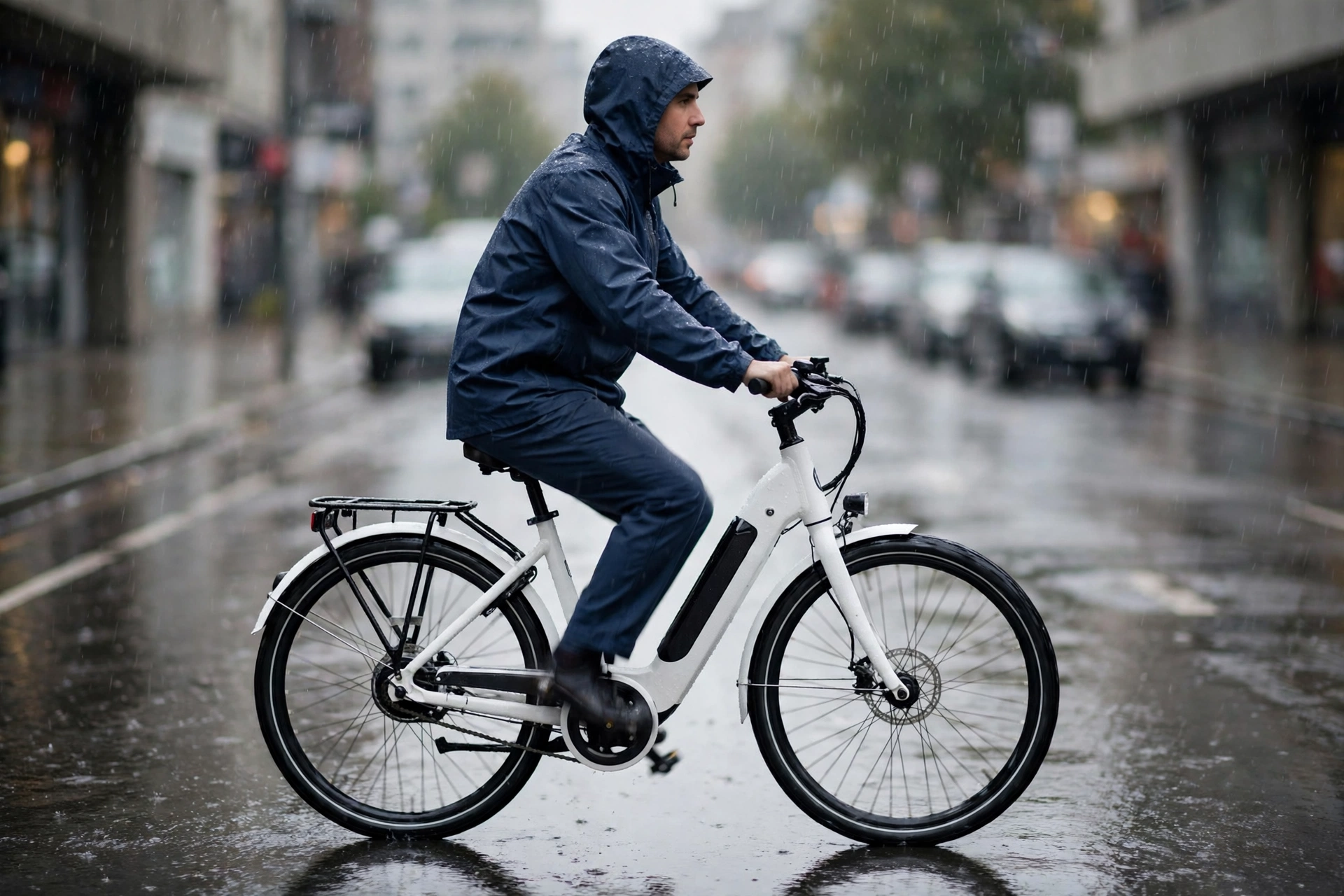
The concord electric bike lineup, model by model
Five models make up the range. All use rear hub motors and cadence-based pedal assist, which means the motor helps in simple steps rather than measuring how hard you push. Simple is fine. Simple is also cheap, and cheap is the point. Across the range, a concord electric bike keeps the same basic formula: a rear hub motor, a simple battery, and practical fittings.
27.5-inch Step-Thru Commuter — $498 to $548
The one most people buy. A 350W rear hub motor, a 36V 10Ah battery (360Wh), 27.5-inch wheels, mechanical disc brakes, a Shimano Tourney 7-speed drivetrain, plastic fenders, a rear rack, and a headlight that runs off the main battery. Walmart’s listing puts it at 49 pounds; one reviewer’s scale said 50. Call it 50. That is light for an e-bike, and it matters more than any motor figure: 50 pounds goes up one flight of stairs without a running commentary.
It is sold in Class 1 (pedal assist only) and Class 2 (assist plus thumb throttle) versions, so check which one is in the box before you pay. For commuting, the Class 2 is the one to have, and our guide to what the e-bike classes actually mean explains why the distinction matters on shared paths.
One firm view: the step-through frame is the right shape for this job. Work clothes, a rack bag, a stop at the lights every few blocks. Nobody commutes better in a drops-and-aero tuck.
Our score: 7.4/10 — Range 5/10 / Reliability for commuting 7/10 / Value 9/10
27.5-inch and 26-inch Step-Over — $478 to $498
Same motor, same 36V system, same brakes and Tourney drivetrain, in a traditional diamond frame. The 26-inch version at $478 is the cheapest way into the brand, sized for riders from 5’2″ to 5’10” per the listing. Walmart does not publish a separate battery figure for the 26-inch SKU, so treat its range as the same class as its 27.5-inch sibling (est., based on the shared 36V system). The Class 1 step-over carries the range claim discussed below: up to 64 km, roughly 40 miles, on the listing. Keep that number in mind. It comes back. In that role, a concord electric bike is best judged on honest range rather than the headline figure.
Our score: 7.1/10 — Range 5/10 / Reliability for commuting 7/10 / Value 9/10
Urbanfold 20-inch folder — $548
The folder. A 350W rear hub motor and a smaller 36V 7.8Ah battery (281Wh), 20-inch wheels, mechanical discs with a 180mm front rotor and 160mm rear, Tourney gearing, fenders, a rack, and a simple LED display instead of the commuter’s LCD. Weight is 20.41 kg, about 45 pounds, which is genuinely carryable onto a train. The electrical system carries the same UL 2849 and UL 2271 certifications. Men’s Journal noted an IPX5 water-resistance rating, which covers rain if you get caught in it. Fine. Folders live or die on the latch and the battery, and this battery is small. More on that in the range maths. A concord electric bike in folding form trades battery size for portability, and that trade should be clear before buying.
Our score: 5.9/10 — Range 4/10 / Reliability for commuting 6/10 / Value 6/10
LoadPro cargo — $648
The oddity. A Class 2 cargo bike with a 500W rear hub motor and the joint-biggest battery in the range at 499Wh, for $648. Cargo e-bikes under $700 barely exist; the usual entry point is twice this. Walmart’s own stated range for it is unambitious (up to 20 miles, like most of the range), and the battery maths below suggests roughly 25 miles at moderate assist (est.). If your commute doubles as the school run or the weekly shop, this is the Concord to look at first. If it does not, the commuters are cheaper and lighter. For carrying loads, a concord electric bike with the bigger battery makes the cargo version the most interesting of the five.
Our score: 6.9/10 — Range 6/10 / Reliability for commuting 6/10 / Value 9/10
Voltic fat tire — $798
The range-topper spends its money in the right places and the wrong places at the same time. Right: hydraulic disc brakes, the only ones in the lineup, and a 60mm suspension fork, over a 500W direct-drive hub motor and the same 499Wh battery as the LoadPro. Wrong, for commuting: fat tires and 27.5 kg (about 61 pounds). Sixty-one pounds is not a bike you carry anywhere; it is a bike you wheel into a garage and leave there. Direct-drive motors are also quieter and simpler than geared hubs, and weaker off the line. On wet leaves at a junction, off-the-line matters. For commuting, a concord electric bike this heavy is a harder sell, whatever its brakes and fork offer.
Our score: 6.4/10 — Range 5/10 / Reliability for commuting 6/10 / Value 6/10
Range claims vs. real miles: the concord electric bike maths
Here is the number Walmart leads with on the Class 1 step-over: up to 64 km. Forty miles, from 360 watt-hours. Do the division and the claim asks the bike to sip 9 watt-hours per mile. A cadence-sensor commuter ridden at mixed assist, in real weather, with a real rider, uses about 20 watt-hours per mile. Our planning rule for any bike in this class is simple: realistic miles = battery watt-hours ÷ 20. That is why a concord electric bike should be planned on the 20 watt-hour rule, not the listing claim.
Run the range through it. The commuters: 360 ÷ 20 = 18 miles. Independent testing of the step-through found approximately 20 miles in normal riding, which is close enough to call the rule honest. The Urbanfold: 281 ÷ 20 = 14 miles (est.), against a published figure of about 20. The LoadPro and Voltic: 499 ÷ 20 = roughly 25 miles (est.) at moderate assist.
Now divide price by realistic miles, because that is the number that tells you what you actually bought:
- 26-inch Step-Over: $478 ÷ 18 = $26.56 per realistic mile
- 27.5-inch commuters: $498 ÷ 18 = $27.67 per realistic mile
- LoadPro: $648 ÷ 25 = $25.92 per realistic mile
- Voltic: $798 ÷ 25 = $31.92 per realistic mile
- Urbanfold: $548 ÷ 14 = $39.14 per realistic mile
Read that list twice. The cargo bike, the one with the biggest battery, is the cheapest range you can buy under this badge. The folder is the most expensive, by a distance. Folding costs money and battery at the same time, and at this end of the market you cannot afford both trades. On price per realistic mile, a concord electric bike in cargo form is the standout of the range.
Hills deserve their own paragraph, because hills are where a concord electric bike shows its price. In independent testing, the commuter on throttle alone slowed to about 3 mph on a steep test hill and stalled. Pedalling at the highest assist level, it climbed the same hill without drama. Translation: the motor assists a rider; it does not replace one. A 350W hub motor on a 36V system flattens a commute. It does not flatten a mountainside, and no listing copy changes that.
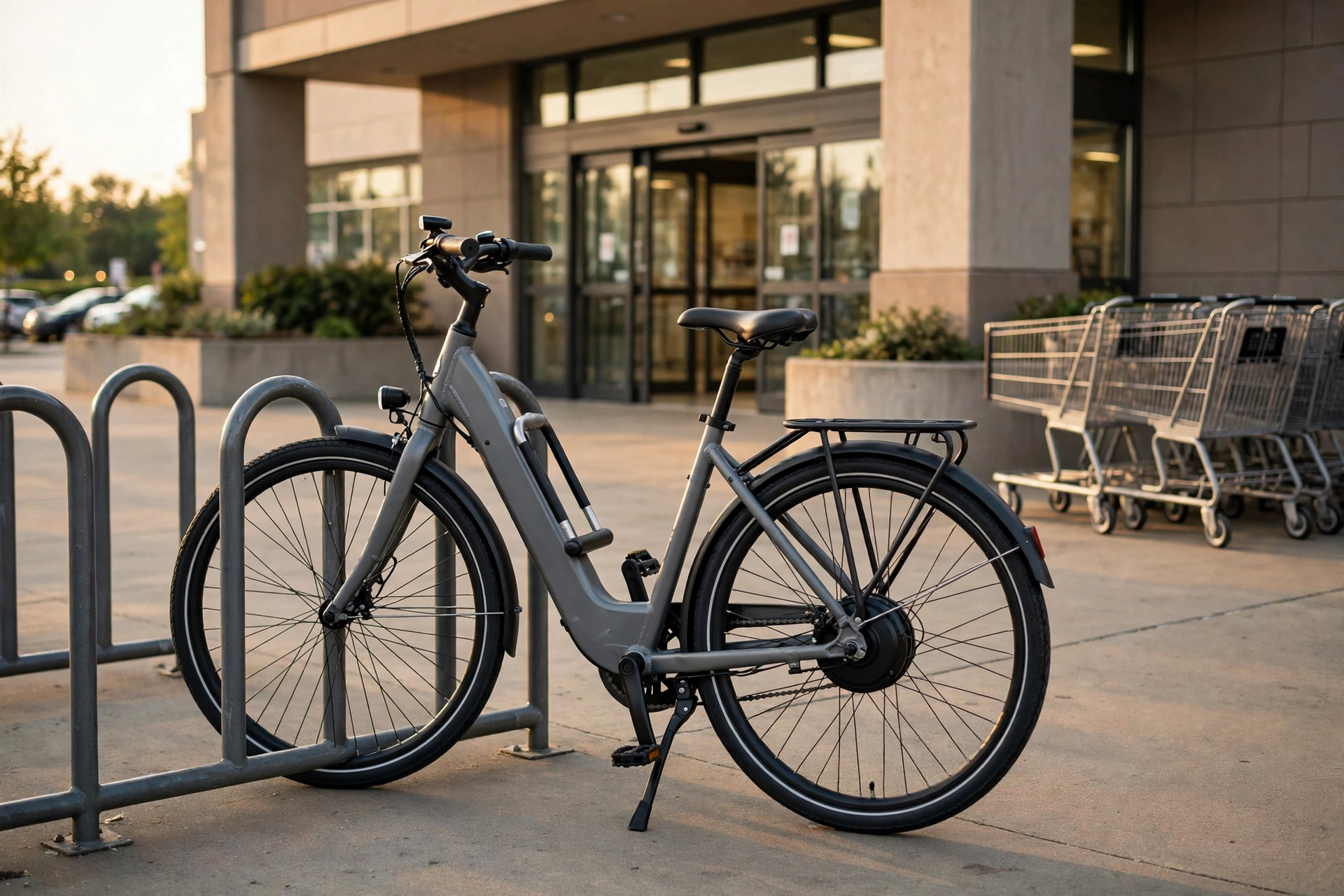
What breaks first on a concord electric bike
Big-box bikes do not usually die in dramatic ways. They wear out in small, cheap, annoying ways, and the ownership question is whether those ways are fixable. On this range, they mostly are, which is the quiet strength of the whole proposition. Ownership of a concord electric bike is mostly about small, cheap wear items rather than dramatic failures.
First to go: brake pads. Mechanical disc brakes on a 50-pound bike that gets ridden in the rain will eat pads, and the cables stretch as they bed in, so the levers creep closer to the bar over the first months. Budget for pads and learn the barrel adjuster; both are ten-minute jobs. Second: the drivetrain. A Shimano Tourney derailleur and a basic chain are honest parts, and they wear like honest cheap parts, especially if the chain lives wet. Third: spokes. A rear wheel carrying a hub motor takes the load of the motor and the rider together, and budget wheel builds loosen. A spoke key and a monthly squeeze test cost almost nothing.
Fourth, and slowest: the battery. A 360Wh pack charged most days will fade over a few years of commuting, and when it does, the range maths above shrinks with it. That is a (est.) timeline, based on typical lithium pack behaviour at daily cycling, not a Concord-specific test.
Support is where the big-box model shows its seams. There is no dealer network. Warranty and parts run through the supplier behind the brand; one reviewer called the support line on a Sunday and got a person willing to talk parts. Encouraging. Not the same as a shop on your street.
The compensating advantage is the store itself: you can wheel the bike back into a Walmart, listings typically carry a return window (30 days is the figure trackers cite for these models, so read your own listing before you buy), and many stores will assemble the bike for you, sometimes free during promotions. If you buy one, use the return window properly. Commute on it, in the rain, with your actual bag, inside those first weeks. That is what the window is for.
The spec sheets themselves are the last ownership wrinkle. Prices and stated specs for this range move between listings and seasons; the range and prices in this article were checked against Walmart listings and the trackers that catalogue them on October 27, 2026, and our research method page explains how we handle figures that disagree. The full Concord range, with prices and maker details, is catalogued in The Velo Index’s overview of Walmart’s house-brand e-bikes, and the commuter’s measured range, hill test and certification checks come from Ebike Escape’s hands-on review of the $498 commuter.
A year of commuting: concord electric bike vs. the $999 Lectric XP 3.0
Set the scene. An 8-mile round trip, five days a week, 48 weeks a year: 240 days, 1,920 miles. Prices checked October 27, 2026.
The Concord step-through. Purchase: $498. Parts allowance for the year (est., at typical retail prices): two sets of brake pads at $12 = $24, one tire at $32, one chain at $16, one shop visit for cables and a wheel true at $70. Total parts: $142. Electricity: 1,920 miles × 20 Wh = 38.4 kWh, at $0.17 per kWh = $6.53. (A full charge of the 360Wh pack costs about six cents, for the record; we break the arithmetic down in our guide to what it costs to charge an electric bike.) Year one total: $498 + $142 + $7 = $647, or 33.7 cents per mile.
The Lectric XP 3.0. The default $999-class rival: a 500W motor, a 48V 10.4Ah battery (499Wh), hydraulic brakes, and a support operation that answers email with a name attached. Purchase: $999. Parts allowance (est.): $75, because hydraulic pads and better tires wear slower and cost more when they do. Electricity: the same $7. Year one total: $999 + $75 + $7 = $1,081, or 56.3 cents per mile.
The gap is $434, and it buys real things: stronger brakes, a bigger battery, a company. Our position, plainly: for a first year of commuting, take the Concord and the $434. If the habit sticks and the bike is still earning its keep at month thirteen, the Lectric class is where you go next, and you will know exactly why you are paying. Run your own routes through our EV total cost of ownership calculator if your mileage looks nothing like 1,920 a year; the conclusion flips for very long commutes, where the bigger battery stops being a luxury.
Who should buy one, and who should walk away
Buy one if your commute is under ten miles each way, mostly flat, and likely to get rained on. Fenders and a rack are already fitted, the battery is certified, the price per realistic mile undercuts everything with a support network, and the whole machine weighs about 50 pounds. Buy the LoadPro if that commute also carries children or shopping. That is a real use case being served for $648, and pretending otherwise would be snobbery, not reviewing.
Walk away if your route has a genuine hill in the middle of it, if you need more than about 18 honest miles between charges, or if a broken bike on a Tuesday means a missed shift on Wednesday. The support structure here is a phone line and a returns desk. Both are fine. Neither is a mechanic who knows your name.
Frequently asked questions
Is a concord electric bike actually made by Walmart?
No. Walmart owns the brand and the shelf space; the bikes are produced by an outside manufacturer under contract, as most store brands are. Reviewers tracing warranty support identify the supplier as Phoenix Bicycles. That is why support runs through a supplier phone line rather than a Concord shop, and why the same basic hardware turns up under other names elsewhere.
How far will a concord electric bike go on one charge?
Plan on 18 miles from the 360Wh commuters, about 14 from the Urbanfold’s 281Wh pack (est.), and roughly 25 from the 499Wh LoadPro and Voltic (est.), using a 20 Wh-per-mile planning figure for mixed commuting. Independent testing measured about 20 miles on the step-through commuter, which is where the planning figure comes from. The listing claim of up to 40 miles on the Class 1 step-over assumes the gentlest assist and a rider doing most of the work.
Are Concord e-bikes UL certified?
The models reviewers have checked, yes. The commuter and the Urbanfold carry UL 2849 certification for the electrical system and UL 2271 for the battery pack. That is a stronger position than most bikes at this price, and it is the first thing to verify on any budget e-bike, this brand included, because certifications are per model, not per logo.
Class 1 or Class 2: which one should I buy?
Class 2, for commuting. The throttle earns its place at wet junctions and on the start of every hill, and the Class 2 step-through is the version most listings stock. Pick Class 1 only if your local paths restrict throttle bikes, or if you know you will never use it. Same motor, same battery, same money.
What breaks first, and can I get parts?
Brake pads and cables first, then the chain, then loose spokes in the rear wheel. All standard bicycle parts, all fixable at any bike shop, none of it proprietary. The electrical side is the slower risk: if the battery fades in year three, a replacement has to come through the supplier, and availability that far out is not guaranteed. Price that risk in, and the maths in this article still holds.
Can I return it if commuting does not work out?
That is the big-box advantage, used properly. Trackers cite a typical 30-day return window on these listings, and the bike goes back to a store, not into a shipping box at your expense. Confirm the window on your exact listing before purchase, then ride the bike hard inside it: your route, your weather, your bag. A concord electric bike that survives your worst fortnight will survive your year.
Bottom line: a concord electric bike makes sense as a low-cost commuter, and a concord electric bike is easiest to judge on real range, not the headline claim. If your route fits that honest range, a concord electric bike is a practical buy.