Last updated: October 27, 2026
A charger is the least exciting part of owning a scooter, right up to the moment it goes missing, gets chewed by a vacuum cleaner, or starts behaving oddly. Then it becomes the only part that matters. This guide covers the gotrax scooter charger in full: which specification belongs to which model, how to read the label on the brick, why the genuine-versus-third-party question is a safety question rather than a money question, and what the little LED is actually telling you. Every model specification below was checked against Gotrax documentation or the scooter’s own manual, and where a figure could not be verified that way, it is marked as an estimate with its basis stated.
One clarification before the details. Most Gotrax scooters run a battery described as “36V”, yet the charger in the box is labelled 42V. That is not a misprint and it is not a mismatch. A 36V lithium pack is a nominal figure; fully charged, that same pack sits at 42V, and the charger must reach 42V to fill it. Owners who buy a “36V charger” by mistake have bought a power supply that will never fully charge their scooter. Owners who buy a 54.6V charger because it was listed as “universal” have bought something genuinely dangerous for a 36V pack.
The short version, for readers in a hurry: match the output voltage to your scooter’s battery class, match the connector to your scooter’s port, and buy a charger with a real certification mark from an accredited laboratory. Everything else is detail — useful detail, worth reading before you spend money.
A note on method. Charger specifications were verified per model from Gotrax’s published manuals for the GXL V2 and the G4, from Gotrax’s own store material, and from dealer and charger-manufacturer documentation for the GX series and the kids’ GKS line. The need for that patchwork is itself a finding, scored below. Our wider approach to checking figures is set out on our how we research page.
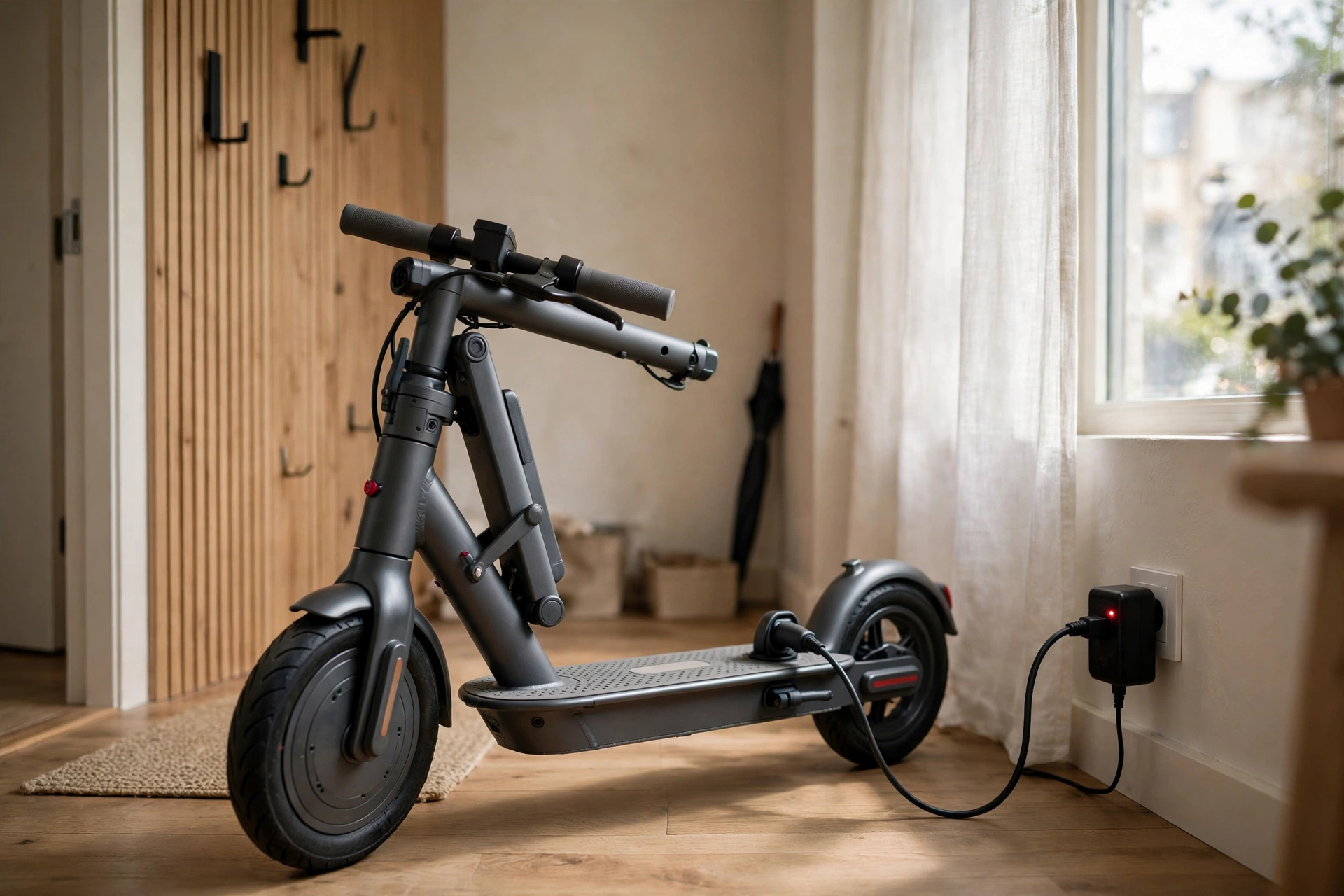
Which gotrax scooter charger does your model use?
Gotrax has sold a lot of scooters, and they do not all drink from the same brick. Work through your model below, and if your scooter is not listed, use the label method in the next section instead of guessing.
The 42V 1.5A class. The GXL V2 is the reference point. Its manual specifies a 36V 5.2Ah battery and a charger rated DC 42V 1.5A, with a quoted charge time of 4 hours. The same 42V 1.5A specification is documented by charger manufacturers for the GXL, G2, G3, G3 Plus, Apex, Eclipse, XR Elite and XR Ultra. Treat those models as one family: 36V pack, 42V charger, 1.5A as supplied.
The 42V 2A class. The G4 carries a larger 36V 10.4Ah pack — 374.4Wh, exactly double the GXL V2 — and its manual specifies a DC 42V 2.0A charger with a charge time of about 6 hours. A 2A charger on a 1.5A model is not automatically a problem — the battery management system decides how much current to accept — but the reverse pairing is merely slow. Slow is safe. Replace like with like.
The 54.6V class. The GX performance series is a different species. Dealer listings put the GX1’s pack at 720Wh and the GX2’s at 48V 20Ah (960Wh) (est., from retailer specifications). A 48V pack charges at 54.6V, and a third-party GX3 charger listing specifies 54.6V 3A. The GX3 also ships with dual chargers to cut its charge time. None of the 42V bricks in this guide belongs anywhere near a GX scooter, and no GX charger belongs near a G-series scooter.
The 29.4V class. The kids’ GKS line runs a small 25.2V pack and takes a 29.4V charger (documented in charger-manufacturer listings for the GKS, GKS Lumios and GKS Pro). It is the easiest charger in the range to confuse with the adult one — the bricks look alike on a shelf — and they are not interchangeable in either direction.
The hoverboard trap. Gotrax hoverboards such as the Hoverfly Eco also use a 42V 2A charger — but with a round 3-prong connector, not the barrel plug your scooter takes. Voltage matching is necessary. It is not sufficient. The connector has to match too, which brings us to the label.
How to read a gotrax scooter charger label
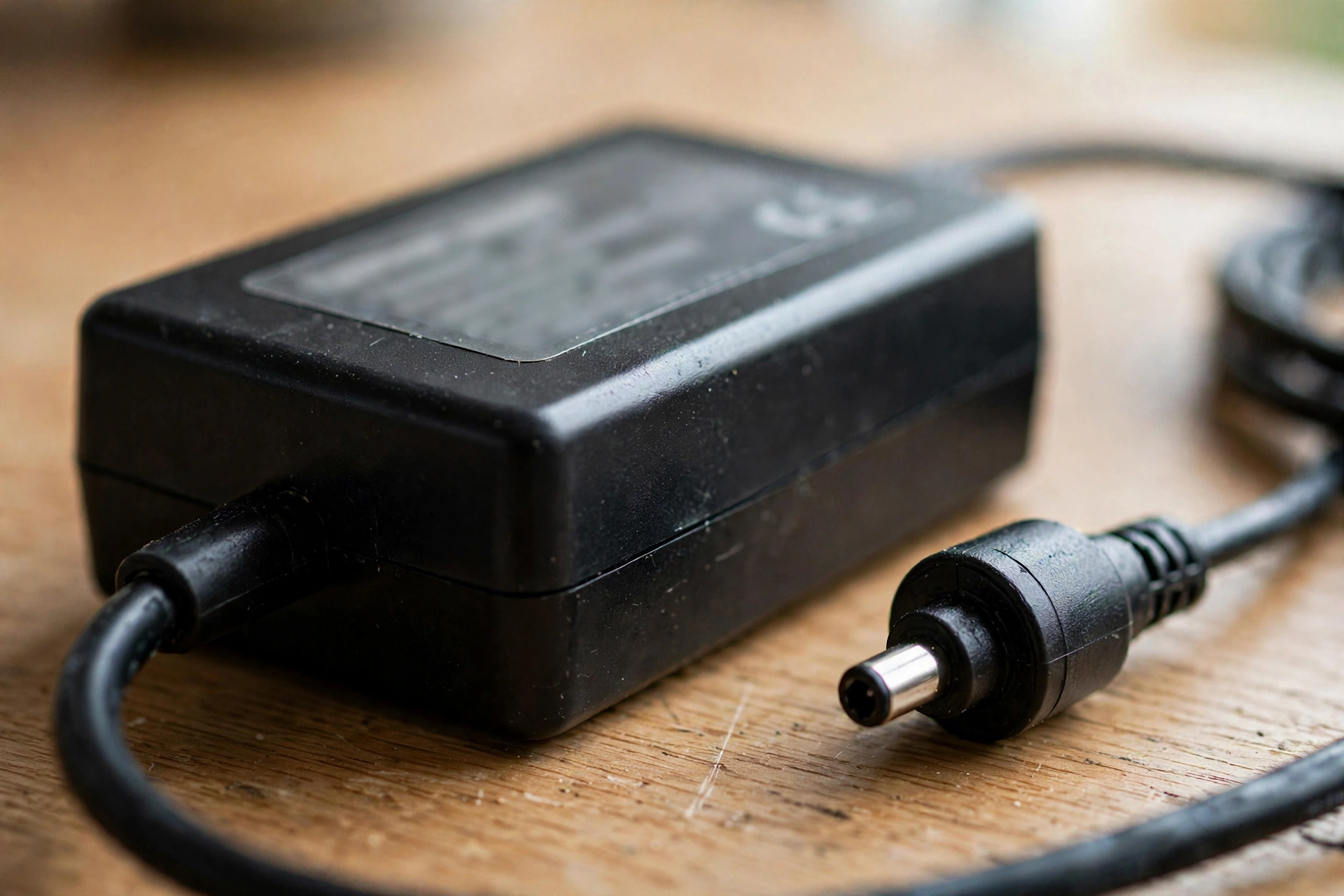
Every legitimate charger carries a specification label, and four lines on it matter. Output is the important one: it should read 42V (or 54.6V, or 29.4V, per your model above) followed by the current, 1.5A or 2A. Input should read 100–240V AC, 50/60Hz. The model number — the eeTao-made unit supplied for many Gotrax scooters is the FY0634201500, and that string decodes as 42V, 1.5A — lets you cross-check a replacement against the original. Finally, look for a certification mark: UL or ETL, printed with a control or file number. A mark you cannot trace to an accredited laboratory is decoration.
Two label warnings deserve emphasis. First, some marketplace listings headline a charger as suitable for “36V batteries” and then list a 42V output in the small print; both statements describe the same correct product, for the reason explained above. Second, some listings quietly bundle several voltages into one “universal” title. The US Consumer Product Safety Commission has warned consumers explicitly against universal chargers for micromobility products. If a listing will not state one output voltage plainly, close the tab.
The same discipline applies to any powered two-wheeler. Riders cross-checking a different brand’s brick can run the figures through our EV charger compatibility checker to see how voltage classes line up before buying anything.
The voltage rule, and why breaking it is a fire risk
Lithium packs are charged to a fixed ceiling voltage set by their cell count. A 36V (10-series) pack is full at 42V. A 48V (13-series) pack is full at 54.6V. The charger enforces that ceiling; the battery management system is the second line of defence, not the first. Feed a 36V pack from a 54.6V charger and you are asking the BMS to absorb a 12.6V error indefinitely. Some packs will refuse and shut down. A pack with a cheap or failed BMS may accept the overcharge, and overcharged lithium cells are the mechanism behind the thermal-runaway fires that regulators keep warning about.
The reverse error is benign. A 42V charger on a 48V pack simply cannot lift the pack past roughly three-quarters charge; the scooter will run weakly and the owner will conclude the battery is dying. Under-voltage wastes money and weekends. Over-voltage risks the building. If you remember one sentence from this guide, make it that one.
Our position is not hedged: a charger with no traceable certification mark should never be plugged into a lithium pack. Not once, not “just to test whether it works”. The price difference between a certified brick and an anonymous one is about the cost of a pizza.
Connectors: the barrel plug problem
Most Gotrax scooters take a round DC barrel plug, 5.5mm outside diameter with a 2.5mm centre pin. The catch is that a second, nearly identical plug exists — 5.5 × 2.1mm — used by Xiaomi-style scooters and many others. A 2.1mm plug pushed into a 2.5mm port can feel seated while making poor contact on the centre pin, and poor contact under load means heat at exactly the point you cannot see. Check the listing’s stated pin size against your old charger’s label, and if the new plug wobbles in the port, send it back.
Three more connector facts worth having. Gotrax hoverboards use a chunky 3-prong round plug, entirely different from the scooter barrel. The charging port on the scooter itself is a replaceable part — a coaxial 5.5mm port — so a port damaged by a forced wrong plug can be repaired without replacing the scooter.
For a useful comparison, the Segway Ninebot Max G30P covered in our Segway Ninebot Max G30P guide solves this differently, with a built-in charger and a mains lead — one less brick to lose, one less spec to match. Gotrax owners do not have that luxury, which is precisely why the label-reading above is a skill worth having.
Charging times, worked out properly
Manufacturers quote charge times; arithmetic lets you check them. A charger’s output in watts is its voltage multiplied by its current, and a pack’s energy is its voltage multiplied by its amp-hours. Divide one by the other and you get the theoretical minimum time; real charging runs at roughly 85% efficiency (est., allowing for charger losses and the slow finishing phase), which stretches the figure.
GXL V2. Pack: 36V × 5.2Ah = 187.2Wh. Charger: 42V × 1.5A = 63W. So 187.2 ÷ 63 ≈ 3.0 hours in a perfect world, and 187.2 ÷ (63 × 0.85) ≈ 3.5 hours in the real one. Gotrax quotes 4 hours. Claim and arithmetic agree, with the taper at the end accounting for the difference.
G4. Pack: 36V × 10.4Ah = 374.4Wh. Charger: 42V × 2A = 84W. So 374.4 ÷ 84 ≈ 4.5 hours ideal, and 374.4 ÷ (84 × 0.85) ≈ 5.2 hours adjusted. Gotrax quotes about 6 hours, and independent testing by TechGearLab measured an average of 5 hours 50 minutes — one of the rare cases where the tested figure is slower than the maths, almost certainly because of a long finishing phase. Plan on 6 hours.
What a full charge costs. The G4 draws 374.4Wh from its pack’s perspective; from the wall, at 85% efficiency, that is about 440Wh, or 0.44kWh. At $0.17 per kWh (est., in line with recent US average residential electricity prices), a full G4 charge costs roughly 7.5 cents. The GXL V2 works out near 4 cents. Even the GX3’s 1,260Wh pack, charged on two bricks, costs about 25 cents from empty (est., same efficiency and rate).
Anyone curious how those numbers scale up to e-bikes and cars can run the same arithmetic with our guide to how much it costs to charge an electric bike. Electricity is not the expensive part of scooter ownership; a charger is cheap to run and only expensive to get wrong.
Genuine or third-party? The gotrax scooter charger safety case
Start with the regulator’s position, because it is unusually blunt. The CPSC’s micromobility battery charging safety guidance tells consumers to charge only with the charger supplied with the device, to use only manufacturer-approved replacements, to be present while charging, and never to charge while sleeping. In September 2024 the Commission went further and urged consumers not to buy or use “universal” chargers with micromobility products at all, citing fire hazard. When a federal safety agency names a product category that plainly, believe it.
Genuine replacements are ordered through Gotrax’s official site, which runs a parts replacement service for exactly this situation; if your model is older, Gotrax’s US-based support can confirm the correct brick before you pay. Third-party chargers sit on a spectrum. At the defensible end are units from identifiable manufacturers — the eeTao FY0634201500 (42V 1.5A, barrel plug, documented protections against over-voltage, over-current and short circuit) and SGS-certified 42V 2A units — with stated specs and a certification file number. At the other end are unbranded bricks bundled with seven adapter tips and no test documentation. Those we would not plug in, full stop.
Prices, checked October 27, 2026: certified third-party 42V 2A chargers were listed around $21–$31 on major marketplaces (est., converted from live listings, including an SGS-certified unit at $28.99 CAD); undocumented generics start under $10. A genuine Gotrax replacement, where listed, sits in a similar band to the certified third-party units. Safety here costs about twenty dollars, once.
Our score: 8/10 for the genuine Gotrax replacement route. Genuine-part value: 7/10 — the brick itself is ordinary, and you are paying for certainty rather than performance. Third-party safety: 5/10 — certified units from named makers are acceptable; the category as a whole is dragged down by the uncertified end. Clarity of specs: 6/10 — the G-series manuals are precise, and the absence of one published charger table for the GX and GKS lines is an avoidable own goal.
What the light on your gotrax scooter charger is telling you
Gotrax keeps its signalling simple, and the manuals state it plainly: red means charging, green means fully charged. The brick also shows green when it is plugged into the wall but not yet connected to the scooter. The four situations owners actually meet:
Red, steady. Charging normally. Leave it alone.
Green the moment you plug into the scooter. One of three things: the pack is already full; the barrel plug is not fully seated (pull it out, check the pin, push firmly); or the pack’s BMS has refused the charge, which on an old or deeply discharged battery can mean the pack, not the charger, has failed. Test the charger on a known state of charge before condemning either part.
No light at all. Work from the wall outward: try a second outlet, then inspect the AC cord and the brick for damage. A charger that has been dropped can fail silently. If the brick is dead, replace it — charger bricks are sealed units, and opening one is not a home repair.
Blinking or flickering. Gotrax does not publish a blink code for these chargers, and we will not invent one. In practice a flickering LED points to an intermittent connection — a loose 2.1mm plug in a 2.5mm port is the classic cause — or to a charger or pack fault. Treat it as a stop signal: unplug, inspect both ends for heat damage or a bent pin, and do not leave a flickering charger running unattended.
Battery care: the rules that genuinely extend pack life
Most battery advice circulating online is folklore. These six rules are the ones supported by the manuals, the regulators, or basic lithium-ion behaviour — the same ownership logic that applies to the bigger packs in machines like the Kaabo King GTR.
Be present, and unplug when it is green. The CPSC’s core instruction. A full pack left on the charger gains nothing; unplug at green and the question of overcharge protection never arises.
Never charge while you sleep. Also the CPSC, verbatim in substance. Charge in the evening while you are awake and in the room’s orbit, not overnight.
Mind the temperature. Gotrax’s G4 manual sets the charging window at 32–104°F (0–40°C). A pack brought in from a freezing ride should warm to room temperature before it meets the charger; a pack hot from a hard ride should rest first too.
Live between 20% and 90%. For daily commuting, avoid running the pack to empty and avoid storing it full; the middle of the range is where lithium cells age slowest. Charge to 100% before a long ride when you need the range — that is what the capacity is for — then let it come back down in use.
Store it half charged, and wake it monthly. A scooter parked for winter should sit around half charge, indoors, and get a short top-up check every month or so. A pack stored empty for a season can discharge below the point where the BMS will accept a charge at all, at which point the charger gets blamed for the battery’s death.
Keep the port covered and the brick dry. Close the rubber port cover after every charge, as the manual instructs, and store the charger somewhere cool and dry — not on a garage floor under the scooter.
Buying a replacement: a six-point check
Work through this list in order and a wrong purchase becomes very unlikely. One: confirm your battery class from the scooter’s manual or deck label — 36V, 48V, or 25.2V. Two: match the charger output to that class — 42V, 54.6V, or 29.4V respectively. Three: match the supplied current, 1.5A or 2A, like for like. Four: confirm the connector — barrel 5.5 × 2.5mm for most Gotrax scooters, 3-prong for hoverboards, and never assume. Five: require a UL or ETL mark with a file number you can look up. Six: buy the genuine part from Gotrax where it is available, or a certified unit from a named manufacturer where it is not.
Do that, and the gotrax scooter charger goes back to being what it should be: the most boring component you own. Boring, with chargers, is the highest praise available.
Gotrax scooter charger: frequently asked questions
Can I use a 42V charger from another brand as my gotrax scooter charger?
Electrically, a certified 42V charger with the correct 5.5 × 2.5mm barrel plug and a matching current rating will charge a 36V Gotrax pack — the pack cannot tell what logo is on the brick. The conditions are the whole answer, though: certified, correct pin size, correct current. An uncertified “42V” brick of unknown actual output is a different proposition, and the CPSC advises using the manufacturer’s charger or an approved replacement.
How long does a Gotrax G4 take to charge?
Gotrax quotes about 6 hours from empty on the supplied 42V 2A charger, and independent testing measured 5 hours 50 minutes on average. Our arithmetic — 374.4Wh of pack against 84W of charger output at roughly 85% efficiency — lands at about 5.2 hours before the slow finishing phase, so treat anything in the 5–6 hour range as normal and anything faster as a claim to question.
Why does the charger light turn green immediately?
Usually because the pack is already full, or because the plug is not properly seated in the port. Reseat the plug firmly and check the scooter’s own battery display. If the display shows a low pack while the charger insists it is full, the fault is real — in either the charger, the port, or the pack’s management system — and the scooter should go to a repairer.
Is it safe to leave a Gotrax scooter charging overnight?
No. The CPSC is explicit that micromobility products should be charged while you are present and never while you are sleeping, with the charger unplugged once the cycle completes. The GXL V2’s 4-hour and the G4’s 6-hour charge times both fit inside a waking evening. Schedule around them.
Can a 2A charger replace the 1.5A charger my scooter came with?
In most cases yes, provided the voltage and connector match exactly: the battery management system draws the current it wants, so a 2A unit on a GXL V2 will charge it somewhat faster without forcing current into the pack. The conservative choice remains the genuine like-for-like replacement, and on a scooter still under warranty it is the only choice we would defend.
What does a blinking charger light mean?
Gotrax publishes no blink code for these chargers, so any source that decodes one for you is guessing. A flicker most often means an intermittent connection — check that the plug is the correct 2.5mm pin type and fully inserted — or a failing charger or pack. Unplug it, inspect for heat damage, and do not leave it running unattended.