Last updated: October 27, 2026
Twenty thousand dollars. That is where the price of a pedal bike with a motor now stops: the Specialized S-Works Turbo Levo 4 LTD, a limited-run trail bike listed at $20,000. If you came here asking which is the most expensive electric bike you can genuinely order today, that is your answer, with one Colorado-built oddity, the $18,900 Optibike R22T Everest, breathing down its neck. What follows is what that money buys, what it refuses to buy, and why the trailhead does not care either way.
One definition first, because this corner of the market loves fog. “Most expensive” here means production: a bike you can order from the maker’s own page or a dealer today, at a listed price. It does not mean auction jewellery. The PG-Bikes BlackTrail sold for roughly €65,000 (about $80,000 at the time) in a run of 667 units more than a decade ago. You cannot order one now, so it is history, not a listing. Same verdict for gold-plated show bikes and one-off concept builds. Every price below was checked on October 27, 2026, against manufacturer pages and current dealer listings.
The ladder, top down. $20,000 for the Levo 4 LTD. $18,900 for the Optibike. Then a crowded shelf of flagship trail bikes between roughly $12,700 and $16,700: Pivot’s Shuttle LT Team, Santa Cruz’s Vala CC XX, Yeti’s 160E. Leave the dirt and the road flagships are waiting: Stromer’s ST7 speed pedelec at $13,200, and Riese & Müller’s Superdelite5 tourer at around $11,500 (est.) in Rohloff trim. Six brands, six different ideas of “best”, and a spread that would buy a new car.
I ride trails, so this guide judges the expensive end the way a trail rider should: motor tune, suspension hardware, weight, and the part brochures skip entirely — whether the machine is legal where you plan to ride it. A $20,000 Class 1 e-MTB and a $5,800 Class 1 e-MTB obey the same 20 mph assist cutoff and the same land-manager rules. Hold on to that sentence. It explains most of what follows.
The Most Expensive Electric Bike You Can Actually Order Right Now
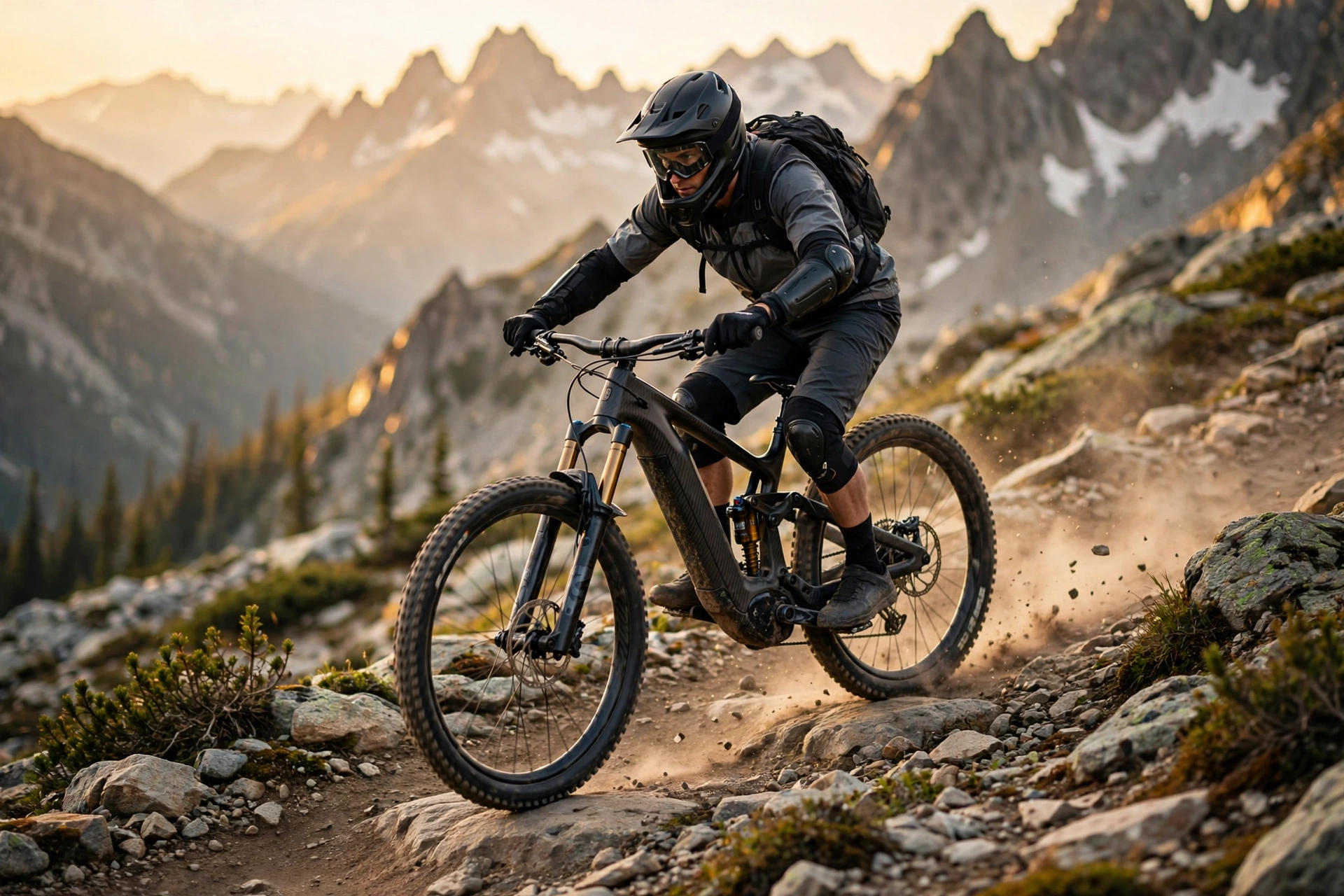
Start at the top. The S-Works Turbo Levo 4 LTD takes Specialized’s FACT 11m carbon chassis — 150 mm of rear travel, 160 mm up front, mullet wheels, adjustable geometry, SWAT downtube storage — and hangs the most expensive parts catalogue in the sport off it. An inverted Fox Podium Factory fork. A Fox Float X Factory shock running Specialized’s GENIE air-spring tech. SRAM XX Eagle AXS wireless shifting, carbon Traverse HD wheels, a 3D-printed-mirror saddle. The drive unit is the S-Works version of Specialized’s 3.1 motor, rated at 111 Nm and up to 850 watts peak on Specialized’s own S-Works Levo 4 page, fed by an 840 Wh battery.
Limited production, launched in early 2026. And here is the detail that tells you everything about this tier: the 280 Wh range extender costs $699.99 extra. On a $20,000 bicycle, the spare battery is an upsell.
The Optibike R22T Everest is a different animal wearing the same price tag. Optibike hand-builds it in Colorado around a carbon frame and swingarm, a downhill dual-crown fork, 200 mm of travel and a Rohloff 14-speed hub. The battery is two 1,630 Wh packs — 3,260 Wh total — and the maker claims 300 miles of range for a light rider pedalling at 15 mph. The motor makes 1,700 watts continuously, 2,500 watts peak, 190 Nm. Weight is around 92 lb (est., from published spec coverage). It is not really a bicycle in any legal sense, and the scoring below treats it that way.
Under those two, the flagship shelf is dense and honest. Pivot’s Shuttle LT Team ($14,999–$16,699) runs the race-tuned Bosch CX Race motor, a Fox Factory Podium fork and DT Swiss carbon wheels on a DW-Link enduro chassis. Santa Cruz’s Vala CC XX AXS RSV (about $13,999) pairs the Bosch Performance Line CX with a 600 Wh battery, Reserve carbon wheels and the best finish quality in the business. Yeti’s 160E (about $12,900) wraps its Sixfinity linkage and TURQ carbon around the same Bosch CX. Different suspension philosophies, same message: the most expensive electric bike on this list is a limited edition, and everything beneath it is fighting over feel, not numbers.
What the Most Expensive Electric Bike Money Actually Buys
Suspension, mostly. A Fox Factory GRIP X2 damper or an inverted Podium fork holds a line through braking bumps that a mid-tier fork turns into arm pump and deflection. On a 23–25 kg machine carrying speed downhill, that control difference is real, repeatable and worth money. Specialized’s GENIE shock tech, which mimics a coil spring’s traction on small hits while resisting bottom-out, is the same story: engineering you can feel in the first rock garden.
It buys shifting that works under load. SRAM’s XX and X0 Eagle Transmission AXS drivetrains are direct-mount, wireless and happy to shift while you stomp uphill at full assist — exactly where cheap drivetrains skip, groan and wear out. It buys brakes built for the mass: four-piston SRAM Maven Ultimates on 220 mm rotors, stopping 24 kg of bike plus rider, lap after lap, without fade. It buys carbon wheels that shrug off hits that would fold an alloy rim, and a frame with a lifetime warranty behind it.
And it buys grams, the most expensive substance in cycling. The S-Works Levo 4 was weighed at 23.62 kg in Flow Mountain Bike’s test — lighter than plenty of bikes costing half as much. Its shorter-travel sibling, the Levo R, comes in at 47.5 lb. Two or three kilograms does not sound like much at the checkout. At hour three of a technical climb, it is the whole conversation.
Last thing the money buys, and riders undervalue it until they need it: a service network. Bosch and Specialized parts sit in shops on every continent. When your $15,000 bike needs a motor under warranty in year two, that network is the difference between a week and a season.
What the Money Cannot Buy: Motor, Speed or a Warmer Welcome
Here is the ceiling nobody advertises. In the US, a Class 1 e-bike — the only kind with any business on singletrack — is capped at 750 watts and pedal assist to 20 mph. Every flagship trail bike in this guide lives under that ceiling. Bosch’s Performance Line CX makes 85 Nm and 600 watts peak. Shimano’s EP801 makes 85 Nm. Specialized’s standard 3.1 makes 101 Nm, and the S-Works tune unlocks 111 Nm and extra peak watts from the same hardware — a software decision, as NSMB’s long-term S-Works Levo 4 review points out while comparing it with the cheaper Pro that shares the frame. Read that again. Part of your five-figure premium is a settings file.
Torque bragging is the new spec war — DJI’s Avinox system now claims up to 130 Nm on 2026 bikes from other brands — and it changes nothing at the trailhead, because assist still cuts at 20 mph and the rules still say Class 1. Double the money does not double anything that matters on dirt. It polishes the last ten percent.
Run the battery maths, because it is rude. Price per watt-hour of battery capacity, using the figures checked for this guide:
- Specialized S-Works Levo 4 LTD: $20,000 ÷ 840 Wh = $23.81 per Wh
- Specialized Levo 4 Comp Alloy: $5,799 ÷ 840 Wh = $6.90 per Wh
- Stromer ST7: $13,200 ÷ 1,440 Wh = $9.17 per Wh
- Riese & Müller Superdelite5 (est.): $11,500 ÷ 1,200 Wh = $9.58 per Wh
- Optibike R22T Everest: $18,900 ÷ 3,260 Wh = $5.80 per Wh
The most expensive electric bike in the showroom is the worst battery value in the building, at nearly four times the cost per watt-hour of its own alloy sibling wearing the same 840 Wh pack. Meanwhile the derided oddball from Colorado is the cheapest energy on the list. And note Santa Cruz’s choice: the $13,999 Vala ships with 600 Wh, less battery than the $5,799 Levo, because Santa Cruz spent the money on handling instead. Paying more can literally buy you less range. Our Class 1 e-bike guide breaks down the class limits behind these numbers, and it is worth reading before any of this money moves.
The Flagship Shelf, Scored
Six picks make up the current most expensive electric bike shelf. Scores judge each machine on the trails or roads it is actually built for — and on whether the law agrees.
Specialized S-Works Turbo Levo 4 LTD — $20,000
The benchmark. The best-tuned full-power motor in the class, the GENIE shock, an inverted Podium fork and a parts list with no weak link. It is also jewellery: the standard S-Works shares the frame, motor and battery for thousands less, and the Pro shares nearly everything that matters for about half the LTD’s price. Buy it because you want the object, not because the stopwatch demands it.
Our score: 8/10 · Motor & suspension: 10/10 · Value: 4/10 · Trail legality: 9/10
Pivot Shuttle LT Team — $14,999–$16,699
The enduro racer’s flagship. Bosch’s CX Race motor spins up harder than the standard CX, the DW-Link rear end pedals with a discipline most long-travel bikes cannot match, and the Team build wastes nothing: Fox Factory Podium fork, carbon DT Swiss wheels, Maven Ultimate brakes. If your riding is timed stages and steep country, this is the sharpest tool here — and it costs less than the LTD while giving up almost nothing on trail.
Our score: 8/10 · Motor & suspension: 9/10 · Value: 5/10 · Trail legality: 9/10
Santa Cruz Vala CC XX AXS RSV — about $13,999
The purist’s flagship. Bosch CX power, a deliberately modest 600 Wh battery (a 250 Wh PowerMore extender bolts on) and the finest frame finish in the sport. Santa Cruz traded battery size for handling balance, and on tight, technical singletrack that trade pays off every switchback. Lifetime frame warranty, bearings included, from a brand that actually honours both.
Our score: 8/10 · Motor & suspension: 9/10 · Value: 6/10 · Trail legality: 9/10
Riese & Müller Superdelite5 GT Rohloff — about $11,500 (est.)
Leave the singletrack and this is the flagship that makes sense. Dual Bosch batteries totalling 1,200 Wh, full suspension including under the luggage, a Rohloff 14-speed hub with electronic shifting and a Gates belt. In German group testing a fully optioned build came to €10,619 and nearly 38 kg — heavy, yes, and it rides like a small luxury car. For loaded touring it has no real rival at any price.
Our score: 7/10 · Motor & suspension: 7/10 · Value: 6/10 · Road & tour legality: 9/10
Stromer ST7 — $13,200
The road flagship is a speed pedelec: a 1,440 Wh battery, Stromer’s SYNO Sport II hub motor, Pinion electronic shifting, belt drive and integrated ABS braking, assisting to 45 km/h in European spec (750 W and 28 mph in US trim). As a car replacement for a long, fast commute it is superbly engineered. As a bicycle in the eyes of European law, it is not one — more on that below — and it will never touch a trail.
Our score: 6/10 · Motor & suspension: 7/10 · Value: 5/10 · Road legality: 4/10
Optibike R22T Everest — $18,900
Now the honesty section. In US trim the R22T makes 1,700 watts continuous, tops out at 36 mph and weighs around 92 lb (est.). That is not a Class 1, 2 or 3 e-bike. It is an electric dirt bike wearing pedals as a costume, and on the trails I ride it would be as welcome as a two-stroke. Our guide to electric dirt bikes covers where machines like this belong: private land and OHV areas, full stop. The engineering is real, the range claim is remarkable, the category is a lie.
Our score: 4/10 · Motor & suspension: 6/10 · Value: 5/10 · Trail legality: 1/10
Trail Rules: The Most Expensive Electric Bike Gets No Extra Welcome
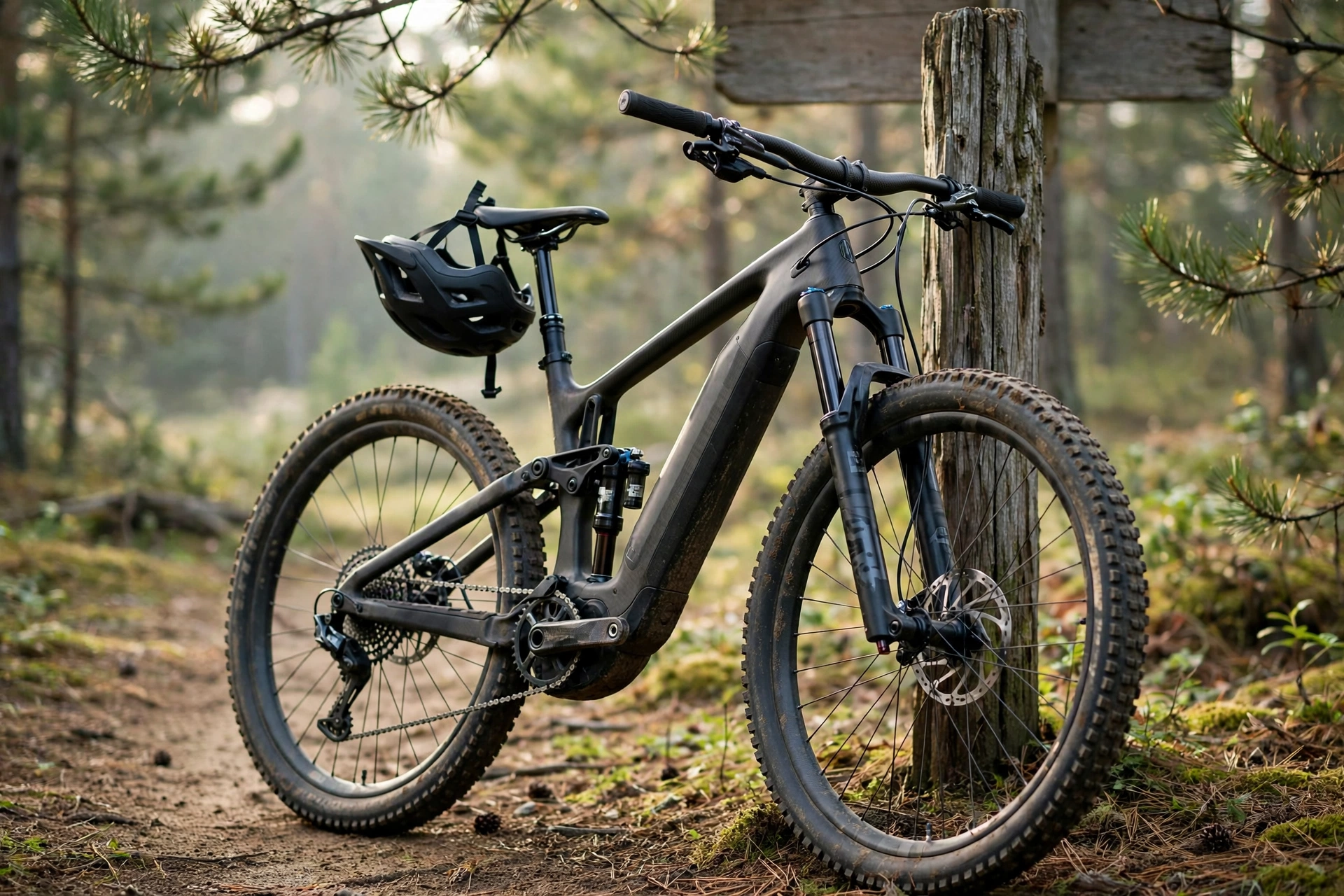
Access is the argument that ends all arguments, so here it is plainly. On US federal land, an e-bike of any price is treated as a motorised vehicle until the local land manager designates trails open to it. Where e-MTBs are allowed on singletrack, the permission is for Class 1 — pedal assist only, 20 mph, no throttle — in almost every case. The most expensive electric bike ever bolted together gets exactly the same answer as a $900 hardtail: show me your class sticker. Your receipt is not a pass.
Europe is stricter and clearer. A 250-watt, 25 km/h pedelec is a bicycle, full stop — that is the version Riese & Müller sells by the thousand, and it can go anywhere a bicycle can. A 45 km/h machine like the Stromer ST7 is an L1e-B vehicle: number plate, insurance, helmet, and no right to most cycle paths. Riders shopping the high-speed end should read our fastest e-bike guide for how speed classes translate into paperwork before spending ST7 money.
One more rule, and I will not soften it: overpowered bikes ridden on bicycle trails are how access gets revoked for everyone. Every land-manager meeting about e-MTBs features a story about a 30 mph throttle machine on a hiking trail. Do not be the story. The honest machines in this guide — Class 1, pedals, 20 mph — earned their welcome. Keep them honest.
The Real Bill: Cost Per Trail Day
Purchase price is the entry fee, not the cost. Here is the arithmetic nobody at the bike shop does for you. Assume 50 trail days a season (est.) over three seasons: 150 days of riding. Assume the halo bike holds 45% of its value (est., based on used listings for outgoing S-Works models) and the mid-tier bike holds 50% (est.).
- Levo 4 LTD: ($20,000 − $9,000 resale) ÷ 150 days = $73.33 per trail day in depreciation alone
- Levo 4 Comp Alloy: ($5,799 − $2,900 resale) ÷ 150 days = $19.33 per trail day
A $54-a-day gap for the same legal 20 mph, the same 840 Wh and a motor separated by a software tune. It gets worse in year one: halo e-MTBs typically shed 30–40% of their value in the first twelve months (est., from used-market listings of prior flagship generations), which on the LTD is roughly $7,000 gone — more than the entire Comp Alloy costs new.
Consumables widen the gap further. An XX-level cassette, a set of carbon-wheel brake pads, Factory suspension services: flagship parts carry flagship prices, while the wear rate on a 24 kg bike is identical. The same depreciation logic applies to four wheels, which is why our EV total cost of ownership calculator exists — run any big purchase through honest numbers before the heart signs.
Who Should Actually Buy One
Three riders, honestly identified. The enduro racer who can feel a GRIP X2 damper’s high-speed circuit working and whose results pay for equipment. The high-mileage rider on the bike four or five days a week, for whom reliability, dealer support and small comfort gains compound over thousands of hours. And the buyer who simply wants the finest object in the category and accepts the depreciation as the price of that want. No shame in the third. Just do not dress it up as value.
Everyone else: the smart money stops around $6,000–$8,000, where the same motors, the same batteries and 90% of the suspension performance live, and spends the difference on trips, coaching, tyres and lift passes. For nine riders in ten, the correct flagship is a mid-tier bike and a season of riding somewhere worth remembering. How we score and source guides like this is set out on our research method page.
Frequently Asked Questions
What is the most expensive electric bike in the world right now?
Among production bikes you can actually order, the Specialized S-Works Turbo Levo 4 LTD at $20,000, checked on October 27, 2026. The Optibike R22T Everest follows at $18,900. Historical halo machines like the €65,000 PG-Bikes BlackTrail cost more but are long out of production and cannot be ordered.
Is a $15,000 e-MTB faster than a $6,000 one?
No — not anywhere it is legal to ride. Both are Class 1 machines with assist capped at 20 mph, and both can carry the same 840 Wh battery. The expensive bike accelerates marginally harder (111 Nm vs 101 Nm in Specialized’s case), handles better and weighs a little less. Your lap times will improve by seconds, not minutes, and mostly on the descents.
Are expensive e-bikes legal on mountain bike trails?
Price is irrelevant to legality. Where land managers allow e-MTBs on singletrack, they allow Class 1 only: pedal assist, 20 mph cutoff, no throttle. Many trail systems still allow no e-bikes at all. Check the specific trail network before you ride, every time — designations change.
Do flagship e-bikes hold their value?
Poorly. Expect to lose 30–40% in year one (est., based on used listings for previous flagship generations) as new motor systems and battery standards make last year’s halo bike look dated. Utilitarian flagships with long production runs — the Riese & Müller tourers are the classic case — depreciate more gently than limited-edition trail bikes.
What is the most expensive electric bike for commuting?
The Stromer ST7 at $13,200 is the flagship of the speed-pedelec world, with a 1,440 Wh battery and 45 km/h assistance in European spec. In Europe it is legally a light moped — plate, insurance and helmet required — while US versions ship as 28 mph Class 3 bikes. The Riese & Müller Superdelite5, around $11,500 (est.) in Rohloff trim, is the most expensive option that stays a legal bicycle almost everywhere.
So, the verdict from the trail. The most expensive electric bike is a magnificent machine and, for most riders, the wrong purchase — not because it fails, but because the ceiling it presses against is legal, not financial. Buy the motor class your trails allow, buy the best suspension your budget survives, and keep the change for the riding itself. The mountain does not check receipts.
Still weighing the most expensive electric bike? The most expensive electric bike is not automatically the best fit, and the most expensive electric bike for your trails is the legal, comfortable one within budget — choose a most expensive electric bike only when it earns its price.