Last updated: October 27, 2026
If you measure cars in strollers, school bags and how far a sleeping toddler lets you drive, the story of volvo and electric cars in America matters to you — and it changed a lot this year. Volvo built its name on keeping families safe. Its electric range was supposed to be the simple part: pick a size, plug it in at night, do the school run on cheap electricity. The cars themselves are mostly lovely.
The lineup around them, though, has been chopped, delayed and repriced so often that a sensible parent now needs a map before a test drive. This guide is that map. Seven things, in plain order, with the real prices, the real ranges and the maths done for you.
Start with the headline nobody at Volvo wanted. Three of the electric Volvos you could buy not long ago are leaving the United States, one glamorous sedan is not coming at all, and a brand-new model in the middle has quietly become the whole show. None of that makes the remaining cars bad. It does change which one you should buy, and how hard you should haggle. All prices below are US figures including destination charges where stated, checked October 27, 2026, and ranges are EPA figures unless marked (est.).
1. Volvo and electric cars in America: the range just got smaller
Here is the cull, straight. The little EX30 is finished in the US after the 2026 model year — Volvo closed the order bank on March 20, 2026, so dealers are selling down whatever is left on their lots. The coupe-shaped EC40 was dropped after the 2025 model year and survives only as a used buy. The EX40, the boxy one formerly called the XC40 Recharge, is on sale as a 2026 model right now, and Volvo has already confirmed it will not return for 2028.
Volvo Car USA’s own 2026 lineup announcement reads cheerful, as press releases do. The showroom reality is tidier: leftover EX30s, the 2026 EX40, the new EX60 and the big EX90. That is the entire electric Volvo range in America.
Why? Money and geography. The EX30 was designed around production in China, US tariffs on Chinese-built cars wrecked its promised $35,000 starting price, and building it in Belgium instead never repaired the sums. The EX90 is built in South Carolina and the EX60 in Sweden, which is why those two survived the axe.
For a family, the upside is real: a four-car shortlist is easier to shop than a seven-car one, and the two cars Volvo is keeping long-term — the EX60 and EX90 — are exactly the two sizes most families cross-shop. The downside is choice at the cheap end. Once the EX30s are gone, the cheapest electric Volvo in America costs about $60,000.
One more piece of housekeeping before the cars. The $7,500 federal clean vehicle credit ended on September 30, 2025, so none of these prices gets a tax-credit haircut at the till anymore — our guide to whether EVs are worth buying without tax credits walks through what replaced it. Treat any dealer advert still shouting about the credit as a red flag and walk away.
2. The EX30 is a last-call car, and the bargain of the range
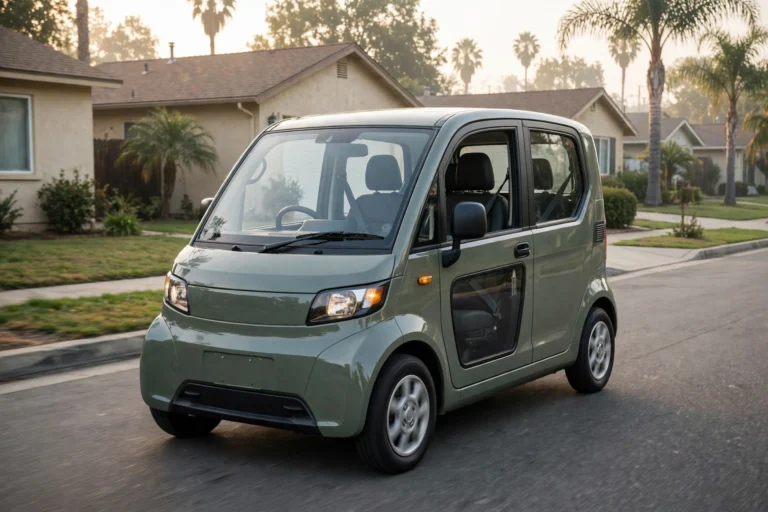
The EX30 is the smallest Volvo ever sold here: 166.7 inches long, shorter than a Honda Civic, with a 69 kWh battery (about 64 kWh usable, est.). The Single Motor version makes 268 hp, is EPA-rated at 261 miles and starts at $38,950 plus $1,395 destination — $40,345 all-in. The Twin Motor makes a faintly ridiculous 422 hp, hits 60 mph in 3.4 seconds and does 253 miles, from $46,345 with destination. The chunky Cross Country sits at $49,545 and drops to 227 miles. Charging peaks at 153 kW, taking the battery from 10 to 80 percent in about 28 minutes. Those are strong numbers for the money. Genuinely strong.
Now the family reality check. The back seat offers 32.3 inches of legroom, which means a rear-facing child seat behind a tall driver is a negotiation, not a given. Cargo space behind the seats is about 12.4 cubic feet — one folded stroller and the weekly shop will argue over it. There is no instrument cluster in front of the driver; everything, including the speedometer, lives on one central 12.3-inch screen. Some parents adapt in a day.
My honest advice: if your children are past the pram stage and you mostly do school runs, nursery drops and a commute, the EX30 at run-out money is the best-value premium EV left in America. If you still travel with a full-size stroller and a boot full of kit, it is simply too small, whatever the discount.
Our score: 8.2/10 — Range: 7/10 · Charging: 7/10 · Value: 9/10. Among volvo and electric cars, nothing else comes close on value while stocks last.
3. The EX40 is the sensible one nobody should pay full price for
The EX40 is the electric version of the XC40 families have liked for years, renamed from XC40 Recharge. It is a size up from the EX30 in every direction that matters: 36.1 inches of rear legroom, about 18.9 cubic feet behind the seats and 57.5 with them folded, plus a proper driver display beside the Google-based centre screen. The Single Motor makes 248 hp and is EPA-rated at a genuinely useful 296 miles. The Twin Motor makes 402 hp and manages 260 miles. The battery is 82 kWh (79 kWh usable), charging peaks at 200 kW, and 10 to 80 percent takes about 28 minutes.
Prices are where it falls apart. The Single Motor Plus starts at $55,150, or $56,545 with destination. The Twin Motor Plus is $56,900 before destination, and the Ultra Black Edition reaches $60,850. Read the next section before signing anything: the brand-new EX60 starts at $59,795, charges twice as fast and goes further on a charge.
Paying within a few thousand of EX60 money for the EX40’s older platform is, bluntly, a mistake at list price. The EX40 only makes sense as a negotiated car — a long-run 2026 model that Volvo has publicly said is not coming back is exactly the sort of stock dealers discount. Get $5,000 or more off, and it becomes the calm, boxy, easy-to-park family Volvo it always was. At sticker price, leave it.
Our score: 7.4/10 — Range: 8/10 · Charging: 7/10 · Value: 6/10.
4. The EX60 is where Volvo and electric cars are really heading
The EX60 is the new midsize five-seater, built in Sweden on Volvo’s fresh SPA3 platform, and it is the first Volvo with a native NACS charge port — you plug straight into a Tesla Supercharger, no adapter in the glovebox. Its 800-volt system charges at up to 400 kW, with Volvo quoting 10 to 80 percent in as little as 16 minutes and roughly 170 miles added in 10 minutes. The P6 is rear-wheel drive with an 83 kWh battery (80 kWh usable) and 369 hp, priced from $59,795 including destination, with range up to 310 miles (est., Volvo’s preliminary EPA-cycle figure).
The P10 all-wheel drive has a 95 kWh battery and 503 hp, from $62,145, at up to 322 miles (est.). A P12 with a 112 kWh battery and a 400-mile target (est.) follows later.
Two honest warnings. First, those range figures are Volvo’s preliminary estimates, not final EPA ratings, so treat them the way you treat a toddler’s promise to tidy up — directionally encouraging, unverified. Second, supply is thin: US deliveries started in 2026 and Volvo has prioritised European production, with dealers reporting low allocations. You may wait.
For most families reading this, the wait is worth it. This is the Volvo sized like the XC60 that half of suburban America already drives, with the charging speed to make a holiday road trip painless and a price that undercuts the German rivals. If you buy one electric Volvo in 2026 and plan to keep it a decade, this is the one.
Our score: 8.8/10 — Range: 9/10 · Charging: 10/10 · Value: 8/10. The strongest package in the whole volvo and electric cars lineup.
5. The EX90 is the three-row flagship — bring your tape measure
The EX90 is the big one: seven seats, built in South Carolina, with a 111 kWh battery (about 107 kWh usable, est.) and a small lidar lump on the roof feeding Volvo’s most advanced safety systems yet. The Single Motor starts at $76,695 plus destination — $78,090 all-in — and the EPA figures published on fueleconomy.gov put the Twin Motor at 305 miles and the Twin Motor Performance at 298, with the Single Motor rated at 291 miles on its 21-inch wheels.
For 2026 the EX90 moved to an 800-volt system, and the Performance now makes 670 hp — the most powerful Volvo ever offered, which is a sentence nobody’s school run strictly needed. Volvo quotes up to 155 miles of range added in 10 minutes of fast charging.
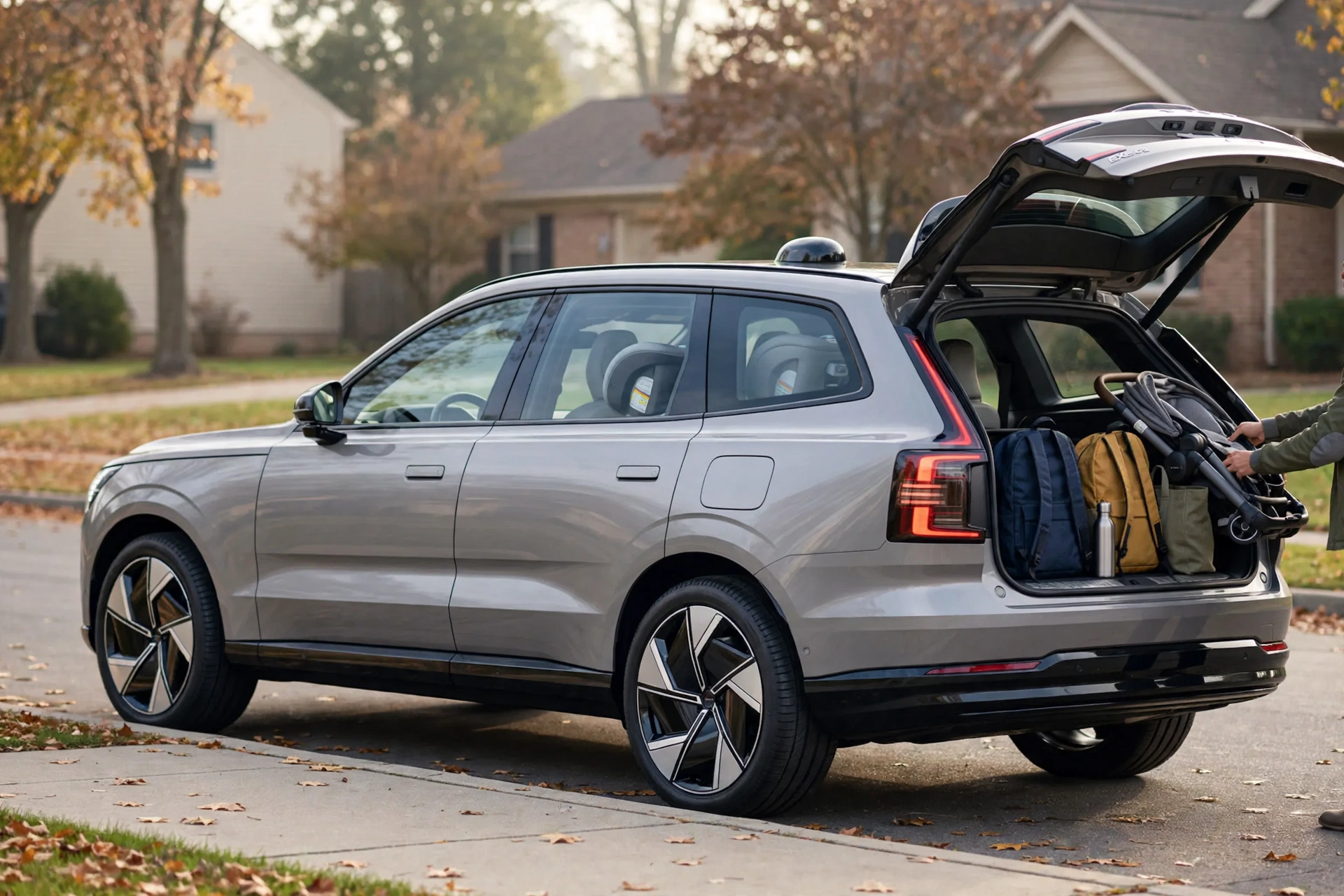
Family maths first, horsepower second. With all seven seats up, the boot holds about 11 cubic feet. That is one folded stroller, standing up, and not much else — a weekly shop for seven will not fit behind the third row, full stop.
Fold the third row and it becomes the cavernous wagon-substitute Volvo people love. The third row itself suits kids and flexible grandparents, not six-foot teenagers on a long drive. None of this is a criticism; every three-row EV plays the same trick. Just measure your life honestly before spending $78,090. Our broader guide to EV cars, range and running costs shows how the EX90’s numbers stack up against other big electric family cars.
Our score: 8.4/10 — Range: 8/10 · Charging: 8/10 · Value: 7/10.
6. The ES90 sedan is not coming, and the 2030 promise got softer
Sedan people, some sympathy. The ES90 is Volvo’s sleek electric flagship saloon, on sale in Europe from about £67,560 — and it is not coming to the United States. It is built only in Chengdu, China, and Volvo has said plainly that tariffs mean it cannot be sold profitably in America; the company even took an impairment charge of roughly $1.1 billion against the EX90/ES90 programme in 2025.
Volvo’s US range is now all SUVs, all the time. If your heart was set on an electric Volvo with a boot, the used EC40 — dropped after 2025, quick, pretty, and down to about 260 miles in twin-motor form — is your only route in.
Our score (EC40, as a used buy): 6.9/10 — Range: 7/10 · Charging: 7/10 · Value: 7/10. The ES90 gets no score. You cannot score a car a family cannot buy.
The plan behind the cars shifted too. Volvo’s famous 2021 pledge to sell only fully electric cars by 2030 was replaced in September 2024: the current target is for 90 to 100 percent of global sales by 2030 to be “electrified,” meaning pure electric cars and plug-in hybrids together, with a small allowance for mild hybrids. Full electrification stays the stated long-term goal.
Is that a betrayal? No — it is a company reading the same charging maps and price tags you are. For buyers shopping volvo and electric cars, the practical meaning is reassurance: Volvo is not abandoning its electric cars, parts or software support for the ones it has already sold, and its battery warranty — 8 years or 100,000 miles across the range — stands as written.
7. Charging and running costs: adapters, Superchargers and the home maths
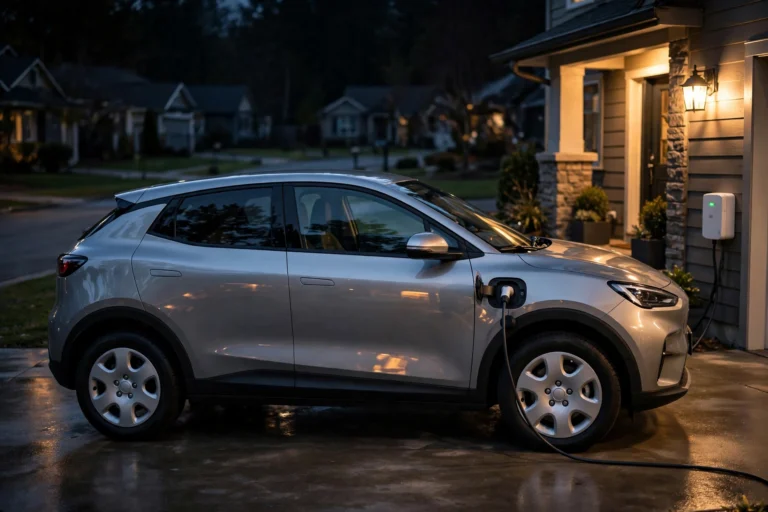
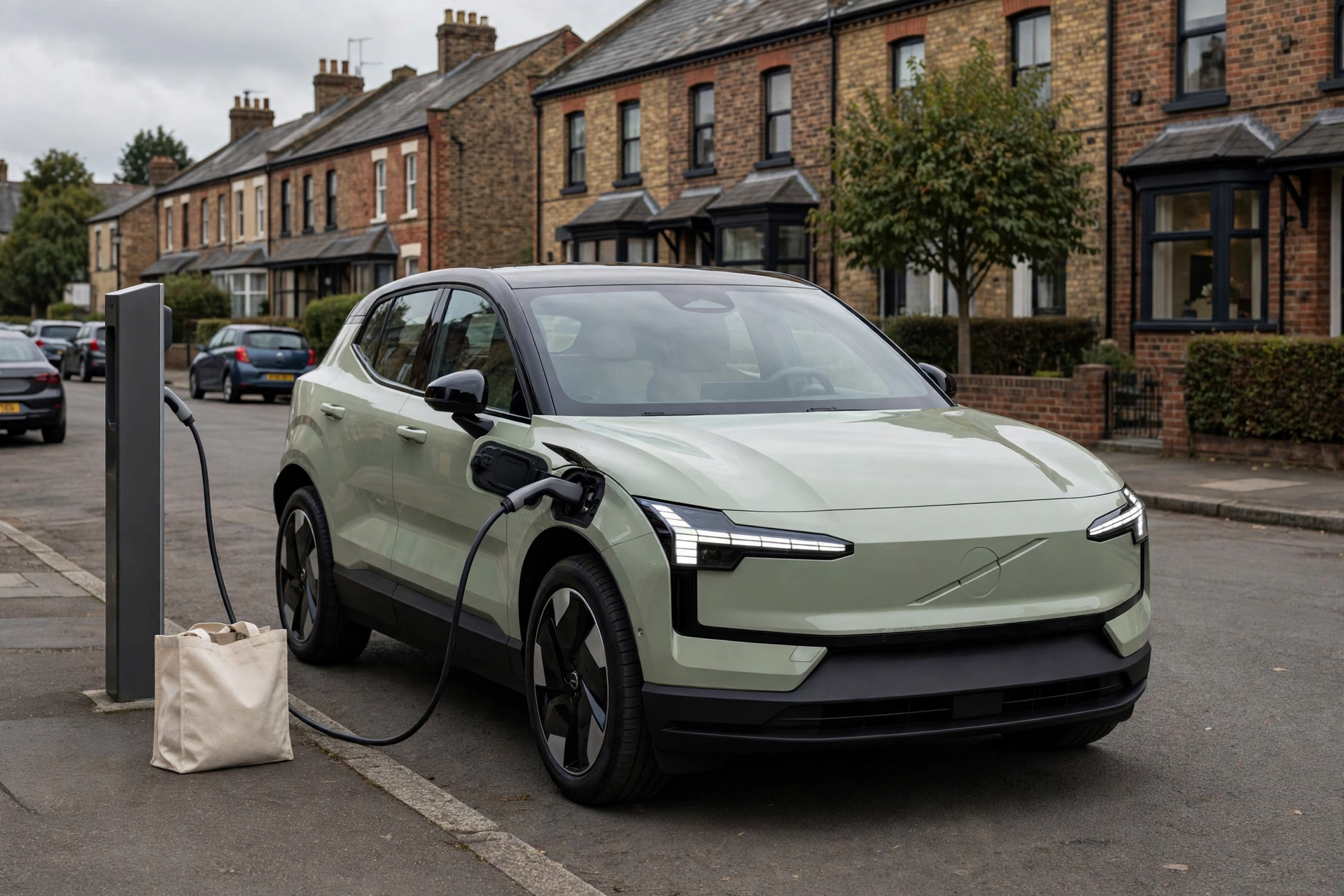
Charging splits the volvo and electric cars range by age. Every CCS-port Volvo — EX30, EX40, EC40 and the current EX90 — can use Tesla’s Supercharger network (V3 stalls and newer, more than 17,800 compatible stations) with a Volvo-approved NACS adapter. The adapter came free with model-year 2025 EX90, EX40 and EC40 cars; everyone else buys it from a dealer for $230. It is for DC fast charging only, never for home or destination AC charging. The EX60 skips all this with its native NACS port. At home, all of them sip from a normal 240-volt setup overnight, which is where family EVs earn their keep.
Now the original maths, at an average US home electricity price of $0.17 per kWh (est.), filling the usable battery from empty:
- EX30: 64 kWh × $0.17 = $10.88 for up to 261 miles
- EX40: 79 kWh × $0.17 = $13.43 for up to 296 miles
- EX60 P6: 80 kWh × $0.17 = $13.60 for up to 310 miles (est.)
- EX90: 107 kWh × $0.17 = $18.19 for up to 291 miles
And the number that explains the whole range — what you pay for each mile of EPA range on the sticker, destination included:
- EX30 Single Motor: $40,345 ÷ 261 miles = $155 per mile of range
- EX40 Single Motor: $56,545 ÷ 296 miles = $191 per mile of range
- EX60 P6: $59,795 ÷ 310 miles (est.) = $193 per mile of range
- EX90 Single Motor: $78,090 ÷ 291 miles = $268 per mile of range
The flagship charges you 73 percent more per mile of range than the baby of the range. You are paying for seats, space and safety kit, not efficiency — fine, as long as you know it. One last sum. A month of school runs, clubs and commuting at 500 miles in an EX90 uses 500 × 0.34 kWh (its EPA consumption) = 170 kWh, costing $28.90 at home.
A petrol XC90 at 22 mpg burns 22.7 gallons doing the same month — about $77 at $3.40 a gallon (est.). That is roughly $580 a year back in your pocket, before servicing savings. Play with your own mileage in our EV total cost of ownership calculator, and see our electric car cost per mile breakdown for the pence-per-mile view across brands.
Which Volvo electric car fits your family?
Keep it simple. One or two small children, mostly local miles, tight budget: hunt a leftover EX30 now, haggle like you mean it, and accept the tiny boot as the price of the bargain.
Two kids, one car that must do everything, sensible head on: the EX60 P6 at $59,795 is the sweet spot of the volvo and electric cars range — the space, the range and the charging speed to grow into. Three kids or regular grandparent duty: the EX90, with your eyes open about the boot behind the third row.
The EX40? Only with serious money off. The EC40? Only used, only cheap, only because it is pretty. And if none of them fit yet, that is a legitimate answer — Volvo’s range is mid-reshuffle, and the EX60’s supply and the P12 version will both look better within a year.
Volvo and electric cars: questions families ask
What is happening with Volvo and electric cars in the US — is Volvo giving up on EVs?
No. Volvo is shrinking to the EVs it can build profitably for America: the Swedish-built EX60 and the South Carolina-built EX90 continue, the EX30 and EX40 leave after their current runs, and the China-built ES90 stays away. The long-term goal is still a fully electric range; the 2030 target now counts plug-in hybrids inside a 90 to 100 percent “electrified” share.
Can I still buy a new Volvo EX30 in 2026?
Yes, from dealer stock only — the order bank closed on March 20, 2026, and once the remaining cars are gone, that is it for the US. The full warranty stands: 4 years/50,000 miles on the car and 8 years/100,000 miles on the battery, backed by the same dealer network as every other Volvo.
Do I need an adapter to charge a Volvo at a Tesla Supercharger?
For an EX30, EX40, EC40 or EX90, yes — a Volvo-approved NACS adapter ($230 from a dealer, free with model-year 2025 EX90, EX40 and EC40), and only at V3 or newer Superchargers. The EX60 has a native NACS port and needs nothing.
How far will an EX90 really go with seven seats filled?
The EPA figures are 291 to 305 miles depending on version and wheels. Load it with family, luggage and winter air and plan around 230 to 250 miles between comfortable charges (est., based on typical EV winter and load losses). For school-run life, that is a week or more between plug-ins.
Is the Volvo ES90 ever coming to America?
There is no announced plan, and Volvo has said tariffs make the China-built ES90 unprofitable to sell in the US. Do not wait for it. If you want that shape of Volvo, a used EC40 is the closest thing on American soil.
How much does it cost to charge a Volvo EV at home?
At $0.17 per kWh (est. US average), a full usable battery costs about $10.88 in an EX30, $13.43 in an EX40, $13.60 in an EX60 P6 and $18.19 in an EX90. Most families charge little and often overnight, so the real figure feels like a few dollars a night, not a weekly petrol-station bill.
Before you sign, remember that volvo and electric cars are changing fast, so check stock, charging and warranty terms on the day you buy. If you take one thing from this guide, let it be this: among volvo and electric cars, the right choice is the one that fits your family, your mileage and your home charging, not the biggest battery on the list. Shop volvo and electric cars with those three checks in mind, and you will buy with confidence.
That is how volvo and electric cars should be shopped: compare the real range, the real charging speed and the real price, and let volvo and electric cars earn the sale on those facts.