The rumble of the internal combustion engine has powered American commerce for over a century. But a quiet revolution is underway on our city streets and highways. The era of the electric commercial van has arrived, and for businesses looking to gain a competitive edge, the time to pay attention is now. Choosing from the best electric vans for businesses and delivery in USA is no longer a fringe decision; it’s a strategic move towards lower operating costs, enhanced brand reputation, and a future-proofed fleet.
This guide is designed to be your ultimate resource. We’ll cut through the noise and dive deep into what truly matters for your operations: total cost of ownership (TCO), real-world range, payload capacity, and charging logistics. Whether you’re a local florist, a national logistics provider, or a skilled tradesperson, electrifying your fleet is one of the most impactful decisions you can make this decade. Let’s get started.
The Electric Revolution: Why Your Fleet Needs to Go Green
Switching your commercial fleet from gasoline or diesel to electric is about more than just reducing your carbon footprint. It’s a sound financial and operational decision that delivers tangible benefits from day one.
Lowering Your Total Cost of Ownership (TCO)
While the initial sticker price of an electric van might be higher than its gas-powered equivalent, the real story is told over the lifetime of the vehicle.
- Fuel Savings: The most immediate and significant saving. Charging a van with electricity is dramatically cheaper than filling it with gasoline. Depending on your local utility rates, you could see a 50-70% reduction in “fuel” costs.
- Reduced Maintenance: Electric vans have far fewer moving parts. Say goodbye to oil changes, spark plugs, exhaust systems, and transmission fluid. This means less downtime for your vehicles and lower maintenance bills. Brakes also last longer thanks to regenerative braking.
- Government Incentives: Federal, state, and even local utility incentives can slash thousands off the purchase price, making the upfront cost much more competitive.
Boosting Your Brand’s Eco-Friendly Image
Today’s consumers are more environmentally conscious than ever. Operating a fleet of zero-emission electric vans sends a powerful message that your business is forward-thinking and committed to sustainability. This can be a significant differentiator, attracting both customers and talent who share those values. A quiet, clean electric van operating in a neighborhood is a much better brand ambassador than a loud, polluting one.
Navigating Regulations and Future-Proofing Your Business
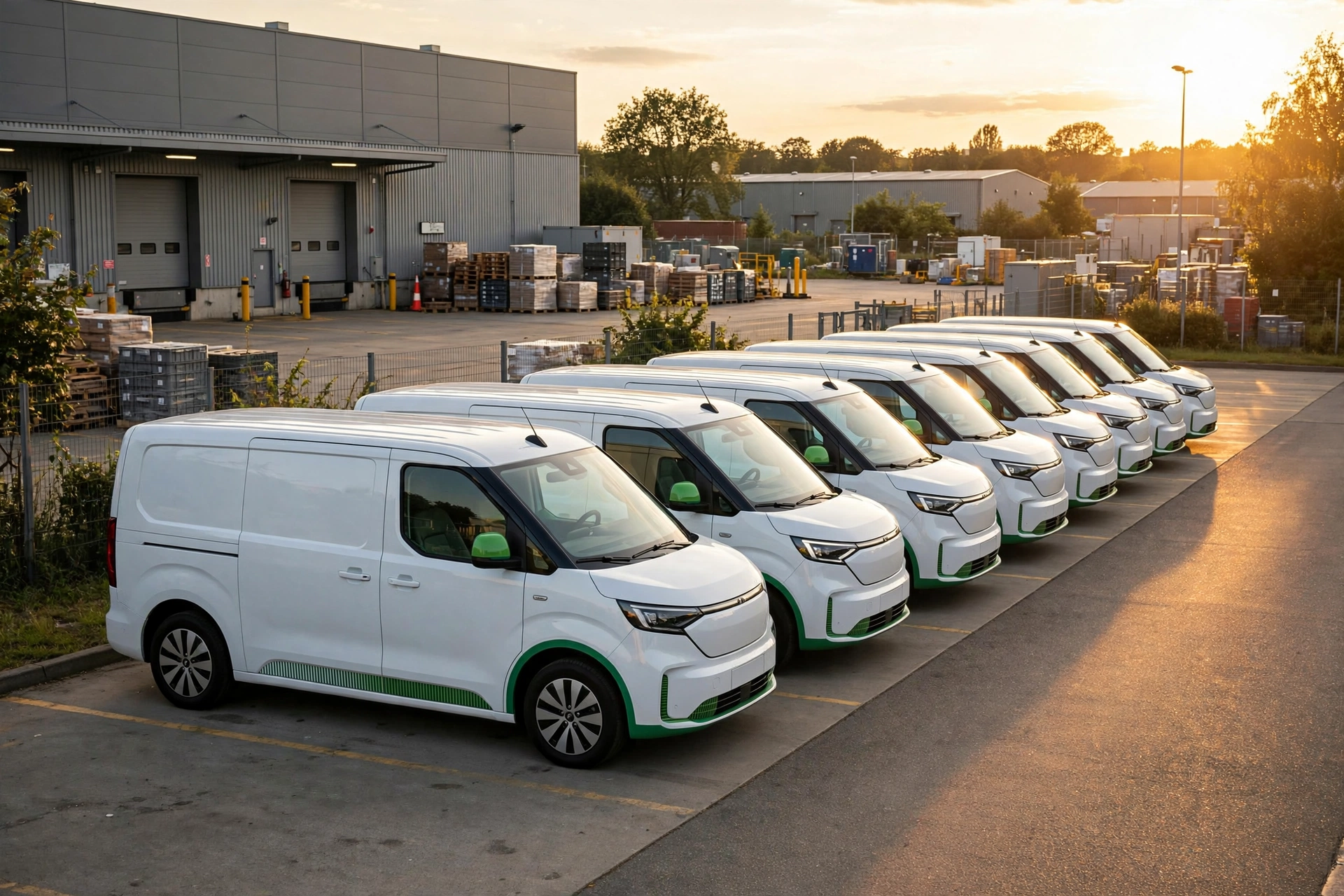
States like California are leading the charge with regulations mandating a transition to zero-emission commercial vehicles. Getting ahead of this curve not only ensures compliance but also positions your business as a leader. By investing in electric vans now, you are future-proofing your operations against rising fuel costs and stricter emissions standards.
How to Choose the Right Electric Van: A Buyer’s Checklist
Not all electric vans are created equal. The right choice for a last-mile package delivery service might not be the best for a plumber or electrician. Here are the key factors to evaluate.
Real-World Range vs. Advertised Range
Manufacturers provide an estimated range (often based on the EPA cycle), but your real-world mileage will be affected by:
- Payload: A fully loaded van will have less range than an empty one.
- Climate: Extreme cold can reduce battery efficiency and range by up to 30-40%.
- Topography: Hilly routes require more energy than flat ones.
- Driving Style: Aggressive acceleration and high speeds drain the battery faster.
Our advice: Analyze your daily routes. Most commercial vans in the US travel less than 75 miles per day. A van with a 120-mile range is more than sufficient for the vast majority of use cases.
Payload and Cargo Capacity: Don’t Compromise on Utility
This is non-negotiable. An electric van must be able to do the job you need it to do. Carefully compare the maximum payload (the weight of cargo and passengers it can carry) and the cargo volume (the amount of space inside, measured in cubic feet) to your current vehicles. Thankfully, manufacturers have designed their EVs to be highly competitive with their gas counterparts in this regard.

Charging Solutions: At the Depot and On the Go
How and where you’ll charge your fleet is a critical piece of the puzzle.
- Level 2 AC Charging: This is the most common solution for overnight depot charging. A 240V Level 2 charger can typically replenish a van’s battery in 6-12 hours, ensuring it’s ready to go every morning.
- DC Fast Charging: This is your “gas station” equivalent. A DC fast charger can add 50-100+ miles of range in just 30-45 minutes. It’s essential for vehicles that need a midday top-up or operate on longer routes. Ensure the van you choose is equipped with this capability.
Telematics and Fleet Management Integration
Modern electric vans for business come with advanced telematics systems. These tools are invaluable for managing a commercial fleet, providing data on battery status, state of charge, charging schedules, vehicle location, and energy efficiency. This allows you to optimize routes, monitor driver behavior, and schedule maintenance proactively.
The Best Electric Vans for Businesses and Delivery in USA
The market for electric commercial vans in the USA is heating up, with established automakers and innovative startups all vying for a piece of the action. Here’s a detailed look at the top contenders.
Ford E-Transit: The Versatile Workhorse
Ford leveraged its decades of dominance in the commercial van space to create the E-Transit, and it shows. It’s essentially an electric version of the ridiculously popular Transit van, which is a massive advantage for businesses looking for a seamless transition. Drivers will find the interior familiar, and upfitters can use many of the same shelves, racks, and equipment.
| Specification | Ford E-Transit Details |
|---|---|
| Targeted Range | Up to 126 miles (low-roof model) |
| Max Payload | Up to 3,880 lbs (cargo van) |
| Cargo Volume | Up to 487.3 cu. ft. (high-roof, extended-wheelbase) |
| Configurations | 3 lengths, 3 roof heights, chassis cab, cutaway models |
| Standout Feature | Pro Power Onboard: provides up to 2.4kW of exportable power to run tools and equipment directly from the van’s battery. |
Best For: Contractors, tradespeople (plumbers, electricians), local delivery services, and any business already integrated into the Ford ecosystem. The Pro Power Onboard is a game-changer for mobile workshops.
Mercedes-Benz eSprinter: Premium Quality Meets Electric Power
The Sprinter van has long been the choice for businesses that demand reliability and a premium feel. The new-generation eSprinter, launched for the 2024 model year, addresses the range limitations of its predecessor and brings Mercedes-Benz’s engineering prowess to the EV space. It focuses on efficiency and a superior driver experience.
| Specification | Mercedes-Benz eSprinter Details |
|---|---|
| Targeted Range | Up to 249 miles (WLTP cycle, EPA rating pending) |
| Max Payload | Up to 2,624 lbs |
| Cargo Volume | 488 cu. ft. (high-roof model) |
| Configurations | Initially launching as a high-roof cargo van with a 170-inch wheelbase. |
| Standout Feature | Exceptional build quality and an advanced MBUX infotainment system with EV-specific navigation. |
Best For: High-end delivery services (“white glove” delivery), mobile medical services, and businesses where brand image and driver comfort are paramount. Its impressive range also makes it suitable for regional delivery routes.
Ram ProMaster EV: The New Challenger
Stellantis has entered the fray with the highly anticipated Ram ProMaster EV. Built on the familiar and well-liked ProMaster platform, it aims to compete directly with the E-Transit by offering impressive specs, particularly in payload and available configurations. It’s a strong contender for one of the best electric vans for businesses and delivery in USA.
| Specification | Ram ProMaster EV Details |
|---|---|
| Targeted Range | Up to 162 miles (in city driving) |
| Max Payload | Up to 3,020 lbs |
| Cargo Volume | Up to 524 cu. ft. (super-high roof model) |
| Configurations | Two cargo lengths, two roof heights, including a new super-high roof option. |
| Standout Feature | Front-wheel-drive layout provides a low load floor, making loading/unloading easier. Excellent turning circle for urban maneuverability. |
Best For: Urban delivery, last-mile logistics, and vocational businesses that need maximum cargo space and ease of access. The low load floor is a huge ergonomic advantage for workers who enter and exit the cargo area frequently.
Chevrolet BrightDrop 600: Built for High-Volume Delivery
A subsidiary of General Motors, BrightDrop isn’t just selling a van; it’s selling an entire ecosystem designed for large-scale delivery operations. The Zevo 600 was built from the ground up as an EV, and it’s packed with features specifically for parcel delivery. It’s already being used by major players like FedEx and Verizon.
| Specification | Chevrolet BrightDrop 600 Details |
|---|---|
| Targeted Range | Up to 250 miles |
| Max Payload | Up to 2,200 lbs |
| Cargo Volume | Over 600 cu. ft. |
| Configurations | Purpose-built delivery vehicle. |
| Standout Feature | Low step-in height, wide cabin walkway, and a large auto-open cargo bulkhead door are all designed to reduce driver strain and increase delivery efficiency. |
Best For: Large-scale logistics companies, national retailers, and any business focused on high-volume, last-mile package delivery. It’s a specialized tool for a specific job.
Maximizing Your Investment: Tax Credits and Incentives
One of the most compelling reasons to go electric is the financial help available. These incentives can significantly lower the barrier to entry.
Federal Commercial Clean Vehicle Credit (IRC 45W)
Heads-up: the federal commercial clean vehicle credit (IRC 45W) introduced by the Inflation Reduction Act of 2022 ended for vehicles acquired after September 30, 2025. For reference, this is what it offered:
- Credit Amount: The credit is the lesser of 30% of the vehicle’s cost or the “incremental cost” of the vehicle compared to a comparable gas model.
- Maximum Credit: The credit is capped at $7,500 for vehicles under 14,000 lbs GVWR and $40,000 for vehicles over that weight. Most of the vans discussed here fall into the under 14,000 lbs category.
Note: Tax laws can be complex. Always consult with a tax professional to confirm your business’s eligibility.
State and Local Rebates: A Patchwork of Savings
Many states, cities, and even utility companies offer their own incentives. California’s Hybrid and Zero-Emission Truck and Bus Voucher Incentive Project (HVIP) is a prime example, offering point-of-sale rebates. Other states have similar programs. Be sure to research the specific incentives available in your area of operation.
Making the Smart Switch to the Best Electric Vans for Businesses and Delivery in USA
The transition to electric commercial vehicles is no longer a question of “if,” but “when.” The vehicles are here, the business case is clear, and the benefits are undeniable. By carefully evaluating your operational needs against the capabilities of today’s market leaders, you can find the perfect fit for your fleet.
From the jack-of-all-trades Ford E-Transit to the purpose-built BrightDrop Zevo, the best electric vans for business offer a range of solutions to boost your efficiency, cut your operating costs, and elevate your brand. The road to a smarter, cleaner, and more profitable future is electric.
Ready to take the next step in electrifying your fleet? Contact our commercial vehicle experts today for a personalized consultation and TCO analysis for your business.
Frequently Asked Questions
What is the real-world range of an electric delivery van?
Real-world range for electric vans typically varies from 100 to 250 miles, depending on the model, payload, weather, and driving style. For example, the Ford E-Transit offers a targeted range of up to 126 miles for its low-roof cargo van, which is ideal for predictable daily routes. Newer models like the Ram ProMaster EV are pushing this higher, with targeted ranges of up to 162 miles in city driving.
How much does it cost to charge an electric van compared to fueling a gas one?
Charging an electric van is significantly cheaper than fueling a gasoline equivalent. Based on average US electricity rates (~$0.17/kWh) and gas prices (~$3.50/gallon), you could save 50-70% on fuel costs. A van that gets 1.5 miles/kWh would cost about $11.33 to travel 100 miles. A gas van getting 15 MPG would cost about $23.33 for the same distance. These savings on fuel and reduced maintenance are a primary driver of the lower Total Cost of Ownership (TCO) for EVs.
Are electric vans powerful enough for heavy loads?
Absolutely. Electric motors provide instant torque, which gives electric vans excellent acceleration and hauling capability, even when fully loaded. The Ford E-Transit, for instance, offers a maximum payload capacity of up to 3,880 lbs for its cargo van models, which is competitive with its gasoline counterparts. Always check the specific model’s payload rating to ensure it meets your business’s needs.