Last updated: October 24, 2026
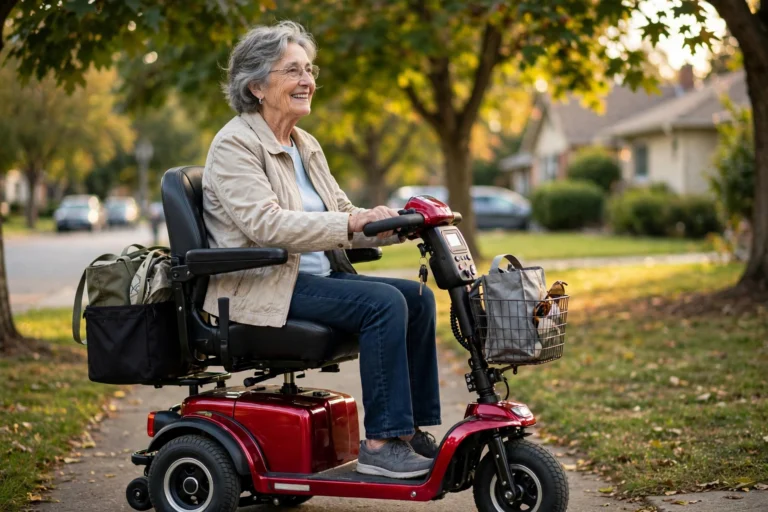
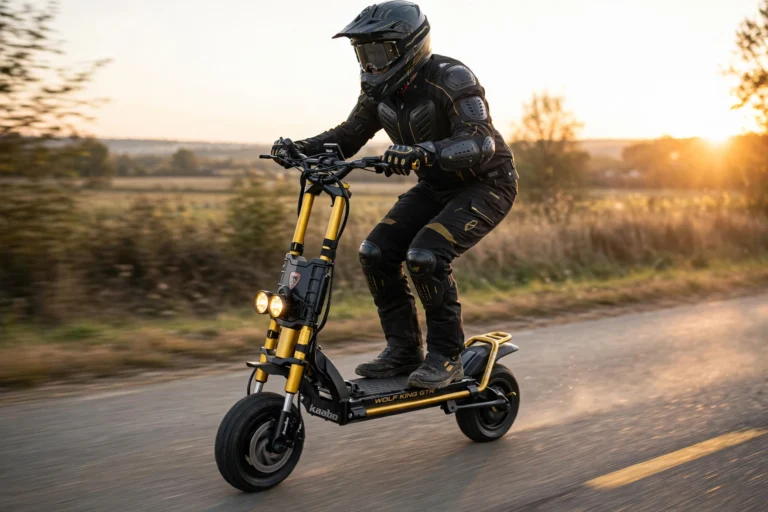
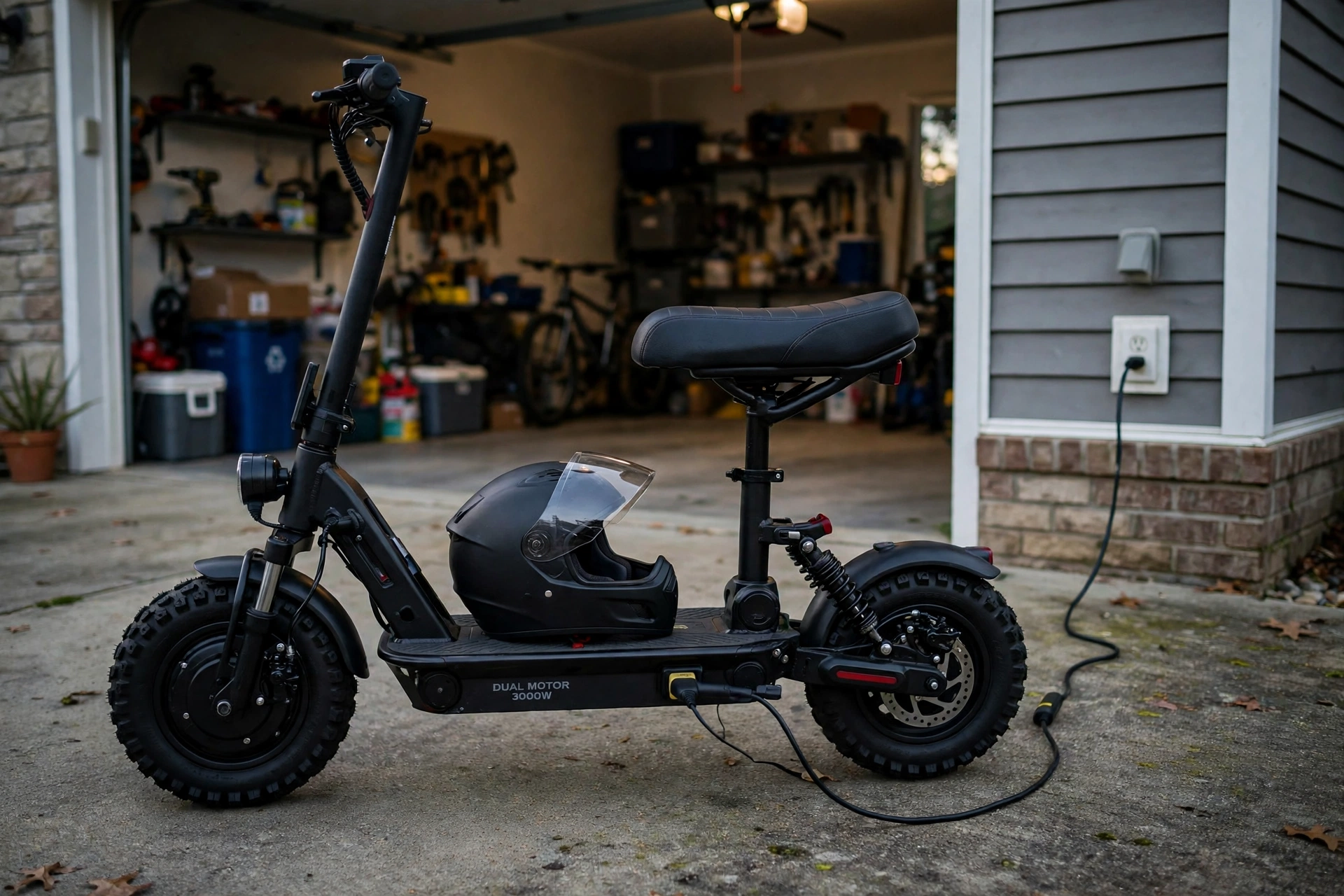
Start with the name in full, because the details hinge on it. The freeboy j30 max electric scooter is not a gentle seated runabout for short hops to the shops, whatever a quick marketplace search suggests. In its current listings it is a dual-motor, 60-volt standing scooter with serious speed claims, chunky 11-inch off-road tyres, and a weight close to 100 pounds. An optional seat appears on the top version only. That gap between expectation and hardware is exactly why careful reading matters here.
Freeboy sells the J30 Max through its own store and through marketplace sellers, and the listings do not agree with each other. Range is quoted at 55 miles in one place, 62 miles in the manual, and 37 to 50 miles in another manual section. Maximum load is 441 pounds in the official store table and 330 pounds in a dealer listing. Charging time runs from 6 hours to 12 hours depending on which page you open.
None of that makes the scooter automatically bad. It does mean you should buy the verified parts of the specification, not the headline parts. This guide separates the two. Prices were checked on October 24, 2026.
Freeboy J30 Max Electric Scooter: The Specification We Can Stand Behind
Some figures repeat across the official Freeboy store, the user manual, and independent dealer listings. Those are the figures worth trusting. Dual brushless motors rated at 3,000 watts each. A 60V 38Ah lithium battery on the top version. A claimed top speed of 50 mph, with some pages stretching to 53 or 55 mph. Eleven-inch tubeless off-road tyres. Dual disc brakes, described as oil or hydraulic brakes in most listings. Front and rear hydraulic suspension. An IPX5 water-resistance rating. A black aluminium-alloy frame. A net weight of 99.2 pounds, or 45 kg.
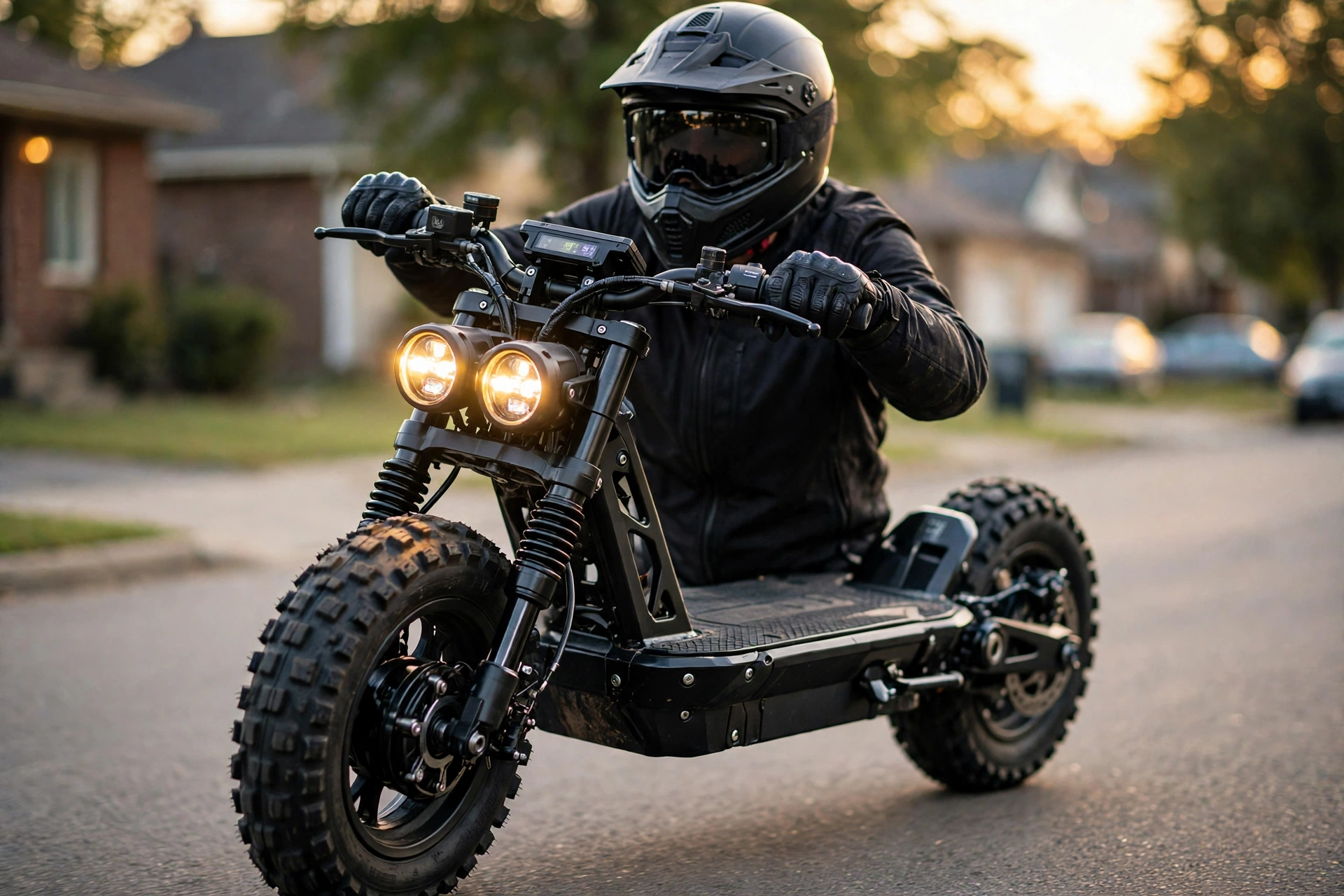
The official Freeboy J30 Max product page lists the top version at 50 mph and 55 miles, and the range in its own FAQ stretches to 56 to 62 miles a few lines later. Read that again. Even the manufacturer page gives two answers to the same question. Careful buyers notice that sort of thing.
| Specification | Freeboy J30 Max (Top Version) | Confidence |
|---|---|---|
| Motors | Dual 3,000W brushless (6,000W combined claim) | Repeated across listings |
| Battery | 60V 38Ah lithium, 2,280 Wh calculated | Repeated across listings |
| Claimed top speed | 50 mph (some pages say 53–55 mph) | Conflicting at the edges |
| Claimed range | 55 miles official store; up to 62 miles in manual | Conflicting |
| Reference range in manual | 60–80 km (37–50 miles) | Manual figure |
| Our realistic range estimate | 32–42 miles mixed riding (est.) | Our estimate, basis explained below |
| Weight | 99.2 lbs (45 kg) net | Repeated across listings |
| Maximum load | 441 lbs claimed by brand; 330 lbs in dealer listing | Conflicting — use 330 lbs as the cautious limit |
| Tyres | 11-inch off-road tubeless | Repeated across listings |
| Brakes | Dual disc, oil/hydraulic in most listings | Mostly consistent |
| Suspension | Hydraulic front and rear | Repeated across listings |
| Water resistance | IPX5 | Repeated across listings |
| Charging time | 6–12 hours quoted; plan on 8–10 hours | Conflicting |
| Seat | Included on Top Version only | From official store variants |
| Price checked October 24, 2026 | $1,219.99 official store (Basic listed); about $1,153–$1,250 at dealers checked | Date-specific |
One clarification before the seven points. This scooter folds at the stem, and several listings use the word foldable in large type. A 99-pound scooter that folds is still a 99-pound scooter. The fold helps with garage storage. It does not make the machine portable in any honest sense of the word.
1. You Are Choosing Between Three Different Scooters
The official store sells three versions under one name, and the differences are large. The Basic version uses a 60V 25Ah battery, claims 40 mph and 43 miles, and comes with no seat. The Updated version steps up to a 60V 35Ah battery, claims 50 mph and 50 miles, and still has no seat. The Top version carries the 60V 38Ah battery, claims 50 mph and 56 miles, and adds the seat, a phone holder, a bag, a lock, and a pump.
So the seated scooter in the photographs is the most expensive version. The cheaper listings are standing scooters. If a marketplace advert shows a seat and quotes the lowest price, check the variant selector before you pay. That single check prevents the most common disappointment with this model.
My view is firm on this point. If you want the J30 Max at all, the Top version is the only one that makes sense, because the big battery is the main reason to accept this much weight. The Basic version keeps the heavy frame and dual motors and gives you the smallest battery of the three. That is the worst combination in the range.
2. The Speed Is Real Enough to Be a Legal Problem
Dual 3,000W motors on a 60V system will move a scooter quickly. A claimed 50 mph is plausible for this hardware on a full charge with a lighter rider, and one manual lists 53 mph. Treat 50 mph as the working figure and treat anything above it as marketing stretch.
Now the careful part. Fifty miles per hour is motorcycle territory in most city rulebooks. Many US cities cap e-scooters at 15 or 20 mph in bike lanes and on shared paths, and some cap motor output as well. A dual-motor scooter with 6,000 watts of claimed output sits outside those limits by a wide margin. Riding it at full speed on a public path is not a grey area. It is simply not permitted in most places.
Where can you use the performance honestly? Private land. Closed courses. Properties and rural roads where local rules allow this class of vehicle, and you have confirmed that in writing from a reliable local source. If your riding is a city commute on shared infrastructure, you will spend nearly every mile holding this machine back to a fraction of its ability. Paying for speed you cannot legally use is poor value, and riding at speeds the path was never designed for is poor judgement.
The U.S. Department of Energy’s Alternative Fuels Data Center makes a useful side point in its guidance on building codes and ordinances for EV charging: neighbourhood EVs and e-micromobility devices typically only need a standard 120V outlet to charge. That applies here too. The J30 Max needs no special home charging installation, which is one genuine convenience in an otherwise demanding package.
3. Freeboy J30 Max Electric Scooter Range: Claimed, Manual, and Realistic
Three different range stories exist for this scooter, and they need to be kept separate. The official store claims 55 miles, stretching to 62 miles in its FAQ. The user manual claims up to 100 km, which is 62 miles, then lists a reference cruising range of 60 to 80 km, which is 37 to 50 miles. That reference figure is the most honest number in the paperwork, because manuals tend to bury the cautious figure rather than headline it.
Our realistic estimate is lower still. Here is the basis, step by step. The 60V 38Ah battery holds 2,280 watt-hours on paper (60 × 38). A dual-motor scooter ridden at moderate speeds on mixed surfaces commonly uses 55 to 70 watt-hours per mile once hills, stops, rider weight, and tyre drag from knobbly off-road tread are included (est.). Divide 2,280 by that consumption band and you get roughly 32 to 42 miles. Gentle single-motor cruising at low speed would stretch further, perhaps toward the manual’s 50-mile reference ceiling (est.). Sustained fast riding would land below 32 miles.
So plan your ownership around 32 to 42 miles (est.), and treat anything above 50 miles as a best-case figure for a light rider travelling slowly. If a seller quotes you 62 miles without conditions, that seller is quoting the laboratory number, and you should price the scooter accordingly.
Compare that pattern with a calmer machine. In our Segway Ninebot Max G30P complete guide, the claimed range is 40.4 miles and rider reports tracked by ScooterRank average about 23.5 miles. The gap between claim and reality exists across the whole scooter market. The J30 Max is not unusual in this respect. It is unusual only in how many different claims its own paperwork makes.
4. The Battery Is Large, Slow to Charge, and Not Removable
A 2,280 Wh battery is big by scooter standards, roughly four times the capacity of a typical commuter scooter pack. Size brings range. Size also brings charging time, and the listings disagree here as well: 6 to 8 hours in one manual, 8 to 10 hours in another, 6 to 12 hours in a dealer table. Plan on 8 to 10 hours from empty. That is an overnight charge, not a lunch-break top-up.
No listing we found describes the battery as removable (est. based on the absence of any removable-battery claim across the official store, manual, and dealer pages checked). The practical result matters. You charge the whole 99-pound scooter where it sleeps, which means a ground-floor space with an outlet, ideally a garage. Apartment riders who planned to carry a battery upstairs to charge should stop and rethink, because that plan does not work with this design.
The running cost, at least, is tiny. This is our own calculation, from the battery size above. A full charge uses about 2.28 kWh before charger losses. At an average US residential electricity price of about 17 cents per kWh (est.), that is roughly 39 cents per full charge, or about 46 cents if you allow for typical charging losses (est.). Spread over our realistic 35-mile midpoint estimate (est.), the electricity cost lands near 1.3 cents per mile. Fuel cost will never be the problem with this scooter. Tyres, brake pads, and your time will cost more.
Charging safety deserves one plain paragraph. Use only the supplied charger. Charge on a hard, non-flammable surface, away from exits, while you are awake and at home. A 2,280 Wh pack stores a great deal of energy, and a scooter bought through a marketplace chain deserves extra care, not less. If the battery case is ever damaged, swells, or smells unusual, stop using it and contact the seller. Do not charge a damaged pack to see whether it recovers. It will not.
5. It Weighs 99 Pounds, and the Load Rating Cannot Be Trusted as Printed
The net weight of 99.2 pounds repeats consistently, and I trust it. Everything that follows from it is simple. This scooter lives on the ground floor. It goes in a garage, a shed, or a ground-floor store room. It travels in a vehicle only with a ramp or two people lifting. It does not go up apartment stairs, and it does not belong on a bus or train.
The load rating is where the paperwork falls apart. The official store claims a maximum load of 200 kg, or 441 pounds. A dealer listing for the same scooter says 150 kg, or 330 pounds. One manual adds a recommended rider weight of 100 to 220 pounds, which is lower than both. Three numbers, one scooter.
Use the cautious reading. Treat 330 pounds as the ceiling (est. cautious limit, chosen because it is the lowest maximum-load figure published for this model), and treat the manual’s 220-pound recommended upper figure as the comfort zone for range and braking. Heavier riders should expect the low end of every estimate in this guide: the low end of the range band, longer stopping distances, and faster tyre wear. That is not a judgement about any rider. It is physics, and physics does not negotiate.
Riders who need genuine stability at low speed rather than outright pace may be better served by a different layout entirely, and our 3 wheel electric scooter complete guide covers machines that trade top speed for balance and confidence. For some buyers that trade is the correct one.
6. Brakes, Suspension, and Tyres Are the Strong Part of the Package
Credit where it is due. Dual disc brakes front and rear, hydraulic suspension at both ends, and 11-inch tubeless off-road tyres are the right specification for a heavy, fast scooter. Smaller tyres and a single brake would be a serious concern on a machine of this weight. Freeboy has not made that mistake, at least on paper.
The tyres cut both ways, so let me be specific. Knobbly 11-inch tread grips gravel, grass edges, and broken pavement well, and the larger diameter rolls over pothole lips better than the 8.5 or 10-inch wheels on commuter scooters. On smooth tarmac the same tread is noisier, wears faster, and uses more energy, which is one reason our range estimate sits where it does. If your routes are paved and smooth, you are paying a small daily penalty for off-road ability you rarely use.
Build-quality expectations need to be set at the price. At roughly $1,153 to $1,250 checked on October 24, 2026, this is a value-priced performance scooter, and the compromises show up in the supporting details rather than the headline hardware. Expect to check and tighten fasteners during the first weeks. Expect brake pads and tyres to be consumables you source yourself. Expect warranty support to run through the seller rather than a local dealer network, with the official store advertising a 1-year warranty. None of that is unusual in this class. All of it should be priced into your decision.
One more firm opinion, because it matters. A 50 mph scooter demands full protective gear: a proper full-face helmet, gloves, and abrasion-resistant clothing, every ride. The dual brakes and suspension reduce risk. They do not remove it, and at these speeds the margin for a mechanical failure or a patch of gravel is thin. If the gear feels like an unreasonable extra cost, the scooter is the wrong purchase.
7. The Price Buys Power Cheaply and Confidence Expensively
Now the value calculation, and this is another figure we worked out ourselves. At $1,250 for the top version, divided by the 55 claimed miles, you pay about $22.73 per claimed mile of range. Divided by our realistic 35-mile midpoint (est.), you pay about $35.71 per usable mile. The scooter did not change between those two sums. Only the honesty of the denominator changed, and that is the right way to compare any scooter in this market.
Against a commuter benchmark, the picture sharpens. The Segway Ninebot Max G30P at $799, with rider-reported real range near 23.5 miles, works out near $34 per real mile, with a 551 Wh battery, a 41.2-pound weight, a documented dealer network, and a top speed of 18.6 mph that keeps it legal in far more places. Very similar cost per real mile. A completely different kind of ownership.
Who should buy the J30 Max? A rider with private land or confirmed legal access to suitable roads, ground-floor storage, a realistic 32 to 42 mile expectation (est.), and the discipline to wear full gear and maintain the machine themselves. That rider gets a great deal of hardware for the money.
Who should not? Commuters on shared city paths. Apartment residents without ground-floor charging. New riders. Anyone whose route needs a scooter they can carry, fold into a car boot quickly, or take on transit. And anyone whose main reason for buying is the 62-mile headline. That reason is built on the least reliable number in the listing.
If your riding is mostly short, seated, low-speed trips on paved streets, a smaller seated machine will serve you better and cost you less in effort every single day; our A3 Aero electric scooter guide covers that calmer end of the market. The J30 Max is the opposite end. Buy it for what it is, or do not buy it.
Our Score
Freeboy J30 Max electric scooter (Top Version) — Our score: 5.9/10. Range: 6/10. The battery is genuinely large, and the realistic 32 to 42 miles (est.) is respectable, marked down for paperwork that cannot agree with itself. Charging: 4/10. Eight to ten hours, a non-removable pack, and no fast-charge option we could find. Value: 7/10. The hardware per dollar is strong, and the score reflects hardware rather than support, documentation, or resale confidence.
Segway Ninebot Max G30P — Our score: 7.8/10. Range: 7/10. A 40.4-mile claim with about 23.5 miles in rider reports, honestly documented by third parties. Charging: 7/10. Around 6 hours for a 551 Wh pack, with a built-in charger. Value: 8/10. Slower and far less powerful, and a safer, more supportable purchase for most city riders.
The scores are not close because the scooters are not close. One is a heavy performance machine with messy documentation. The other is a mature commuter product with modest claims and evidence behind them. Choose based on where you will actually ride, not on which specification table shouts loudest.
Frequently Asked Questions
Is the freeboy j30 max electric scooter sold with a seat?
Only the Top Version includes a seat, according to the official Freeboy store variant list. The Basic and Updated versions are standing scooters with no seat. Check the variant name on any listing before paying, because marketplace adverts often photograph the Top Version and price the Basic.
How far will the J30 Max really travel on one charge?
Claims run from 55 to 62 miles. The manual’s own reference range is 37 to 50 miles. Our estimate for mixed real-world riding is 32 to 42 miles (est.), based on the 2,280 Wh battery and typical dual-motor consumption of 55 to 70 Wh per mile (est.). Light, slow, single-motor cruising should do better; sustained fast riding will do worse.
How long does the J30 Max take to charge?
Listings quote anything from 6 to 12 hours. The safer planning figure is 8 to 10 hours from empty, using the supplied charger. The battery is not described as removable in any listing we checked, so you charge the scooter itself, indoors at ground level or in a garage.
Is the J30 Max legal to ride on city bike lanes?
In most US cities, no, not at its full capability. Many jurisdictions cap e-scooter speed at 15 to 20 mph on shared paths and bike lanes, and a 50 mph dual-motor scooter exceeds those caps. Rules vary by city and state, so check your local regulations before buying, and expect to use full performance only on private land or where this class of vehicle is expressly allowed.
How much weight can the J30 Max carry?
The published figures conflict: 441 pounds from the brand, 330 pounds from a dealer listing, and a manual recommendation of 100 to 220 pounds for the rider. Our cautious advice is to treat 330 pounds as the maximum (est. cautious limit) and to expect reduced range and longer stopping distances as rider weight rises.
What does it cost to charge the J30 Max?
About 39 cents for a full charge at roughly 17 cents per kWh (est.), rising to about 46 cents once charging losses are included (est.). That works out near 1.3 cents per mile at our realistic range estimate (est.). Electricity is the cheapest part of owning this scooter by a wide margin.