Last updated: October 27, 2026
A cheap electric scooter can be a genuinely kind purchase. It can turn a tiring walk to the bus stop into a calm roll, spare your knees the last half mile, and cost less to run than the coffee you buy at the station. It can also be a wobbly, harsh little machine that hurts your wrists and dies two miles from home. The difference is rarely the price tag itself. It is seven specific things, and this guide walks through them slowly, in plain language, with comfort and stability first.
Let us set the price band first. In this guide, cheap means roughly $250 to $500, bought new, from a brand with a real website, a warranty and spare parts. Prices here were checked on October 27, 2026, against maker stores and large retailers, and they move around with sales — the Hiboy store, for example, was showing Halloween-event pricing when we checked. Four models anchor the guide: the Gotrax GXL V2 at about $299, the Hiboy S2 at $299.99, the TurboAnt M10 Lite at $299.98, and the Segway Ninebot E2 Plus II at $349.99. Everything below is judged against those real prices, not against a fantasy sale that ended last month.
Who is this for? Riders doing short, mostly flat trips: the station run, the campus crossing, the gentle errand loop. If your route has steep hills, broken pavement or a round trip over ten miles, a cheap electric scooter is the wrong tool and no clever shopping will fix that. Saying so early is deliberate. We would rather talk you out of the wrong scooter than into the least-bad one, and our research method page explains how we check figures before printing them.
One honest warning before the seven things. The range printed on a budget scooter’s box is measured with a light rider, on flat ground, at a steady gentle speed. Real riders weigh more, stop at lights, and meet small hills and headwinds. Independent testers consistently record far less — sometimes barely half the claim. Throughout this guide, whenever a scooter has a published independent range test, we quote the tested figure next to the claim, and our own estimates are marked (est.) with the reasoning shown.
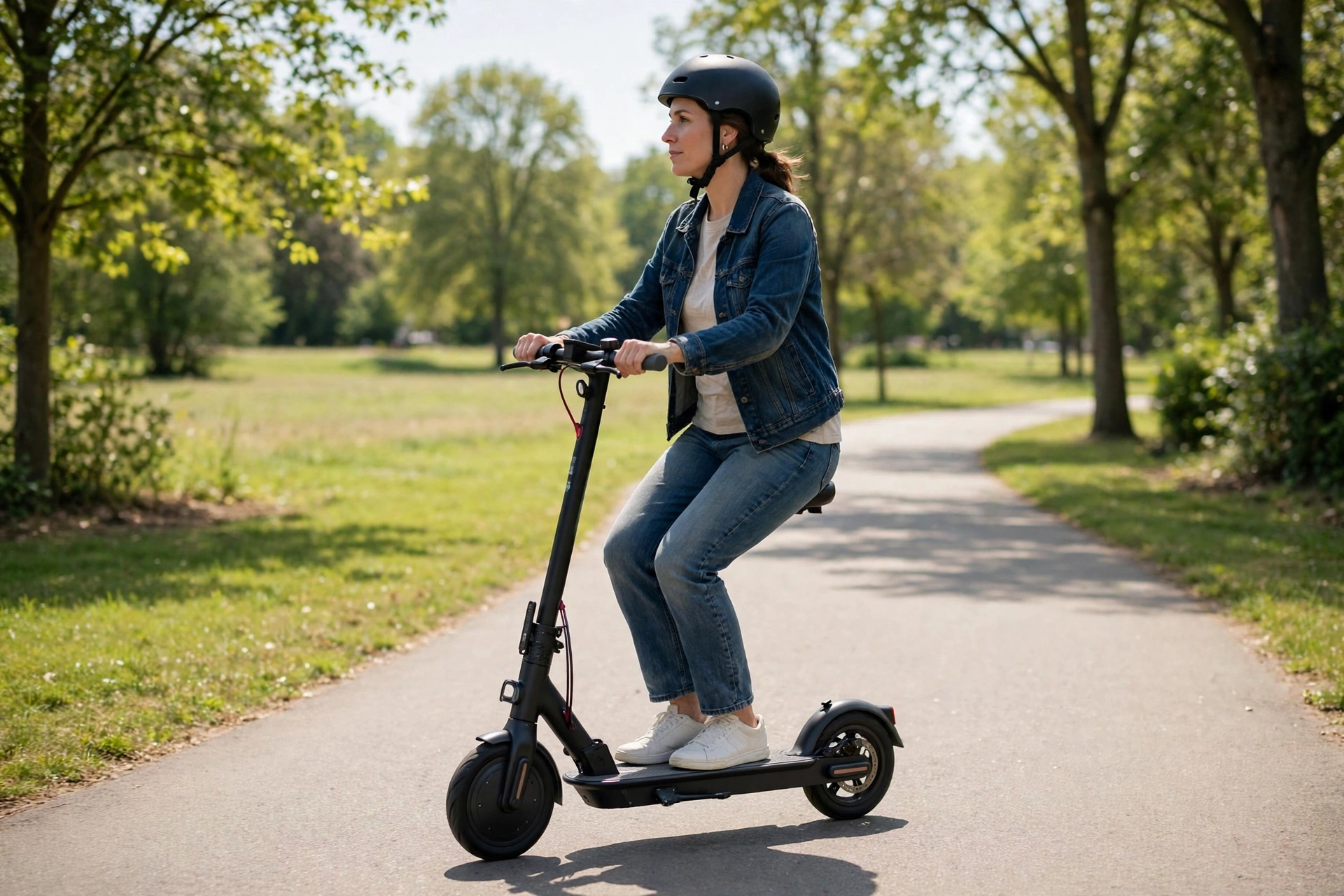
Here, then, are the seven things to know: the safety certificate, the real range, the tires, the carrying weight, the brakes, the space for your feet, and the true cost of a charge. Take them in order and the right choice usually becomes obvious.
1. A cheap electric scooter without UL 2272 is not a bargain
Start with the certificate, because it is the one place where saving money can go properly wrong. UL 2272 is the safety standard that tests an electric scooter’s whole electrical system — battery pack, charger, wiring and motor controller together — for fire and electrical faults. A scooter that carries it has been through laboratory abuse tests. A scooter that does not has simply not been checked, and at this price level that gap matters more, not less, because the battery is where cheap models quietly cut corners.
Our position is firm: if a listing cannot show UL 2272 certification, do not buy it, even at $150, even with glowing reviews. The four picks in this guide are all sold as certified — Segway lists the E2 Plus II as UL 2272 and UL 2271 certified in its own product data, Gotrax states UL 2272 certification for the GXL V2, and Hiboy and TurboAnt sell their models through mainstream stores with certification claims on the listing. That last point is a habit worth copying: check the exact listing you are buying from, not just the brand’s homepage, because versions vary by retailer. A few large marketplaces also delist uncertified scooters, which is one more reason to buy from the maker’s store or a major retailer rather than an anonymous seller.
Charging habits belong in this section too, because they protect both the battery and your home. Charge on a hard floor away from bedding and exits, use only the charger in the box, and unplug once the light turns green rather than leaving the scooter plugged in for days. None of that costs anything, and it does more for safety than any accessory.
2. Real range: what a cheap electric scooter actually delivers
Now the numbers that decide whether a scooter fits your life. Gotrax claims up to 12 miles for the GXL V2; TechGearLab’s reviewers, riding until the battery died, recorded about 7 miles. TurboAnt claims 15.5 miles for the M10 Lite; Electric Scooter Insider’s test, ridden briskly, returned 10 miles. Hiboy claims 17 miles for the S2, and Levy Electric’s range database puts it at 12.7 miles. Segway claims 16 miles in Eco mode and 12 in Sport for the E2 Plus II, and we have not found a published independent test, so plan on 10 to 12 miles (est.) — the basis is its 220 Wh battery, and scooters of this size typically use 18 to 22 Wh per mile at full speed. Notice the pattern: the claim is the ceiling, never the plan. Plan your trips around the tested figure, then keep a margin for cold weather and a heavier bag.
Range also fades as the battery drains, which testers of the GXL V2 flagged clearly: past half charge, the scooter slows and gentle hills become a walk. If your round trip is close to the tested range, you will spend the last mile at walking pace. That is not a defect to be angry about — it is physics at a low price — so size your purchase so the round trip is at most two-thirds of the tested range.
Here is our own computation, because price per mile of tested range tells you more than any star rating. Gotrax GXL V2: $299 ÷ 7 tested miles = $42.71 per mile of range. TurboAnt M10 Lite: $299.98 ÷ 10 tested miles = $30.00 per mile. Hiboy S2: $299.99 ÷ 12.7 tested miles = $23.62 per mile. Segway E2 Plus II: $349.99 ÷ 11 miles (est., the midpoint of our estimate above) = $31.82 per mile (est.). Same shelf, same rough price — the Hiboy quietly buys you nearly twice the tested distance of the Gotrax per dollar. Roundups from testers such as Electric Scooter Guide’s budget scooter rankings are a useful second opinion here, because they publish their own measured ranges rather than repeating the box.
3. Tires decide how a cheap electric scooter treats your joints
Tires are a comfort decision disguised as a spec-sheet line. A cheap electric scooter generally comes with one of three setups: air-filled (pneumatic) tires, solid rubber tires, or honeycomb solids with hollow pockets that flex a little. Air is the cushion. An 8.5-inch pneumatic tire rolls over pavement joints and small cracks with a softness no solid tire matches, and that softness goes straight to your wrists, elbows and knees. The TurboAnt M10 Lite and many GXL V2 listings wear pneumatic tires, which is a large part of why they feel calmer than their prices suggest.
Solid tires never puncture. That is their whole argument, and for a rider who cannot manage a repair or a pump, it is a fair one. The Hiboy S2 runs solid honeycomb tires and adds a rear spring to soften the news from the road. Understand the trade plainly, though: a solid tire sends every sharp edge up the stem, and on coarse chip-seal or cracked sidewalks your hands will tingle within ten minutes. Segway’s E2 Plus II takes a middle path with 8.1-inch inner-hollow tires — solid, so no flats, but moulded with air pockets to absorb some shock — plus a real front spring suspension, the only genuine suspension in this group.
If your joints complain on a bicycle, choose pneumatic tires and accept the small chore of checking pressure every couple of weeks. That is a one-sided call and we will stand by it: at this price, tire choice changes how a scooter feels more than motor wattage, top speed or any app feature. One caution for GXL V2 shoppers — listings differ, with some retailers describing solid tires and others air-filled, so read the exact page you are ordering from and treat the tire line as part of the purchase, not a detail.
4. Carrying weight and the fold: will you actually take it with you?
A scooter you cannot lift is a scooter you will stop using. The numbers: Gotrax GXL V2, about 27 lb. TurboAnt M10 Lite, 30.9 lb. Hiboy S2, roughly 32 lb. Segway E2 Plus II, 36.2 lb. Those gaps sound small on paper and feel large on a staircase, especially carried one-handed by the stem while your other hand holds a rail — which is exactly how everyone carries one. If you have stairs at home or at the station, put the lightest models at the top of your list and be honest about your grip strength on a tired evening, not your best morning.
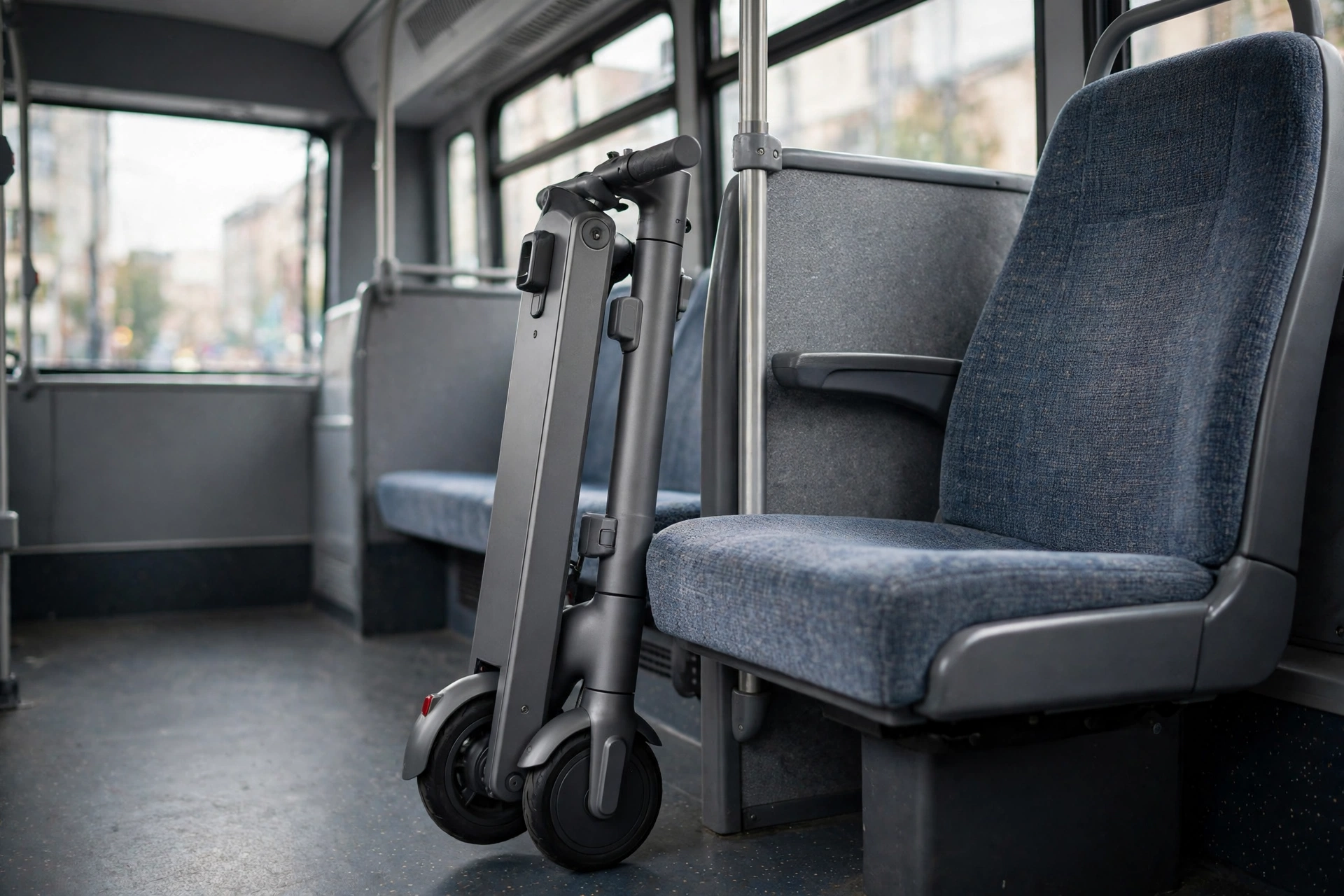
Folding matters just as much. All four fold at the stem in a few seconds and stand about 43 to 45 inches long when folded, which fits under a desk, in a car boot, or beside a bus or train seat. Practise the fold before you need it: the latch should close with a clear click, and the folded scooter should lock so the stem does not swing open mid-carry. Check the maximum rider weight too, in the maker’s own figures — 220 lb for the Gotrax, Hiboy and TurboAnt, and a stricter 198 lb for the Segway. A rider near the limit will also see range drop sharply, which loops back to the tested figures in section 2. For a look at how larger scooters handle the carrying question, our Segway Ninebot Max G30P guide shows what you gain — and what 42 lb feels like — when you step up a class.
The four picks, scored for comfort and stability
Scores below weight range, comfort and stability, and value — the things this guide promised to put first. Each pick is a current model at a checked price, and each passed the certification filter from section 1.
TurboAnt M10 Lite — the calm all-rounder
At $299.98, the M10 Lite pairs 8.5-inch pneumatic tires with the widest deck in this group at 6.3 inches, and that width is a stability feature you feel the moment you step on: both feet fit without shuffling. Its 350W motor is the joint strongest here, its tested range of 10 brisk miles beats the Gotrax, and its disc-plus-electronic braking stopped in 2.9 metres in Electric Scooter Insider’s testing, the shortest figure in this guide. It folds at the stem and weighs 30.9 lb. For most readers, this is the one to buy.
Our score: 8/10 — Range: 7/10 · Comfort & stability: 8/10 · Value: 9/10
Hiboy S2 — the range-per-dollar winner
The S2, $299.99 at Hiboy’s own store (the store page also covers its smaller S2 Lite sibling), carries the biggest battery here — 36V, 7.8Ah, which is 280.8 Wh — and turns it into the best tested range per dollar in our computation above. The 350W motor feels willing, the rear spring helps, and the app and cruise control are pleasant extras at this price. What holds it back is the solid honeycomb tires: no punctures, ever, but a firmer ride that your hands will report on rough streets.
Our score: 7.5/10 — Range: 7/10 · Comfort & stability: 6/10 · Value: 8/10
Segway Ninebot E2 Plus II — the gentle starter
Segway built this one for beginners, and it shows in the kind details: a front spring suspension, shock-absorbing hollow tires, a big clear dashboard, and both brakes worked from a single lever, which is easier for riders with weaker grip in one hand. It is fully certified (UL 2272 and UL 2271), well sealed against splashes, and $349.99 at major retailers. The costs are weight — 36.2 lb is a real lift — a 198 lb rider limit, and the shortest realistic range of the group at 10 to 12 miles (est.).
Our score: 7.5/10 — Range: 6/10 · Comfort & stability: 8/10 · Value: 7/10
Gotrax GXL V2 — the light, simple one
The GXL V2 is the lightest pick at about 27 lb and the simplest to live with: one-step folding, a clear console, a 250W motor that keeps speeds gentle at 15.5 mph, and a long track record at this price. Be clear-eyed about the limits, though. TechGearLab measured roughly 7 miles per charge, the motor fades on hills and as the battery drains, and there is no suspension. For a short, flat, carry-it-upstairs life, it still makes sense. For anything longer, its $42.71 per tested mile is the weakest value here.
Our score: 6.5/10 — Range: 4/10 · Comfort & stability: 6/10 · Value: 8/10
5, 6 and 7: brakes, room for your feet, and the charger in the box
Three quicker checks before you pay. Brakes: look for two ways of stopping — an electronic brake plus a disc or drum — because a single electronic brake alone is gentle at best. All four picks pair an electronic brake with a mechanical one, and the Segway’s single-lever arrangement is the friendliest layout here if your hands tire easily. Practise your first stops somewhere quiet; braking is the skill that keeps a slow scooter safe.
Room for your feet: deck size decides whether you can stand with feet slightly staggered, which is the stable stance. The M10 Lite’s 6.3-inch-wide, 17.7-inch-long deck is the roomiest here; the smallest decks force your feet into line, one behind the other, which feels tippy at first and tiring on longer rolls. If you wear larger shoes or simply like a planted feel, deck measurements deserve the same attention as motor watts. The charger: it should be the maker’s own, matched to the battery — never a random spare from a drawer. If you are ever unsure whether a charger suits a vehicle, our EV charger compatibility checker walks through the matching rules in plain steps.
What a full charge actually costs
Running costs are where these scooters quietly shine, so let us do the arithmetic once, carefully. Take the Hiboy S2’s typical pack: 36 volts × 7.8 amp-hours = 280.8 watt-hours, which is 0.281 kilowatt-hours. At an average US home electricity rate of about $0.17 per kWh (est., in line with recent national residential averages), a full charge costs 0.281 × $0.17 = $0.048 — call it five cents. Spread over its 12.7 tested miles, that is roughly 0.4 cents per mile. Even the small GXL V2 pack (36V × 5.2Ah = 187 Wh) costs about 3 cents to fill. If you want the same maths for a bigger battery, our guide to what it costs to charge an electric bike uses the identical method, and the per-mile picture is just as friendly. A month of daily station runs will not show up on your electricity bill in any way you can find.
Questions people ask before buying
How much range does a cheap electric scooter really have?
Plan on 7 to 13 miles for most riders, whatever the box says. Independent tests of the models in this guide returned 7 miles (Gotrax GXL V2), 10 miles (TurboAnt M10 Lite) and 12.7 miles (Hiboy S2). Lighter riders on flat routes, riding gently, will do better; hills, cold weather and higher speeds all take their share.
Are solid tires a mistake at this price?
Not a mistake, but a compromise you should choose on purpose. Solids never puncture and suit riders who cannot manage repairs. They also ride firmly and can feel harsh on cracked pavement. If your streets are smooth and your trips short, solids are fine. If your joints are sensitive, pneumatic tires are the kinder default.
Can a cheap electric scooter handle hills?
Gentle ones, yes; real hills, mostly no. A 250W to 350W motor will climb a mild slope slowly, and testers found the GXL V2 slowing to a crawl on a steep 10.5% grade. If your route includes a hill you would notice on a bicycle, budget for a stronger motor instead — or accept a short walk beside the scooter, which many riders quietly do.
How long will the battery last before it needs replacing?
Expect two to three years of regular use before range drops enough to bother most riders (est., based on typical lithium pack cycle life of 300–500 full charges and the replacement timelines budget-scooter roundups report). Charging little and often, storing the scooter neither empty nor full, and keeping it out of freezing garages all stretch that life. This is one more reason to buy a brand that sells replacement parts.
What weight should I aim for if I have stairs?
Under about 31 lb is the comfortable zone for most people carrying one-handed. That points to the Gotrax GXL V2 at roughly 27 lb or the TurboAnt M10 Lite at 30.9 lb. Above 35 lb — the Segway here — is manageable for short lifts but hard work up two flights, so test your own limit with a suitcase of similar weight before deciding.
To close gently: a cheap electric scooter asks you to be honest about three things — your route, your joints and your stairs. Match the tested range to the route with room to spare, choose tires for the body you have, and keep the carrying weight within what your arms forgive. Do that, and the $300 scooter stops being a gamble and becomes what it should be: a small, calm, inexpensive way to make short trips kinder.